

Understanding Heat Pump Short Cycling: Symptoms and Mechanical Consequences
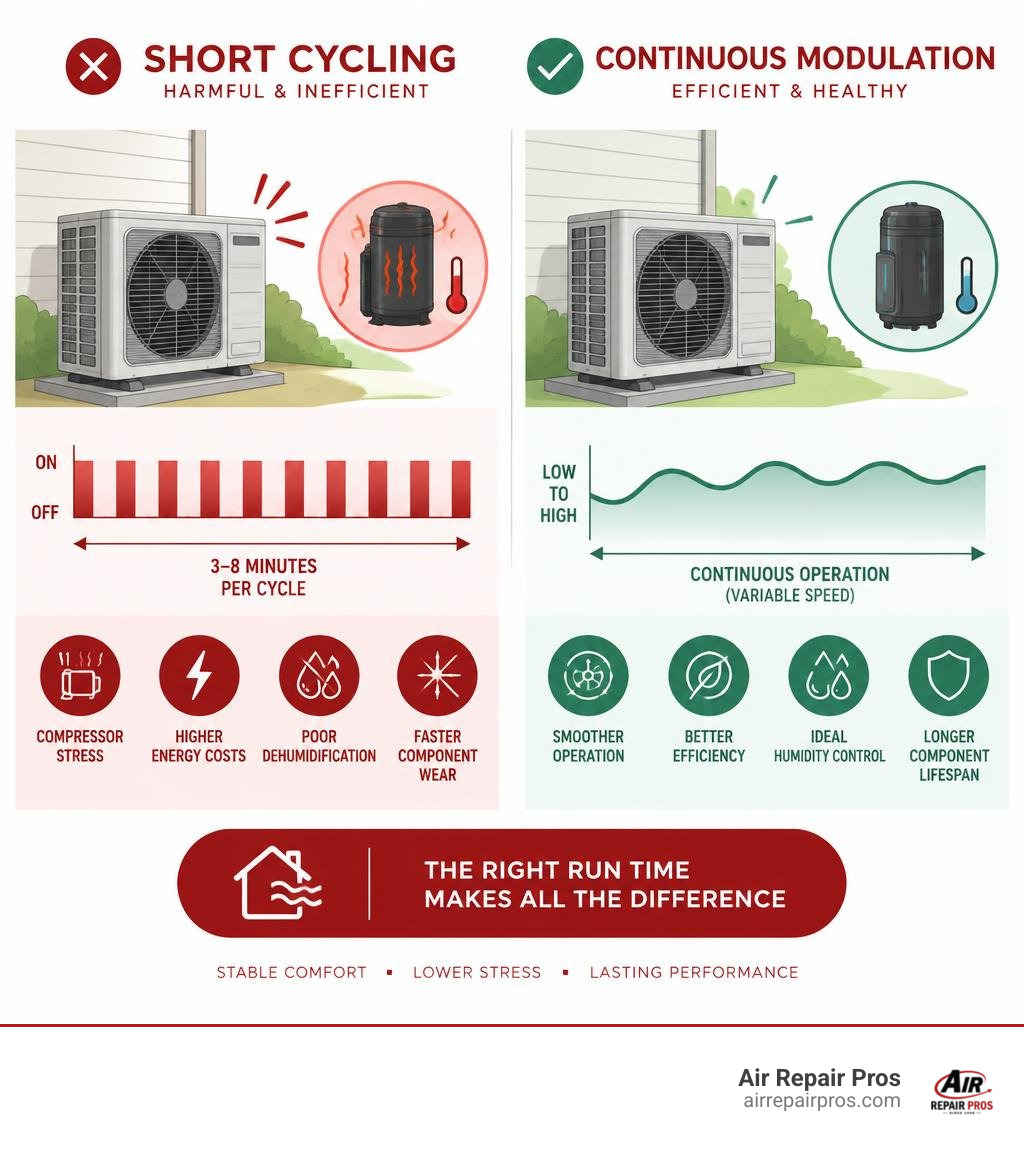
When an HVAC system repeatedly turns on and shuts off after running for only three to eight minutes, it is trapped in a destructive operational pattern known as short cycling. Rather than completing a full, steady cooling or heating cycle that thoroughly conditions the air and removes latent indoor humidity, the unit satisfies the thermostat setpoint prematurely and shuts down, only to restart minutes later when temperatures fluctuate.
To understand why this causes severe mechanical problems, it helps to review how heat pumps work in modern residential applications. Heat pumps do not generate heat directly through combustion; instead, they transfer thermal energy between the indoor and outdoor environments using circulating pressurized refrigerant. During summer cooling operation in Plano, TX, the indoor evaporator coil absorbs both sensible heat (lowering dry-bulb air temperature) and latent heat (condensing moisture out of the air onto the coil surface).
When evaluating the pros and cons of heat pumps, exceptional energy efficiency is their greatest advantage, but that efficiency depends entirely on extended, steady run times. Short cycling undermines that core benefit by introducing severe operational stresses:
- Compressor Start-Stop Fatigue: The initial startup of a compressor motor requires substantial inrush electrical current (Locked Rotor Amps or LRA), which generates significant heat within motor windings. Repeated cycling spikes internal component temperatures, deteriorates motor insulation, and accelerates mechanical bearing wear.
- Elevated Electric Utility Costs: A compressor consuming surge current every few minutes uses significantly more kilowatt-hours than an inverter or two-stage unit running steadily at part-load capacity.
- Inadequate Indoor Dehumidification: Effective moisture removal requires warm, humid indoor air to pass across a cold evaporator coil for an extended duration. When a cycle terminates prematurely, condensed moisture remains trapped on coil fins and evaporates back into supply ductwork, leaving the home feeling humid and clammy.
- Premature Electrical Component Failure: Frequent electrical arcing across contactors, capacitors, and relays dramatically shortens the working lifespan of critical HVAC control modules.
Short-Cycling vs. Normal Modulation
It is essential for homeowners to distinguish between destructive short cycling and the continuous low-speed operation of modern variable-speed inverter systems. Traditional single-stage heat pumps operate at 100% capacity whenever they turn on. When properly sized, a single-stage system runs continuous 15 to 25 minute cycles during peak afternoon heat.
In contrast, modern variable-speed inverter systems modulate compressor speed up or down in tiny increments to match real-time indoor thermal loads. Homeowners unfamiliar with inverter technology sometimes mistake an outdoor unit running continuously at low capacity for an equipment malfunction. In reality, extended low-speed run times are ideal. Continuous low-capacity operation optimizes humidity extraction, eliminates indoor hot and cold spots, and maintains high electrical efficiency by keeping compressor startup cycles to an absolute minimum.
Comprehensive Heat Pump Sizing Guide: Calculating Loads the Right Way
Sizing residential HVAC equipment requires precision engineering rather than guesswork. Historically, contractors relied on crude rules of thumb, such as allocating one nominal ton (12,000 BTU/hr) of cooling capacity for every 500 square feet of living space. In modern construction, that assumption leads directly to severe equipment oversizing.
The risks of oversizing are substantial. An oversized unit drops indoor dry-bulb temperature within minutes, satisfying the thermostat before the evaporator coil reaches its optimal moisture-removal temperature. The result is a cold, clammy indoor environment that promotes mold growth in ductwork and causes rapid component deterioration. Conversely, undersizing a heat pump leads to continuous run times during mild weather and an inability to maintain indoor setpoints on hot summer afternoons or sub-freezing winter mornings.
The U.S. Department of Energy emphasizes that accurate equipment selection requires a formal load calculation rather than estimated floor area approximations. Modern homes feature varying window orientations, advanced low-E glass coatings, airtight building envelopes, and spray foam insulation, all of which dramatically reduce the thermal energy required to heat and cool the living space.
Manual J Standards in Our Heat Pump Sizing Guide
The national standard for calculating residential heating and cooling loads is the Air Conditioning Contractors of America (ACCA) Manual J protocol. A professional technician performing an ACCA Manual J evaluation models the home as an integrated thermal boundary, calculating sensible heat gains (temperature rise from sunlight and conduction) and latent heat gains (moisture from occupants, cooking, and outdoor humidity infiltration).
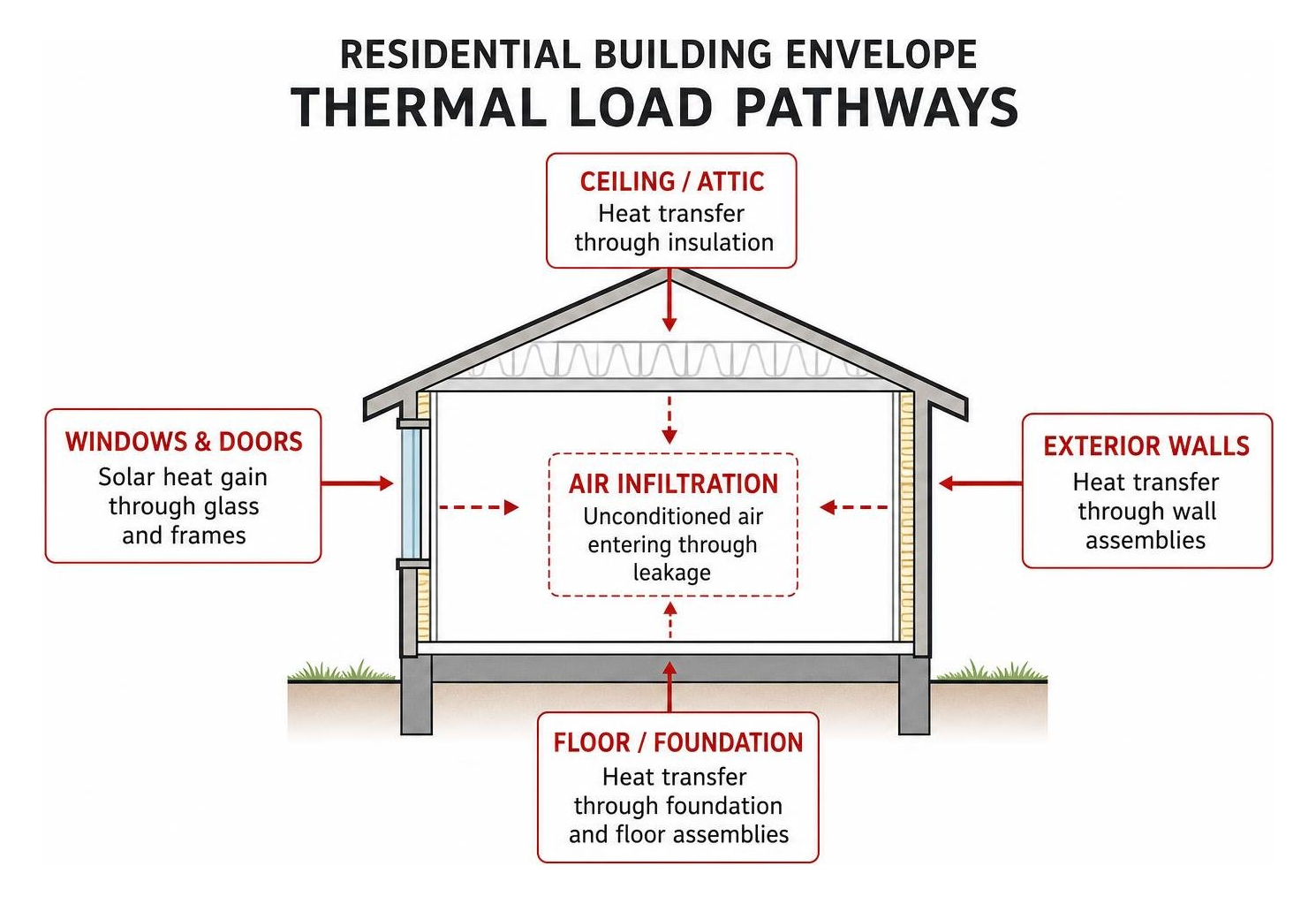
Key variables analyzed during sizing a system under Manual J standards include:
- Building Envelope R-Values: Thermal resistance ratings of ceiling insulation, exterior wall assemblies, foundation perimeters, and subflooring.
- Fenestration Performance: Total window and glass door area, frame thermal breaks, Solar Heat Gain Coefficient (SHGC), and U-factor ratings.
- Air Infiltration Rates: The rate of unconditioned air entering the home, measured via blower door metrics or tight construction leakage standards (typically below 0.35 Air Changes per Hour).
- Solar Orientation and Shading: Directional alignment of roof pitches and primary window arrays relative to morning and afternoon solar angles.
- Internal Sensible and Latent Loads: Heat produced by kitchen appliances, lighting, consumer electronics, and resident occupancy levels.
Avoiding Dual-Load Sizing Pitfalls: A Practical Heat Pump Sizing Guide
Unlike a standalone AC unit or gas furnace, an air-source heat pump must fulfill both cooling and heating roles. This dual-load nature creates an engineering challenge: the cooling load and heating load of a home rarely balance perfectly.
In heating-dominant northern states, equipment is selected to meet peak winter heat loss, which can leave the system substantially oversized for mild summer cooling. Conversely, in Texas, understanding how to calculate what size AC you need requires prioritizing the cooling load while ensuring adequate winter performance.
When sizing equipment, technicians plot the home’s heating load line against the heat pump’s heating capacity curve across falling outdoor temperatures. The point where the two lines intersect is known as the thermal balance point. Above this temperature, the heat pump provides 100% of the home’s heating needs without supplemental electric resistance strip heaters.
| System Sizing Category | Typical Run Duration (Peak Summer) | Sensible Heat Reduction | Latent Moisture Removal | Indoor Relative Humidity | Long-Term Compressor Stress |
|---|---|---|---|---|---|
| Oversized (1.5+ Tons Over) | 4 to 7 Minutes | Extremely Rapid | Minimal (Coil stays dry) | 60% to 70% (Clammy) | Severe (Excessive start cycles) |
| Moderately Oversized (0.5 to 1 Ton Over) | 8 to 12 Minutes | Fast | Incomplete Dehumidification | 55% to 62% | Moderate (Frequent cycling) |
| Accurately Sized (Manual J/S) | 18 to 35 Minutes | Steady & Consistent | Complete Moisture Condensation | 45% to 50% (Ideal) | Low (Extended gentle cycles) |
| Undersized System | Continuous (No shutoff) | Insufficient on Peak Days | High (Constant coil contact) | 40% to 48% | High (Thermal overload risks) |
North Texas Climate Factors: Balancing Summer Dehumidification and Winter Heating
Plano, TX and surrounding Collin County communities present distinct HVAC challenges. The local climate is cooling-dominated, characterized by extended summer heat waves exceeding 100°F combined with high Gulf moisture infiltration. However, North Texas also experiences sharp winter arctic blasts where outdoor temperatures plummet well below freezing.
For cooling design, ACCA Manual J establishes local outdoor design temperatures for Plano at approximately 99°F dry-bulb and 75°F wet-bulb. An oversized heat pump installed in this region will cool the air down to 72°F so quickly that indoor relative humidity can remain trapped above 60%. High indoor humidity forces occupants to set their thermostats lower to feel comfortable, driving up summer electric bills.
During winter, the 99% heating design temperature for Plano sits at approximately 24°F. Because ambient heating capacity drops as outdoor air temperatures drop, standard single-stage heat pumps experience a thermal balance point around 30°F to 35°F. Professional heat pump installation services ensure that the heat pump meets summer cooling and moisture removal requirements while staging auxiliary electric heating strips appropriately to cover sub-freezing winter cold snaps.
Ductwork and Airflow Compatibility
A heat pump cannot perform to its design specifications if the home’s ductwork cannot distribute air properly. Airflow across the indoor evaporator coil must maintain approximately 350 to 450 CFM (Cubic Feet per Minute) per ton of nominal capacity.
When an oversized heat pump is attached to undersized ductwork, external static pressure escalates significantly above the manufacturer limit of 0.5 inches of water column (in. w.c.). High static pressure starves the indoor blower motor, drops system efficiency, and causes the outdoor compressor to trip on internal high-pressure safety switches. Designing duct systems according to ACCA Manual D standards ensures that static pressure remains balanced across supply plenums and return grilles.
Diagnostic Steps and Solutions for Short-Cycling Heat Pumps
If your heat pump is turning on and off rapidly, a systematic technical evaluation is necessary to isolate the underlying cause.
Safety Warning: Heat pump diagnostics involve high-voltage electricity (240V), moving fan assemblies, and pressurized chemical refrigerants. Homeowners should never open electrical service panels, touch internal wiring, or connect pressure gauges. Always rely on a licensed HVAC professional.
Technicians follow a structured diagnostic protocol to resolve short cycling:
- Airflow and Filtration Analysis: Measure static pressure across the return filter and indoor coil. Clogged filters, crushed flex ducting, or closed registers restrict airflow, causing heat exchangers to overheat in winter or freeze in summer.
- Thermostat Placement and Calibration: Verify that the thermostat is not mounted directly in the path of a supply register discharge stream, near heat-generating appliances, or in direct sunlight, which causes erratic temperature readings.
- Refrigerant Charge Verification: Check superheat and subcooling levels against factory charging charts. Both low refrigerant (leaks) and overcharged systems trigger safety switches that shut down the compressor prematurely.
- Blower Speed and Staging Adjustments: Adjust variable-speed ECM blower dip switches to deliver optimal CFM for local latent dehumidification needs.
- Cold-Climate Specifications Review: When replacing older systems, consult the NEEP cold-climate air-source heat pump specifications to identify variable-capacity inverter models that modulate down to low capacities during mild weather.
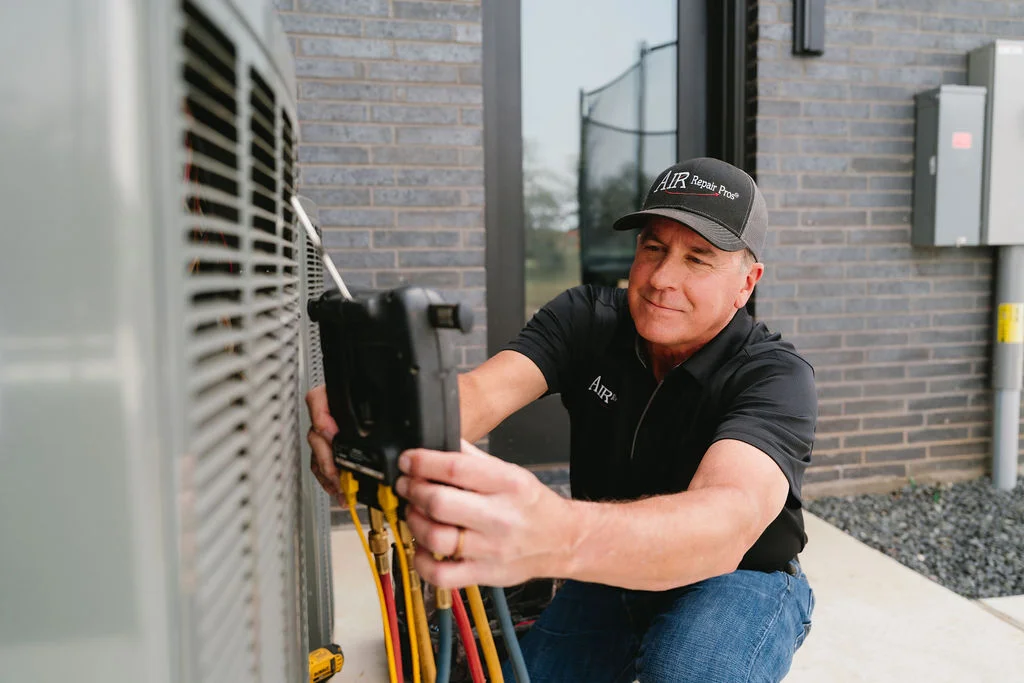
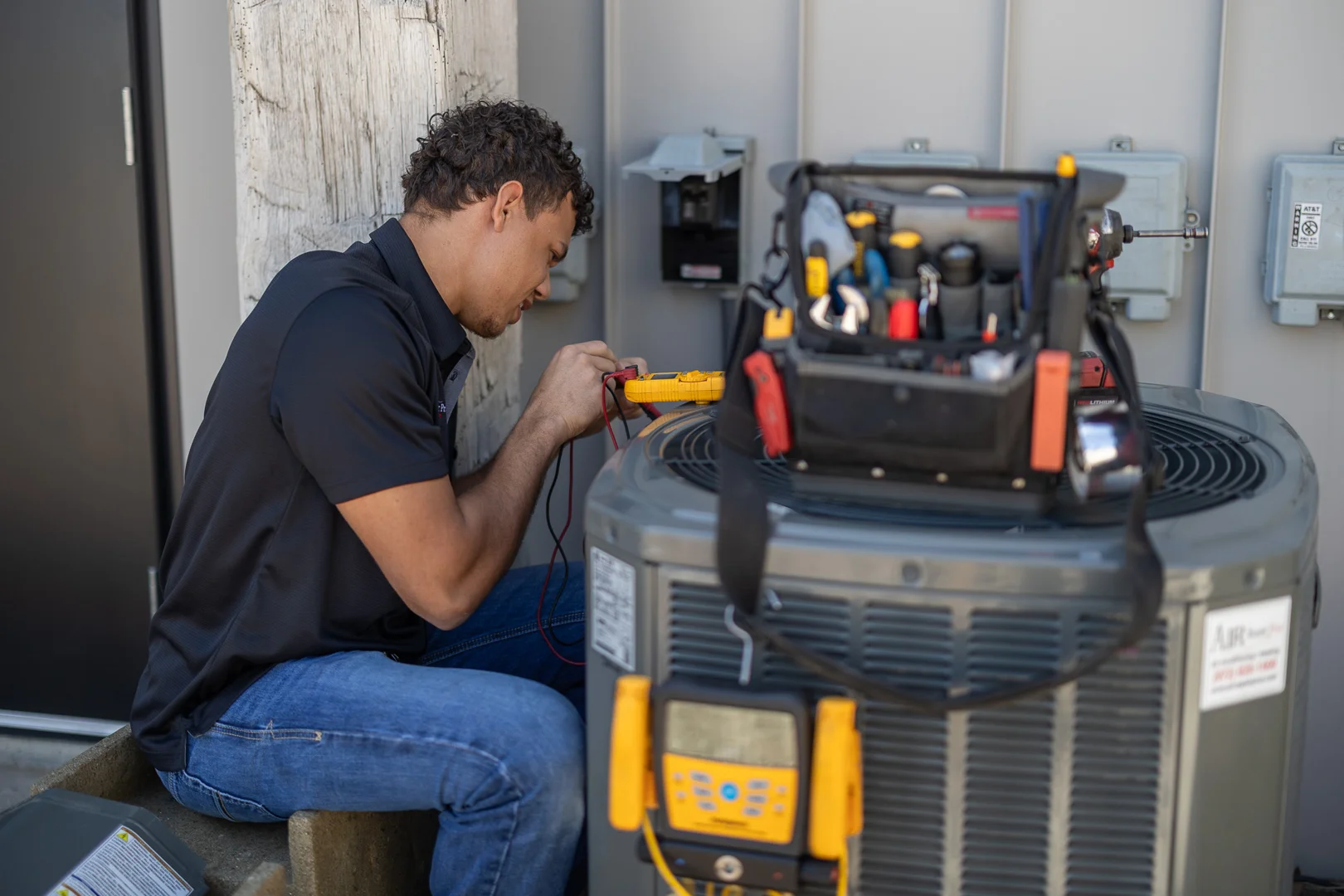
When dealing with chronic short cycling, scheduling comprehensive heat pump services allows certified technicians to verify system electronics, test compressor winding resistance, and confirm ductwork compatibility.
When Replacement Outweighs Repair
If a heat pump is severely oversized or nearing the end of its useful lifespan, continuing to pay for repairs yields diminishing returns. Reviewing how long heat pumps last shows that residential systems typically last 10 to 15 years in North Texas.
Replacing an improperly sized single-stage system with a properly calculated, high-efficiency variable-capacity heat pump restores indoor humidity control, prevents nuisance electrical tripping, and dramatically reduces monthly operating expenses.
Frequently Asked Questions About Heat Pump Sizing and Short Cycling
What causes a heat pump to short cycle in Plano homes?
Short cycling is most commonly caused by an oversized system, severely restricted airflow from dirty air filters or undersized ducts, low refrigerant levels from a leak, or a faulty thermostat placed in direct sunlight or drafty areas.
How does oversizing cause short cycling and high humidity?
An oversized heat pump cools the indoor air down to the thermostat setpoint in just a few minutes. Because moisture removal requires extended air contact across a cold evaporator coil, the unit shuts down before condensing indoor humidity, leaving the home feeling cool but clammy.
What is the rule of thumb for heat pump tonnage per square foot?
Contractors often used a rule of thumb of one ton per 500 square feet, but this method is inaccurate for modern heat pumps. Proper sizing requires an ACCA Manual J load calculation that accounts for window orientation, insulation levels, ceiling height, and local weather design temperatures.
How do cooling-dominant climates affect heat pump sizing calculations?
In cooling-dominant areas like North Texas, equipment is primarily sized to satisfy the peak summer cooling and dehumidification load. Winter heating capacity is then evaluated, and auxiliary electric heat strips are sized to cover any heating deficit during sub-freezing temperatures.
What is a thermal balance point in heat pump sizing?
The thermal balance point is the specific outdoor temperature where a heat pump’s heating output exactly matches the heat loss of the home. When outdoor temperatures drop below this point, supplemental heating sources must engage to maintain the indoor setpoint.
Can a variable-speed heat pump solve short-cycling issues?
Yes. Variable-speed heat pumps feature inverter-driven compressors that can throttle their capacity down to 25% or 30% of maximum output. This allows the system to run continuous, low-speed cycles during mild weather, preventing short cycling and maximizing dehumidification.
How does ductwork sizing impact heat pump cycling behavior?
Undersized or restrictive ductwork creates high external static pressure, reducing airflow across the heat pump coils. This causes the system to overheat in heating mode or freeze in cooling mode, which trips high- or low-pressure safety switches and forces the unit to shut down prematurely.
What efficiency ratings matter most when sizing a heat pump?
Key ratings include SEER2 (Seasonal Energy Efficiency Ratio 2) for cooling efficiency, HSPF2 (Heating Seasonal Performance Factor 2) for winter heating efficiency, and COP (Coefficient of Performance) at specific low-temperature operating points.
What are the risks of undersizing a heat pump?
An undersized heat pump will run continuously without satisfying the thermostat on hot summer afternoons, leading to elevated indoor temperatures. In winter, an undersized unit relies excessively on electric resistance backup heat, significantly increasing utility bills.
When should a homeowner request a Manual J load calculation?
A Manual J calculation should be requested whenever replacing an existing HVAC system, completing home additions, installing new energy-efficient windows, or adding insulation to the attic and walls.
Conclusion: Restoring Efficiency and Comfort to Your Plano Home
A heat pump trapped in a continuous cycle of short run times costs more to operate, wears out expensive mechanical components, and fails to control North Texas humidity. Achieving balanced indoor comfort requires selecting equipment that matches the specific thermal characteristics of your home rather than relying on outdated rules of thumb. By following standard load calculation protocols, maintaining balanced duct static pressures, and selecting variable-capacity technology, homeowners in Plano, TX can enjoy quiet, efficient cooling and dependable winter heating all year round.
The certified team at Air Repair Pros has provided reliable, high-performance heating and cooling solutions to Collin County homeowners since 1998. With fully stocked service trucks and advanced diagnostic capabilities, our technicians resolve complex cycling and airflow issues on the first visit. To ensure your home is paired with an accurately sized system, contact our professional heat pump specialists today for a comprehensive load calculation and system assessment.