

By understanding how much energy your home uses, you can make informed choices about reducing your consumption.
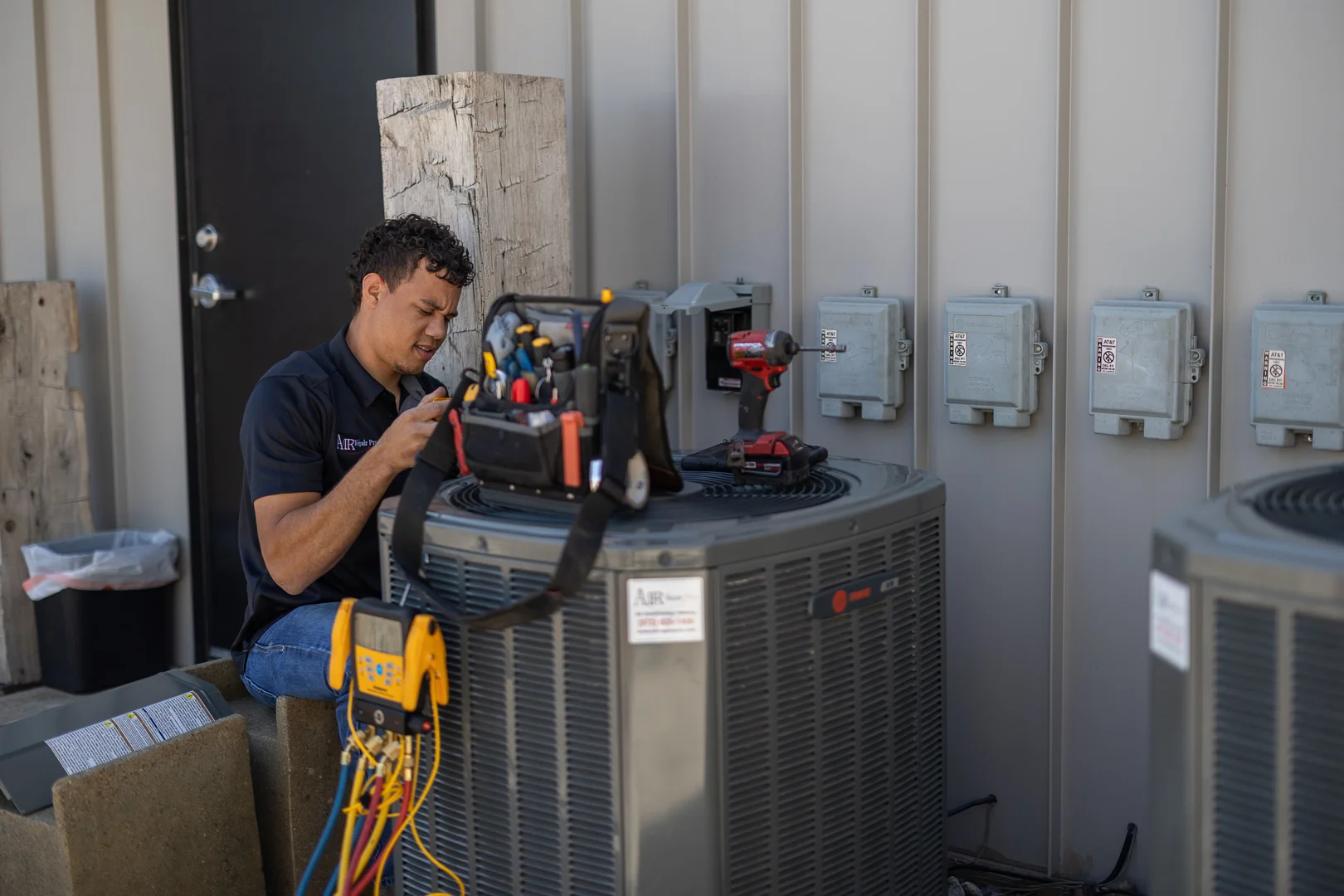
Understandably, one of your home’s biggest “energy hogs” is your heating and cooling system. It may be time for an upgrade if you have an older system. A newer, more efficient system can save you a significant amount of money on your energy bills each month and also help to reduce your carbon footprint.
But how do you know if your current system is inefficient or not?
Of course, there are the obvious signs of inefficiency: high energy bills, rooms that are either too hot or too cold, and so on. But there’s also a more scientific way to tell: by looking at your home’s “SEER rating.”
What is a SEER rating? In short, it measures how much cooling capacity your air conditioner has for each watt of energy it consumes. It’s calculated based on a “seasonal average,” – meaning how much cooling your system provides throughout an entire season. But, it’s also worth noting that the SEER rating of a system is based on the “maximum” efficiency of which the system is capable. In other words, your actual SEER rating may be lower than the maximum, depending on how well your system is maintained.
So, what’s a good SEER rating? Anything above 15 is considered “energy efficient.” If you’re unsure what your home’s current SEER rating is, you’ll find it on the yellow EnergyGuide label required by law to be affixed to all new air conditioners. If you can’t find the label, or if your air conditioner is more than a few years old, you can contact a local HVAC contractor to have your system evaluated.
Once you know your home’s current SEER rating, you can start shopping for a new, more efficient system. Because guess what? It does make a difference in cost and comfort over time. SEER ratings can go up to 21 or even higher for the most efficient models on the market today, meaning if you’re still using an old system with a SEER rating of 10, you could be paying nearly twice as much to operate it than you would for a brand new, energy-efficient model.
And as a bonus, many utility companies offer rebates and other incentives for upgrading to a more efficient system. So, not only can you save money on your energy bills, but you may also be able to get some money back from your utility company. ENERGY STAR has offered a federal tax credit program in the past, and there’s the potential of being renewed for the 2022 tax year. You can check online at energystar.gov/about/federal_tax_credits for updates.
So, if you’re ready to start saving money and reducing your carbon footprint, it’s time to start shopping for a new air conditioner – and be sure to pay attention to that all-important SEER rating.
Give Air Repair Pros a call anytime at [csad_phone], and we’ll come out to help you right away!