Air Conditioning System Basics
Typically an air conditioning system for a home is an electric compressor-cycle system. Usually, an air conditioning system is either a packaged units or a split system.
Regardless of the system style, the components and method of operation are similar for all electric compression-cycle systems. The major elements are an evaporator coil, a condenser coil, fans to circulate air over both coils, tubing to carry a refrigerant between the two coils, a compressor to move the refrigerant through the system, and a metering device to regulate the rate of refrigerant flow.
Heating and cooling systems use several basic principles of physics to remove heat from within a house. The refrigerant absorbs heat when it changes from a liquid to a gas. The refrigerant also releases heat when it changes from a gas to a liquid and finally heat moves from a medium at a high temperature to a medium at a lower temperature.
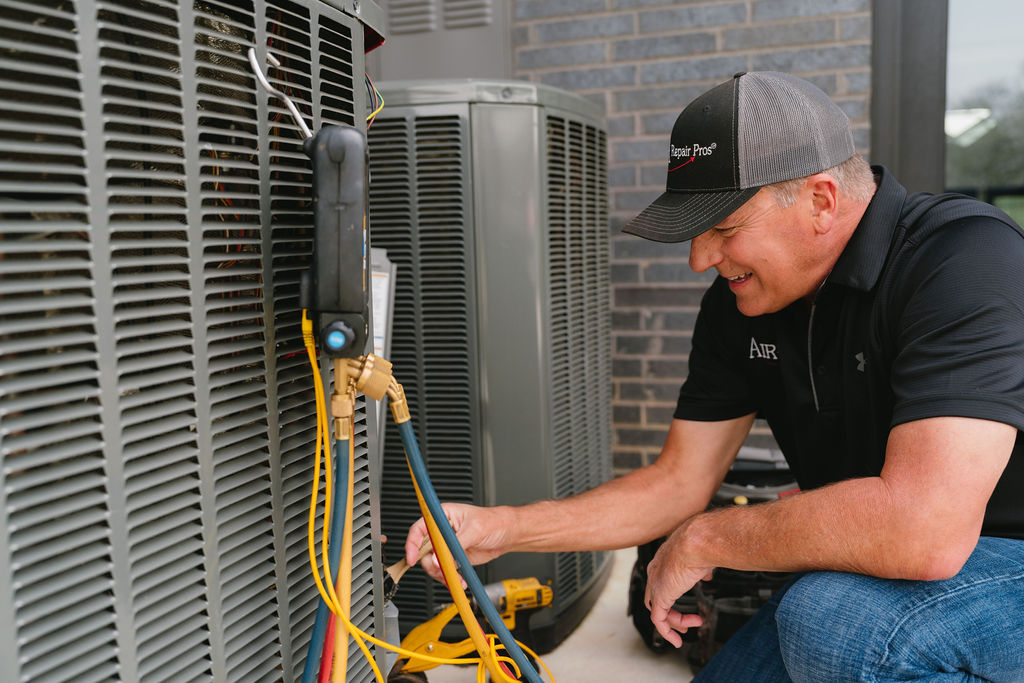
Once the liquid refrigerant passes into the evaporator it expands to a gas. Systematically, it absorbs heat from the homes air. As this heat transfer takes place, the temperature of the household air becomes noticeably cooler and is pushed through air ducts throughout the home. The refrigerant, which vaporizes into a gas in the evaporator and is pulled through the tubing into the compressor where it is compressed to a high-temperature, high-pressure gas. The refrigerant then passes into the condenser coil where it releases heat to the outdoor air, which is forced across the coil by second fan. During this process, the refrigerant condenses back to a liquid and is ready to begin another cycle.
Adequate airflow is also important for proper operation of your air conditioning system. Dirty filters and blocked air returns and outlets (supply registers) will result in imbalanced air distribution and uneven cooling. At least one return needs to be positioned near the ceiling.
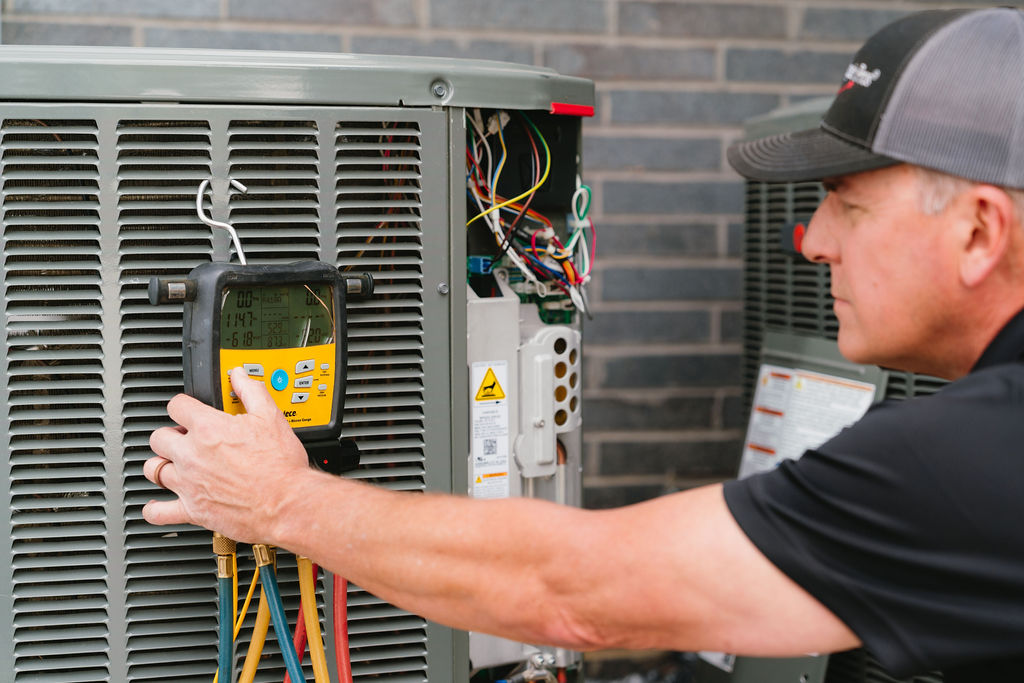
Central air conditioning systems do not require a large amount of maintenance, but some basic attention is required if the unit’s maximum economic life span is to be achieved. The first major element that may require replacement is usually the compressor. Unfortunately, it is also the most expensive component of the system. Also, an annual servicing of your air conditioning system is recommended.
Yearly preventative maintenance can increase equipment reliability, decrease energy consumption, ensure comfort levels, maximize system capacity, eliminate or minimize seasonal breakdown. Click Here to view our preventative maintenance plan. If you have any further questions or would like to schedule a service call, please feel free to contact Air Repair Inc. at (469) 333-2474