
When Your AC Stops Cooling, the Compressor Is Usually to Blame
The signs of ac compressor failure can show up suddenly — or creep in slowly over weeks. Either way, catching them early can save you hundreds, even thousands, of dollars in repairs.
Here are the most common signs your AC compressor is failing:
| Sign | What You’ll Notice |
|---|---|
| Warm air from vents | AC runs but doesn’t cool |
| Strange noises | Grinding, banging, or rattling sounds |
| Weak airflow | Less air coming through vents than usual |
| Refrigerant leaks | Moisture or oily residue near the outdoor unit |
| Tripped circuit breaker | Breaker trips repeatedly when AC runs |
| AC clutch not engaging | Compressor doesn’t kick on with the system |
| Frequent cycling | System turns on and off more than normal |
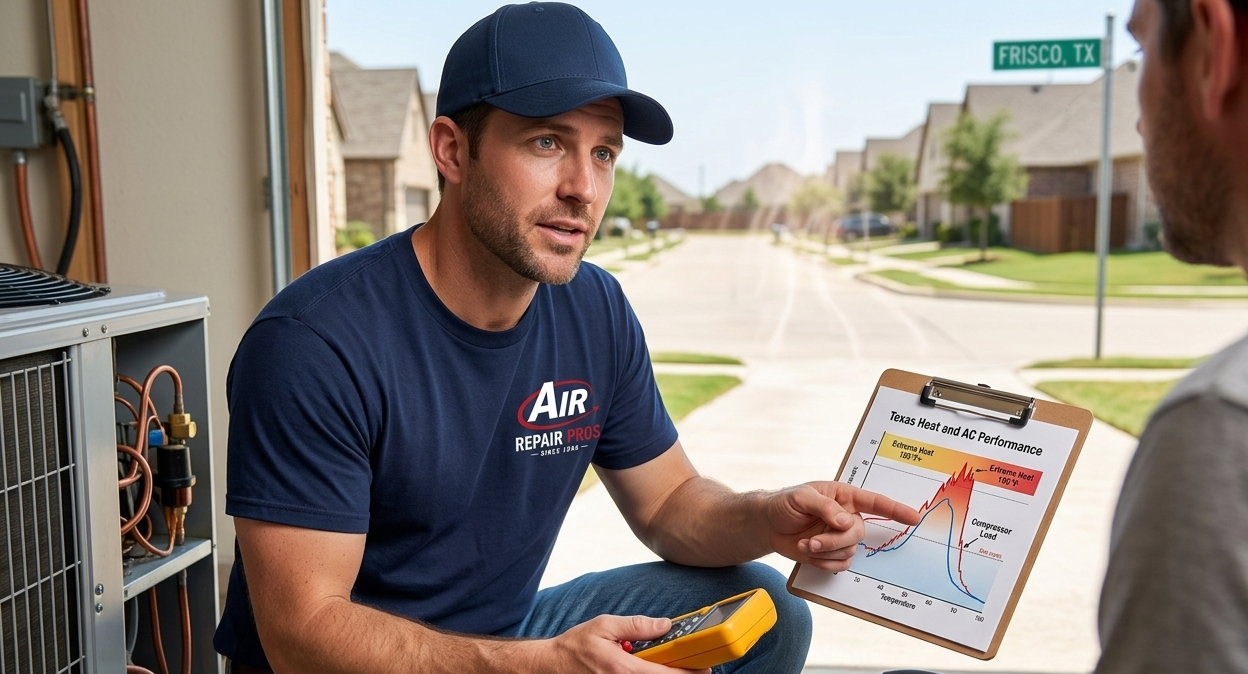
The compressor is the heart of your AC system. It pressurizes the refrigerant that makes cooling possible. When it starts to fail, nothing else in the system can do its job properly — and a North Dallas summer is no time to find that out the hard way.
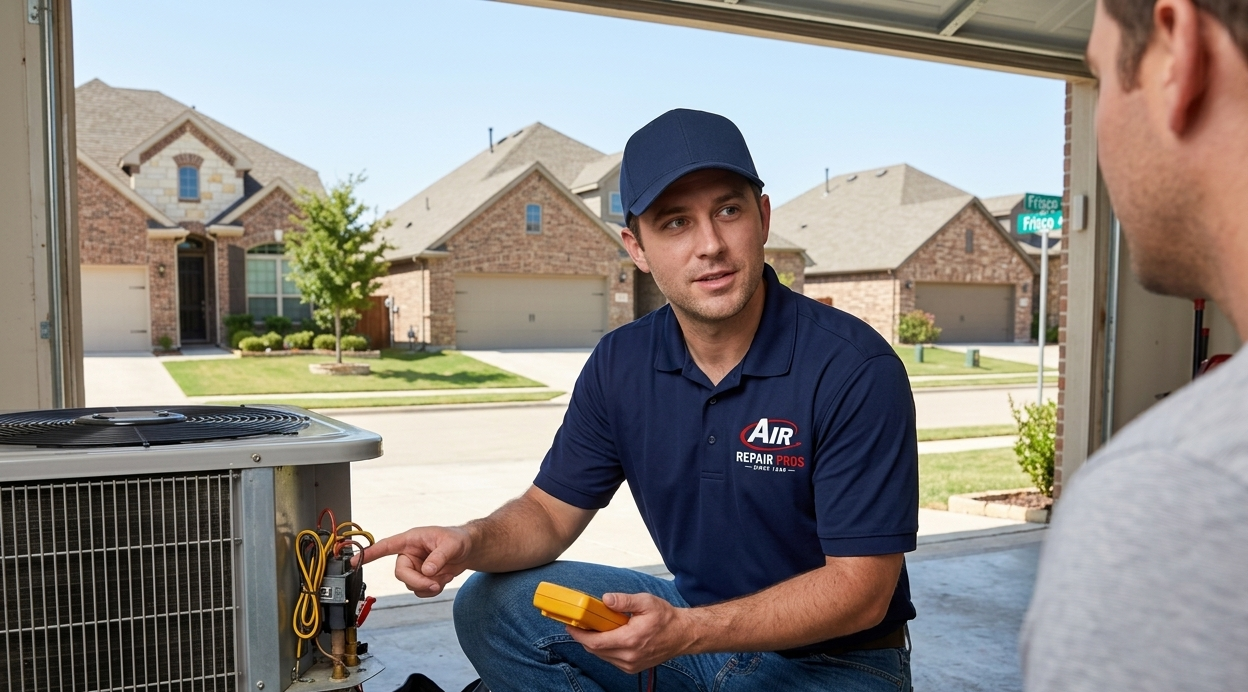
I’m Kara Kohlschmidt, Operations Manager at Air Repair Pros, where I work daily with our certified technicians on HVAC diagnostics including the signs of ac compressor failure across hundreds of residential and commercial systems. In the sections below, I’ll walk you through exactly what to look for — and what to do about it.

Understanding the Heart of Your HVAC System
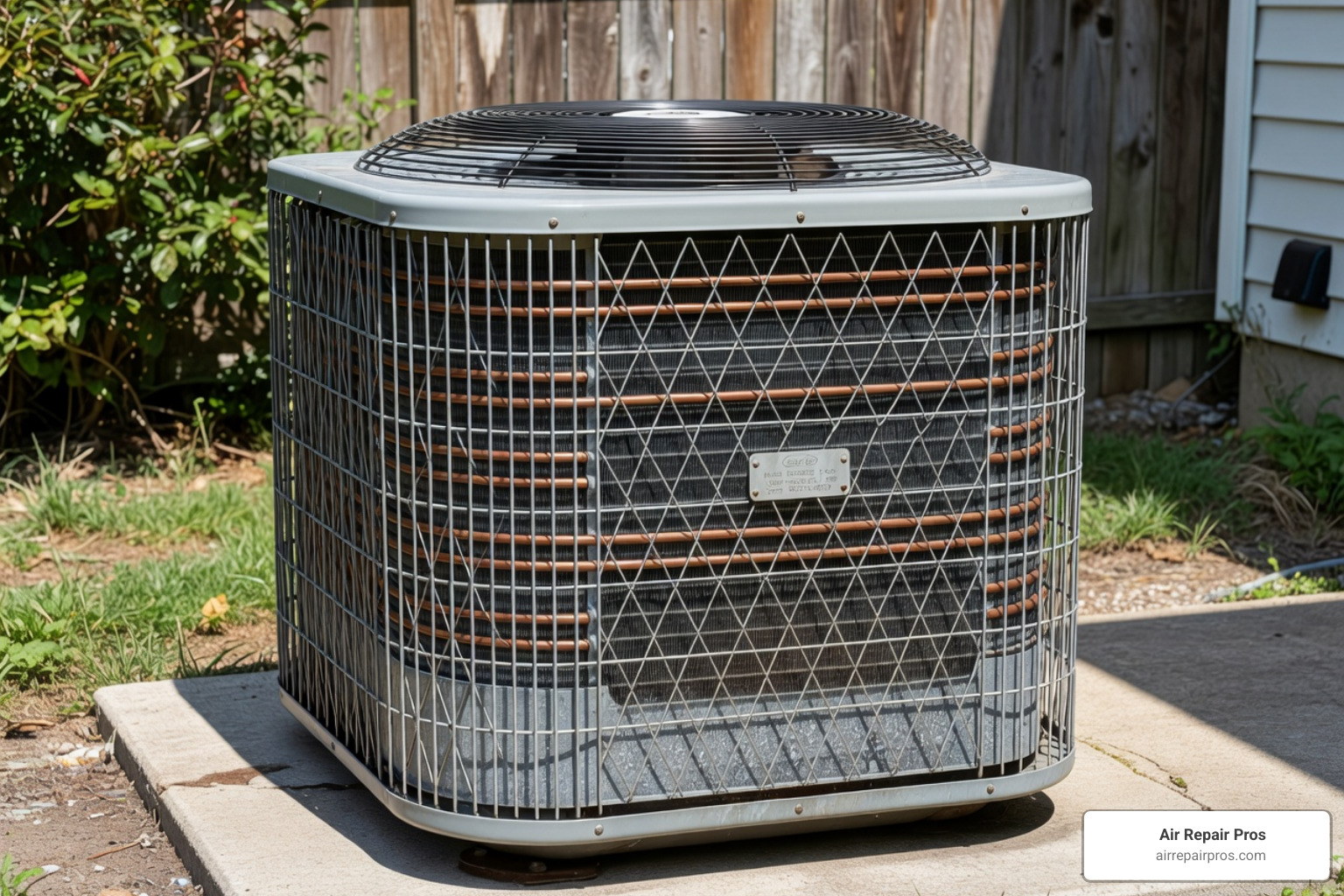
To understand why the signs of ac compressor failure are so devastating to your comfort, you first need to know what this component actually does. In the HVAC world, we often call the compressor the “heart” of the system. Just as your heart pumps blood to keep your body functioning, the compressor pumps refrigerant through the entire cooling loop.
Located inside your outdoor unit (the condenser), the compressor’s primary job is to take low-pressure, cool refrigerant gas and squeeze it into a high-pressure, hot gas. This compression is the “engine” of the refrigeration cycle. Once pressurized, the refrigerant moves to the condenser coils to release heat outdoors, then travels back inside to your evaporator coils to soak up the heat from your home’s air.
Without a functioning compressor, the refrigerant simply sits still. There is no heat exchange, no moisture removal, and—most importantly for those of us in Frisco and North Dallas—no cold air. Because the compressor is the only major moving part in the outdoor unit, it is under constant mechanical and electrical stress, making it one of the most common points of failure in aging systems.
7 Critical Signs of AC Compressor Failure
When a compressor begins to struggle, it rarely goes quietly. It will usually give you several warning signals. Recognizing these signs of ac compressor failure early can be the difference between a manageable repair and a total system replacement.
| Feature | Normal Operation | Failure Symptom |
|---|---|---|
| Air Temperature | Consistently cold (approx. 15-20° drop) | Lukewarm or room temperature |
| Sound Level | Low hum or steady fan whir | Banging, clanging, or loud screeching |
| Airflow | Strong, steady stream from vents | Weak, wispy, or inconsistent airflow |
| Electrical | Steady power draw | Repeatedly tripped circuit breakers |
| Startup | Smooth engagement | “Hard starting” or visible unit shaking |
If you notice your system behaving erratically, it is important to investigate ac-compressor-issues before the unit seizes up entirely.
Warm Air: Early Signs of AC Compressor Failure
The most obvious indicator that something is wrong is when your vents start blowing lukewarm air. You might find yourself constantly nudging the thermostat lower, but the house never actually gets cooler.
This happens because a failing compressor can no longer adequately pressurize the refrigerant. If the pressure is too low, the refrigerant cannot absorb heat effectively. While this can also be caused by a simple refrigerant leak, a failing compressor is often the root cause of these pressure imbalances. If you’ve checked your thermostat settings and your air filter is clean, but the air is still warm, your compressor is likely struggling to do its job.
Strange Noises: Auditory Signs of AC Compressor Failure
Your AC should produce a predictable, rhythmic hum. If you start hearing sounds that belong in a heavy metal concert rather than your backyard, take note.
- Grinding or Screeching: This often indicates that internal bearings are worn out or the motor is seizing.
- Metallic Banging or Clanging: This is a major red flag. It usually means a component inside the sealed compressor housing has broken loose and is physically hitting the casing.
- Ticking or Chattering: This often points to an electrical issue, such as a failing relay or a “hard start” condition where the compressor is fighting to turn over.
Ignoring these auditory signs of ac compressor failure can lead to “slugging,” where liquid refrigerant enters the compressor and causes catastrophic mechanical damage. You can read more about identifying these sounds in our guide on signs-of-ac-compressor-failure.
Electrical Issues and Tripped Breakers
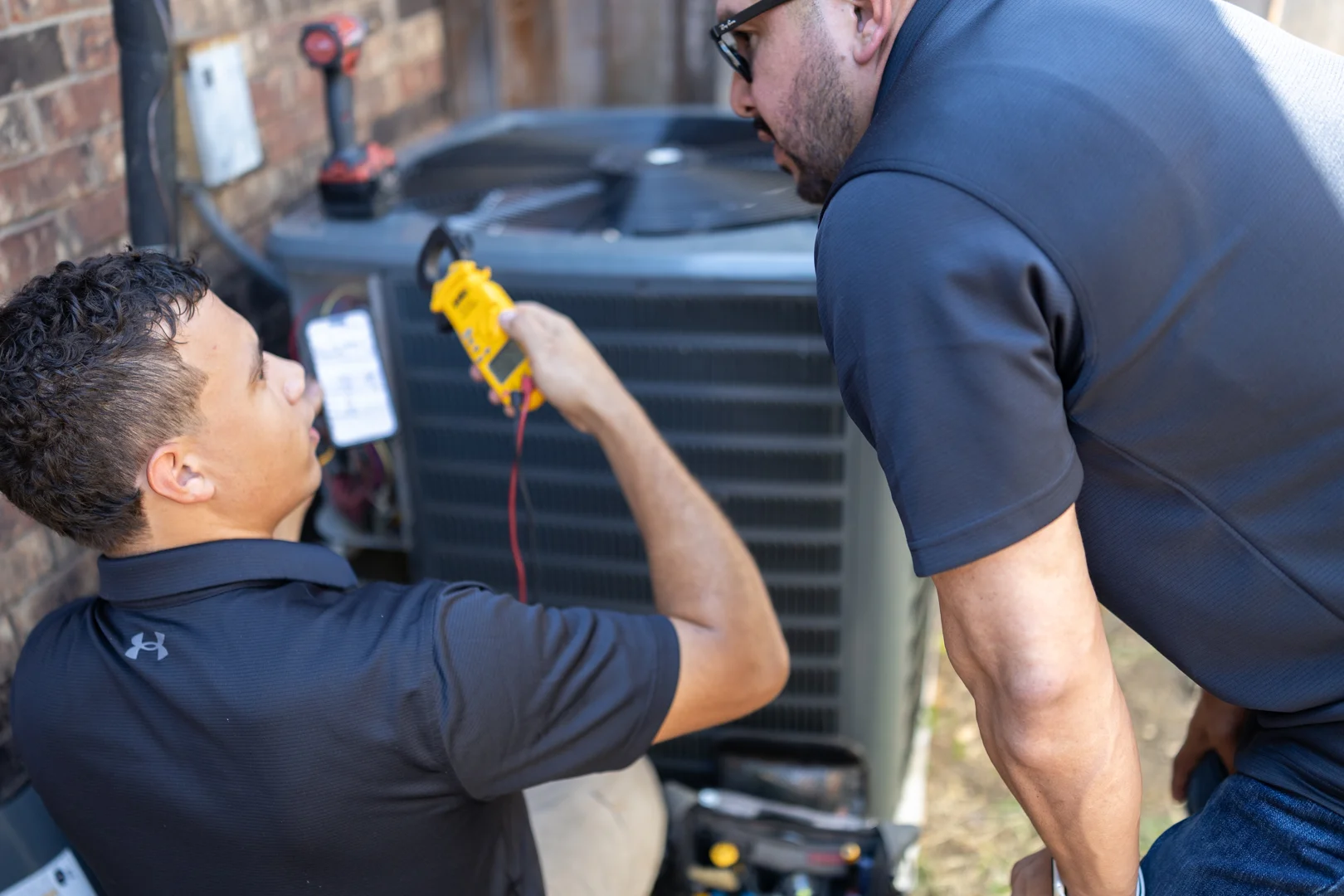
A compressor that is beginning to fail will often “draw” more electricity than it’s supposed to. As internal parts wear down, the motor has to work harder to turn, creating excessive heat and pulling high amperage.
If your AC causes the circuit breaker to trip, do not keep resetting it. The breaker is doing its job—protecting your home from a potential electrical fire. A compressor that repeatedly trips the breaker is likely overheating or has an internal electrical short. This “hard starting” puts immense strain on your home’s electrical system and can lead to a total burnout of the compressor motor.
What Causes an AC Compressor to Fail?
In our experience serving the North Dallas area since 1998, we’ve found that compressors don’t usually fail without a reason. While they are designed to last 12 to 15 years, certain factors can cut that lifespan short:
- Dirty Condenser Coils: When the outdoor coils are caked with Texas dust and grime, the system can’t dissipate heat. This causes the compressor to run at much higher temperatures, eventually “cooking” the internal components.
- Refrigerant Leaks: Low refrigerant levels force the compressor to work twice as hard to move the same amount of heat. It also means there is less oil circulating to lubricate the moving parts.
- Contaminated Oil: Moisture or acid in the refrigerant lines can degrade the compressor’s lubricant, leading to mechanical seizure.
- Electrical Surges: North Dallas storms can bring power surges that damage the sensitive start capacitors or the motor windings inside the compressor.
- System Age: Like any mechanical part, a compressor eventually wears out. After 15 years, the metal fatigue and electrical wear simply take their toll.
Repair vs. Replacement: Costs and Lifespan
When faced with the signs of ac compressor failure, the big question is: should you fix it or replace the whole unit?
The Cost Factor: Replacing a compressor is one of the most expensive repairs in the HVAC world. Between the specialized part and the labor required to evacuate and recharge the refrigerant, costs typically range from $800 to $1,500. In some high-end or luxury systems, that price tag can exceed $2,000.
The Lifespan Factor: If your system is less than 10 years old and still under warranty, replacing the compressor is usually the smart move. However, if your unit is over 12 years old, we often recommend a full system replacement. Why? Because the new EPA regulations are phasing out R-410A refrigerant by 2025. Older systems using R-22 or even R-410A are becoming more expensive to maintain as supplies dwindle.
Investing $1,500 into a 13-year-old unit is often “throwing good money after bad.” A new, high-efficiency system will not only be more reliable but can also lower your North Dallas energy bills by 20% to 30%. You can find more detailed guidance on this choice at our ac-compressor-issues service page.
Frequently Asked Questions about Signs of AC Compressor Failure
Is it safe to run my AC with a bad compressor?
In short: No. If you notice the signs of ac compressor failure, shut the system off. Continuing to run a failing compressor can cause “acid burnout,” where the motor’s electrical insulation melts and contaminates the entire refrigerant line with acid. This can ruin the indoor coils and other components, turning a $1,000 repair into a $6,000 total system loss. There is also a small risk of electrical fire if the unit continues to draw excessive power.
Can a compressor be repaired or must it be replaced?
Residential AC compressors are “hermetically sealed” units. This means the motor and the compression pump are welded inside a steel can. You cannot simply open them up to replace a small internal part. If the internal mechanics or motor windings fail, the entire “can” must be replaced. While external parts like the start capacitor or the contactor can be repaired, the compressor itself is a replacement-only item.
How can I troubleshoot my compressor at home?
While most compressor work requires a certified professional, you can perform a few basic checks:
- Check the Filter: A clogged filter restricts airflow and mimics some compressor symptoms.
- Inspect the Breaker: Check your electrical panel to see if the AC circuit has tripped.
- Visual Inspection: Look at the outdoor unit. Is the fan spinning? Do you see oily residue (a sign of a refrigerant leak) around the base?
- Listen: Turn the AC on at the thermostat and stand near the outdoor unit. Do you hear the compressor “clunk” on, or does it just hum and then click off?
If these basic steps don’t solve the issue, it’s time to call in the pros.
Conclusion
Detecting the signs of ac compressor failure early is the best way to protect your home’s comfort and your wallet. Whether it’s a strange banging noise, a tripped breaker, or just air that isn’t as cold as it used to be, these symptoms are your system’s way of asking for help.
At Air Repair Pros, we have been serving the Frisco and North Dallas communities since 1998. We understand the unique challenges the Texas heat puts on your HVAC system. Our team of EPA-certified technicians arrives in fully stocked trucks—meaning we have the parts to fix 85% of issues in a single visit. We offer 24/7 emergency service to ensure you’re never stuck in a sweltering home for long.
If you live in Frisco, Little Elm, McKinney, or the surrounding North Dallas area and suspect your AC is on the fritz, don’t wait for a total breakdown. More info about AC compressor services is just a click away, or you can call us to schedule a professional diagnostic today. We’ll give you an honest assessment and help you decide the best path forward for your home and your budget.