The Silent Threat: Why Air Filtration is Essential
If you’re asking “What is air filtration?”, here’s a quick answer:
- Definition: air filtration is the process of removing contaminants like dust, allergens, smoke, and pollutants from indoor air.
- How it Works: Specialized filters capture these airborne particles as air passes through them.
- Purpose: To improve the quality of the air you breathe indoors, protecting your health and comfort.
We spend most of our lives indoors – often around 90 percent. That’s a lot of time breathing the air inside our homes and workplaces. Surprisingly, this indoor air can be three to five times more polluted than the air outside.
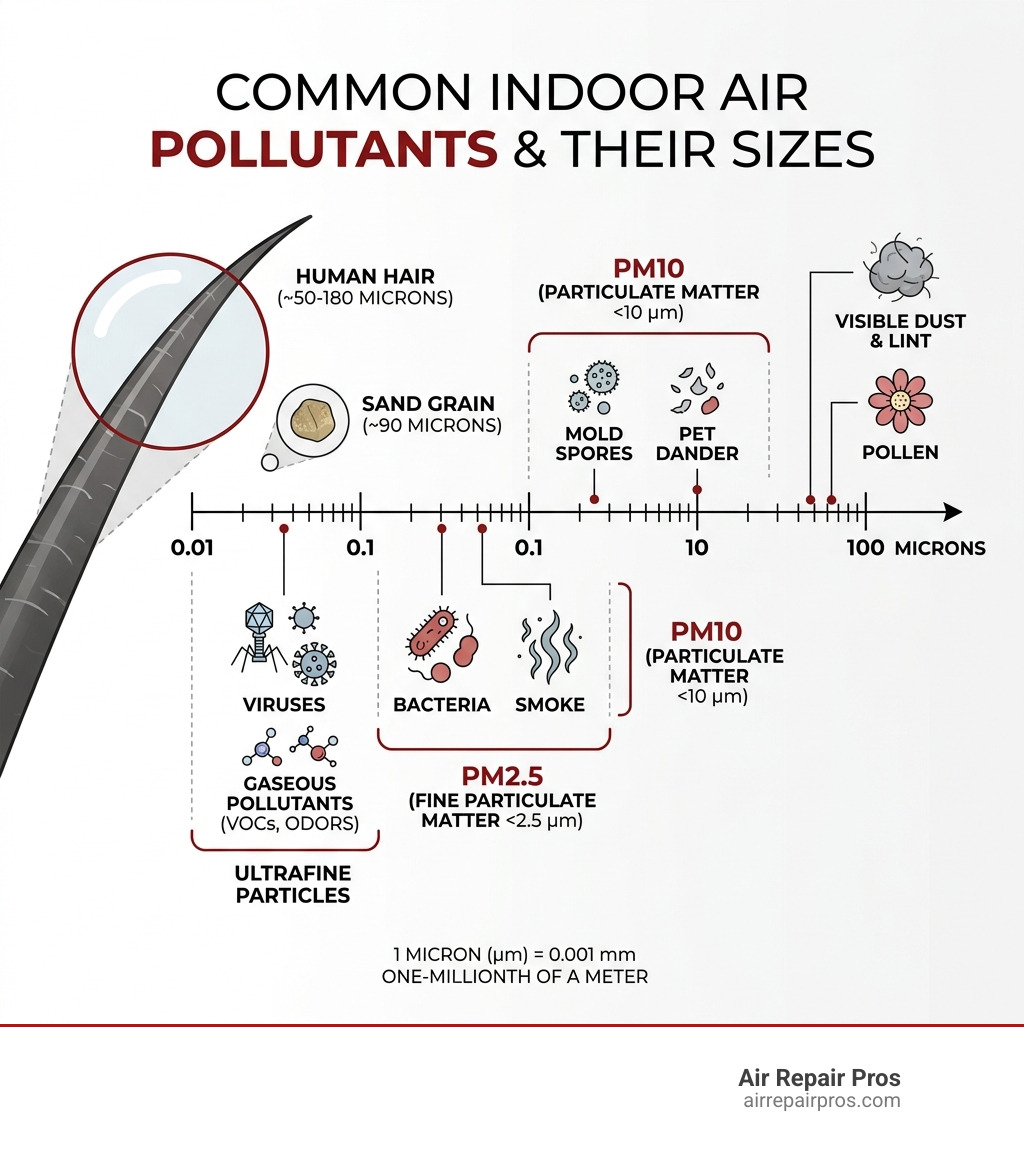
Think about it: cooking, pets, cleaning products, and even just daily living release countless particles into your home. These can include dust, pet dander, pollen, mold spores, and even microscopic viruses. Over time, these pollutants can affect your well-being, from allergies and asthma to general respiratory health.
That’s where air filtration comes in. It’s not just a luxury; it’s a vital part of creating a healthier living and working environment. By understanding how to clean your indoor air, you can significantly reduce your exposure to harmful airborne particles.
I’m Kara Kohlschmidt, Operations Manager at Air Repair Pros. My role involves ensuring our HVAC services are top-notch, and understanding air filtration is key to delivering excellent indoor air quality solutions for our North Dallas clients. This guide will walk you through everything you need to know to breathe easier.
How Air Filtration Works to Protect Your Home
When we talk about air filtration in a residential setting, we are usually looking at how we can trap “the bad stuff” before it reaches your lungs. At its core, most home systems rely on mechanical filtration. This isn’t magic; it’s a physical barrier. Imagine a very sophisticated net that allows air molecules to pass through but snags everything from cat hair to microscopic spores.
As your HVAC system pulls air from your rooms, it forces that air through a filter media. This media is typically made of fiberglass, polyester, or cotton fibers. These fibers are arranged in a dense, random mat. As the air twists and turns through this maze, particles get stuck.
However, we always tell our neighbors in Frisco and Plano that filtration is just one piece of the puzzle. According to the EPA, the most effective way to improve indoor air is a three-pronged approach:
- Source Control: Getting rid of the source of the pollution (like not smoking indoors).
- Ventilation: Bringing in fresh outdoor air.
- Filtration: Using Air Cleaners and Air Filters in the Home | US EPA to supplement the first two steps.
For many of us in North Texas, opening the windows in August isn’t exactly an option unless you enjoy living in a sauna. That makes high-quality air filtration even more critical for our comfort and health.

Understanding the Science of Air Filtration
You might think a filter works like a sieve—if a particle is bigger than the hole, it stops. While that’s true for large dust bunnies, the science of capturing tiny microscopic particles is much cooler. There are three main ways a mechanical filter traps particles:
- Impaction: Large, heavy particles travel in a straight line. When the air turns to go around a filter fiber, these “heavyweights” have too much momentum. They slam right into the fiber and get stuck.
- Interception: Mid-sized particles follow the airstream. If they pass close enough to a fiber, they “brush” against it and are captured.
- Diffusion: This is for the truly tiny particles (like viruses). They don’t move in straight lines; they zip around in a random, jagged pattern called Brownian motion. Because they are bouncing around so much, they eventually smack into a fiber and stay there.
Interestingly, there is a “sweet spot” called the Most Penetrating Particle Size (MPPS), usually around 0.3 microns. Particles at this size are too small for easy impaction but just large enough that they don’t bounce around wildly via diffusion. This is why the 0.3-micron standard is the benchmark for high-efficiency filters.
Portable Purifiers vs. Whole-Home Systems
We often get asked if a small “plug-in” air purifier is enough. The answer depends on your goals.
Portable Air Purifiers: These are great for single rooms. They use a Clean Air Delivery Rate (CADR) to tell you how much air they can clean per minute. They are perfect if you want extra protection in a bedroom or home office. However, they only treat the air in that specific area.
Whole-Home Systems: These are integrated directly into your HVAC ductwork. Every time your heater or air conditioner runs, 100% of the air in your home is being treated. This provides a consistent level of protection for every room, from the kitchen to the laundry room. If your system isn’t running properly, it can’t filter the air, which is why keeping up with air conditioning repair is so important for your air quality.
Comparing Filter Types: HEPA, Carbon, and MERV Ratings
Not all filters are created equal. If you go to a big-box store in McKinney or Allen, you’ll see a dizzying array of options. To make sense of them, you need to understand the MERV (Minimum Efficiency Reporting Value) scale.
MERV ratings range from 1 to 20. The higher the number, the better the filter is at capturing small particles.
| MERV Rating | Efficiency Category | Common Particles Captured |
|---|---|---|
| MERV 1-4 | Low Efficiency | Large dust, carpet fibers, lint |
| MERV 5-8 | Medium Efficiency | Mold spores, hair spray, cement dust |
| MERV 9-12 | High Efficiency | Lead dust, auto emissions, flour |
| MERV 13-16 | Premium Efficiency | Bacteria, smoke, sneeze droplets |
| MERV 17-20 | HEPA Grade | Viruses, carbon dust, tiny allergens |
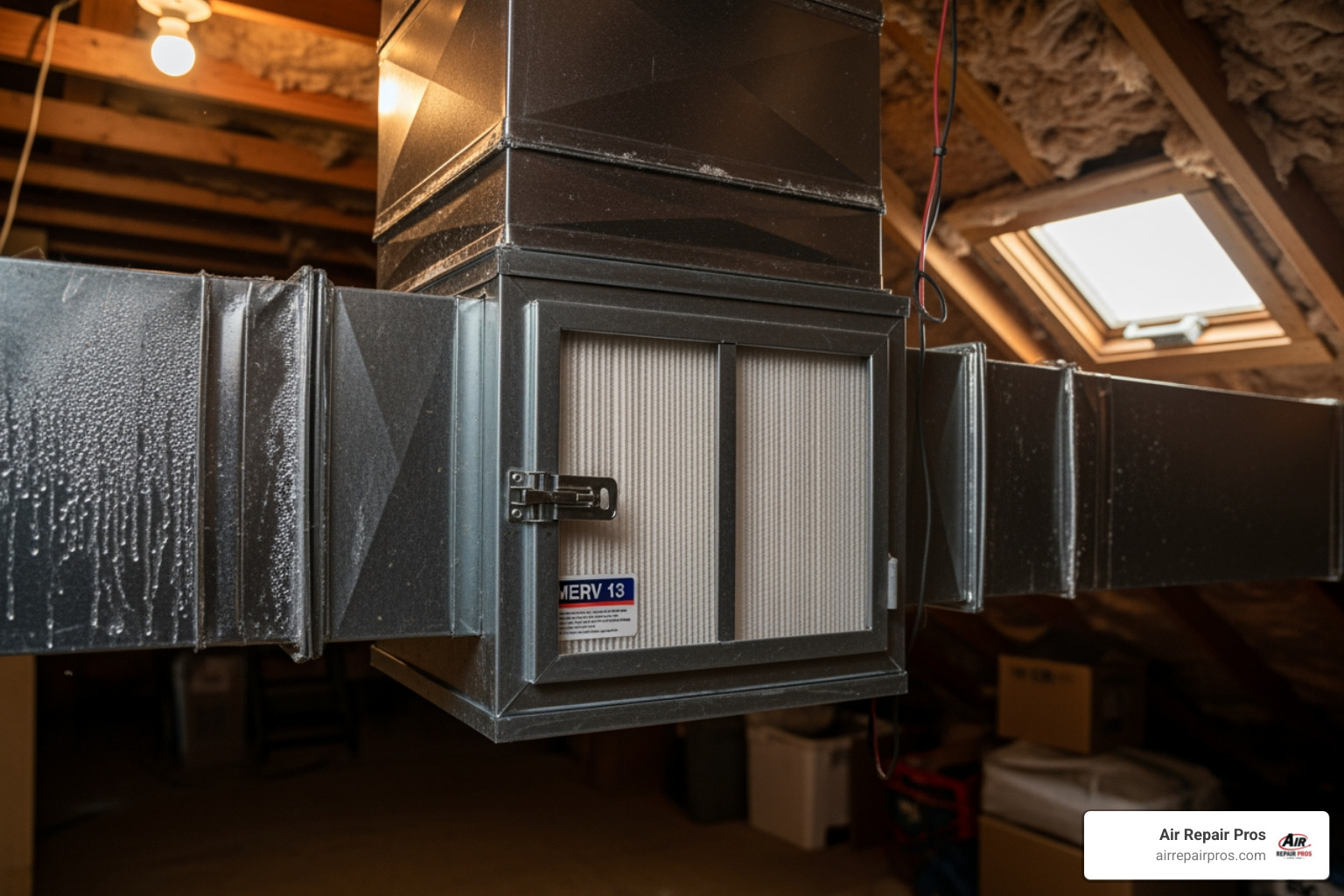
Most older homes were designed for MERV 1-4 fiberglass filters, which mostly just protect the equipment from big dust chunks. For better health, we generally recommend upgrading to at least a MERV 11 or 13, provided your system can handle the airflow. You can learn more about these standards in the Indoor Air Filtration Factsheet.
The Role of HEPA in Air Filtration
HEPA stands for High-Efficiency Particulate Air. To be a true HEPA filter, it must meet a strict ASME standard: it must remove at least 99.97% of particles that are 0.3 microns in size.
While HEPA filters are the gold standard for hospitals and clean rooms, they can be tricky for residential HVAC systems. Because they are so dense, they can restrict airflow, making your blower motor work much harder. This is why many homeowners choose portable HEPA units for specific rooms while using high-MERV filters in their central system. You can read more about the HEPA Filter Standards and History to see how this technology evolved from the Manhattan Project to our modern living rooms.
Activated Carbon and Gas-Phase Filtration
Mechanical filters are great for particles (dust, dander, pollen), but they are useless against gases and odors. If you’ve ever cooked fish or dealt with “wet dog” smell, you know that particles aren’t the only problem.
Activated carbon filters use a process called adsorption (with a ‘d’). The carbon is treated with oxygen to open up millions of tiny pores between the carbon atoms. These pores act as a chemical magnet, trapping Volatile Organic Compounds (VOCs), smoke odors, and chemical vapors. If you live near a busy North Dallas highway or have a house full of pets, a combination of HEPA and activated carbon is the ultimate “one-two punch” for clean air.
Optimizing HVAC Performance and Air Quality
One mistake we see often in Frisco and Allan is homeowners buying the thickest, most expensive filter they can find and stuffing it into a system not designed for it. This is like trying to breathe through a thick wool sweater while running a marathon—it stresses the system!
When we install high-efficiency filters (like MERV 13-16), we have to ensure the “static pressure” remains within safe limits. If the filter is too restrictive, it can actually reduce the lifespan of your HVAC unit.
One pro tip we recommend: Continuous Fan Operation. Most thermostats have a “Fan” setting that can be switched from “Auto” to “On.” When set to “On,” the fan runs even when the AC isn’t cooling. Research shows that running the fan continuously can reduce particle concentrations by as much as 24%. It keeps the air moving through your filters constantly.
To make sure your system is ready to handle higher-level filtration without breaking a sweat, it’s a good idea to schedule a regular AC tune-up. Our technicians can check the airflow and ensure your system is optimized for both comfort and air purity.
Maintenance, Safety, and Emerging Technologies
Even the best air filtration system is only as good as its last maintenance check. A clogged filter doesn’t just stop cleaning the air; it can actually become a source of pollution as particles “blow off” the surface and back into your home.
- Standard 1-inch filters: Change every 30-90 days.
- Media filters (4-5 inch): These can often last 6-12 months.
- Electronic Air Cleaners: These need their collector plates washed every month or two.
We also want to touch on safety. Some air cleaners on the market produce ozone as a byproduct. Ozone is a known lung irritant and should be avoided in occupied spaces. When choosing a system, always look for CARB (California Air Resources Board) certification, which ensures the device meets strict ozone emission limits.
Emerging technologies like Bipolar Ionization and UV-C light are becoming more popular. UV-C light, for example, doesn’t “trap” particles; it uses ultraviolet radiation to scramble the DNA of bacteria and viruses, rendering them harmless. For more on how these technologies interact with health concerns, check out the Air Cleaners, HVAC Filters, and Coronavirus (COVID-19) | US EPA.
DIY Air Cleaners and Emergency Solutions
Sometimes, you need a solution now. During wildfire season or periods of high pollution, commercial air purifiers can sell out quickly. Enter the “Corsi-Rosenthal Box.”
This is a DIY air cleaner made by taping four or five MERV 13 filters into a cube and placing a standard box fan on top. While it looks like a high school science project, independent testing has shown these can be incredibly effective at reducing airborne particles. They are a great, low-cost temporary solution for households in North Dallas when outdoor air quality takes a dip. Just remember, they aren’t a permanent replacement for a professionally managed HVAC filtration system!
Frequently Asked Questions about Air Filtration
Do air purifiers produce harmful ozone?
Most modern mechanical filters (like HEPA or pleated filters) do not produce any ozone. However, some older ionizers or “ozone generators” do. We recommend sticking to mechanical filtration or electronic cleaners that are certified ozone-safe. Ozone is great for the upper atmosphere, but not so great for your living room.
How often should I change my home air filters?
In North Texas, we have a lot of pollen and dust. If you have pets or suffer from seasonal allergies, we suggest checking your 1-inch filters every 30 days. If you use a thicker media filter, you can usually go 6 months. A good rule of thumb: if it looks grey and “fuzzy,” it’s time for a change!
Can air filtration protect against viruses like COVID-19?
Yes, but with caveats. Viruses are very small (0.1 to 1 micron), but they often travel on larger droplets. HEPA filters and MERV 13+ filters are very effective at capturing these particles. However, filtration should always be used alongside other public health measures. It’s about reducing the “viral load” in the air.
Conclusion
Improving your home’s air filtration is one of the best investments you can make for your family’s health. From reducing allergy symptoms to protecting your expensive HVAC equipment, the benefits are clear:
- Fewer Allergies: Trap pollen and pet dander before they trigger a sneeze.
- Better Sleep: Clean air can lead to deeper, more restful sleep.
- Dust Reduction: Spend less time cleaning surfaces and more time enjoying your home.
- System Longevity: Clean filters keep your HVAC system running efficiently for years.
At Air Repair Pros, we’ve been serving our neighbors in Frisco, Allen, McKinney, and throughout North Dallas since 1998. Our certified technicians arrive in fully stocked trucks, ready to help you find the perfect indoor air quality solution. Whether you need a filter upgrade, a system tune-up, or a whole-home purifier, we’re here 24/7 to ensure you breathe easy.
For more expert advice on indoor air quality management, give us a call today. We’re proud to keep our community comfortable and healthy, one home at a time!