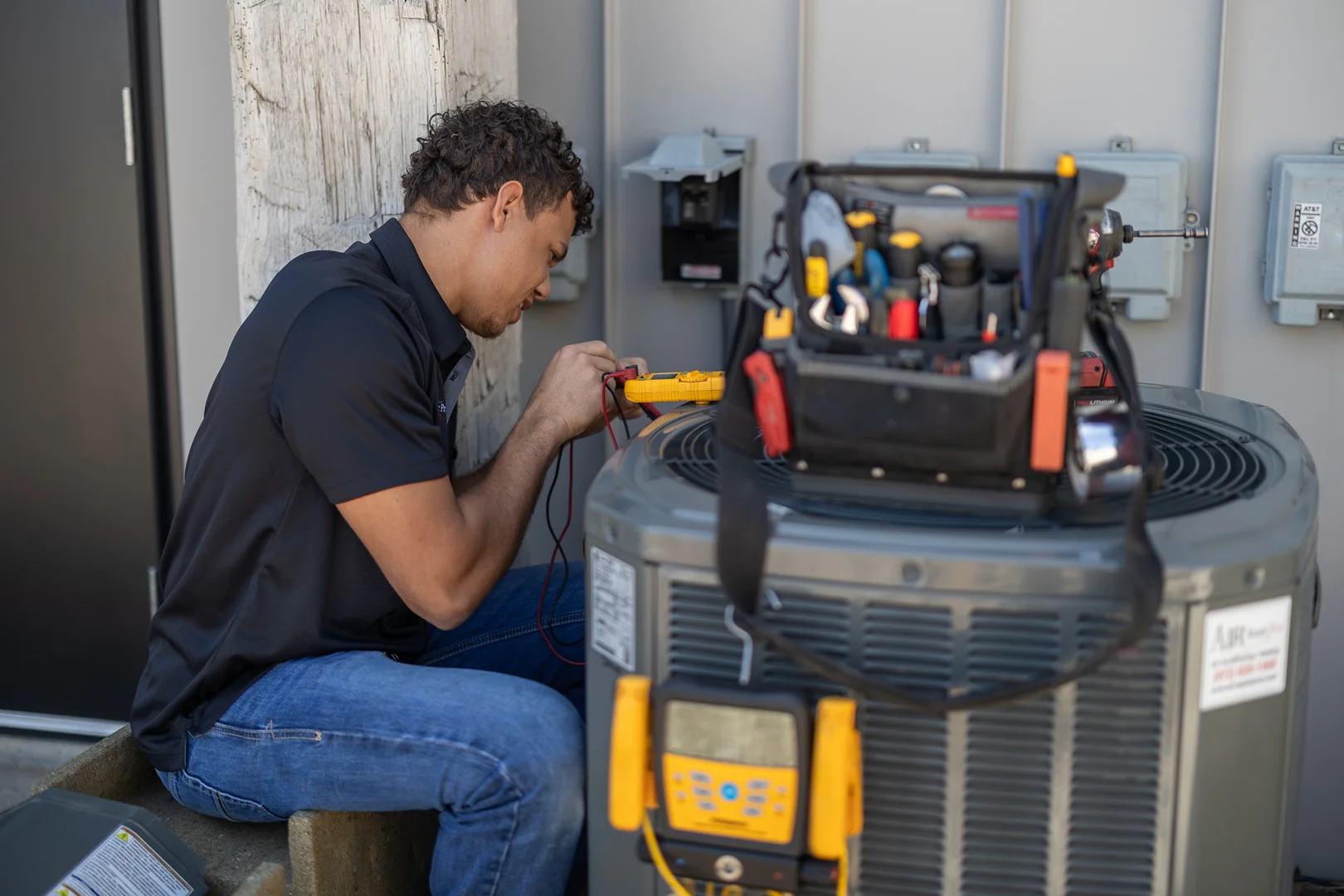

Start These Habits to Prevent AC Breakdowns
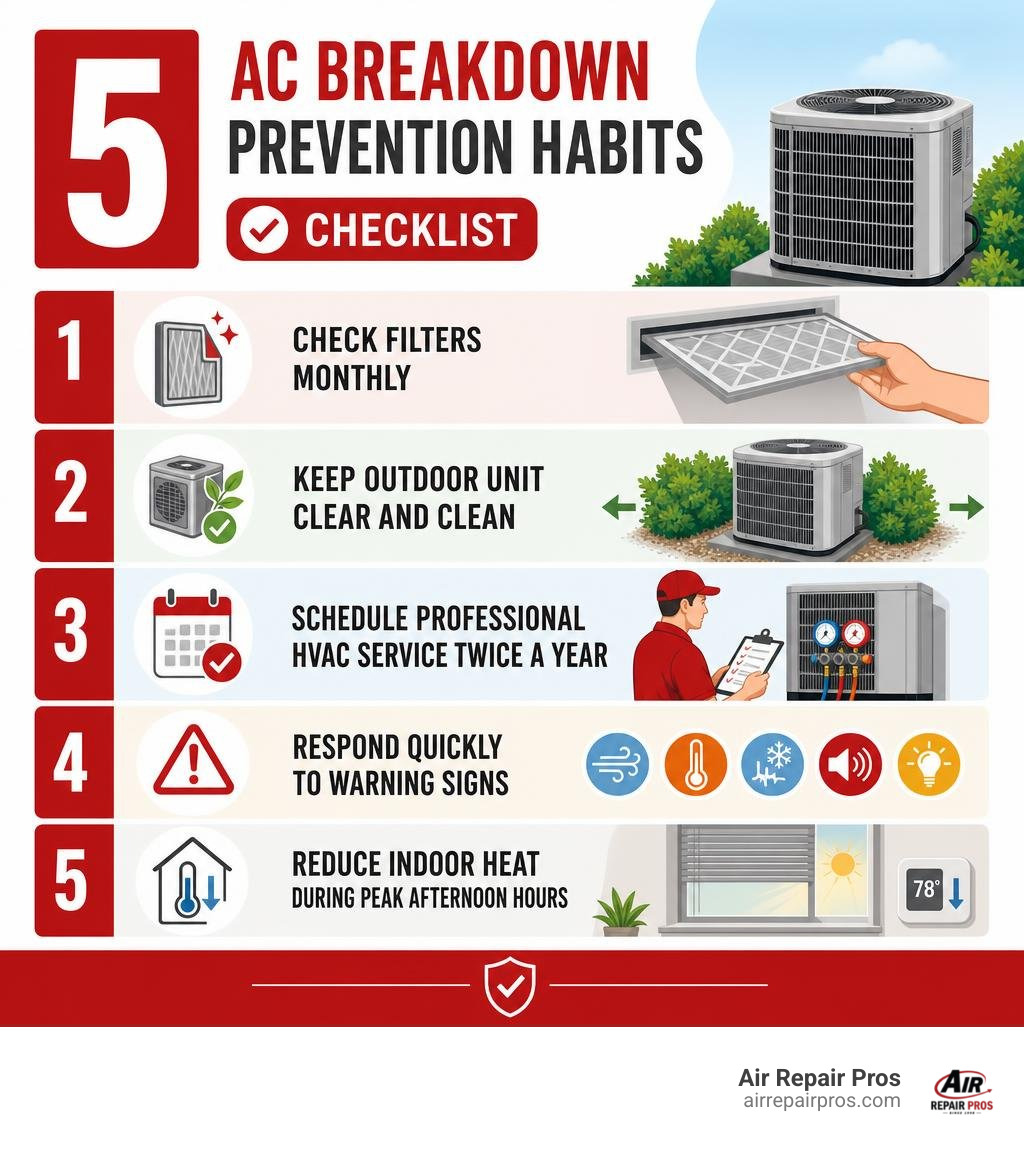
To help prevent AC breakdown during a North Texas summer, build five simple habits: check filters monthly, keep the outdoor unit clear and clean, schedule professional HVAC service twice a year, respond quickly to warning signs, and reduce indoor heat during peak afternoon hours.
A clogged filter, dirty condenser coil, weak electrical part, or small refrigerant problem can force an AC system to run longer and hotter. In severe heat, that added strain can turn a minor issue into an emergency repair.
For busy homeowners and business owners in North Dallas, TX, prevention matters. Your AC may run for much of the day during a heat wave, so small maintenance tasks can protect comfort, energy use, and equipment life. Air Repair Pros recommends addressing trouble early, before weak airflow, warm air, ice, unusual noises, or a rising electric bill become a full shutdown.
Why Cooling Systems Fail Under Severe Weather Stress
When summer arrives in North Texas, cooling systems face relentless operational demands. In cities like Frisco, Texas, Plano, Texas, and McKinney, Texas, afternoon temperatures consistently push equipment to their design limits. Unlike moderate climates where an AC cycles on and off periodically throughout the day, extreme heat waves can require units to operate almost continuously for twelve to eighteen hours daily.
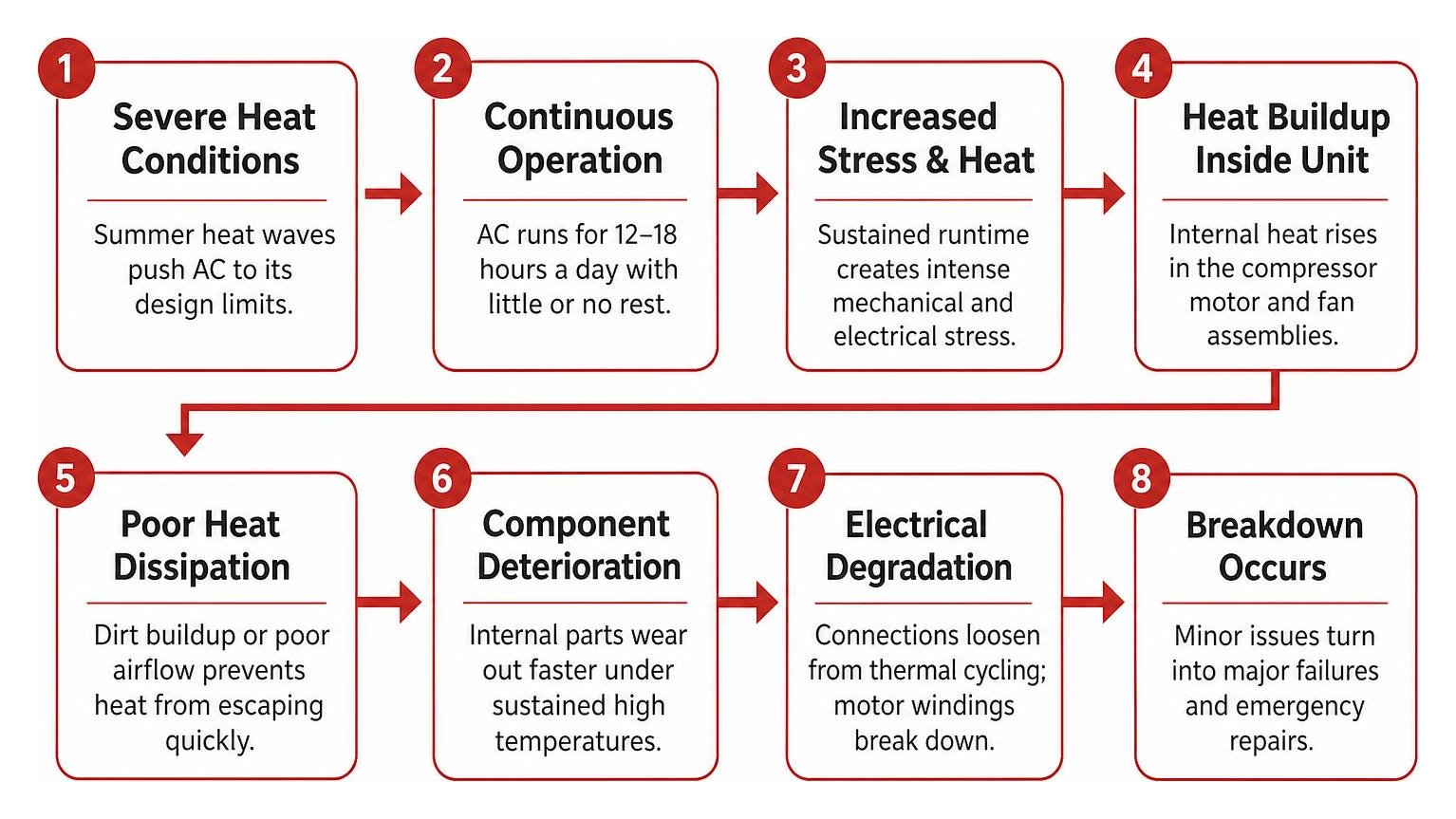
This sustained runtime exposes every component in the system to intense mechanical and electrical stress. Continuous operation generates significant internal heat within the compressor motor and fan assemblies. If that heat cannot dissipate rapidly due to dirt accumulation or poor airflow, internal components deteriorate at an accelerated pace. Electrical connections loosen from thermal expansion and contraction cycles, while motor windings degrade from sustained high temperatures. When ambient outdoor temperatures exceed 100 degrees Fahrenheit, condensing pressures rise dramatically, forcing the compressor to work against elevated head pressure and increasing electrical consumption.
Recognizing Early Warning Signals
Mechanical systems rarely shut down without first exhibiting subtle signs of distress. Homeowners who know how to identify these early indicators can intervene before a catastrophic failure occurs during a triple-digit afternoon.
Key warning signs include:
- A noticeable reduction in airflow coming from supply registers across different rooms
- Persistent lukewarm air blowing from vents while the outdoor condenser is running
- Unfamiliar mechanical noises such as squealing belts, metal grinding, rattling, or rapid clicking
- Frequent short cycling, where the outdoor unit turns on and off every few minutes without cooling the home
- Ice or heavy frost accumulating along the indoor evaporator coil or the insulated copper refrigerant line outside
- Unexpected spikes in monthly electric bills despite normal daily thermostat settings
Recognizing these common signs your AC is about to break down allows homeowners to schedule targeted service before components suffer irreversible damage.
High Thermal Loads in North Texas Attics
In Texas residential construction, indoor air handlers, furnaces, and flexible ductwork systems are frequently located within unconditioned attic spaces. During peak summer months, attic temperatures in Little Elm, TX and Allen, TX regularly exceed 140 degrees Fahrenheit.
This intense environment creates a severe thermal load on the entire HVAC system. When superheated air surrounds the ductwork, heat naturally conducts through the duct walls into the cooled supply air traveling into your living spaces. The AC must run significantly longer just to overcome this internal heat gain before it can begin lowering the temperature inside the living areas. Exploring why AC units break down in Frisco’s extreme Texas heat highlights how attic thermal dynamics, duct leakage, and continuous ambient exposure combine to push compressors and fan motors past their safe operational thresholds.
5 Proven Maintenance Habits That Prevent AC Breakdown
Protecting your residential cooling investment does not require complex mechanical expertise. By establishing consistent maintenance habits, homeowners across North Texas can eliminate the underlying conditions that lead to emergency service calls in the middle of a heat wave.
1. Replacing Air Filters on Schedule to Prevent AC Breakdown
The primary air filter serves as the lungs of your HVAC system. When a filter becomes loaded with dust, pet hair, and airborne particulate, it creates severe static pressure across the air handler. This restriction starves the evaporator coil of the warm airflow it needs to absorb heat properly.
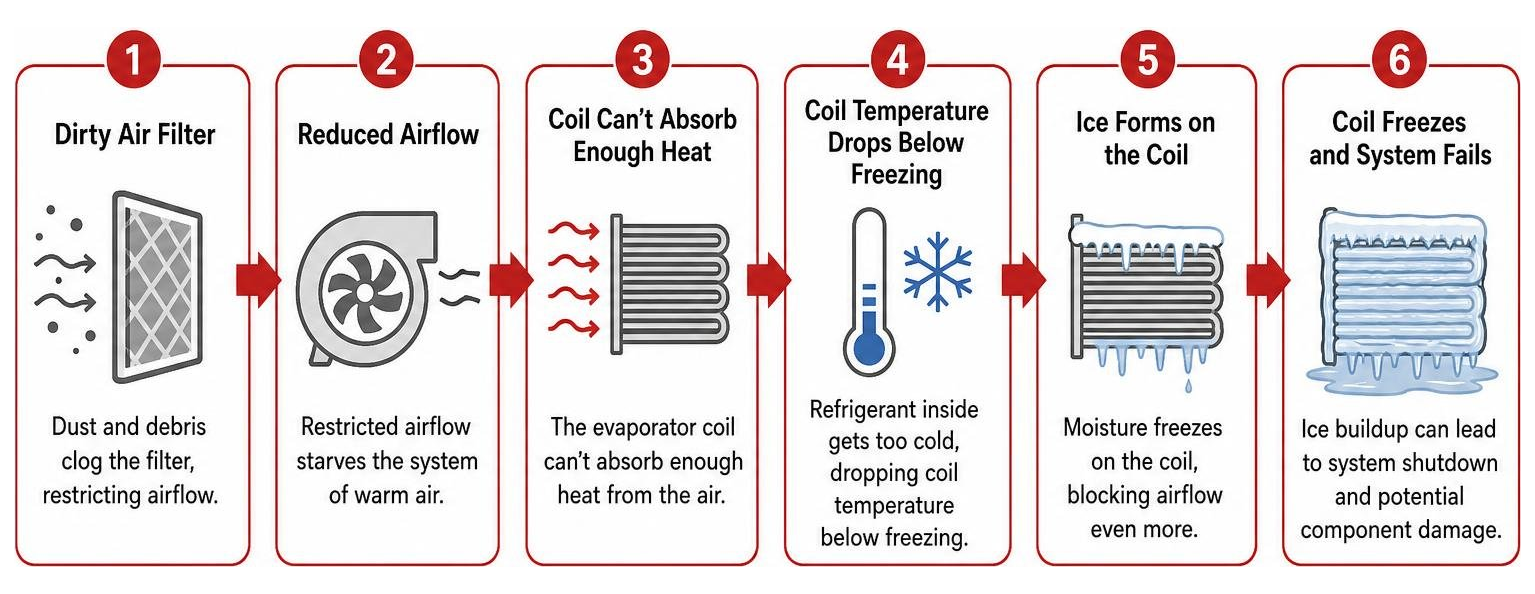
Without adequate airflow across the coil, the refrigerant inside cannot absorb sufficient heat, causing internal coil temperatures to plummet below freezing. Condensation on the coil freezes into a solid block of ice, choking off airflow entirely. Homeowners frequently make the mistake of lowering the thermostat further when this happens, which only forces the compressor to pump liquid refrigerant back into its mechanical chambers, causing permanent valve and motor destruction.
Safe Air Filter Inspection Checklist
- Power Down: Turn off the HVAC system at the thermostat before removing the filter to prevent dust from pulling directly into the blower wheel.
- Inspect Dust Density: Hold the filter up to a light source; if light cannot pass through the media, replace it immediately.
- Verify MERV Rating: Use filters with an appropriate efficiency rating that matches your system manufacturer specifications, as overly dense filters can restrict system airflow.
- Follow a Desert Schedule: During hot summer months, inspect filters every 30 days rather than waiting for standard 90-day intervals.
Understanding how to keep your cooling system in good condition between tune-ups empowers homeowners to maintain proper system balance and protect critical indoor components.
2. Clearing and Cleaning Outdoor Condenser Coils
The outdoor condenser unit is responsible for releasing all the heat extracted from inside your home into the outside air. For this thermodynamic process to work, air must move freely through thousands of tiny aluminum fins surrounding the copper coil tubing.
Over time, dust storms, lawn clipping debris, leaves, and dirt accumulate on the exterior surface of the condenser coil. This grime acts as an insulating blanket, trapping heat inside the unit. As heat dissipation drops, refrigerant operating pressures skyrocket, forcing the compressor to consume substantially more electrical power while operating at dangerously elevated temperatures. Industry guidelines emphasize that keeping outdoor coils clean is essential for preserving compressor windings and motor bearings.
Condenser Maintenance Guidelines
To keep outdoor equipment operating at peak performance throughout hot summer months, homeowners should adopt practical maintenance routines:
- Maintain a minimum clearance zone of 24 inches around all sides of the outdoor condensing cabinet to promote unobstructed air intake.
- Trim back overgrown landscaping, tree branches, vines, and ornamental shrubs that encroach upon the perimeter of the unit.
- Regularly clear accumulated lawn clippings, dead leaves, twigs, and mulch away from the bottom base pan of the cabinet.
- Ensure the concrete or composite equipment pad remains level so motor oil inside the compressor lubricates internal surfaces evenly.
Safety Warning: Always disconnect high-voltage power at the outdoor disconnect box before cleaning around condenser equipment. Never attempt to insert tools or high-pressure spray nozzles through the protective metal grilles, as delicate aluminum fins bend easily and can create severe airflow restrictions. For heavy grease, embedded organic matter, or chemical wash treatments, professional cleaning by certified technicians is required to protect the delicate coil surface from corrosion.
3. Scheduling Bi-Annual Professional Inspections to Prevent AC Breakdown
While regular filter changes and outdoor clearing are essential homeowner tasks, many critical cooling components require professional diagnostic instruments to assess accurately. Scheduling professional service twice a year (once in spring for cooling and once in autumn for heating) ensures your system is thoroughly tested before severe weather arrives.
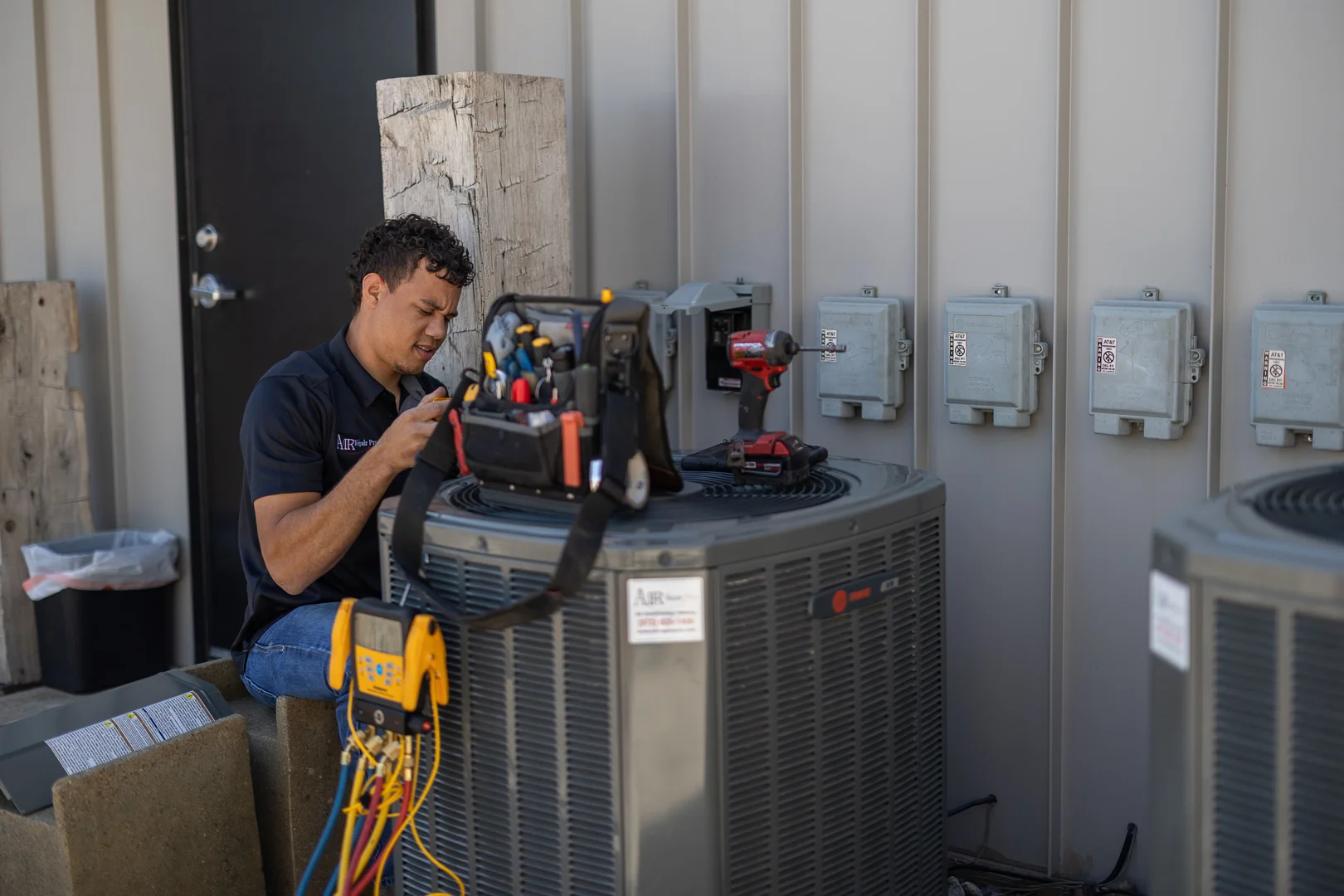
During a professional tune-up, certified technicians from Air Repair Pros perform comprehensive evaluations that go far beyond surface cleaning. Diagnostic checks include measuring blower motor amperage draw, calibrating digital thermostats, inspecting electrical contactor points for pitting or carbon buildup, verifying safety switch operation, clearing condensate drain pans, and testing safety cutoff switches to prevent water overflow in ceilings.
Enrolling in comprehensive air conditioning maintenance delivers peace of mind by identifying weakened components before they fail under load. Establishing a routine of professional preventative maintenance protects factory equipment warranties, preserves system energy efficiency, and extends the overall operating lifespan of expensive hardware across North Texas homes.
4. Monitoring Electrical Components and Refrigerant Lines
Electrical failure and refrigerant loss represent two of the most frequent causes of sudden mid-summer AC breakdowns in Texas. Modern residential cooling systems rely on run capacitors to deliver the electrical phase shift needed to start and operate compressor and fan motors.
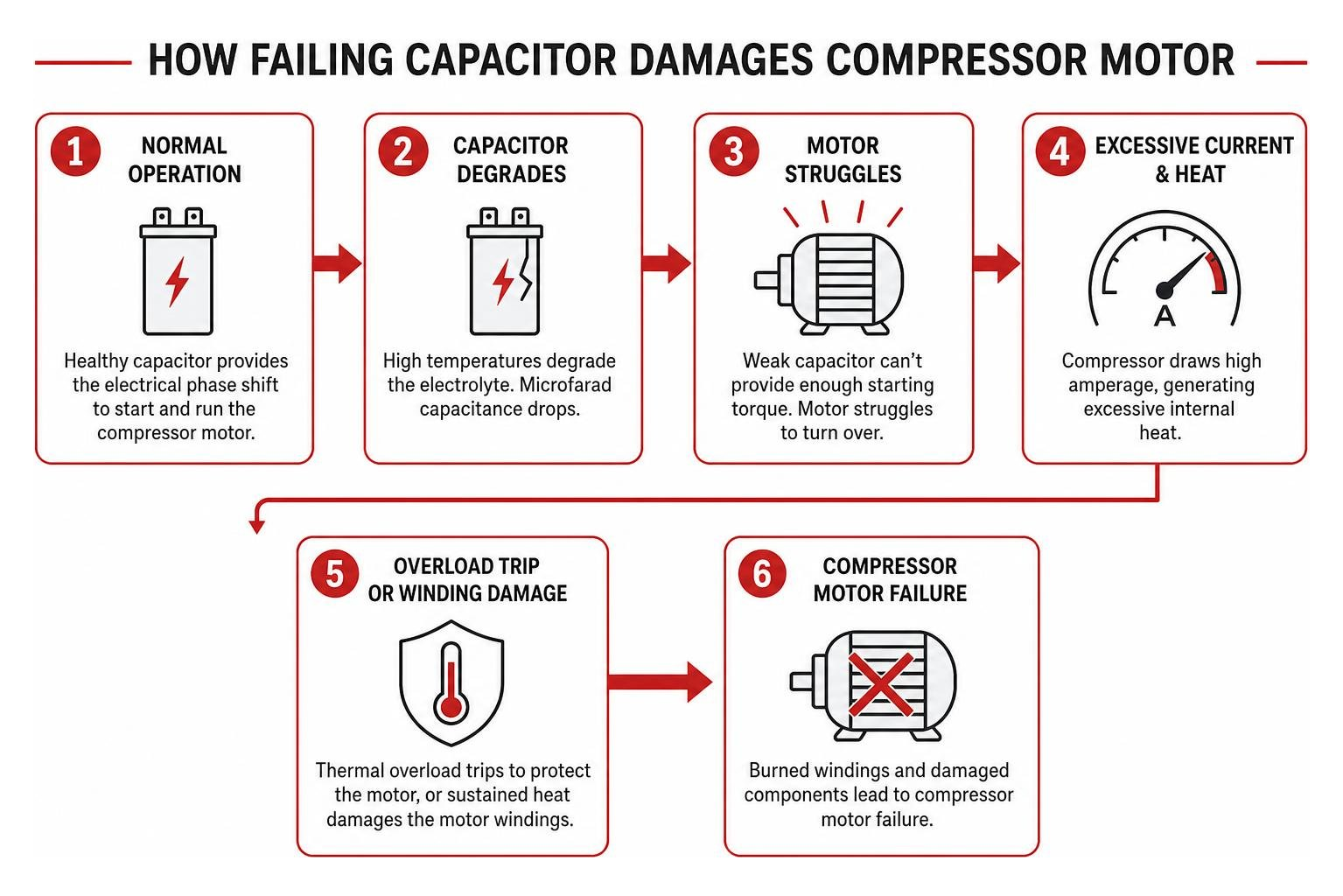
A single cooling season can involve thousands of motor start cycles. During each startup, the compressor pulls high inrush electrical current, generating intense internal heat. Over time, high ambient temperatures degrade the electrolyte fluid inside capacitors, causing their microfarad capacitance to drop. When a capacitor weakens, the compressor motor struggles to turn over, drawing excessive amperage until the internal thermal overload switch trips or the motor windings burn out completely.
Refrigerant leaks present an equally severe hazard. Because air conditioning systems are sealed closed-loop circuits, they do not consume refrigerant during normal operation. A low refrigerant charge indicates a physical leak in the copper tubing, service valves, or coil joints. Operating an air conditioner with an improper refrigerant charge leads to:
- Continuous compressor running without reaching target indoor temperatures
- Loss of motor cooling, as return vapor refrigerant cools the compressor internally
- Acid buildup in the lubricating oil due to elevated discharge temperatures
- Eventual mechanical seizure of internal compressor pistons or scroll plates
Learning to spot subtle system changes and identifying subtle signs you need AC repair prevents minor electrical component wear or pinhole leaks from escalating into complete system replacements.
5. Managing Daily Indoor Heat Loads and Airflow
Reducing the physical heat load placed on your cooling system during the hottest afternoon hours is an effective way to lower mechanical stress and prevent equipment overheating. Smart daily usage habits protect your system when ambient conditions are at their peak.
When outdoor temperatures climb toward triple digits, every additional source of indoor heat forces the AC system to run longer cooling cycles. By managing household thermal gains and maintaining unobstructed interior airflow patterns, homeowners can substantially decrease daily runtime demands.
Actionable Strategies to Reduce Daily Cooling Strain
- Solar Window Management: Close heavy drapes, blinds, or solar screens on all south-facing and west-facing windows by midday to block radiant solar heat gain.
- Strategic Appliance Usage: Delay running heat-generating household appliances such as clothes dryers, dishwashers, and ovens until after 7:00 PM when outdoor temperatures begin dropping.
- Ceiling Fan Circulation: Run ceiling fans in a counter-clockwise direction while rooms are occupied to create a wind-chill effect that enhances personal comfort at moderate thermostat settings.
- Maintain Open Airflow Pathways: Ensure interior doors remain open and keep supply registers and return air grilles unblocked by furniture, thick rugs, or curtains to maintain balanced duct static pressure.
- Consistent Thermostat Settings: Avoid setting the thermostat to unrealistically low temperatures during peak heat, which forces nonstop operation without cooling the home any faster.
- Exhaust Fan Utilization: Run bathroom and kitchen exhaust fans briefly during cooking or bathing to vent humid air outside before it increases indoor cooling loads.
Pairing these daily management habits with scheduled system inspections ensures your cooling system maintains steady, reliable performance throughout the most demanding Texas heat waves.
Upgrading vs. Repairing an Aging Cooling System
Even with diligent maintenance habits, every mechanical system eventually reaches the end of its reliable operational life. Homeowners facing repeated breakdowns must weigh the long-term economics of repairing an aging unit against investing in a modern, high-efficiency replacement.
| System Parameter | Aging System (10+ Years Old) | Modern High-Efficiency System |
|---|---|---|
| Cooling Technology | Single-stage, fixed-speed compressor | Variable-speed inverter compressor |
| Energy Efficiency | Low SEER ratings with degraded output | High SEER2 ratings with precise control |
| Operational Sound | Loud startup clatter and fan vibration | Whisper-quiet variable-speed operation |
| Humidity Control | Rapid cycling leaves indoor air humid | Extended low-speed runs optimize dehumidification |
| Refrigerant Type | Obsolete or phased-out formulations | Modern environmentally compliant blends |
| Reliability Risk | High probability of mid-summer failure | Exceptional multi-year manufacturer warranty |
The 10-Year Lifespan Rule and Efficiency Gains
In Texas climates where systems accumulate extreme operational hours, an air conditioner older than ten years begins to experience cumulative component fatigue. Major component failures on older equipment, such as compressor burnouts or leaking evaporator coils, often involve substantial investment compared to the price of modern replacement hardware.
Modern systems equipped with variable-speed inverter compressors modulate cooling output in precise increments rather than cycling abruptly on and off at full capacity. This inverter design eliminates large electrical inrush surges, reduces mechanical wear, and maintains consistent indoor humidity levels throughout the home. If your current unit is showing its age, scheduling an air conditioning tune-up with a certified professional from Air Repair Pros will provide an objective assessment of your system’s remaining life expectancy and operating efficiency.
Frequently Asked Questions About How to Prevent AC Breakdowns
What are the most common causes of AC breakdowns during summer heat waves?
The most frequent causes of summer cooling failures include clogged air filters that restrict airflow, dirty outdoor condenser coils that trap heat, failing motor capacitors, loose electrical connections, and low refrigerant levels caused by undetected line leaks. Continuous high attic temperatures also place extreme thermal stress on indoor air handlers and duct systems.
How often should I schedule professional AC maintenance?
Professional HVAC maintenance should be scheduled twice a year. A spring tune-up prepares the cooling equipment for summer heat waves, while an autumn inspection ensures heating components and electrical assemblies operate safely for winter.
What are the early warning signs that my AC is about to fail?
Early warning indicators include weak airflow from supply vents, lukewarm air blowing during active cooling cycles, unusual mechanical sounds like buzzing, grinding, or squealing, frequent breaker trips, ice forming on copper line sets, and unexplained spikes in monthly utility bills.
How can I tell if my AC has a refrigerant leak?
Signs of a refrigerant leak include extended cooling cycles where the system runs continuously without reaching the set temperature, hissing or bubbling noises near the indoor or outdoor coils, ice buildup on the evaporator coil or external copper lines, and elevated indoor humidity levels.
What electrical issues commonly cause AC failures?
Common electrical failures stem from swollen or out-of-tolerance capacitors, burned contactor points pitted by electrical arcing, loose wiring terminals caused by thermal expansion, and damaged control boards resulting from summer utility power surges and lightning strikes.
How often should I change my air filter to avoid AC breakdowns in hot weather?
During peak Texas cooling months, air filters should be checked every 30 days and replaced whenever dust accumulates across the filter media. Homes with multiple pets, high occupancy, or nearby construction may require filter replacements every three to four weeks to prevent airflow starvation.
How can I keep my outdoor condenser unit clean and functioning properly in dusty climates?
Maintain at least two feet of clear perimeter space around the outdoor cabinet, regularly trim back surrounding shrubs and vines, remove lawn clippings and leaves from the base, and gently rinse the aluminum fins with a standard garden hose using low water pressure with the electrical power shut off.
What simple habits can help reduce strain on my AC during extreme heat?
Close window coverings on sun-exposed sides of the home during peak afternoon hours, run heat-producing appliances like ovens and clothes dryers in the evening, use ceiling fans to improve air circulation in occupied rooms, and keep interior doors open to balance return airflow.
When should I consider upgrading to a high-efficiency AC unit instead of repairing an old one?
Homeowners should evaluate replacement when an AC unit exceeds ten to twelve years of age, requires frequent or costly mechanical repairs, uses obsolete phased-out refrigerants, or struggles to maintain comfortable indoor temperatures and humidity levels during standard summer weather.
How does a professional tune-up in spring prevent emergency repairs in summer?
A comprehensive spring tune-up tests electrical components under simulated loads, clears the condensate drainage system, measures refrigerant charge accuracy, cleans dirty coil surfaces, and lubricates motor bearings. This proactive care identifies and corrects minor component wear before severe heat causes an unexpected mid-summer breakdown.
Conclusion
Protecting your home from the inconvenience and discomfort of an air conditioning breakdown requires a proactive approach to maintenance. By establishing simple habits like checking air filters monthly, keeping the outdoor condenser clear of debris, and managing indoor heat loads, you protect critical system components from unnecessary operational stress.
When North Texas summer temperatures soar, having a dependable cooling system is essential for your family’s health and comfort. The certified team at Air Repair Pros serves Frisco, TX, Plano, TX, McKinney, TX, Allen, TX, and Little Elm, TX with fully stocked service vehicles and extensive replacement inventory. For prompt help with a cooling issue, contact our professional AC repair technicians to keep your home comfortably cool all summer long.