
Replacing an HVAC System in Prosper, TX: Start With a Plan
Replacing an HVAC system is more than swapping an old AC unit for a new one. The smart process is to confirm replacement is the right choice, have the home properly sized, inspect the ducts, compare detailed quotes, and verify the system at startup.
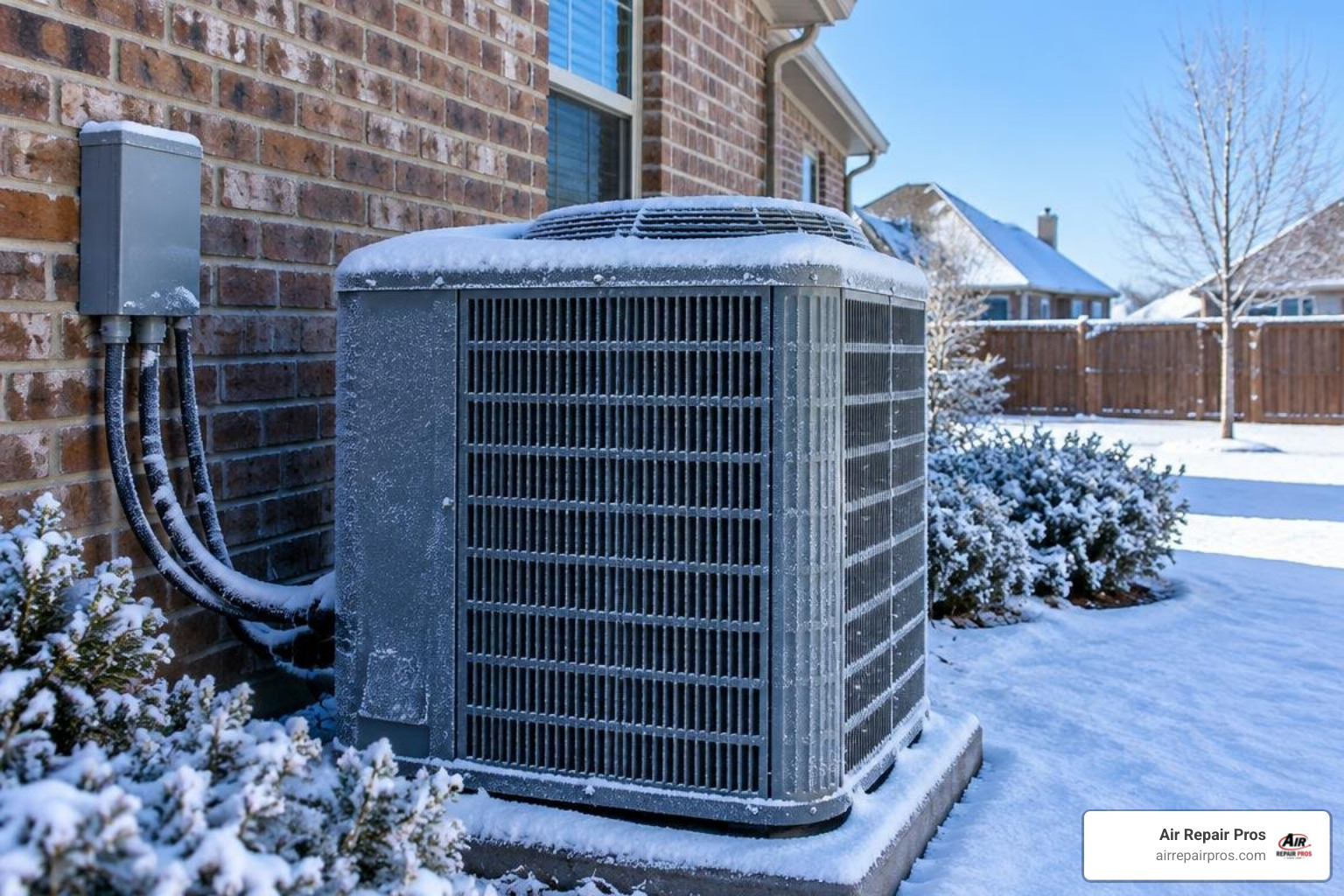
For Prosper, TX homes, planning ahead matters. North Texas summers put heavy demand on AC equipment, while winter cold snaps still require reliable heat. Most AC systems and heat pumps last about 12 to 18 years, while gas furnaces can often last longer. If your system is near that range, breaks down often, struggles to keep rooms even, or sends energy bills climbing, replacement may offer a more dependable long-term answer than another patch repair.
A quality installation should also account for your home’s insulation, windows, attic ducts, humidity needs, and electrical setup. A Manual J load calculation helps prevent an oversized system that short-cycles or an undersized one that cannot keep up on hot Texas afternoons.
Air Repair Pros can help Prosper homeowners understand the full replacement process, from evaluating the existing equipment to choosing a correctly matched heating and cooling system.
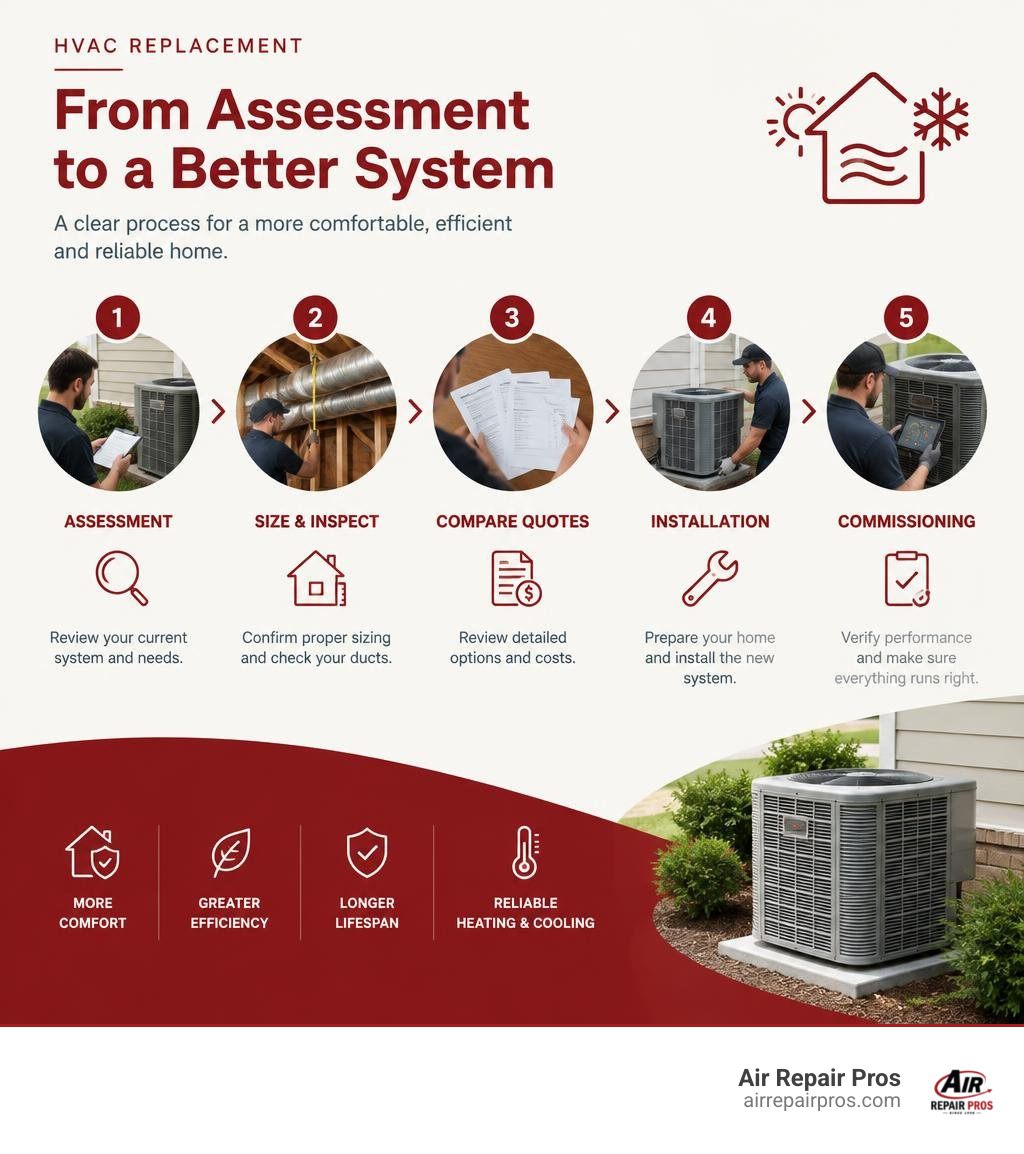
Key Factors in Replacing a HVAC System for North Texas Homes
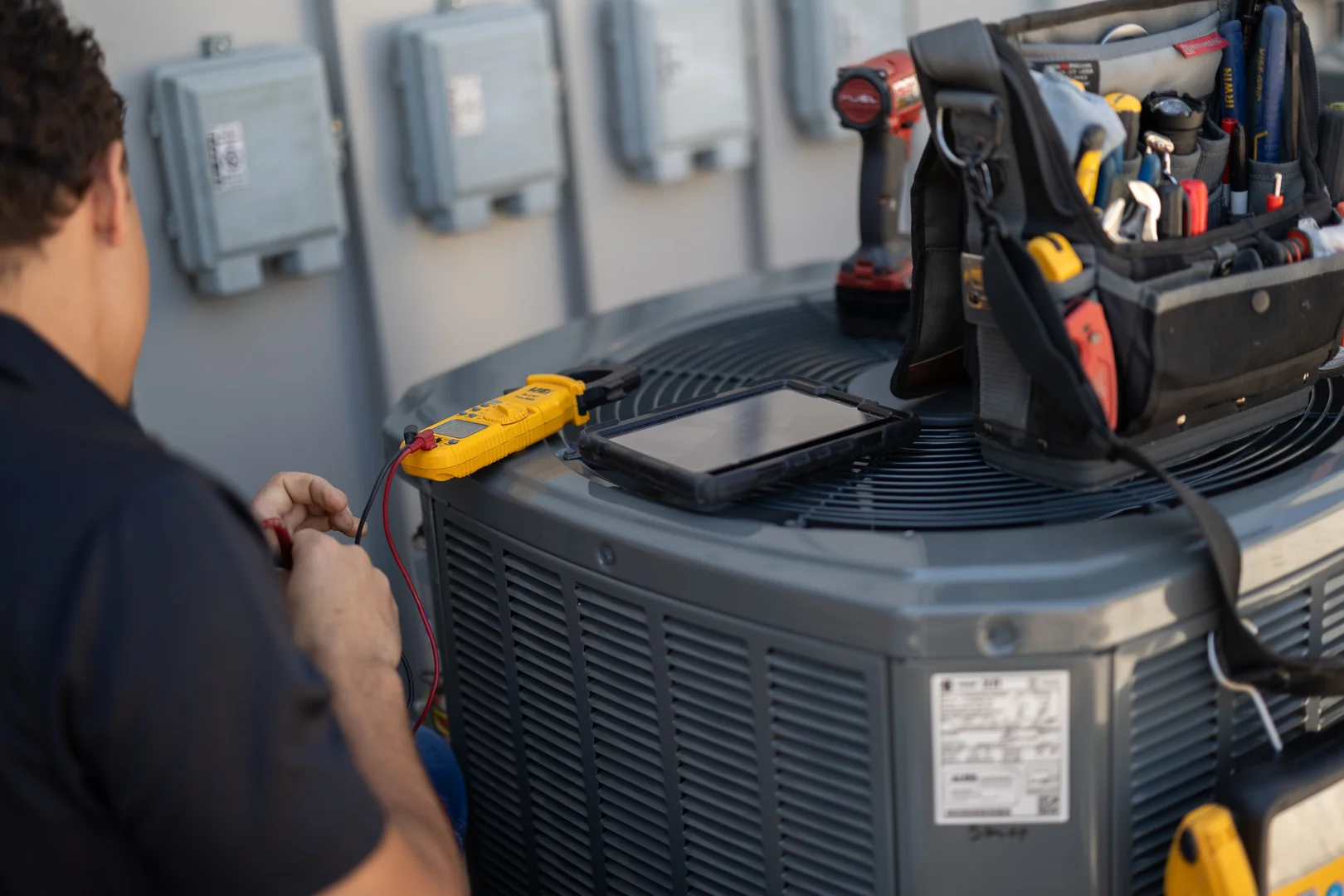
When summer temperatures in Collin County climb past triple digits, your cooling equipment works continuously. The average ducted central cooling system or heat pump operates under intense thermal stress in Texas, yielding an expected lifespan of 12 to 18 years. Gas furnaces generally last between 18 and 25 years. When equipment surpasses these milestones, internal components suffer from metal fatigue, degraded electrical windings, and reduced heat transfer efficiency.
Homeowners often struggle to distinguish between a routine service call and terminal equipment failure. Warning signs of imminent failure include:
- Escalating energy bills: A steady rise in monthly utility consumption without changes in household habits indicates loss of internal mechanical efficiency.
- Frequent breakdown patterns: Requiring multiple component fixes across consecutive seasons signals systemic decline.
- Short-cycling: Rapid turning on and off prevents the system from completing full cooling cycles, leaving indoor spaces humid and uncomfortable.
- Critical component failures: Compressor burnout, electrical motor seizure, or cracked heat exchangers present safety and financial boundaries where repairs cease to make economic sense.
Reviewing the essential factors to keep in mind when considering a replacement HVAC system helps prevent continuous expenditures on aging units.
Financial Rules and Costs of Replacing a HVAC System
A structured mathematical framework eliminates guesswork when deciding between servicing existing equipment and investing in new machinery. Industry professionals rely on the $5,000 rule: multiply the age of your equipment in years by the estimated repair estimate. If the resulting product exceeds $5,000, replacing the unit is generally the smarter financial path. For example, facing a major fix on a 12-year-old system yields a factor well above the threshold, pointing directly toward replacement.
Another standard benchmark is the 50% threshold guideline. If a single repair quote approaches or exceeds 50% of the cost of modern equipment, spending money on old components rarely delivers a positive return. Reviewing a detailed guide on whether to repair or replace an air conditioning or heating system clarifies these parameters.
Efficiency Ratings, SEER2 Gains, and A2L Refrigerant Standards
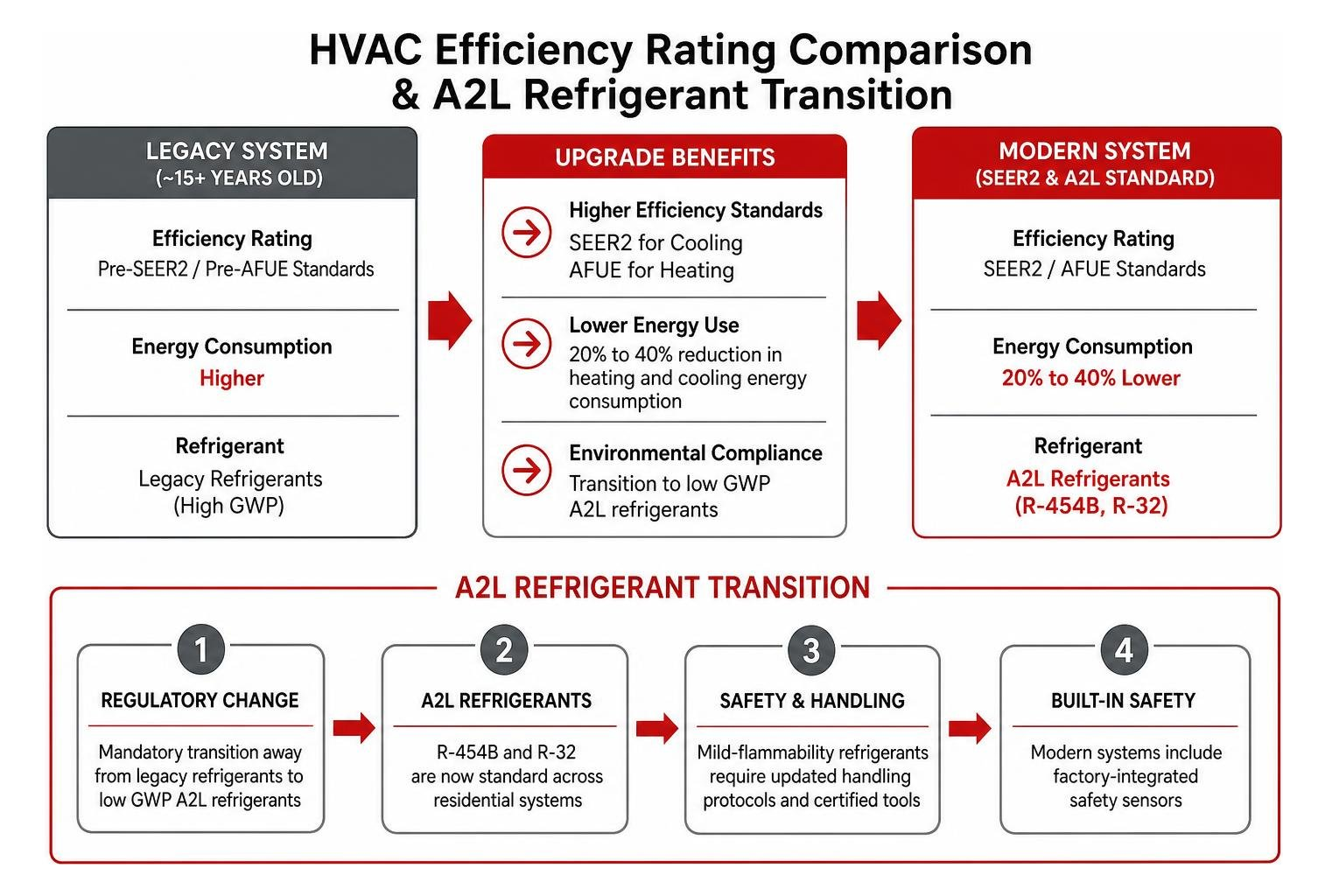
Modern HVAC equipment must adhere to SEER2 (Seasonal Energy Efficiency Ratio 2) standards for cooling and AFUE (Annual Fuel Utilization Efficiency) standards for gas heating. SEER2 testing incorporates higher external static pressure requirements, offering a realistic reflection of real-world duct conditions compared to legacy ratings. Upgrading from a 15-year-old system to a modern SEER2 platform typically yields a 20% to 40% reduction in heating and cooling energy consumption.
Environmental regulations have also transformed heating and cooling technology. The mandatory transition away from legacy refrigerants toward low Global Warming Potential (GWP) A2L refrigerants, including R-454B and R-32, is now fully standard across residential systems.
These mild-flammability refrigerants demand updated handling protocols, certified tools, and factory-integrated safety sensors. The technical transition, alongside general equipment updates, has established modern manufacturing baselines. Homeowners can read our comprehensive HVAC replacement guide to explore how these efficiency standards translate into dependable home comfort.
System Selection and Dual Replacement Benefits
Selecting the ideal heating and cooling platform depends on your home layout, fuel availability, and personal zoning preferences in Prosper, TX.
Available system configurations include:
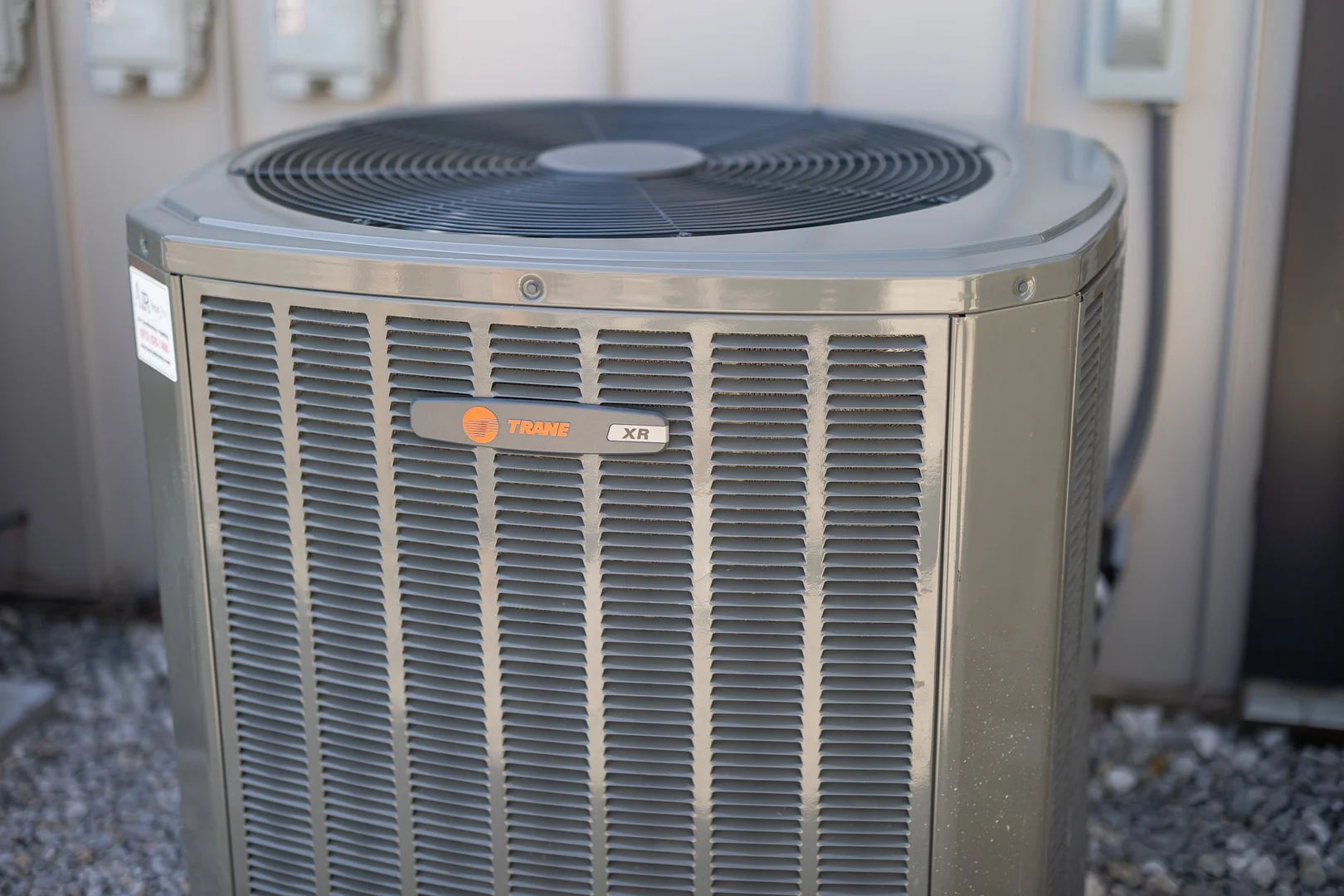
- Split Systems: The most common configuration in North Texas, utilizing an outdoor condensing unit paired with an indoor furnace or air handler located in an attic or closet.
- Package Units: Self-contained heating and cooling systems housed in a single exterior cabinet, commonly installed where interior equipment space is limited.
- Dual-Fuel Systems: Hybrid units combining an electric heat pump with an auxiliary gas furnace, automatically selecting the most economical fuel source based on outdoor temperatures.
- Cold-Climate Heat Pumps: Inverter-driven systems capable of extracting heat efficiently even when ambient exterior temperatures dip well below freezing.
For dedicated cooling upgrades, scheduling expert AC replacement services ensures the refrigeration circuits and airflow parameters match your living space precisely.
| Compressor Type | Operating Speeds | Temperature Control | Humidity Management | Relative Energy Efficiency |
|---|---|---|---|---|
| Single-Stage | 100% capacity only | Moderate fluctuations | Basic removal | Standard baseline |
| Two-Stage | High (~100%) and Low (~65–70%) | Consistent comfort | Enhanced removal | Moderate to high |
| Variable-Speed (Inverter) | Modulates from 25% to 100% in tiny increments | Precise within 0.5 degrees | Superior continuous removal | Maximum efficiency |
Matched System Upgrades: Furnace and AC Combinations
A frequent dilemma is whether to replace the air conditioner and furnace simultaneously. While phasing installation might seem tempting, matched systems deliver superior efficiency, lower long-term operating expenses, and extended longevity.
Installing an air conditioner and furnace together delivers substantial benefits:
- Shared Labor Savings: Replacing both units during the same visit eliminates redundant setup, teardown, and permitting fees.
- AHRI Matched Certification: The Air-Conditioning, Heating, and Refrigeration Institute certifies system performance only when indoor evaporator coils, blowers, and outdoor condensing units are engineered to operate in harmony.
- Airflow Optimization: Modern multi-speed and variable-speed blower motors inside new furnaces are required to achieve the rated SEER2 efficiency of the outdoor AC unit.
- Unified Warranty Protection: A simultaneous replacement ensures all components start their warranty clock at the same time, preventing coverage gaps.
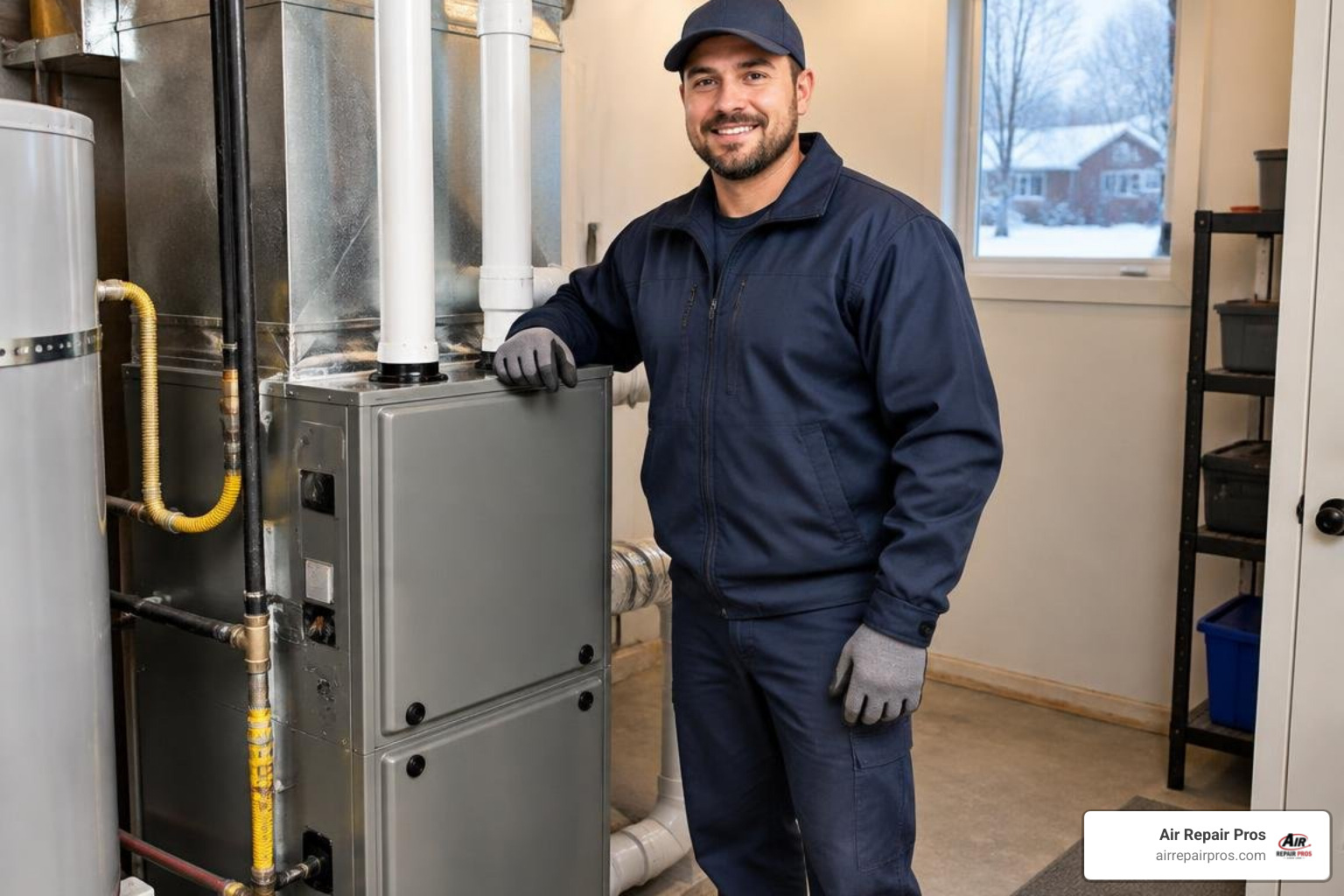
Coordinating the upgrade with professional furnace installation services protects heating performance before winter arrived.
Tailoring Systems for Regional Architecture and Older Properties
Residential properties across North Texas range from historic builds to expansive two-story master-planned developments. Multi-story homes often suffer from thermal stratification, where upper levels trap heat while ground floors remain chilly. Addressing these imbalances requires multi-stage equipment paired with electronic dampers or multi-zone controls.
Attic duct routing in Texas requires robust thermal insulation to prevent attic heat gain from degrading conditioned air. High summer humidity also requires extended, low-speed run cycles to extract moisture without overcooling the home. Homeowners modernizing vintage housing stock can discover specialized techniques in our guide on choosing the best HVAC system for an older home.
Sizing, Ductwork, and Technical Load Calculations
One of the costliest mistakes when replacing a HVAC system is relying on outdated “rules of thumb,” such as allocating one ton of cooling capacity per 500 square feet. Square footage alone ignores the thermal envelope of the structure.
A proper installation requires precise engineering calculations:
- Manual J (Residential Load Calculation): Evaluates square footage, ceiling heights, window orientations, solar heat gain coefficients, insulation R-values, air infiltration rates, and internal occupant loads to establish exact heating and cooling BTU requirements.
- Manual S (Equipment Selection): Matches the calculated sensible and latent heat loads against manufacturer performance data to pick correctly sized equipment.
- Manual D (Duct System Design): Verifies that supply and return air passages accommodate the necessary cubic feet per minute (CFM) of airflow without creating excessive static pressure.
Oversized systems cool homes too rapidly without running long enough to remove ambient humidity, creating a cold, clammy living environment while inducing component wear from short-cycling. Conversely, undersized equipment runs continuously during afternoon heat peaks, failing to maintain setpoint temperatures. Homeowners can consult industry HVAC planning and rebate guidance to verify technical standards.
Sizing and Manual J Calculations When Replacing a HVAC System
A complete Manual J load calculation breaks down the structural thermodynamics room by room. It calculates heat gain during peak 100-degree summer afternoons and heat loss during winter freezes.
Skipping these engineering calculations leads to improper equipment matching, continuous short-cycling, elevated power usage, and premature compressor breakdown.
Ductwork Integrity, Hidden Costs, and Permits
High-efficiency equipment cannot overcome compromised air delivery channels. In typical residential installations, up to 30% of conditioned air leaks out of unsealed duct joints before reaching living areas.
When planning your project, budget for key technical requirements:
- Duct Sealing and Modification: Applying mastic sealant to plenum joints and repairing crushed flex ducting restores balanced static pressure below 0.5 inches water column.
- Line-Set Upgrades: New A2L refrigerants operate under specific pressure profiles, requiring either a chemical line flush or complete copper line-set replacement.
- Electrical Upgrades: Modern systems may require updated high-voltage disconnect boxes, properly sized breakers, or low-voltage control wiring for smart communicating thermostats.
- Condensate Management: Installing secondary drain pans, float safety switches, and clear drain traps prevents ceiling water damage in attic setups.
- Permits and Code Inspections: Municipal building departments require mechanical and electrical permits to ensure life-safety standards, proper venting, and fire clearance compliance.
The Complete Installation Process and Financing
Strategic scheduling simplifies installation and minimizes household disruption. Planning replacements during shoulder seasons (spring or fall) provides flexible scheduling, pleasant working conditions in attic spaces, and access to manufacturer promotions.
Safety Warning: HVAC replacement involves high-voltage electrical connections, combustible gas piping, pressurized refrigerants, and structural load balancing. DIY installation presents severe hazards, including electrical shock, carbon monoxide poisoning, explosive gas ignition, and environmental refrigerant venting. All installations must be executed by certified professionals holding an EPA Section 608 license and regional mechanical credentials.
A professional installation follows a meticulous sequence:
- Pre-Installation Site Assessment: Technicians protect floors, verify dimensions, and ensure clear attic access paths.
- Refrigerant Recovery and Equipment Removal: Old refrigerant is reclaimed into certified recovery cylinders following EPA guidelines. Aging hardware, electrical whips, and compromised drain pans are hauled away.
- Equipment Placement and Nitrogen Brazing: Indoor coils, air handlers, and exterior condensers are set level on vibration-dampening pads. Copper lines are brazed while flowing dry nitrogen to eliminate internal oxidation and soot buildup.
- Triple Evacuation and Vacuum Decay Testing: Deep vacuum pumps pull the sealed system below 500 microns to extract non-condensable gases and moisture before releasing the factory refrigerant charge.
- System Startup and Commissioning: The crew measures external static pressure, superheat, subcooling, temperature splits across coils, and electrical amp draws to document peak factory specifications.
- Airflow Balancing and Homeowner Walkthrough: Registers are checked with airflow meters, smart thermostats are programmed, air filters are demonstrated, and maintenance schedules are reviewed.
- Permit Closeout and Warranty Registration: The installing contractor files local municipal permits for final inspection and registers serial numbers online to secure full manufacturer parts warranties.
To keep investments manageable, explore our flexible HVAC financing options to select convenient payment plans.
Frequently Asked Questions About HVAC Replacement
What is the average lifespan of an HVAC system in Texas?
In Texas, central air conditioning condensers and heat pumps typically last between 12 and 18 years due to demanding summer cooling workloads. Gas furnaces, which face shorter seasonal demands, often last between 18 and 25 years when maintained annually.
What does a complete HVAC replacement cost in 2026?
Investment parameters vary based on home size, equipment tonnage, duct modifications, and efficiency tiers. High-efficiency variable-speed systems and dual-fuel configurations represent a higher initial investment than basic single-stage platforms, but they deliver lower monthly operating expenses over their operating lifespan.
How does the $5,000 rule determine whether to repair or replace?
The rule multiplies the age of the system in years by the total repair estimate. If the resulting product exceeds 5,000, replacing the system is typically the more prudent financial decision. If the total is under 5,000, executing the repair often makes practical sense.
Are there federal tax credits available for 2026 HVAC installations?
The federal Section 25C Energy Efficient Home Improvement tax credit expired on December 31, 2025. Consequently, 2026 residential installations do not qualify for federal tax credits. Homeowners should look to local utility rebates and manufacturer promotions for system incentives.
Why should I replace my furnace and air conditioner at the same time?
Replacing both systems simultaneously ensures matched AHRI-certified components, optimizes SEER2 efficiency ratings, preserves factory warranties, and saves on labor expenses compared to scheduling two separate installation visits.
How do new A2L refrigerants like R-454B affect 2026 equipment costs?
The industry transition to low-GWP A2L refrigerants (such as R-454B and R-32) introduces advanced equipment safety sensors, specialized line-set components, and updated technician handling procedures. These engineering requirements establish new manufacturing baselines across the residential heating and cooling sector.
What is the best time of year to schedule an HVAC replacement?
The shoulder seasons of spring (March through May) and fall (September through November) are the ideal times. Moderate outdoor temperatures reduce service backlogs, and homeowners avoid emergency replacements during extreme summer heatwaves or winter freezes.
Why is a Manual J load calculation necessary before buying a new unit?
A Manual J calculation evaluates the unique thermal characteristics of your home, including insulation levels, window orientation, and square footage. This prevents undersizing, which causes systems to struggle on hot days, and oversizing, which leads to short-cycling and poor humidity control.
How long does a full residential HVAC installation take?
A standard residential changeout typically takes between 8 and 14 hours, usually completed in a single working day by a professional two-person or three-person crew. Complex installations involving ductwork reconfiguration or multi-zone controls may extend into a second day.
Can my existing ductwork support a modern high-efficiency HVAC system?
Existing ductwork must be evaluated for static pressure, sizing, and leakage before connecting modern high-efficiency systems. High-SEER2 equipment requires balanced airflow, and unsealed or undersized ducts can reduce efficiency by up to 30% while stressing blower motors.
Conclusion and Next Steps for Prosper Homeowners
Investing in a new heating and cooling system provides quiet operation, reliable indoor climate management, and lower electric bills for your North Texas residence. By partnering with certified technicians who prioritize Manual J calculations, thorough ductwork inspections, and complete commissioning, you protect your home comfort for decades to come.
Serving homeowners across Frisco, TX, McKinney, TX, Plano, TX, Little Elm, TX, and Allen, TX since 1998, Air Repair Pros arrives with fully stocked service trucks containing over 85% of necessary installation parts to deliver prompt, dependable solutions. When you are ready to evaluate your cooling and heating equipment, contact our professional HVAC replacement technicians to book your in-home assessment.