

Is Your AC Running But Not Cooling? Here’s What’s Going On
If your AC is not cooling your home even though the system is running, you are not alone. This is one of the most common issues HVAC technicians across North Texas encounter every summer. Fortunately, many of the causes can be diagnosed and resolved without requiring a full system replacement.
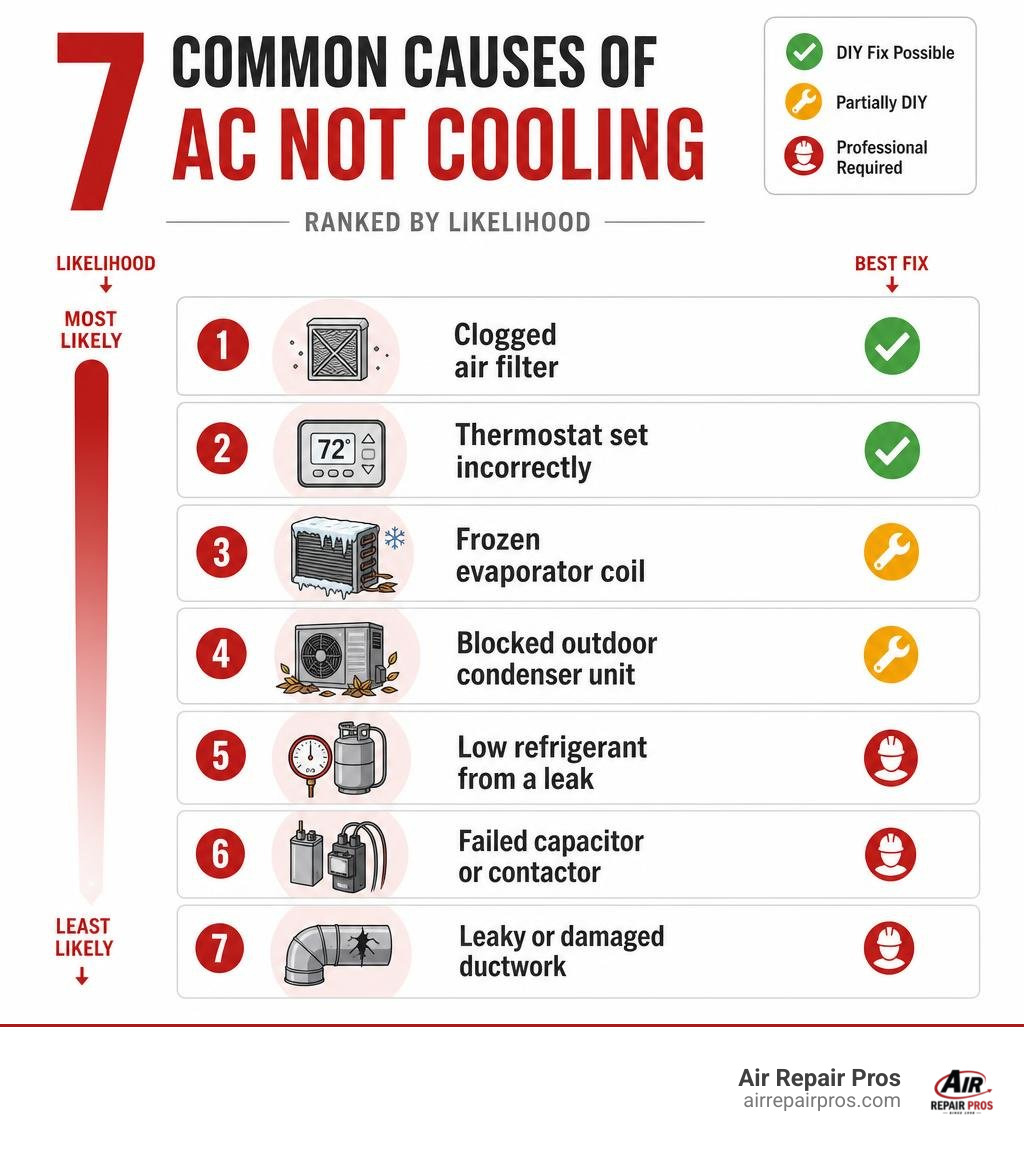
Before diving into the details, here is a quick summary of the most likely reasons your AC is running but not cooling:
| Cause | Can You Fix It Yourself? |
|---|---|
| Clogged air filter | Yes: replace the filter |
| Thermostat set incorrectly | Yes: check mode and temperature |
| Frozen evaporator coil | Partially: turn system off to thaw, then investigate cause |
| Blocked outdoor condenser unit | Partially: clear debris, call a pro for coil cleaning |
| Low refrigerant from a leak | No: requires a licensed technician |
| Failed capacitor or contactor | No: requires electrical diagnosis |
| Leaky or damaged ductwork | No: requires professional inspection |
Walking over to your vents on a hot Texas afternoon only to feel warm air is incredibly frustrating. Your AC runs constantly, the fan blows, but your home remains uncomfortably warm.
An air conditioner does not create cold air; it absorbs heat from inside your home and transfers it outside. When this refrigeration cycle is interrupted, whether by a clogged filter, a refrigerant leak, a failing electrical component, or a dirty outdoor coil, the system fails to cool while your energy bills rise.
In North Texas, where summer temperatures routinely exceed 100°F and AC systems run continuously, cooling failures can quickly become dangerous. Capacitor failure accounts for roughly 25 to 30 percent of summer emergency AC calls, and a dirty air filter remains the single most frequent reason an AC stops cooling effectively.
The sections below cover the seven most common causes of an AC running but not cooling, what you can check yourself, and when to call a professional.
Initial Troubleshooting Steps for an AC Not Cooling
Before scheduling an emergency service call in Frisco, TX, or McKinney, TX, you can perform a few safe, simple diagnostics. Checking these basic components can save you time and the cost of a service visit.

First, check your thermostat. Ensure it is set to COOL and the target temperature is at least 3 to 5 degrees below the current room temperature.
Next, check the fan setting. If the fan is set to ON, the indoor blower runs continuously, even when the outdoor compressor cycles off. This circulates unconditioned, room-temperature air, making it feel like your AC is not cooling. Switching the fan setting to AUTO ensures the blower only runs during active cooling cycles.
Second, inspect your electrical panel. Air conditioning systems draw significant power, and a surge can trip a breaker. Your indoor air handler and outdoor condenser run on separate breakers. If the outdoor breaker trips, the indoor fan will blow warm air while the outdoor unit remains off. If you find a tripped breaker, reset it once. If it trips again, do not force it; this indicates an electrical fault requiring professional attention. For more details, read about Air Conditioning Repair Troubleshooting Tips from the Pros.
Third, inspect the outdoor condenser unit. Ensure there is at least two feet of clear space around it. Weeds, bushes, leaves, and stored items can restrict the airflow your system needs to release heat.
Finally, perform a temperature split test to measure heat removal efficiency. Use a digital thermometer to measure the air temperature entering your return grille (at the air filter). Then, measure the temperature of the air coming out of the supply register closest to the indoor unit.
Under normal conditions, the supply air should be 15 to 20 degrees Fahrenheit cooler than the return air. A difference of less than 15 degrees indicates your system is struggling, while a difference of zero means the refrigeration cycle is not running.
Safety warning: If you smell a burning odor, hear loud screeching, or see smoke, shut the system off immediately at the thermostat and breaker panel, then call for emergency service.
7 Common Causes Why Your AC Runs But Won’t Cool
When your air conditioner runs continuously but fails to lower the indoor temperature, it is usually because something has broken the cooling chain. This chain relies on balanced airflow, clean heat-exchange surfaces, correct refrigerant pressures, and reliable electrical components.
When any single link in this chain fails, the entire system loses its ability to transfer heat. To help you understand what you can handle yourself versus what requires a certified technician, here is a breakdown of the seven most common causes of cooling failure:
| Cooling Issue | Primary Symptom | DIY Action | Professional Action |
|---|---|---|---|
| Clogged Air Filter | Weak airflow, lukewarm air | Replace filter immediately | None needed unless coil is frozen |
| Frozen Evaporator Coil | Ice on brass pipes, low airflow | Turn system off, set fan to ON | Diagnose root cause (leaks/airflow) |
| Low Refrigerant Level | Ice on lines, hissing sounds | None (illegal to DIY) | Leak test, repair leak, recharge system |
| Failed Capacitor | Humming outdoor unit, fan won’t spin | None (high voltage risk) | Test and replace dual run capacitor |
| Blocked Condenser | Warm air, outdoor unit runs hot | Clear debris, rinse outer fins | Deep chemical coil cleaning |
| Damaged Ductwork | Hot rooms, high dust levels | Inspect visible attic ducts | Seal leaks, repair disconnected ducts |
| Bad Thermostat | System short-cycles, blank screen | Replace batteries, check settings | Recalibrate or replace thermostat |
1. Clogged Air Filters Restricting Airflow
A dirty air filter is the most frequent reason an air conditioner stops cooling. To cool your home, the system must constantly draw warm indoor air across the cold evaporator coil, strip the heat and moisture, and push the cooled air back into your living spaces.
When a filter becomes clogged with dust, pet dander, and hair, it restricts airflow and increases static pressure inside your ductwork. This forces the blower motor to work harder while moving significantly less air.
Without enough warm air passing over the evaporator coil, the refrigerant inside cannot absorb enough heat. Consequently, the moisture that condenses on the coil quickly turns to ice. This ice acts as an insulator, blocking further heat transfer.
This creates a compounding cycle: restricted airflow makes the coil colder, creating more ice, which further blocks airflow. If left unaddressed, liquid refrigerant can flood back to your compressor, leading to expensive mechanical failure. Learn more about how restricted airflow impacts your home by reading Why Is My Air Conditioner Not Cooling the House?.
2. Frozen Evaporator Coils Blocking Heat Transfer
If you notice a sudden drop in airflow accompanied by lukewarm air, you may have a frozen evaporator coil. Other warning signs include visible frost on the copper refrigerant lines outside your indoor unit or water pooling around the base of your air handler as the ice melts.
When an evaporator coil freezes, it blocks the path of air through your ductwork. To resolve this, you must thaw the system safely. Turn the thermostat from COOL to OFF immediately to prevent compressor strain, and set the fan from AUTO to ON. This keeps the blower running, forcing warm air over the frozen coil to accelerate melting.
Do not attempt to scrape or chip ice off the delicate aluminum fins, as you can easily puncture the copper tubes and cause a refrigerant leak. Be prepared for water to drain from your system as the ice melts. Ensure your condensate drain pan and lines are clear to prevent water damage.
Once the coil is completely thawed, check your air filter. If it is dirty, replace it and run the system again. If the filter is clean but the coil freezes again, you are likely dealing with a low refrigerant charge or a failing blower motor, both of which require professional diagnostic tools. For detailed instructions, refer to our guide on Air Conditioner Freezing Up.
3. Low Refrigerant Levels and Leaks
There is a common misconception that air conditioners consume refrigerant over time. In reality, your AC is a sealed system. The refrigerant cycles continuously between liquid and gas states to transfer heat, and the level should never drop.
If your system is low on refrigerant, you have a leak. These leaks can occur in the indoor evaporator coil, the outdoor condenser coil, or the copper lines connecting them. When refrigerant levels drop, the system cannot absorb heat efficiently, causing the compressor to run constantly while blowing lukewarm air.
Running an AC with low refrigerant puts extreme stress on the compressor. The compressor relies on returning cool refrigerant gas to keep its internal motor cool. Without this gas, the compressor will overheat, leading to permanent mechanical failure.
According to EPA Section 608 regulations, it is illegal for anyone without proper certification to handle or add refrigerant to an HVAC system. Simply topping off a leaking system without repairing the leak is a waste of money and causes environmental damage.
A professional technician will use electronic leak detectors or ultraviolet dye to find the leak, repair the damaged tubing or replace the coil, and recharge the system to manufacturer specifications. If your AC is struggling to reach the temperature you set, the issue may involve refrigerant pressure, a faulty thermal expansion valve, or another component that needs professional testing.
4. Failed Capacitor or Electrical Components
If you walk outside and hear your outdoor unit making a loud, continuous humming sound but notice the condenser fan is not spinning, you are likely dealing with a failed capacitor.
The dual run capacitor is a small cylinder located inside the electrical panel of your outdoor unit. It acts like a temporary battery, storing and releasing electrical energy to give the compressor and fan motor the power they need to start. Once running, the capacitor helps keep them operating efficiently.
Because North Texas summers are incredibly hot, capacitors are subjected to extreme heat stress. This causes the internal electrical oil to degrade, leading to swelling, leaking, or complete failure. Capacitor failures account for up to 30 percent of summer service calls in places like Plano, TX, and Little Elm, TX.
Another common electrical failure point is the contactor, an electrically controlled switch that sends high-voltage power to the compressor and fan motor when the thermostat calls for cooling. Over time, the contacts can become pitted, burned, or welded together, preventing the outdoor unit from turning on or causing it to run continuously.
Because these components handle high-voltage electricity, attempting to test or replace them yourself carries a severe risk of electrical shock. A certified technician can quickly test these parts using a multimeter and replace them safely. Read more about these common electrical breakdowns in our overview of Common AC Problems and Fixes.
5. Blocked or Dirty Outdoor Condenser Unit
Your outdoor condenser unit is responsible for shedding the heat absorbed from inside your home. To do this, the compressor pumps hot, high-pressure refrigerant gas through the outdoor coil, and the condenser fan draws outdoor air through the aluminum fins to cool the refrigerant back into a liquid.
However, because the outdoor unit is exposed to the elements, it sucks in grass clippings, dirt, pollen, and leaves. Over time, a thick blanket of dirt can build up on the coil surface. This dirt acts as an insulating barrier, trapping heat inside the coil and preventing the refrigerant from cooling down.
When the outdoor unit cannot dissipate heat, the compressor’s operating temperature and pressure skyrocket. To protect itself from burning out, the compressor will trip its internal thermal overload switch and shut down, leaving only the outdoor fan running.
To prevent this, inspect your outdoor unit regularly. You can gently wash the condenser coils yourself by turning off the power disconnect switch next to the unit and using a garden hose with a gentle spray nozzle. Spray the coils from the top down to flush out debris.
Never use a pressure washer. The high-pressure stream can quickly bend the delicate aluminum fins, which restricts airflow and makes it harder for your AC to release heat. If the condenser is heavily clogged or damaged, schedule professional cleaning instead.
6. Leaky or Damaged Ductwork
Even if your air conditioner is running perfectly and producing cold air at the indoor coil, that air will never reach your living spaces if your ductwork is compromised.
The Department of Energy estimates that the typical American home loses 20 to 30 percent of its conditioned air through leaks, loose connections, and tears in the duct system. In North Texas, where ductwork is often run through a hot attic that can reach 140°F in July, duct leaks are incredibly punishing.
If a supply duct becomes disconnected or torn in your attic, your AC will dump cold air directly into your attic space while creating a vacuum inside your home. This vacuum forces hot, humid, dusty outdoor air to be pulled in through cracks around windows, doors, and outlets.
Common signs of leaky or damaged ductwork include:
- Rooms that are consistently warmer than the rest of the house.
- A sudden, unexplained increase in dust throughout your home.
- High utility bills despite normal AC operation.
- Air registers that blow weakly compared to others.
Locating and sealing duct leaks requires specialized diagnostic equipment, such as thermal imaging cameras, to identify hidden leaks deep within attic insulation. Professional duct sealing using mastic paste or specialized sealing systems can instantly restore comfort and lower your monthly energy costs.
7. Thermostat Malfunctions and Calibration Issues
The thermostat is the brain of your heating and cooling system. It monitors the indoor temperature and sends low-voltage electrical signals to your equipment to turn on and off. If the thermostat is miscalibrated, dirty, or poorly positioned, it cannot control your system accurately.
For example, if your thermostat is installed on an exterior wall, near a drafty window, or in direct sunlight, it will read the temperature of that specific hot spot rather than the actual average temperature of your home. This can cause the system to run constantly, over-cooling some rooms while leaving others warm.
Additionally, older digital thermostats can experience sensor drift over time, meaning the internal temperature sensor no longer matches reality. A quick check is to hang a traditional glass thermometer next to your thermostat and compare the readings after 15 minutes. If they differ by more than two degrees, your thermostat may need to be recalibrated or replaced.
Low batteries can also cause erratic behavior, such as the screen blanking out, the system short-cycling (turning on and off rapidly), or the thermostat failing to send the signal to start the outdoor compressor. Replacing the batteries once a year is an easy way to prevent these glitches. If you suspect your thermostat is playing tricks on your system, explore more troubleshooting steps in our guide to AC Not Cooling.
How to Safely Reset Your AC System
If your air conditioner has stopped blowing cold air due to a temporary power glitch, a brownout, or a minor system overload, performing a safe system reset can often reboot the internal control boards and restore normal operation.
To perform a safe system reset, follow these precise steps:
- Turn off the system at the thermostat: Switch the thermostat mode to OFF. This prevents the system from trying to start up immediately when you restore power, which can damage the compressor.
- Locate your main electrical panel: Find the circuit breakers labeled “AC,” “Air Handler,” “Furnace,” or “Condenser.”
- Flip the breakers to the OFF position: Physically switch both the indoor and outdoor AC breakers to the fully OFF position.
- Wait a full 5 minutes: This step is critical. Modern AC compressors are equipped with internal pressure switches and short-cycle timers. Waiting five minutes allows the high refrigerant pressures inside the system to equalize safely and clears any temporary error codes in the control boards.
- Flip the breakers back to the ON position: Switch both breakers firmly back to the ON position.
- Turn the thermostat back to COOL: Set your thermostat back to your desired cooling temperature.
Once you complete this process, you may need to wait an additional 3 to 5 minutes before the outdoor unit starts. Most modern systems have a built-in delay timer to protect the compressor from hard starting. If the system starts blowing cold air again, keep a close eye on it for the next 24 hours. If it trips the breaker again or stops cooling, do not continue resetting it. For more advice on handling sudden system failures, check out What to Do When Your AC Breaks.
Repair vs. Replace: Deciding the Future of Your Cooling System
When faced with a major cooling failure, every homeowner in Allen, TX, or McKinney, TX, must eventually ask the big question: Is air conditioner repair the smarter choice for my current system, or is it time to replace it entirely?
Making this decision requires analyzing several key factors:
- System Age: Most central air conditioning systems last between 10 and 15 years. In North Texas, the intense summer heat puts incredible stress on equipment, meaning a system that is 12 to 13 years old is already nearing the end of its reliable operational life.
- The Rule of 5,000: A helpful industry guideline is to multiply the age of your system by the cost of the repair. If the result is greater than $5,000, a replacement is generally the more cost-effective long-term choice. For example, spending money to repair a 12-year-old system is often a poor investment compared to buying a new, high-efficiency unit.
- Refrigerant Type: If your system was installed before 2010, it likely runs on R-22 refrigerant. Because R-22 has been phased out due to environmental regulations, the cost of this refrigerant has skyrocketed. If your older system has a major refrigerant leak, replacing the system is almost always more practical than paying for an expensive repair.
- Energy Efficiency: Modern systems must comply with updated SEER2 efficiency standards. Upgrading from an older, inefficient system to a modern high-efficiency unit can lower your monthly cooling bills significantly, helping to offset the cost of the new installation over time.
Before making a major financial commitment, it is always wise to seek a professional diagnostic assessment and a transparent estimate. For a comprehensive breakdown of how to weigh these options for your specific home, you can read our detailed guide on AC Repair or Replace.
Frequently Asked Questions About an AC Not Cooling
Why is my AC not cooling but the fan is running?
When the indoor fan blows air but the air is not cold, it means your blower motor is working, but the refrigeration cycle has been interrupted. This is usually caused by a failed compressor, a bad outdoor run capacitor, a tripped outdoor circuit breaker, or a severe refrigerant leak.
What is the most common reason for an AC not cooling?
A dirty, clogged air filter is the most common reason an AC stops cooling. It restricts airflow, which starves the evaporator coil of warm air and causes the system to freeze up, completely blocking heat transfer.
How do I perform a temperature split test?
Use a digital thermometer to measure the air temperature at your return grille, then measure the temperature at the supply vent closest to your indoor unit. A healthy, properly functioning system should show a temperature difference of 15 to 20 degrees Fahrenheit.
Can a dirty air filter cause the system to freeze up?
Yes. When airflow is restricted by a dirty filter, the temperature of the evaporator coil drops below freezing. The moisture in your indoor air then freezes on the coil, creating a block of ice that stops all cooling.
How do I know if my AC has a refrigerant leak?
Common signs of a refrigerant leak include a gradual loss of cooling capacity over several weeks, ice forming on the copper refrigerant lines, a hissing or bubbling sound coming from the indoor or outdoor unit, and higher energy bills.
What does a bad capacitor sound like?
A failing or failed capacitor often causes the outdoor unit to make a loud, continuous humming or buzzing sound. You may also hear a clicking sound as the compressor attempts to start but fails because it lacks the necessary electrical boost.
Is it safe to wash my outdoor condenser with a hose?
Yes, it is safe and highly recommended. Turn off the power at the outdoor disconnect box first, then use a garden hose with a gentle spray pattern to rinse away dirt and debris. Never use a pressure washer, as it will bend the delicate aluminum fins.
Why does my AC struggle to cool on extremely hot Texas days?
Most residential AC systems are designed to maintain a maximum temperature difference of about 20 degrees between the outdoor air and indoor air. When outdoor temperatures exceed 100 degrees, poor insulation, duct leaks, and solar heat gain can make it difficult for your system to keep up.
How often should I schedule professional HVAC maintenance?
You should schedule professional maintenance at least once a year, preferably in the spring before the cooling season begins. Regular tune-ups keep your system running efficiently, catch minor issues before they cause breakdowns, and preserve your manufacturer’s warranty.
When is it time to replace my aging AC unit?
If your system is more than 10 to 12 years old, requires frequent repairs, causes high utility bills, or still runs on the obsolete R-22 refrigerant, it is likely time to plan for a system replacement.
Conclusion
When your home’s air conditioner runs constantly but fails to deliver the cool, crisp relief you need, you do not have to sweat through a sweltering Texas afternoon. While basic checks like replacing a dirty air filter or resetting a tripped breaker are great first steps, complex issues involving electrical components, refrigerant leaks, or frozen coils require professional expertise.
At Air Repair Pros, we have been keeping families comfortable across North Dallas, including Frisco, TX, McKinney, TX, Plano, TX, Little Elm, TX, and Allen, TX, since 1998. Our certified technicians arrive in fully stocked service trucks containing over 85 percent of the parts needed for a one-trip repair, ensuring we can resolve your cooling emergencies quickly and safely.
Do not let a minor cooling issue turn into an expensive system failure. If your home is losing its chill, contact our HVAC technicians today to schedule professional AC repair with the trusted local experts at Air Repair Pros.