
The Complete Professional AC Tune-Up Checklist
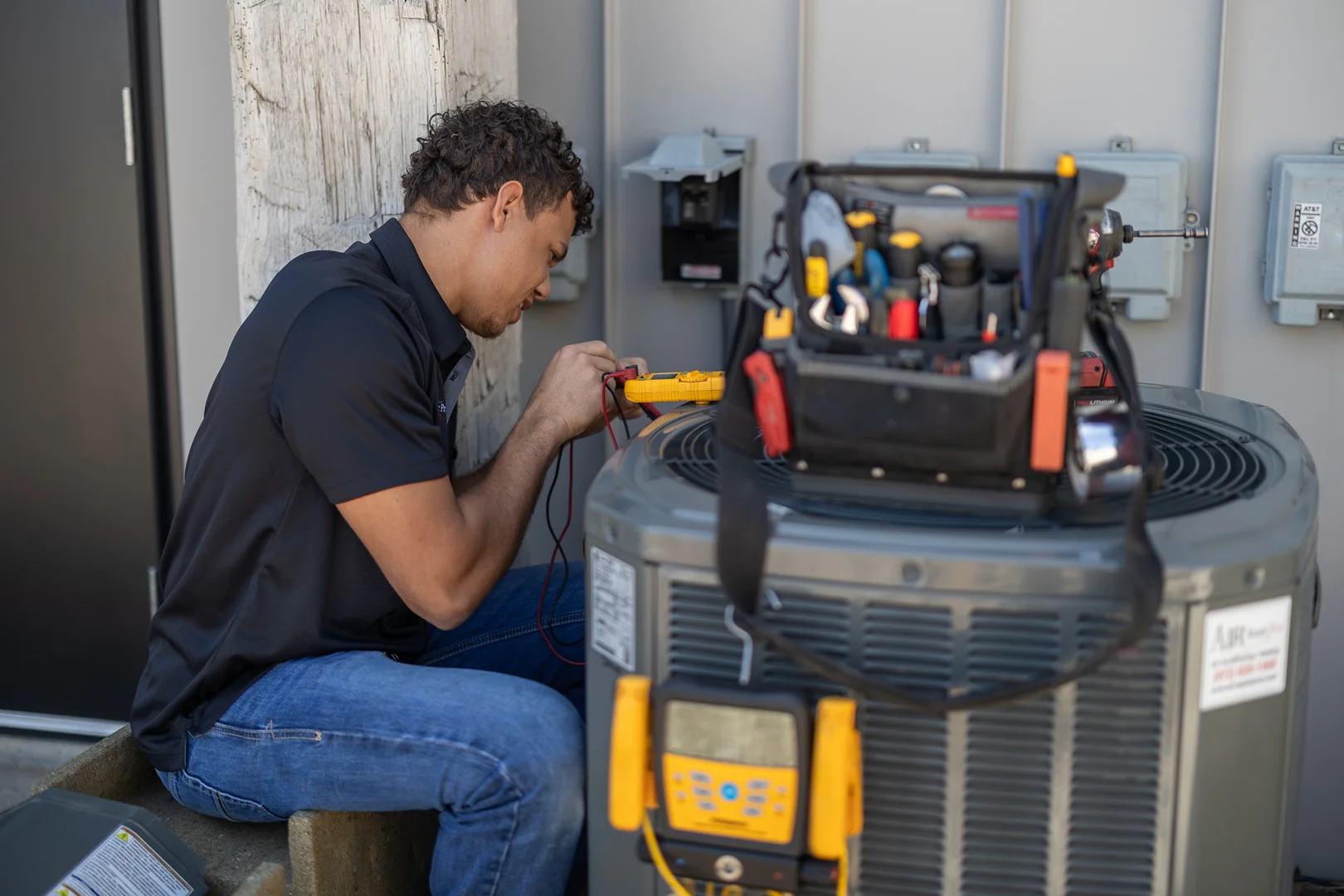
A professional AC tune-up checklist should cover electrical safety, airflow, refrigerant performance, coil cleaning, condensate drainage, and thermostat operation. For homeowners in Frisco, TX, Plano, TX, McKinney, TX, Allen, TX, and Little Elm, TX, these steps help keep cooling equipment ready for long North Texas heat waves. When outdoor temperatures climb past triple digits, internal components endure continuous electrical loads, elevated mechanical friction, and heavy thermodynamic pressure. Routine service goes far beyond simply wiping down the cabinet or replacing a standard air filter. Preventative maintenance requires an exhaustive, multi-point evaluation designed to restore factory performance, verify high-voltage electrical safety, calibrate airflow dynamics, and identify minor component wear before it turns into a costly mid-season breakdown.
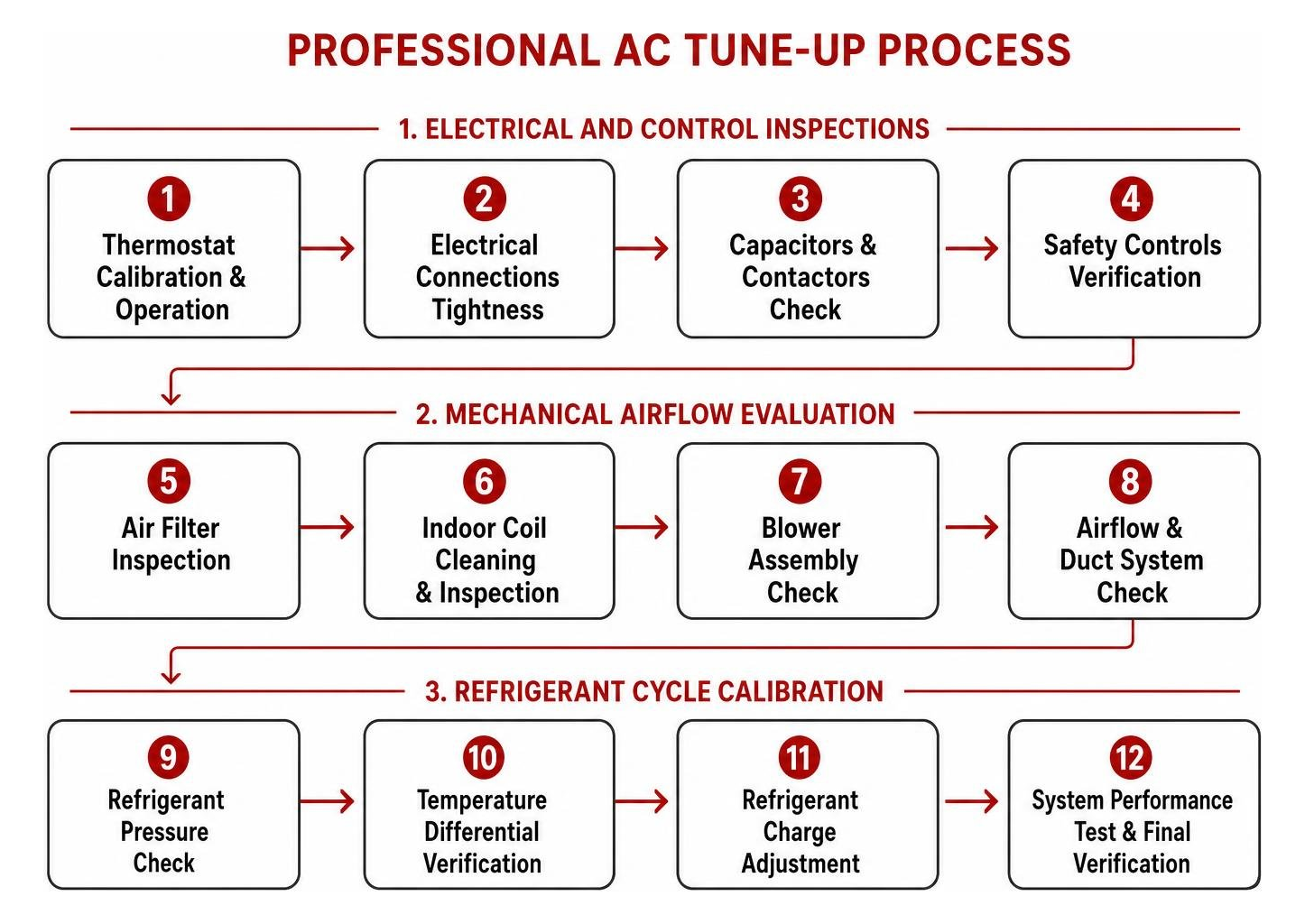
A professional preventative maintenance visit systematically evaluates the cooling system across three foundational pillars: electrical and control systems, mechanical and airflow integrity, and the thermodynamic refrigerant cycle. Overlooking any single item on a comprehensive AC tune-up checklist can lead to escalating monthly energy bills, shortened equipment life, poor humidity extraction, and unexpected failures during peak summer weather. Scheduling a thorough air conditioning tune up with the certified team at Air Repair Pros ensures every component is calibrated for optimal safety, efficiency, and reliability.
Electrical and Control Inspections on the AC Tune-Up Checklist
The electrical infrastructure of your AC system powers complex motors, synchronizes operational cycles, and protects your home against hazardous electrical overloads. Electrical components naturally degrade over time due to high ambient heat, operational vibration, and continuous cycling. During a comprehensive inspection, certified technicians thoroughly inspect and test each of the following electrical elements:
- Thermostat Calibration and Operation: Technicians verify communication between the digital thermostat and the central control board. Precise temperature calibration ensures that the actual temperature in your living space matches the programmed setpoint, eliminating short-cycling and continuous running.
- Tightening Electrical Connections and Terminals: Continuous thermal expansion and contraction can cause electrical wiring terminals to loosen over time. Loose wiring increases electrical resistance, creating dangerous localized heat that can melt insulation, damage printed control boards, and cause intermittent system shutoffs. Technicians inspect and torque all terminal connections to manufacturer specifications.
- Voltage and Amperage Testing: Operating motors must function within precise electrical parameters. Measuring live operating voltage and running amperage on the hermetic compressor, indoor blower motor, and outdoor condenser fan motor helps detect early motor winding degradation or impending electrical failure.
- Run and Start Capacitor Evaluation: Capacitors store and deliver the electrical phase-shift boost necessary to start and run heavy electric motors smoothly. Because capacitors lose capacitance with age and heat exposure, technicians measure microfarad ratings with a calibrated multimeter to ensure they stay within factory tolerance levels.
- Contactor Point and Relay Inspection: The contactor serves as the primary high-voltage switch that sends electrical current to the compressor and condenser fan motor. Over time, high-voltage electrical arcing creates carbon buildup and pitting on contact surfaces, which can cause the switch to stick open, drop voltage, or weld shut entirely.
- Safety Control and Limit Switch Verification: Built-in safety devices, including high-pressure cutoff switches, low-pressure freeze protection switches, and primary limit controls, are tested to confirm the system will automatically power down if unsafe operating conditions develop.
Mechanical and Airflow Checks on the AC Tune-Up Checklist
Airflow is the lifeblood of any residential AC system. Without balanced air delivery across the indoor cooling coils, efficient heat transfer is impossible. Mechanical friction, dirty components, and ductwork restrictions force the blower motor to work harder, accelerating wear on critical parts. For a deeper look at what the team evaluates during a maintenance appointment, homeowners can learn more about what happens during routine HVAC maintenance and how comprehensive airflow balancing protects overall system health.
Technicians evaluate the following mechanical and airflow components during a multi-point inspection:
- Blower Assembly and Motor Maintenance: The indoor blower assembly circulates conditioned air throughout your entire home. Technicians clean dust accumulation from curved blower wheel blades, inspect motor bearings for wear, and lubricate moving parts on serviceable motor assemblies to reduce mechanical friction.
- Condenser Fan Blade Balancing and Motor Mounts: The outdoor fan pulls heat away from the condenser coil. Technicians inspect the fan blades for micro-cracks, verify dynamic balance, tighten motor mounting bolts, and eliminate excessive vibration that can stress the motor shaft.
- Total External Static Pressure (TESP) Testing: Static pressure represents the total resistance to airflow within the supply and return duct systems. Technicians utilize digital manometers to measure supply and return static pressure. High static pressure reduces cooling efficiency, creates hot spots in the home, and places destructive mechanical strain on the indoor blower motor.
- Ductwork Integrity and Leakage Assessment: Leaking or disconnected ductwork allows conditioned air to escape into unconditioned attics while drawing dusty, hot air into the living space. Technicians inspect accessible duct runs for physical tears, separated joints, crushed flexible ducts, and degraded sealing tape.
- Air Filter Condition and Fit: Technicians inspect the primary air filtration system to confirm the filter media is clean, properly sized, and seated without air bypass around the frame.
Refrigerant, Coil, and Condensate Management
The thermodynamic heat exchange cycle depends on clean heat transfer surfaces and factory-precise refrigerant volume. Even minor dust accumulation on coils or minor refrigerant charge imbalances can impair dehumidification, freeze indoor coils, and cause premature compressor failure.
Technicians complete the following coil, refrigerant, and drainage procedures:
- Evaporator Coil Cleanliness and Airflow Passage: Located within the indoor air handler or furnace plenum, the evaporator coil absorbs heat and moisture from the indoor air. Over time, microscopic dust and organic debris coat the delicate aluminum fins, creating an insulating blanket that blocks heat absorption. Technicians inspect the coil face and apply specialized coil treatments when necessary.
- Outdoor Condenser Coil Washing: The outdoor condenser coil expels heat absorbed from inside your home into the outdoor environment. Road dust, lawn clippings, pollen, and dirt accumulate between the exterior fins. Technicians thoroughly wash the condenser coil to eliminate debris and restore unrestricted heat dissipation.
- Digital Manifold Gauge Diagnostics: Technicians connect digital manifold gauges to measure operating refrigerant pressures, calculating real-time superheat on fixed orifice systems and subcooling on thermostatic expansion valve systems without venting refrigerant.
- Refrigerant Leak Detection: Because central AC systems are hermetically sealed closed loops, a low refrigerant reading indicates a mechanical leak. Technicians perform electronic leak detection or ultraviolet dye testing across service valves, flare joints, and coil return bends to pinpoint leak sources.
- Condensate Drain Line Flushing and Clearing: During humid Texas summers, an AC system removes gallons of moisture from indoor air daily. Technicians clear the primary drain line of algae, biological sludge, and particulate sediment to prevent water backups.
- Float Switch Safety Testing: Technicians test the secondary condensate overflow float switch by simulating a drain clog, verifying that the system shuts off immediately to prevent catastrophic water damage to ceilings and drywall.
DIY Preparation Steps Before Your Technician Arrives
While complex electrical diagnostics, refrigerant pressure measurements, and airflow calibrations require licensed HVAC professionals, homeowners can take several practical maintenance steps before a technician arrives. Preparing your equipment ahead of time ensures clear access for service personnel and helps maintain baseline operating conditions between scheduled visits.
Safety Warning: Always turn off electrical power at both the thermostat and the dedicated breaker disconnect switch before inspecting outdoor equipment or opening access panels. Never attempt to service high-voltage electrical wiring, open sealed electrical compartments, or handle moving mechanical parts yourself. Always rely on certified HVAC professionals for internal component service.
Homeowners can perform these simple preparation tasks safely:
- Inspect and Replace Air Filters: A dirty filter restricts airflow, increases energy consumption, and distorts diagnostic airflow readings. Replace standard one-inch pleated filters every 30 to 60 days, or inspect thicker media filters every 6 months. Clean filters ensure your technician obtains accurate static pressure and temperature split measurements.
- Clear Outdoor Clearance Zones: Maintain a minimum two-foot clear perimeter around the outdoor condenser unit. Trim back overgrown shrubs, hanging tree branches, tall grass, and weeds that block fresh ambient intake air or restrict technician access to the electrical service panel.
- Inspect Supply and Return Grilles: Walk through every room in your home to verify that supply registers and return air grilles are completely open and unobstructed by furniture, drapes, or area rugs. Vacuum away visible dust buildup from grille louvers using a soft brush attachment.
- Check Thermostat Batteries: If your thermostat utilizes alkaline backup batteries, replace them with a fresh set before service to prevent power drops or communication errors during operational testing.
Handling basic preparation tasks and filter maintenance makes seasonal appointments smoother and more effective. Learning why spring is a perfect time for an AC tune up helps homeowners schedule early and avoid the rush of summer breakdowns.
Long-Term Benefits and Timing for Seasonal AC Service
Routine AC maintenance is an essential investment in whole-home comfort, operational safety, and system longevity. In communities across North Texas, cooling systems operate under heavy workloads for many months. Unmaintained cooling systems experience accelerated mechanical degradation, which leads to higher monthly utility bills and premature component breakdown.
A neglected cooling system often experiences major mechanical failure within 8 to 10 years of installation, whereas a properly maintained system can deliver 12 to 15 years or more of dependable service. Regular maintenance restores lost heat transfer efficiency, minimizes electrical draw, and keeps equipment operating smoothly through the most intense summer heat waves. Investing in professional AC maintenance helps homeowners preserve equipment longevity and ensure consistent, efficient cooling.
Seasonal tune-ups also have a profound impact on indoor air quality. Most people spend the vast majority of their daily lives indoors, where airborne pollutants can concentrate at levels significantly higher than outdoor air. Clean evaporator coils, unobstructed condensate drainage paths, and well-sealed return ductwork prevent dust, volatile organic compounds, and biological spores from circulating throughout your living spaces. For a broader homeowner maintenance reference, ENERGY STAR provides a seasonal heating and cooling maintenance checklist covering filters, vents, controls, and professional service reminders.
| Factor | Spring Maintenance (March to May) | Summer Emergency Service (June to August) |
|---|---|---|
| System Reliability | Identifies worn capacitors and weak parts before extreme heat hits. | Repairs happen reactively after a total cooling failure occurs. |
| Energy Efficiency | Maximizes cooling efficiency before high summer electric bills arrive. | Operates at degraded efficiency during the hottest, most expensive months. |
| Technician Availability | Flexible appointment windows with fast scheduling. | High seasonal demand causes longer wait times for service calls. |
| Equipment Lifespan | Prevents excessive friction and high operating temperatures. | Strained components run to failure under peak thermal loads. |
Scheduling preventative service in the spring ensures your AC system is operating at peak performance before temperatures rise. When unexpected cooling issues arise, having access to fast, reliable AC repair helps your home remain safe and comfortable.
Frequently Asked Questions About AC Maintenance
How long should a professional AC tune-up take?
A thorough professional tune-up typically takes between 60 and 90 minutes. This duration allows the technician adequate time to complete static pressure measurements, thoroughly wash the outdoor condenser coil, evaluate operating superheat and subcooling with digital manifolds, inspect all electrical connections and capacitors, flush the condensate drain line, and verify safety controls. Visits lasting under 30 minutes usually skip vital diagnostic and cleaning steps.
What is the difference between an AC tune-up and an HVAC tune-up?
An AC tune-up focuses specifically on the cooling and dehumidification components of your system, such as the outdoor condenser unit, hermetic compressor, refrigerant charge, evaporator coil, and condensate drainage. A comprehensive HVAC tune-up covers the cooling components as well as the heating infrastructure, including furnace heat exchangers, gas burner assemblies, ignition sensors, and flue venting systems.
What are the red flags of a substandard or rushed tune-up?
Key red flags include a technician spending less than half an hour on the visit, relying on analog pressure gauges instead of digital manifolds, skipping condenser coil washing, failing to clear the condensate drain, and adding refrigerant without identifying the leak source. A qualified professional always provides a detailed written diagnostic report displaying measured electrical values and operating pressures.
How often should an air conditioning system be serviced?
A standard central AC system should receive a professional tune-up once per year, ideally in early spring before continuous cooling starts. If your home relies on a heat pump for both summer cooling and winter heating, the system should be serviced twice annually, once in the spring for cooling mode and once in the fall for heating mode.
Can skipping annual AC maintenance void my manufacturer warranty?
Yes, skipping annual maintenance can void your warranty. Major equipment manufacturers explicitly state in their warranty terms that functional parts coverage requires documented annual preventative maintenance by a licensed HVAC professional. If an expensive component like a compressor fails, manufacturers may require copies of maintenance receipts before approving warranty claims.
How much energy can a tune-up save on monthly utility bills?
A comprehensive tune-up can recover substantial lost operating efficiency. Restoring clean heat transfer surfaces on dirty coils, clearing clogged air filters, correcting refrigerant charge imbalances, and resolving elevated duct static pressure can optimize system efficiency and noticeably reduce cooling-related electrical consumption during peak summer months.
Why is ductwork inspection included in comprehensive AC care?
Ductwork acts as the distribution network for your cooling system. Tears, loose connections, and crushed flex ducts can leak significant amounts of conditioned air into unconditioned attic spaces while drawing hot, dusty attic air into living areas. Evaluating duct integrity ensures conditioned air reaches every room efficiently.
How does AC maintenance improve indoor air quality?
During normal cooling operation, the evaporator coil extracts moisture from indoor air. If the coil is coated in dust or the drain pan is clogged, stagnant moisture promotes biological growth that enters your airflow. Cleaning the coil, treating the condensate pan, and verifying filter integrity removes airborne dust, biological particles, and common allergens.
What happens if refrigerant levels are low during an inspection?
Because central AC systems are hermetically sealed, low refrigerant levels always point to a physical leak. Rather than simply adding refrigerant, a professional technician will locate the leak source, recommend a permanent mechanical repair, perform pressure testing, and recharge the system to exact factory specifications.
When is the absolute best time in Texas to schedule AC maintenance?
The best time to schedule cooling maintenance across North Texas is early spring, between March and May. Scheduling early ensures your system is fully prepared before severe triple-digit heat arrives, while giving you access to flexible appointment availability before peak summer service calls begin.
Keep Your Cooling System Running Strong with Professional Service
Investing in regular preventative maintenance is the most effective way to safeguard indoor comfort, reduce monthly electricity costs, and prevent sudden breakdowns during hot Texas summers. Air Repair Pros has proudly delivered trusted heating, cooling, and home comfort solutions to homeowners across Frisco, TX, McKinney, TX, Plano, TX, Little Elm, TX, and Allen, TX since 1998.
Our certified technicians arrive in fully stocked service vehicles carrying standard replacement components to resolve mechanical issues promptly. Whether you require precision diagnostic testing, thorough coil cleaning, or emergency cooling assistance, our team is committed to keeping your home cool, efficient, and comfortable through every season. To schedule help with this service, contact our professional AC maintenance technicians.