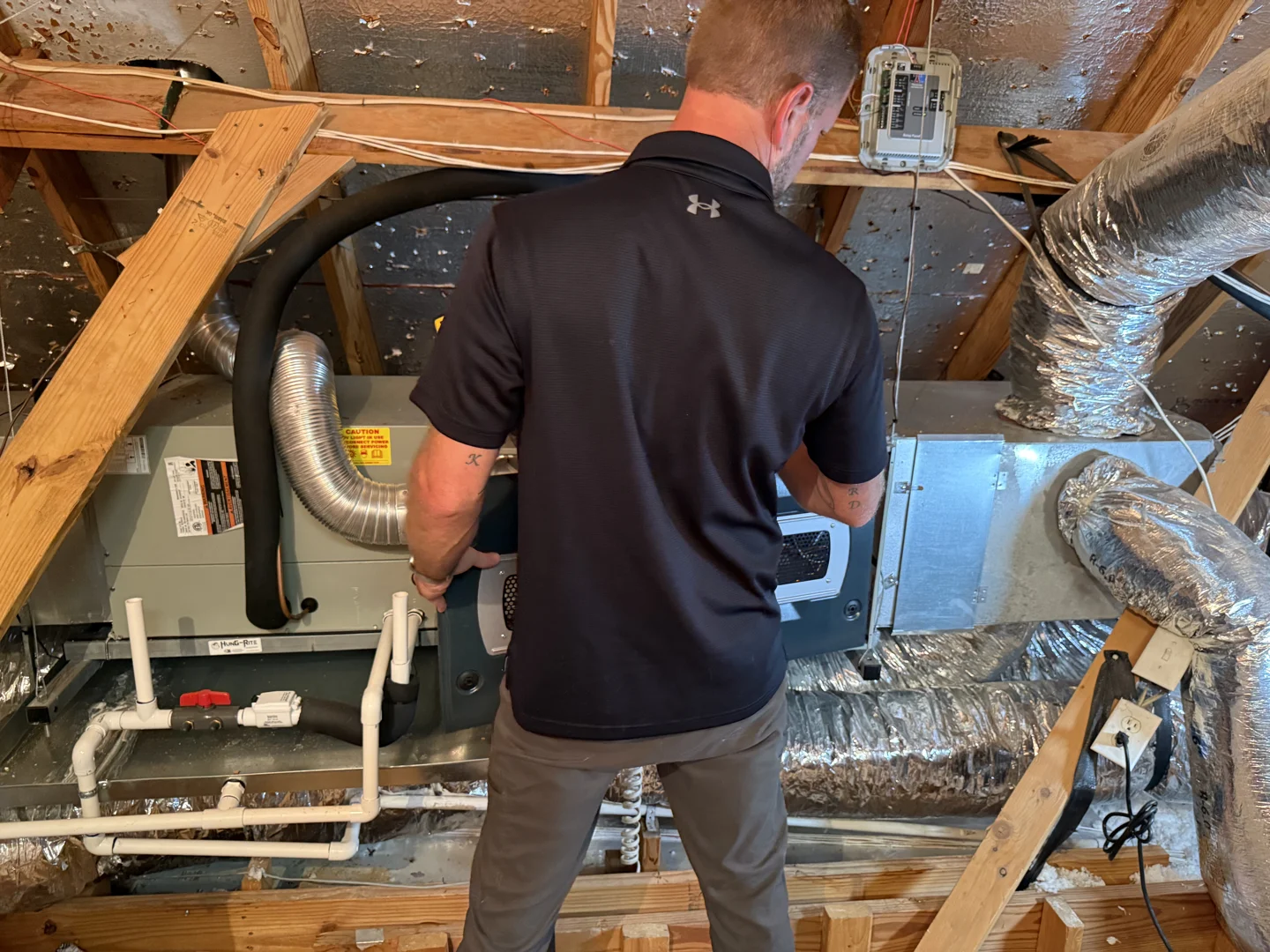


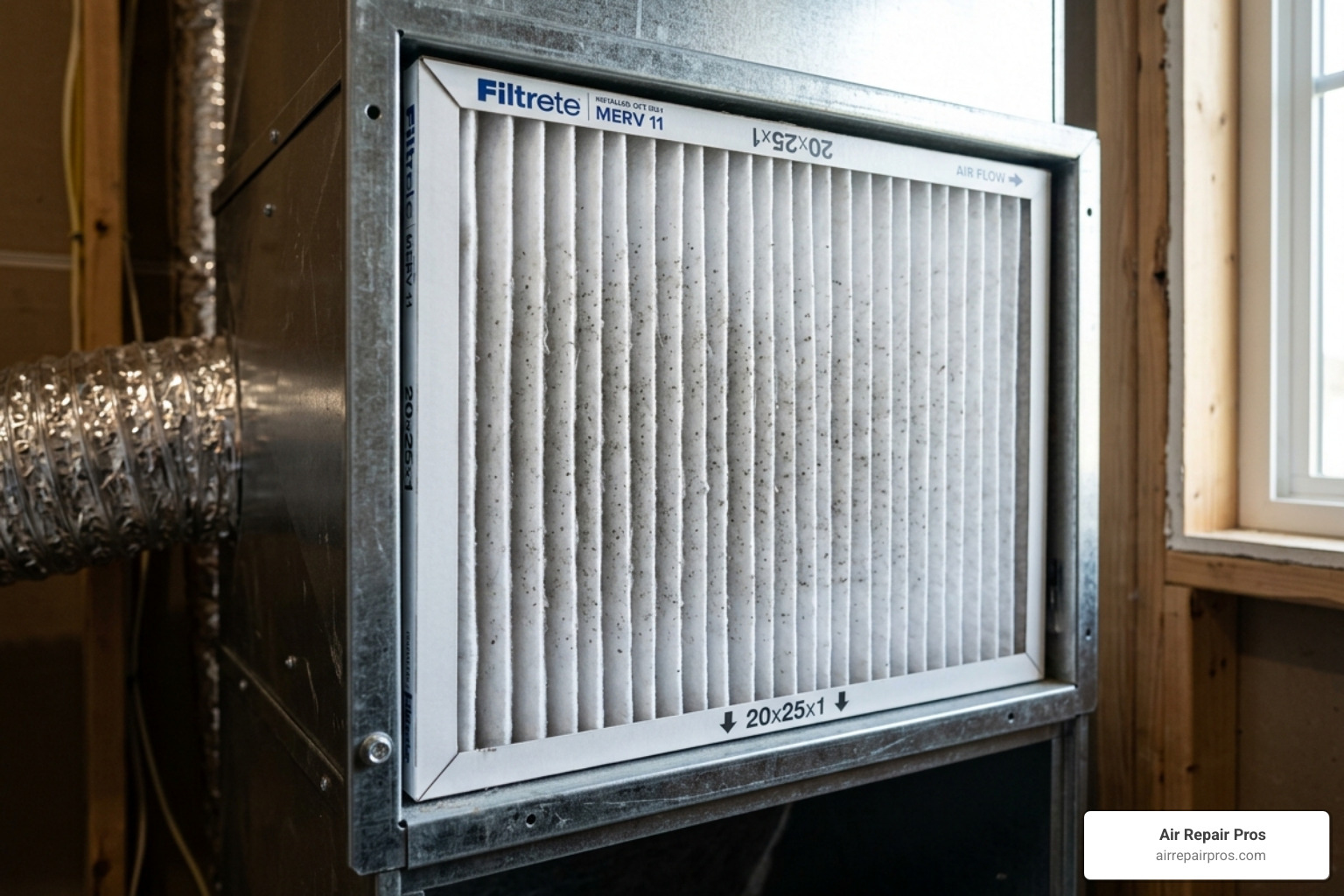
Why a Duct Air Filter Is the First Line of Defense in Your Home’s Air
Quick answer: The best duct air filters by use case
| Your Situation | Recommended Filter | MERV Rating |
|---|---|---|
| Basic dust control | Pleated filter | MERV 8 |
| Pets or allergies | Pleated filter | MERV 11-12 |
| Asthma or severe allergies | Inline filter box | MERV 13 |
| Maximum filtration | HEPA inline box | MERV 15+ |
| Odor control | Carbon-activated filter | MERV 8+ |
A duct air filter is one of the easiest upgrades for cleaner indoor air and better HVAC protection. Dust, pet hair, pollen, and mold spores move through your ductwork whenever the system runs. With the right filter in place, you can catch more of those particles before they build up on coils, clog the blower, and keep circulating through your home.
In North Dallas, where summers push HVAC systems to their limits, a neglected or wrong-sized filter can mean higher energy bills, shorter equipment life, and air that irritates lungs instead of cooling them.
This guide cuts through the noise and shows you exactly which duct air filters are worth buying right now.
I’m Kara Kohlschmidt, Operations Manager at Air Repair Pros, where I work closely with our certified technicians every day to help homeowners get the most out of their HVAC systems — including choosing and maintaining the right duct air filter for their specific setup. Whether you’re dealing with pet dander, construction dust, or just want cleaner air this summer, the product picks and advice below are built around what actually works in real homes.
Understanding the Duct Air Filter: Types and Performance
When you start shopping for a duct air filter, you’ll quickly realize there is no “one size fits all” solution. The term can refer to several different products, ranging from the standard pleated filter you slide into your furnace to specialized inline boxes and vent register inserts.
Inline Filter Boxes
These are heavy-duty solutions for those who want superior air quality. An inline filter box is a metal housing installed directly into your ductwork. For example, brands like AC Infinity offer 4-inch to 10-inch models that handle between 400 and 2400 CFM (Cubic Feet per Minute). These boxes often feature gasketed, neoprene-lined doors to prevent air bypass, ensuring 100% of the air is scrubbed before it reaches your living space.
Vent Register Filters
If you have specific rooms that always seem dusty, or if you have pets that shed near a floor intake, vent register filters are a lifesaver. These are often cut-to-fit electrostatic media or pre-cut pads that sit just behind your supply or return grilles. They act as a secondary “pre-filter,” catching hair and large debris before they ever enter the main duct system.
MERV vs. FPR Ratings
You will see two main rating systems:
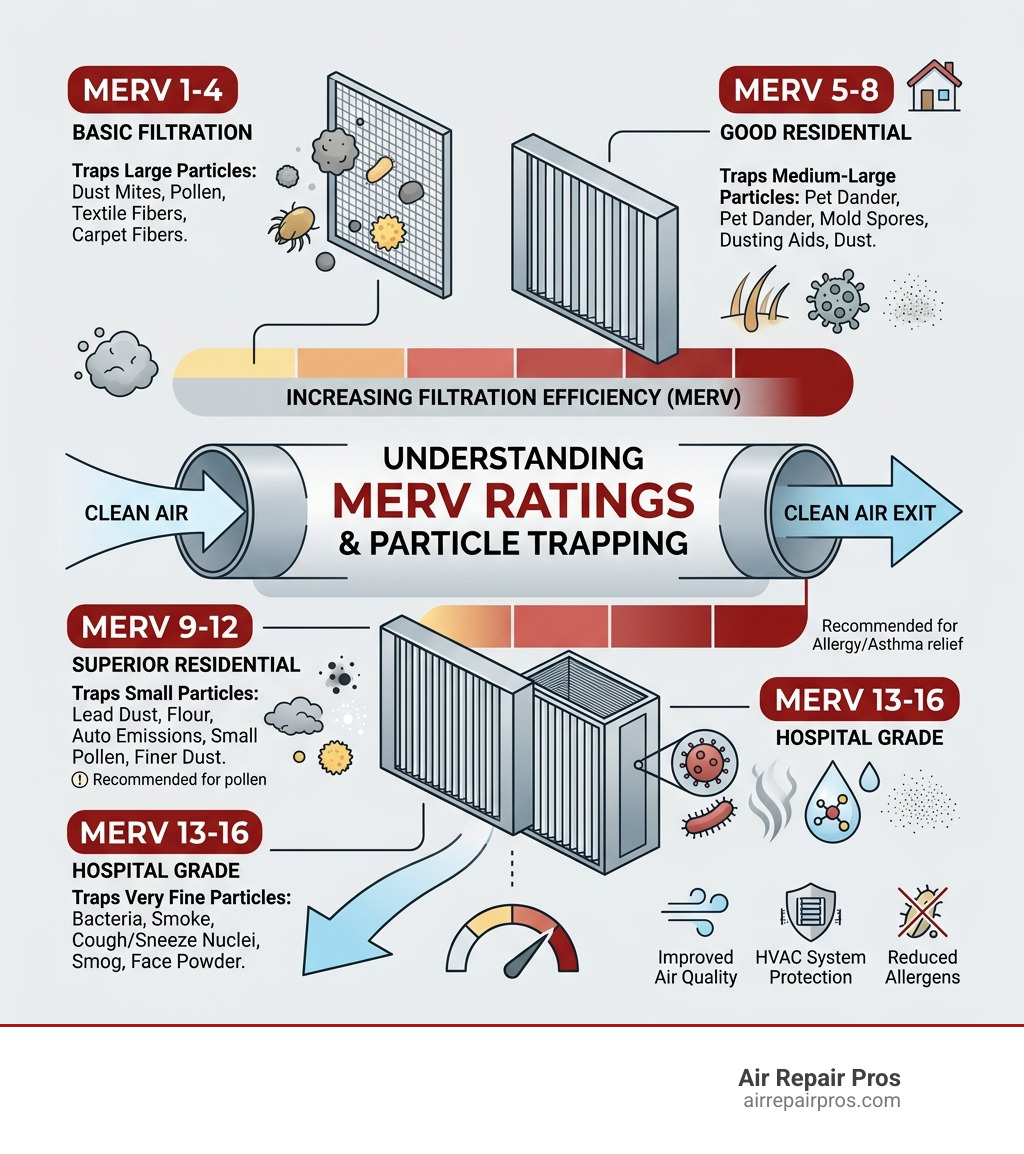
- MERV (Minimum Efficiency Reporting Value): The industry standard (1-20). For most North Dallas homes, MERV 8 to 11 is the “sweet spot.”
- FPR (Filter Performance Rating): A 1-12 scale used by big-box retailers like Home Depot. An FPR 10 is roughly equivalent to a premium MERV 11-12.
Specialized Media
- Electrostatic Media: Uses static electricity to attract particles like a magnet.
- Carbon-Activated Filters: These include a layer of charcoal to trap odors from cooking, pets, or smoke.
| Filter Level | Particle Size Captured | Best For |
|---|---|---|
| MERV 8 | 3.0 – 10.0 microns | Dust, lint, pollen |
| MERV 13 | 0.3 – 1.0 microns | Bacteria, smoke, microscopic allergens |
| HEPA | 0.3 microns (99.97%) | Severe asthma, hospital-grade cleanliness |
Choosing the Right Duct Air Filter for Pets and Allergies
If you live in Frisco or Plano, you know that pollen and pet dander are year-round battles. For homes with furry friends, we recommend a duct air filter with a MERV 8-11 rating. Why not higher? Because pet hair is “chunky.” A MERV 8 filter is excellent at catching hair and dander without suffocating your air conditioner. If you go too high (MERV 13+), the filter may clog so quickly with pet fur that it restricts airflow, leading to a frozen coil.
Inline Filter Boxes vs. Standard Furnace Filters
Standard furnace filters primarily exist to protect the HVAC equipment (the blower motor and coils). An inline filter box, however, is designed for indoor air quality. These boxes often use 4-inch or 5-inch deep pleated filters. Because they have more surface area than a 1-inch filter, they can trap more particles (high dust-holding capacity) while maintaining a lower “pressure drop.” This means your system doesn’t have to work as hard to pull air through the filter.
The Benefits and Risks of Enhanced Duct Air Filtration
Installing a high-quality duct air filter is like giving your HVAC system a suit of armor. But, like any armor, if it’s too heavy, it can slow you down.
The Benefits
- Improved Respiratory Health: By trapping mold spores, bacteria, and fine dust, you reduce the triggers for asthma and allergies.
- Reduced Duct Cleaning: When you catch debris at the intake, it doesn’t settle in your ducts. This can save you significantly on professional Air Duct Services over the life of your home.
- Cleaner Surfaces: You’ll notice less dust on your coffee table and bookshelves.
- Coil Protection: A clean filter keeps the “gunk” off your evaporator coils.
The Risks: Airflow Restriction
The biggest risk is “static pressure.” If you install a MERV 15 filter in a system designed for MERV 8, it’s like trying to breathe through a thick wool sweater while running a marathon. Restricted airflow causes:
- Longer Run Times: The system struggles to reach the set temperature.
- Frozen Coils: Without enough air moving over the cold coils, they turn into a block of ice.
- Blower Motor Failure: The motor overheats trying to pull air through the restriction.
For professional guidance on balancing filtration with airflow, our team at Air Repair Pros offers Indoor Air Quality Services to ensure your system is compatible with high-efficiency filters.
Impact on HVAC Longevity and Cost Savings
A clean system is a cheap system. When your coils are free of debris, heat transfer is efficient. According to industry data, a lack of maintenance (often starting with a dirty filter) is the number one cause of early equipment failure. By investing in a quality duct air filter, you are essentially buying insurance for your furnace and AC. You can find more info about furnace and coil services to see how filtration prevents costly breakdowns.
How to Size and Install Your Duct Air Filter System
Before you click “buy” on that fancy inline filter box, you need to know your numbers.
- Duct Diameter: Most residential ducts are 4″, 6″, 8″, or 10″. The filter box must match this exactly.
- CFM Capacity: Your HVAC blower moves a specific volume of air. If your blower moves 1200 CFM, but your filter box is only rated for 800 CFM, you will whistle and rattle your way to a system breakdown.
- Velocity: Air needs to move through the filter at a speed that allows the media to catch particles without creating too much noise.
Step-by-Step Installation for Register Vents
If you are using cut-to-fit vent filters, the process is DIY-friendly:
- Measurement: Measure the inside of your vent grille (not the outside frame).
- Cut: Use heavy-duty scissors to cut the electrostatic media to size.
- Airflow Direction: Some filters are directional. Look for an arrow; it should always point into the duct for returns and into the room for supply vents.
- Secure: Use adhesive velcro strips to ensure a snug fit. A loose filter will rattle and allow air to bypass the edges.
For more complex installations, like adding an inline box to your attic or crawlspace, it’s best to consult our experts. You can find more info about air conditioning services regarding professional ductwork modifications.
Maintenance and Replacement: Keeping Your System Efficient
A duct air filter is not a “set it and forget it” product. As it works, it fills up. A slightly dirty filter actually filters better than a brand-new one because the captured dust helps trap even smaller particles. However, there is a tipping point where the filter becomes a wall.
Replacement Frequency
- Standard 1-inch filters: Every 30–90 days.
- High-pet homes: Every 30 days.
- 4-inch deep filters/Inline boxes: Every 6–12 months.
- Vent filters: Every 1–2 months.
When to Replace Your Duct Air Filter
Don’t just rely on the calendar. Check for these signs:
- Visible Debris: If the filter is grey or has visible “pillows” of dust.
- Reduced Airflow: If the air coming out of your vents feels weaker than usual.
- Odor Breakthrough: If you start smelling “wet dog” or musty scents when the AC kicks on.
- Dust Spikes: If you notice a sudden increase in dust on your furniture.
Regular inspections are key to avoiding a system freeze-up. We recommend checking your filters monthly, especially during the peak summer in North Dallas. For those who want a professional eye on their system, we offer heating tune-ups and AC maintenance that includes a full filter and airflow check.
Frequently Asked Questions about Duct Air Filters
Can I use a duct air filter alongside my furnace filter?
Yes, but be careful. This is called “dual filtration.” It is common to use a low-MERV (1-4) filter at the return vent to catch large pet hair and a higher-MERV (8-11) filter at the furnace to catch fine dust. However, you must ensure your blower motor can handle the combined resistance of both filters. If the air feels weak, you should stick to one high-quality filter.
What is the best MERV rating for a home duct air filter?
For most homes in the Frisco and McKinney area, a MERV 11 is the perfect balance. it captures 85% of large particles and about 65-79% of small particles (1.0 to 3.0 microns) without putting excessive strain on your blower motor.
Do duct filters help with pet hair and odors?
Absolutely. For pet hair, use a pleated filter rather than a fiberglass one. For odors, look for a duct air filter with a “carbon” or “charcoal” layer. These are chemically treated to absorb gas-phase pollutants and smells that standard filters miss.
Conclusion
Don’t let dust win the war in your home. Whether you choose a high-capacity inline filter box or a simple set of register vent filters, upgrading your duct air filter is the most cost-effective way to protect your health and your HVAC investment.
At Air Repair Pros, we’ve been serving North Dallas since 1998. Our certified technicians arrive in fully stocked trucks, ready to handle 85% of repairs in a single trip. If you’re worried about your indoor air quality or aren’t sure which filter is right for your system, we’re here to help.
For more information on how we can help you breathe easier, explore our indoor air quality management and air purification services. From Frisco to Richardson and everywhere in between, we’re your local experts in home comfort. Contact our air duct specialists today to schedule a professional evaluation and keep your air clean all year long!