What’s Actually Causing Your Drain to Clog?
The most common clogged drain causes in residential homes fall into a predictable set of categories that most homeowners encounter at some point:
| Cause | Where It Happens Most | Risk Level |
|---|---|---|
| Hair and soap scum | Bathroom sinks, showers, tubs | High |
| Fats, oils, and grease (FOG) | Kitchen sink | High |
| Flushable wipes and paper products | Toilets | High |
| Food waste and coffee grounds | Kitchen sink, garbage disposal | Medium |
| Mineral scale from hard water | All fixtures | Medium |
| Foreign objects | Toilets, bathroom sinks | Medium |
| Tree root intrusion | Main sewer lines | Severe |
| AC condensate line blockages | HVAC drain lines | Medium |
Understanding which cause applies to your situation is the fastest way to know whether a plunger will solve the problem or whether you need a professional.
Most homeowners don’t think about their drains until water stops moving. A sink that drains a little slowly on Monday can be completely backed up by Friday. That’s because clogs rarely happen all at once. They build gradually, layer by layer, until flow drops to a trickle or stops entirely.
In North Dallas, TX homes, this problem is especially common. The combination of hard municipal water, mature trees with aggressive root systems, and long, hot summers that put HVAC systems under stress creates a plumbing environment where blockages can develop faster than in other parts of the country. Texas homeowners deal with everything from grease buildup in kitchen lines to AC condensate drain clogs that quietly cause water damage behind walls.
A clogged sewer line, in particular, isn’t just an inconvenience. It can be a genuine plumbing emergency, with backed-up wastewater threatening your home’s structure, your floors, and your family’s health. Even smaller, fixture-level clogs can escalate into leaks and hidden moisture damage if left unaddressed long enough.
This guide covers what’s actually behind drain blockages, what the warning signs look like before things get serious, and which solutions actually work versus which ones just push the problem further down the pipe.
The Science of Obstruction: Primary Clogged Drain Causes in Texas Homes
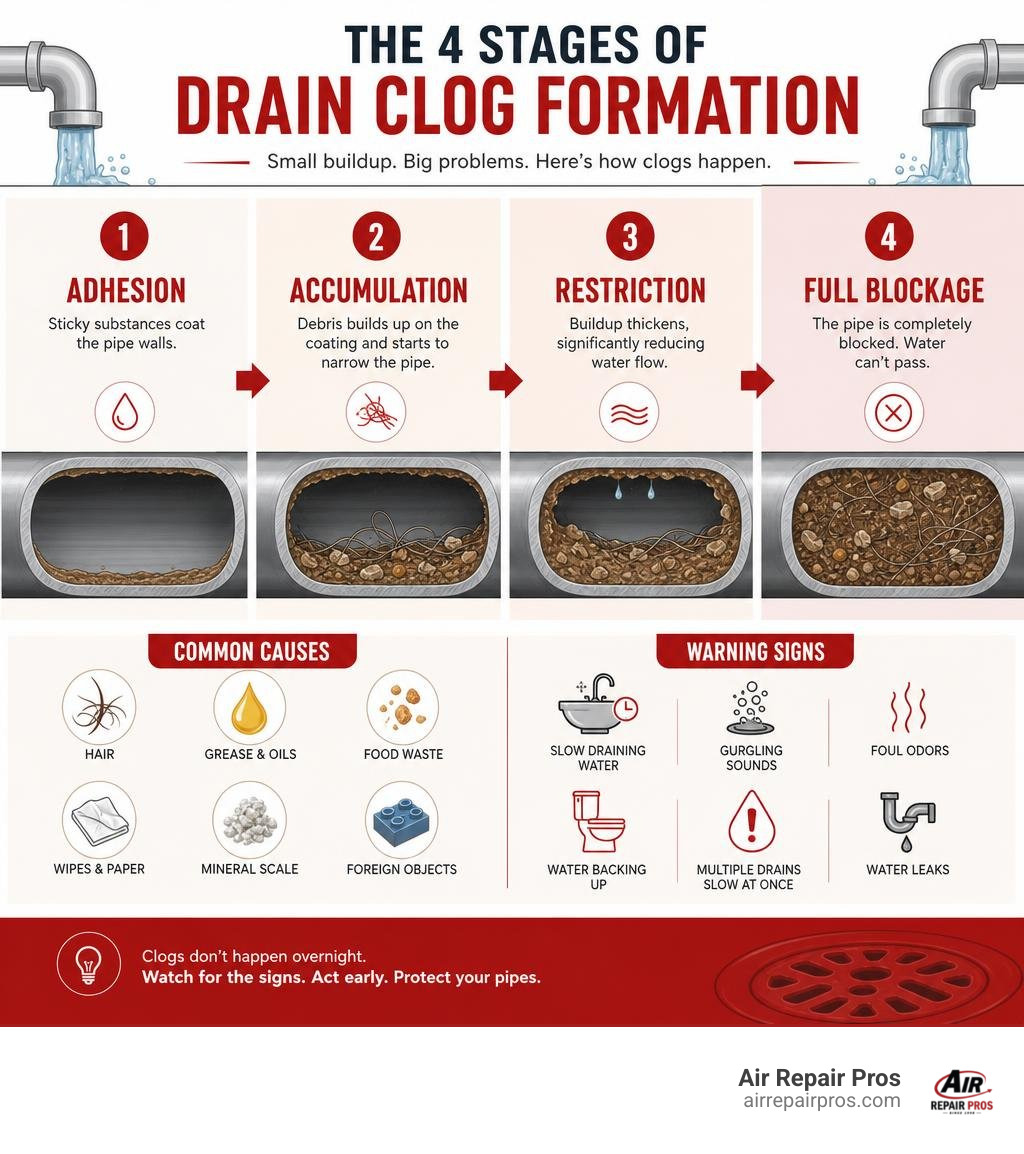
A drain blockage is not a single, isolated event; it is a physical process that develops through distinct stages. This process begins with adhesion, where sticky substances coat the interior walls of your pipes. Once a sticky layer is established, accumulation begins as hair, food particles, and other debris pass through and get caught. Over time, this buildup leads to restriction, narrowing the pipe diameter and slowing water flow. If left unaddressed, the restriction eventually becomes a complete blockage, stopping all water flow and causing immediate backups.
Understanding how these obstructions form makes it much easier to prevent them. Many of the most common clogged drain causes are entirely preventable once you understand the physical and chemical processes occurring inside your plumbing system. Homeowners can learn more about how buildup, pipe condition, and recurring plumbing symptoms connect in this specific Dallas slab leak repair blog, especially when hidden moisture or foundation-level plumbing issues are part of the concern.
How Hair and Soap Scum Create Common Clogged Drain Causes
In the bathroom, hair is the leading contributor to drain blockages. A single two inch diameter drain can accumulate enough hair mass to reduce water flow by fifty percent or more before you ever notice visible backup symptoms. When hair enters the drain, it does not simply wash through the system. Instead, it catches on the rough edges of the drain assembly, the stopper mechanism, and the walls of the U-shaped pipe under the sink known as the P-trap.
The problem escalates dramatically when hair combines with soap scum. Traditional bar soaps are formulated with animal fat derivatives that react with the dissolved minerals in municipal water. This chemical reaction creates a sticky, waterproof substance that clings to the inside of your pipes. As hair passes through, it binds with this sticky soap residue, forming a dense, felt-like plug that traps other debris like toothpaste, skin cells, and shaving cream. Within thirty to sixty days in a multi-person household, this mixture can completely seal off a drain line.
To prevent this, homeowners should install mesh drain strainers to catch hair before it enters the plumbing system. Switching from traditional bar soaps to liquid body washes can also significantly reduce the rate of soap scum accumulation. For homes already dealing with slow bathroom drains, Air Repair Pros can help restore proper flow through professional bathroom plumbing services.
Fats, Oils, and Grease in Kitchen Plumbing
In the kitchen, the primary threat to your drain lines is the combination of fats, oils, and grease, often referred to in the plumbing industry as FOG. Many homeowners mistakenly believe that running hot water while pouring grease down the sink will keep it moving safely through the pipes. In reality, this practice only pushes the grease slightly further down the line.
As grease cools, typically below sixty-eight degrees Fahrenheit, it undergoes emulsification and re-solidification. It transforms from a liquid into a hard, wax-like sludge that coats the interior walls of your kitchen drain pipes. This sludge acts like glue, trapping food particles, coffee grounds, and organic waste.
This issue is frequently worsened by the misuse of garbage disposals. Garbage disposals are designed to chop light food residue into small pieces, but they do not make food disappear. When fibrous materials like celery, potato peels, pasta, rice, or coffee grounds are introduced into a pipe already coated with grease, they quickly bind together to form a solid, cement-like obstruction. Pasta and rice expand in water, while coffee grounds accumulate in the P-trap like wet sand. To protect your kitchen plumbing, always scrape plates into the trash and collect cooking oils in a separate container for disposal. If your kitchen sink is already draining slowly, Air Repair Pros can clear the line safely with professional kitchen plumbing services.
The Impact of Flushable Wipes and Paper Products on Toilets
Toilets and sewer lines are designed to handle only two things: human waste and toilet paper. Standard toilet paper is engineered to disperse in water within about four minutes, breaking down into tiny fibers that flow easily through your home’s drain lines and municipal sewer systems.
In contrast, non-woven wipes, widely marketed as “flushable wipes,” do not disintegrate. These products are made of synthetic fibers bonded together to resist moisture. Even though they may clear your toilet bowl, they remain completely intact as they travel through your plumbing. When multiple wipes are flushed, they catch on pipe joints, tree roots, or rough interior surfaces, creating massive, rope-like blockages. These accumulations can reach up to thirty feet in length, causing severe toilet backups and structural pipe damage.
The consequences of flushing these products extend far beyond individual homes. For example, New York, NY spent eighteen million dollars over five years to deal with wipes clogging up the wastewater system. Other paper products, such as paper towels, facial tissues, feminine hygiene items, and cotton swabs, present the same risk because they are designed to absorb water without breaking apart. To safeguard your plumbing, follow the simple rule of only flushing waste and standard toilet paper. When a toilet backup does occur, Air Repair Pros technicians can address the issue with professional toilet repair services.
Environmental, Structural, and Warning Signs of Blockages
While many drain blockages are caused by what we put down our sinks and toilets, others are driven by environmental factors and structural changes occurring beneath our properties. These issues typically develop outside the home, underground, or within the walls, making them harder to detect without specialized equipment.
Tree Root Intrusion in Sewer Lines
Tree roots are widely recognized as the number one cause of blockage and clogs in water and sewer mains. Underground sewer pipes carry warm, nutrient-rich water, which acts as a powerful attractant for trees and large shrubs growing in your yard.
As trees grow, their root systems expand in search of moisture. They can detect the microscopic condensation that forms on the outside of sewer pipes. Roots do not need a large opening to enter a pipe; they can slip through tiny cracks, loose pipe joints, or offset sections in older clay, concrete, or cast iron lines. Once a single hair-like root enters the pipe, it thrives in the nutrient-rich environment, growing rapidly into a dense root mass that fills the pipe’s diameter.
This root mass acts as a highly effective filter, catching toilet paper, grease, and solid waste. This leads to recurring clogs and, eventually, complete structural failure of the pipe. Mechanical root cutting can temporarily clear the line, but without professional chemical root treatment, root regrowth can occur within six to eighteen months. Homeowners dealing with persistent main line issues can turn to Air Repair Pros for professional root treatment services.
Hard Water, Mineral Scale, and Pipe Corrosion
Hard water is a common issue for homeowners in North Dallas, TX. According to the USGS guide on hard water and minerals, hard water is defined as containing more than one hundred and twenty milligrams per liter of dissolved calcium and magnesium.
As hard water flows through your plumbing system, changes in temperature and pressure cause these dissolved minerals to precipitate out of the water, forming a hard, white crust known as limescale. This scale gradually builds up on the interior walls of your pipes, narrowing the opening available for water flow.
Limescale also creates an incredibly rough interior surface. Instead of sliding smoothly through the pipe, hair, grease, and soap scum catch on the mineral deposits, accelerating the clog formation process. Over time, this mineral scale can also contribute to pipe corrosion in older metal plumbing, weakening the pipe walls and leading to pinhole leaks. Addressing mineral scale often requires professional descaling or the installation of a water softening system to protect your plumbing.
AC Condensate Line Clogs: The Texas HVAC Connection
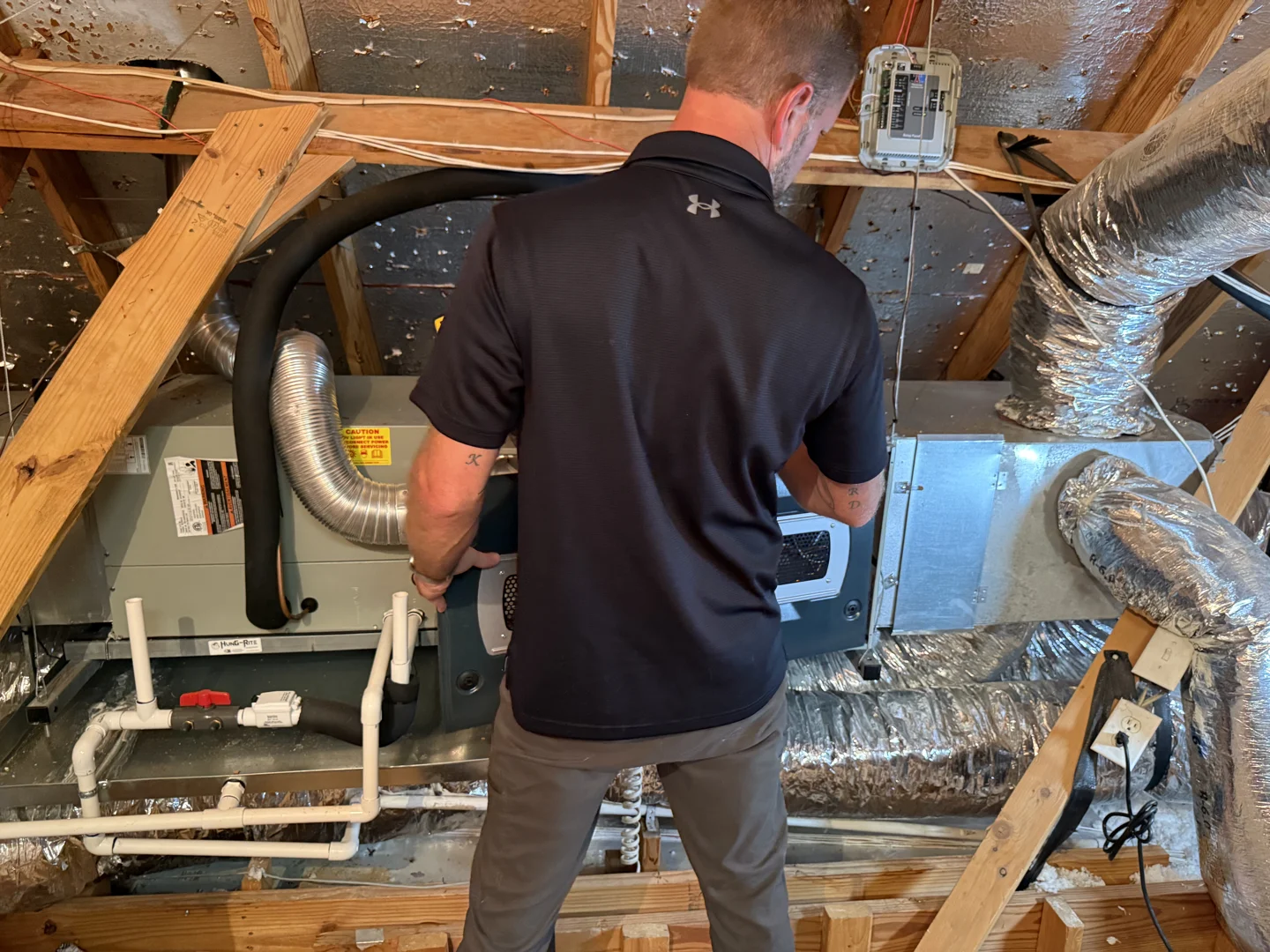
In Texas, the extreme summer heat and high humidity put a massive load on residential A/C systems. As your AC cools your home, it extracts gallons of moisture from the indoor air daily. This moisture collects in a drain pan beneath the indoor evaporator coil and flows out of your home through a dedicated AC condensate drain line.
Because this drain line carries warm, stagnant water, it is a prime breeding ground for algae, mold, and bacterial slime. Over the cooling season, this biological growth can completely plug the narrow condensate line. When the line clogs, the water has nowhere to go and overflows the drain pan.
This overflow can lead to severe water damage, including ruined drywall, ceiling stains, warped flooring, and toxic mold growth inside your walls. Because these drain lines are often routed near your home’s main plumbing drains, a backup in your primary plumbing system can also force wastewater back up into your AC condensate line. Regular professional maintenance of both your HVAC and plumbing systems is essential to prevent these dual-system failures.
Recognizing the Warning Signs of a Developing Clog
Most major plumbing emergencies start with subtle warning signs that are easy to ignore. Recognizing these early indicators can save you from costly repairs and water damage.
- Slow Drainage: If water pools around your feet in the shower or takes several minutes to empty from the kitchen sink, a restriction is active inside the pipe.
- Gurgling Noises: Bubbling or gurgling sounds coming from your drains or toilet indicate trapped air. As water tries to pass a partial blockage, air is forced backward through the system.
- Unpleasant Odors: Persistent foul smells from your drains usually point to decaying organic matter, grease buildup, or a dry P-trap that is letting sewer gases escape.
- Multiple Fixture Backups: If flushing your toilet causes water to rise in your shower, or if running your washing machine makes your kitchen sink gurgle, you have a blockage in your shared main sewer line.
If you notice any of these signs, it is important to act quickly before a minor restriction becomes a complete blockage. For homes experiencing unexplained moisture or damp spots near walls, Air Repair Pros can provide leak detection services to locate hidden plumbing issues before they cause structural damage.
Resolving and Preventing Clogged Drain Causes: What Works and What Doesn’t
When faced with a clogged drain, homeowners often turn to quick, convenient fixes. However, many popular DIY methods are ineffective or can actually cause severe damage to your pipes.
| Method | How It Works | Effectiveness | Risks |
|---|---|---|---|
| Baking Soda & Vinegar | Chemical fizzing action | Low (minor clogs only) | None |
| Plunging | Pressure and suction | Medium (local clogs) | Can damage weak joints if overused |
| Chemical Cleaners | Corrosive acid or alkaline | Low (temporary) | High pipe corrosion, chemical burns |
| Drain Snaking | Physical debris removal | High (local blockages) | Can scrape or puncture older pipes |
| Hydro-Jetting | High-pressure water | Very high (complete clean) | Must be performed by a professional |
Safe DIY Methods vs. Chemical Drain Cleaners
For minor, localized clogs, there are several safe DIY methods you can try before calling a professional. A standard cup plunger is highly effective for sink clogs, while a flange plunger should be used for toilets. When plunging, ensure there is enough water to cover the rubber cup, and maintain a tight seal to maximize the suction pressure.
Another safe home remedy is the classic baking soda and vinegar mixture. Pouring one cup of baking soda down the drain followed by one cup of white vinegar creates a natural foaming action that can help loosen minor organic buildup. Let it sit for fifteen minutes, then flush the line with plenty of hot tap water.
Safety Warning: Never use boiling water if you have PVC pipes, as the extreme heat can soften the plastic and warp the pipe joints. Always wear protective gloves and safety goggles when clearing drains.
One method you should avoid entirely is the use of chemical liquid drain cleaners. These products rely on highly corrosive acids or strong alkaline chemicals to dissolve blockages. Because they generate intense heat during the chemical reaction, they can easily warp or melt PVC pipes, corrode metal joints, and damage sink fixtures.
Furthermore, these chemicals rarely clear the entire clog; they usually just burn a small hole through it, leaving the remaining buildup to trap new debris. If the chemical cleaner fails to clear the block, you are left with a sink full of toxic, caustic water, making it highly hazardous for any plumber who subsequently works on the line.
When to Call a Professional Plumber in Frisco, TX
While minor sink clogs can often be handled at home, recurring clogs, main sewer line blockages, or tree root intrusions require professional intervention. Professional plumbers use advanced diagnostic tools to locate and identify the exact cause of your drainage issues without damaging your home.
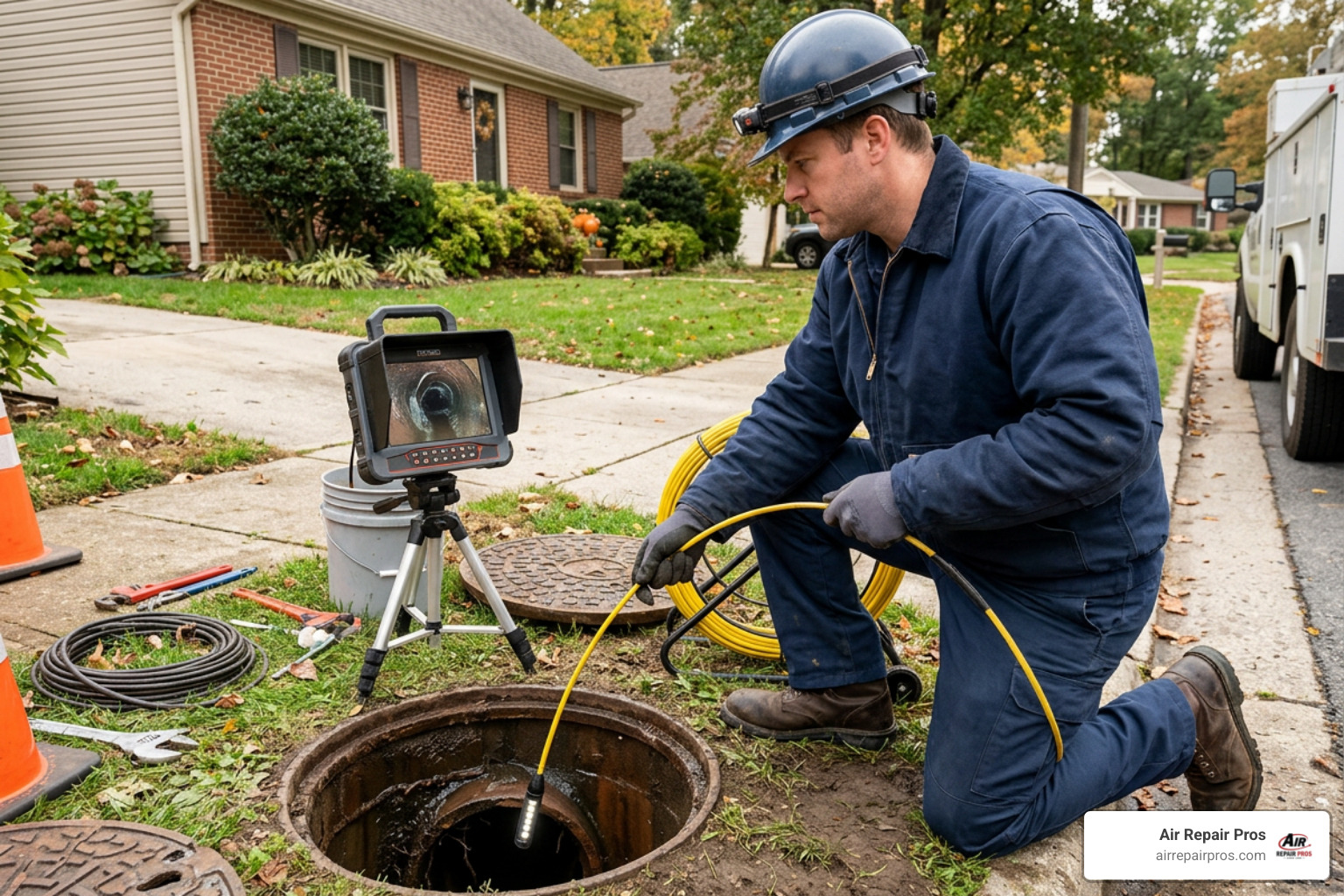
With high-definition sewer camera inspections, a technician can see exactly what is happening inside your pipes, whether it is grease buildup, a broken pipe joint, or invasive tree roots. To clear heavy grease and roots, professionals utilize hydro-jetting. This process uses specialized equipment to blast water through your pipes at up to four thousand PSI, scrubbing the pipe walls completely clean and restoring the full pipe diameter.
For homeowners in Frisco, TX, McKinney, TX, Plano, TX, Little Elm, TX, and Allen, TX, having access to rapid, reliable service is critical when a plumbing emergency strikes. Air Repair Pros provides professional drain cleaning services to resolve drain issues safely and permanently.
Frequently Asked Questions About Clogged Drain Causes
FAQ 1: What are the most common clogged drain causes in residential plumbing?
The most common causes of residential drain blockages are hair, soap scum, fats, oils, grease, food waste, flushable wipes, and foreign objects. Over time, these materials build up on pipe walls, gradually reducing water flow until a complete blockage occurs.
FAQ 2: Can a clogged drain cause a leak behind walls?
Yes. When a drain is completely blocked, water has nowhere to go. The resulting pressure buildup can target weak points in your plumbing, such as pipe joints, deteriorated seals, or corroded sections, leading to hidden water leaks and structural damage behind your walls.
FAQ 3: Why do my drains keep clogging even after using a plunger?
Plunging typically only addresses local, surface-level blockages or pokes a temporary hole in the clog. If your drains keep backing up, it usually indicates a deeper main sewer line issue, heavy grease accumulation, or tree root intrusion that requires professional tools to fully resolve.
FAQ 4: Are flushable wipes actually safe for my sewer line?
No. Despite their labeling, flushable wipes do not dissolve in water like standard toilet paper. They remain intact as they travel through your plumbing, catching on pipe joints and tree roots to create severe blockages in both residential lines and municipal sewer systems.
FAQ 5: How do tree roots get inside underground sewer pipes?
Tree roots seek out moisture and can detect the warm condensation on underground pipes. They enter through microscopic cracks, loose joints, or offset sections in older sewer lines. Once inside, they grow rapidly, creating a dense root mass that blocks water flow.
FAQ 6: What is the difference between drain clearing and professional drain cleaning?
Drain clearing is a temporary fix, such as using a plunger or a basic snake to poke a hole in a clog and get water moving again. Professional drain cleaning, such as hydro-jetting, thoroughly scrubs the interior pipe walls, removing all grease, scale, and debris to restore the pipe to like-new condition.
FAQ 7: How does hard water contribute to recurring pipe blockages?
Hard water contains high levels of calcium and magnesium. These minerals leave a hard scale buildup on the inside of your pipes, narrowing the opening and creating a rough, sandpaper-like surface that easily catches hair, grease, and soap scum.
FAQ 8: Can a clogged AC condensate line cause water damage inside my home?
Yes. When your AC condensate drain line becomes clogged with algae or mold, the condensation water overflows the drain pan. This can lead to ceiling water stains, ruined drywall, warped floors, and toxic mold growth in your home.
FAQ 9: Why does my kitchen sink smell like rotting food?
Foul kitchen sink odors are typically caused by organic waste, food scraps, and grease that have become trapped in the P-trap or accumulated inside your garbage disposal, creating a breeding ground for bacteria.
FAQ 10: When should I choose hydro-jetting over traditional drain snaking?
Hydro-jetting is the preferred choice for severe grease blockages, recurring pipe scale, and extensive tree root intrusions. While a snake only cuts a path through a clog, hydro-jetting uses high-pressure water to completely clean and restore the entire interior surface of the pipe.
Conclusion
Dealing with drain blockages can be incredibly frustrating, but understanding the underlying clogged drain causes is the first step toward maintaining a reliable, worry-free plumbing system. From the daily accumulation of hair and soap scum to the more complex challenges of hard water scale and tree root intrusion, proactive maintenance is always the smartest strategy.
By adopting simple prevention habits, such as using mesh drain strainers, properly disposing of kitchen grease, and keeping non-flushable products out of your toilets, you can prevent major blockages before they start. When DIY methods are not enough, or when you are dealing with recurring main line issues, calling in a certified team is the safest way to protect your home’s structural integrity.
When you need fast, dependable plumbing support, Air Repair Pros is ready to help. Serving North Dallas, TX since 1998, our team provides full-scale residential plumbing and HVAC solutions across Frisco, TX, McKinney, TX, Plano, TX, Little Elm, TX, and Allen, TX. With fully stocked trucks carrying eighty-five percent of the necessary parts for one-trip service, certified technicians are equipped to handle plumbing emergencies twenty-four hours a day, seven days a week. Don’t let a slow drain turn into an expensive emergency; contact our professional drain cleaning technicians and keep your home running smoothly.