

What Dallas Homeowners Need to Know About Slab Leak Repair
Dallas slab leak repair is one of the most important plumbing issues a homeowner in North Texas can face. While we are best known for trusted HVAC and AC service across the region, Air Repair Pros also understands how deeply plumbing problems can affect the comfort, safety, and efficiency of your entire home. A leak below a concrete slab can weaken structural support, increase indoor humidity, create mold concerns, and even force your AC system to work harder than it should.
If you suspect a leak under your foundation, fast action matters. Even a small hidden leak can gradually erode soil, shift the slab, and lead to water damage that spreads beyond the plumbing system itself. That is why homeowners in Dallas, TX and nearby communities benefit from understanding the early signs, the local risk factors, and the professional repair options available.
Quick Answer: Dallas Slab Leak Repair at a Glance
| Topic | Key Facts |
|---|---|
| Definition | A breach in water or sewer lines located beneath the concrete foundation |
| Primary Indicators | Spikes in water bills, warm floor patches, sounds of running water, foundation shifts |
| Detection Technology | Acoustic sensors, thermal imaging, pressure testing, tracer gas |
| Common Solutions | Pipe rerouting, under-slab tunneling, direct access, epoxy lining |
| Estimated Timeline | Detection takes 1 to 2 hours; repairs range from 1 to 5 days |
| Insurance Factors | Often covers access and damage but may exclude the pipe repair itself |
| Professional Action | Immediate inspection is required to prevent foundation failure |
Homes throughout Frisco, TX, McKinney, TX, Plano, TX, Little Elm, TX, Allen, TX, and the larger Dallas area often sit on slab-on-grade foundations. This style is common and practical, but it also means your plumbing may be embedded in or buried beneath the concrete. Once a pipe fails below the slab, the problem is hidden from view until symptoms begin showing up inside the home.
North Texas conditions make these problems more common than many homeowners realize. Expansive clay soil swells when wet and shrinks during dry periods. Over time, that movement puts pressure on buried pipes. Add hard water, aging plumbing materials, and temperature swings, and the risk of a hidden leak goes up significantly. At Air Repair Pros, we often see how a slab leak can create a chain reaction that affects plumbing performance, indoor air quality, and overall HVAC efficiency.
In this guide, we will walk through the essentials of slab leak detection and repair in Dallas, including how leaks start, what signs to watch for, how professionals locate them, and which repair strategies make the most sense for long-term protection. Whether you are dealing with a suspected hot water leak, foundation movement, or unexplained moisture, the goal is to help you make an informed decision before a small issue becomes a major repair.
Understanding Dallas Slab Leak Repair and Local Risk Factors
To fully grasp why dallas slab leak repair is such a frequent necessity, we must examine the geological and infrastructural landscape of North Texas. Most residential properties in Frisco, TX, McKinney, TX, and Plano, TX, utilize slab-on-grade foundations. In this construction style, the concrete is poured directly onto the earth, with the primary water supply and drainage lines either encased in the concrete or buried in the soil immediately beneath it. This design is efficient for construction but leaves the plumbing vulnerable to the elements.
The Impact of Expansive Clay Soil
The most significant threat to your plumbing and HVAC stability is the local soil. North Texas is situated on a bed of expansive clay. This material is highly reactive to moisture levels. During the rainy season, the soil swells, exerting upward pressure on the concrete slab. Conversely, during a drought, the soil pulls away from the foundation, leaving the heavy concrete unsupported. This cycle of heaving and settling can cause rigid copper or cast iron pipes to snap, bend, or develop pinhole leaks. We often find that foundation movement also affects the level of outdoor AC condensers, leading to refrigerant leaks and mechanical strain.
Pipe Corrosion and Mineral Accumulation
Beyond the physical stress of soil movement, the chemical composition of the water in Dallas, TX, plays a major role in pipe degradation. Many older homes in the area rely on copper piping. While copper is generally durable, it is highly susceptible to “pitting” corrosion caused by the minerals found in hard water. According to the DOE Guide on Home Plumbing Systems, these chemical reactions can eventually eat through the pipe wall. This results in slow, steady leaks that may go undetected for months while saturating the ground beneath your home.
Temperature Extremes and Infrastructure Age
Dallas homes deal with big temperature shifts across the year. That constant heating and cooling can make pipes expand and contract over time, which puts stress on joints and weak points. Older North Texas plumbing systems are often more vulnerable, especially when buried lines have been in place for decades. If a pipe breaks beneath the foundation, the fix usually calls for specialized slab leak repair methods rather than a typical above-ground plumbing repair. Homeowners with properties more than twenty years old should pay close attention, since older piping materials may be nearing the end of their useful life.

Identifying Warning Signs and Symptoms in Dallas, TX
Because slab leaks occur out of sight, homeowners must become detectives, looking for secondary symptoms that indicate a problem. Early detection is the most effective way to avoid the need for extensive foundation restoration or massive water remediation. At Air Repair Pros, we encourage our clients to monitor their homes for these specific red flags.
Unexplained Financial Changes
The most common early warning sign is a sudden, unexplained increase in your monthly water bill. If your usage has not changed, but your bill has increased by 20% or more, water is likely escaping from your system. Even a small leak can waste hundreds of gallons of water every day. Similarly, if you notice your electricity bill rising, it could be because a hot water slab leak is forcing your water heater to run constantly, or the resulting humidity is making your AC unit work overtime to keep the air dry.
Localized Floor Temperature Changes
If you walk across your home and notice a warm spot on tile, laminate, or wood flooring, there may be a leak in a hot water line beneath the slab. As hot water escapes, it warms the concrete and that heat can rise to the floor surface. This is a common warning sign that calls for prompt leak detection service. In some homes, the area may also feel slightly damp, or you may see grout lines starting to discolor.
Auditory Clues and Meter Activity
When your home is quiet, usually late at night, listen for the sound of running water. If you hear a faint rushing or hissing sound coming from the floor or walls when no faucets are in use, a pipe has likely failed. You can confirm this by locating your water meter. If the low-flow indicator or the main dial is moving while all water sources are shut off, you have a confirmed leak. This is a critical moment to contact a professional to prevent further soil erosion.
Structural Distortions and Mold Growth
As water saturates the soil under your home, the foundation may begin to shift unevenly. This leads to visible structural changes such as cracks in the drywall, doors that no longer latch correctly, or windows that become difficult to open. Furthermore, the excess moisture can migrate upward into your walls, creating a breeding ground for mold. If you notice a persistent musty odor that your HVAC system cannot filter out, it may be due to water trapped under the slab.
Professional Detection and Diagnostic Processes
In the past, identifying the location of a slab leak involved a significant amount of guesswork and destructive testing. Today, Air Repair Pros utilizes advanced, non-invasive technology to pinpoint the exact source of the problem without causing unnecessary damage to your home. Our slab leak detection process is designed to be precise and efficient.
The Initial Diagnostic Sequence
Our technicians begin with a comprehensive pressure test of your entire plumbing system. By isolating the water supply and monitoring the pressure levels with high-precision gauges, we can determine if the leak is on the supply side or the drainage side. We also perform isolation testing to see if the issue is confined to the hot or cold water lines. This initial step is crucial because it dictates which specialized tools will be used for the remainder of the investigation.
Advanced Technology for Dallas Slab Leak Repair Detection
Once we confirm a leak exists, we employ several high-tech methods to find its exact coordinates:
- Acoustic Amplification: We use sensitive microphones to listen for the sound of water escaping under pressure. Different types of leaks produce different frequencies, and our experienced technicians can distinguish between a pinhole leak and a major pipe burst through several inches of concrete.
- Thermal Imaging Cameras: These devices allow us to see heat signatures through your flooring. This is particularly effective for hot water leaks, as the escaping water creates a distinct “bloom” of heat that is clearly visible on the infrared spectrum.
- Tracer Gas Technology: In complex cases, we drain the lines and inject a safe, non-toxic mixture of helium and nitrogen. Because these gas molecules are smaller than water molecules, they escape through the leak and rise through the slab, where they are detected by our sensitive “sniffer” probes.
- Hydrostatic Testing: This is primarily used for sewer and drain lines. We fill the system with water and monitor the levels to identify where the drainage system is failing.
By using these advanced leak detection methods, we help make the repair as precise as possible, saving homeowners time and helping reduce the total cost of the project.
Primary Repair Methods: Rerouting vs. Tunneling
After the leak has been accurately located, we work with the homeowner to determine the most effective repair strategy. The choice of method depends on the age of the plumbing, the location of the breach, and the type of flooring installed in the home. At Air Repair Pros, we prioritize solutions that offer long-term reliability.
Pipe Rerouting (The Modern Standard)
Rerouting is frequently the most recommended method for dallas slab leak repair. Instead of attempting to fix a pipe that is buried under several feet of concrete and soil, we simply abandon the damaged line. We then install a new, high-quality line through the walls or the attic space.
- Advantages: This method helps you avoid damage to expensive flooring and reduces the chance of another leak forming in the same under-slab line. It often uses flexible PEX tubing, which stands up well to corrosion and mineral buildup that can affect older copper pipes.
- Considerations: Rerouting usually involves a few small drywall openings, but those repairs are typically simpler and less costly than replacing custom tile or hardwood.
- This option is often part of a broader pipe replacement plan to update the home’s plumbing system.
Under-Slab Tunneling
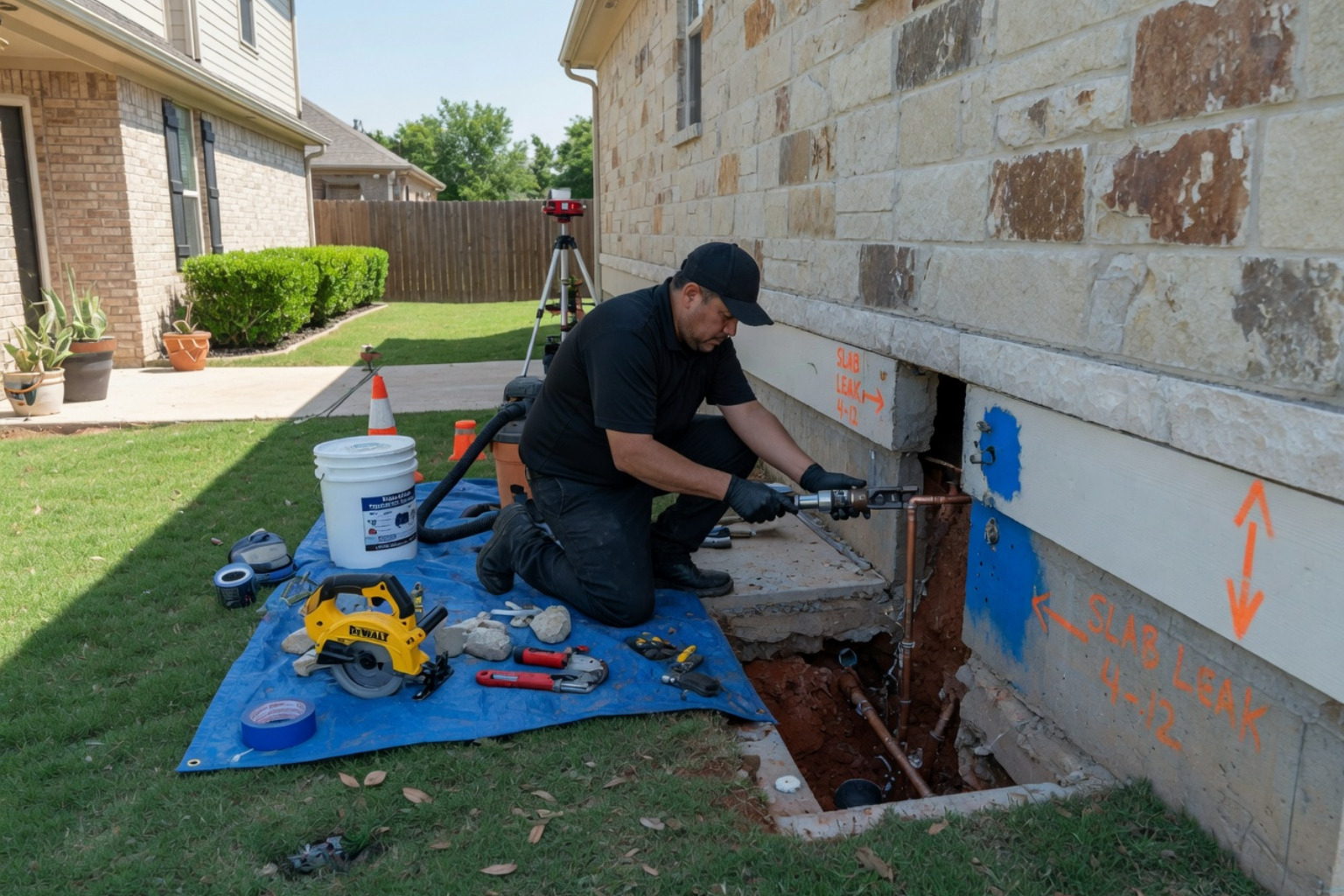
Tunneling is a labor-intensive process where our team digs a path under the foundation from the exterior of the home. This allows us to reach the damaged pipe from below without ever entering your living space.
- Advantages: This is the ideal choice for homeowners with high-end interior finishes that would be impossible to replace. You can remain in your home and continue your daily routine while the work is performed outside.
- Considerations: Because of the manual labor involved in excavating and backfilling the tunnel, this method can be more costly than rerouting.
Direct Access (Jackhammering)
This is the traditional approach where we break through the concrete slab directly over the leak site. While it allows for a quick patch of a specific spot, it is extremely messy and creates a significant amount of dust. We generally only recommend this for newer homes where a single, isolated failure has occurred and the flooring can be easily matched.
Trenchless Solutions and Repiping
For some sewer line problems, trenchless methods like epoxy lining can rebuild the pipe from the inside with less disruption. But if the plumbing system is aging and leaks are happening in multiple places, a whole house repipe may be the smarter long-term investment to avoid repeated repairs.
Financial Considerations: Costs and Insurance Coverage
Navigating the financial aspects of Dallas slab leak repair requires a clear understanding of the variables involved. Because every home in Dallas, TX, is built differently, costs are determined by the depth of the plumbing, the complexity of the leak, and the chosen repair method. We provide detailed estimates to ensure homeowners can make informed decisions without any hidden surprises.
| Repair Method | Relative Cost | Best Application |
|---|---|---|
| Spot Repair | Moderate | Isolated leaks in relatively new plumbing systems |
| Pipe Rerouting | Moderate to High | Older homes with aging copper or multiple leak points |
| Under-Slab Tunneling | High | Homes with custom flooring or difficult interior access |
| Full System Repiping | High | Comprehensive solution for homes with systemic corrosion |
The Role of Homeowners Insurance
A common question we receive at Air Repair Pros is whether insurance will cover the cost of the repair. In most standard Texas homeowners policies, the insurance company will cover the “cost of access” (the labor to reach the pipe) and the “ensuing damage” (repairs to flooring, drywall, or mold remediation). However, the actual repair of the pipe itself is often considered a maintenance item and may not be covered unless you have a specific endorsement for seepage and leakage. It is essential to review your policy with your agent to understand your specific coverage limits. For a deeper look at local service standards and what to expect from professional contractors, you can read The Complete Guide to Plumbing Services in Dallas TX.
Prevention and Professional Maintenance
While you cannot change the soil composition in Dallas, TX, there are several proactive steps you can take to protect your home from the devastating effects of a slab leak. At Air Repair Pros, we believe that prevention is the best investment you can make in your property’s long-term health.
Regulating Water Pressure
High water pressure is a silent killer of plumbing systems. While it might feel great in the shower, pressure exceeding 80 PSI puts incredible stress on every joint, valve, and pipe in your home. We recommend installing a high-quality water pressure regulator to keep your system within the safe range of 40 to 60 PSI. This simple addition can significantly extend the life of your pipes and your HVAC system’s humidification components.
Safety Warning: Adjusting or installing a water pressure regulator involves working with your main water supply line. If you are not comfortable with this type of work, always hire a licensed plumber to handle the installation. Incorrect setup can lead to pressure spikes that damage appliances and fixtures throughout your home.
Foundation Moisture Management
To prevent the expansive clay from shifting, you must maintain a consistent moisture level around your foundation. During the hot, dry months in Texas, use soaker hoses placed about 18 inches from the foundation. This prevents the soil from shrinking and pulling away, which reduces the heaving that leads to broken pipes. Proper drainage is also key; ensure that your AC condensate lines and rain gutters are directed away from the foundation to prevent localized oversaturation.
Water Softening Systems
The hard water in North Texas leads to mineral buildup and internal corrosion. By installing a whole-home water softener, you can prevent the “pitting” that causes slab leaks. This also benefits your HVAC system if you have a whole-home humidifier, as it prevents scale from clogging the internal components.
The Value of Annual Inspections
Regular professional inspections are one of the best ways to catch small plumbing problems before they turn into major repairs. The team at Air Repair Pros performs thorough plumbing and HVAC checkups to help spot early signs of wear, pressure issues, and hidden leaks. With fully stocked service vehicles, many problems can be handled in one visit, including pipe repair and system adjustments. If a problem becomes urgent, 24/7 emergency response is available to help protect your home.
When to Schedule Dallas Slab Leak Repair Services
Do not wait for visible damage to call a professional. If you notice unexplained bill spikes, hot spots on your floor, or any signs of structural movement, reach out to a qualified Emergency Plumber right away. Early intervention is always less expensive and less disruptive than waiting for a small problem to become a foundation-level emergency.
Frequently Asked Questions
What exactly is a slab leak?
A slab leak is a professional term for a leak in the water or sewer lines that run beneath the concrete foundation of a home. These leaks can occur in the supply lines carrying fresh water into the home or the drainage lines carrying waste away.
Why are slab leaks so common in the Dallas area?
The primary reason is the expansive clay soil found throughout North Texas. This soil expands and contracts significantly with moisture changes, which puts physical stress on the pipes. Hard water and aging infrastructure also contribute to the high frequency of these issues.
How can I tell if my high water bill is caused by a leak?
If your bill has increased significantly without a change in your daily habits, you should check your water meter. If the meter is moving while all water in the house is turned off, you likely have a leak somewhere in your system.
Will you have to tear up my hardwood or tile floors?
Not necessarily. We often use pipe rerouting, which involves running new lines through the attic or walls, or tunneling from the outside of the house. Both methods allow us to fix the problem without disturbing your interior flooring.
Does my homeowners insurance cover the repair costs?
Most policies cover the cost of accessing the leak and repairing the damage caused by the water, such as ruined flooring. However, the actual repair of the pipe itself is often the responsibility of the homeowner unless they have specific coverage.
How long does the repair process usually take?
The detection process takes about an hour or two. Depending on the repair method chosen, the actual work can take anywhere from one day for a simple spot repair to five days for a full reroute or repipe.
Is it safe to ignore a small leak for a while?
No, it is never safe to ignore a slab leak. Even a small amount of water can wash away the soil beneath your foundation, leading to structural failure, sinkholes, and dangerous mold growth that can affect your indoor air quality.
What is the most effective repair method available?
Pipe rerouting is generally considered the best long-term solution. It replaces the old, vulnerable pipe with modern materials and moves the plumbing to a location where it is no longer subject to the stress of soil movement.
What is the difference between tunneling and jackhammering?
Jackhammering involves breaking through the floor from inside the home, which is noisy and messy. Tunneling involves digging under the house from the outside, which keeps the mess out of your living space and preserves your flooring.
How can I prevent future slab leaks from occurring?
You can minimize the risk by maintaining consistent moisture levels around your foundation with soaker hoses, installing a water pressure regulator to keep pressure below 80 PSI, and using a water softener to prevent internal pipe corrosion.
Conclusion
Slab leaks are a major issue for homeowners in North Texas, but catching them early can help you avoid much bigger damage. When you know what signs to watch for and how local soil and plumbing conditions affect your home, it becomes much easier to act fast. Whether you are facing an urgent plumbing problem or want trusted help with your home systems, Air Repair Pros is ready to help.
Our certified technicians arrive with fully stocked trucks and the tools needed to diagnose and repair problems efficiently. If you suspect a leak or want a full plumbing evaluation, contact our plumbing experts today for specialized slab leak detection and slab leak repair in Frisco, TX, McKinney, TX, Plano, TX, Little Elm, TX, and Allen, TX. We are available 24/7 for urgent home service needs.