What Frisco, TX Business Owners Need to Know About Commercial AC Repair
Commercial AC repair in Frisco, TX is a critical concern for any business owner trying to keep operations running through a brutal North Texas summer. When temperatures push past 100 degrees for weeks at a time, a failing HVAC system is not just an inconvenience; it is a direct threat to employee productivity, customer comfort, and your bottom line.
Here is a quick overview of what to know if your commercial AC system is failing right now:
Quick Answer: Commercial AC Repair in Frisco, TX
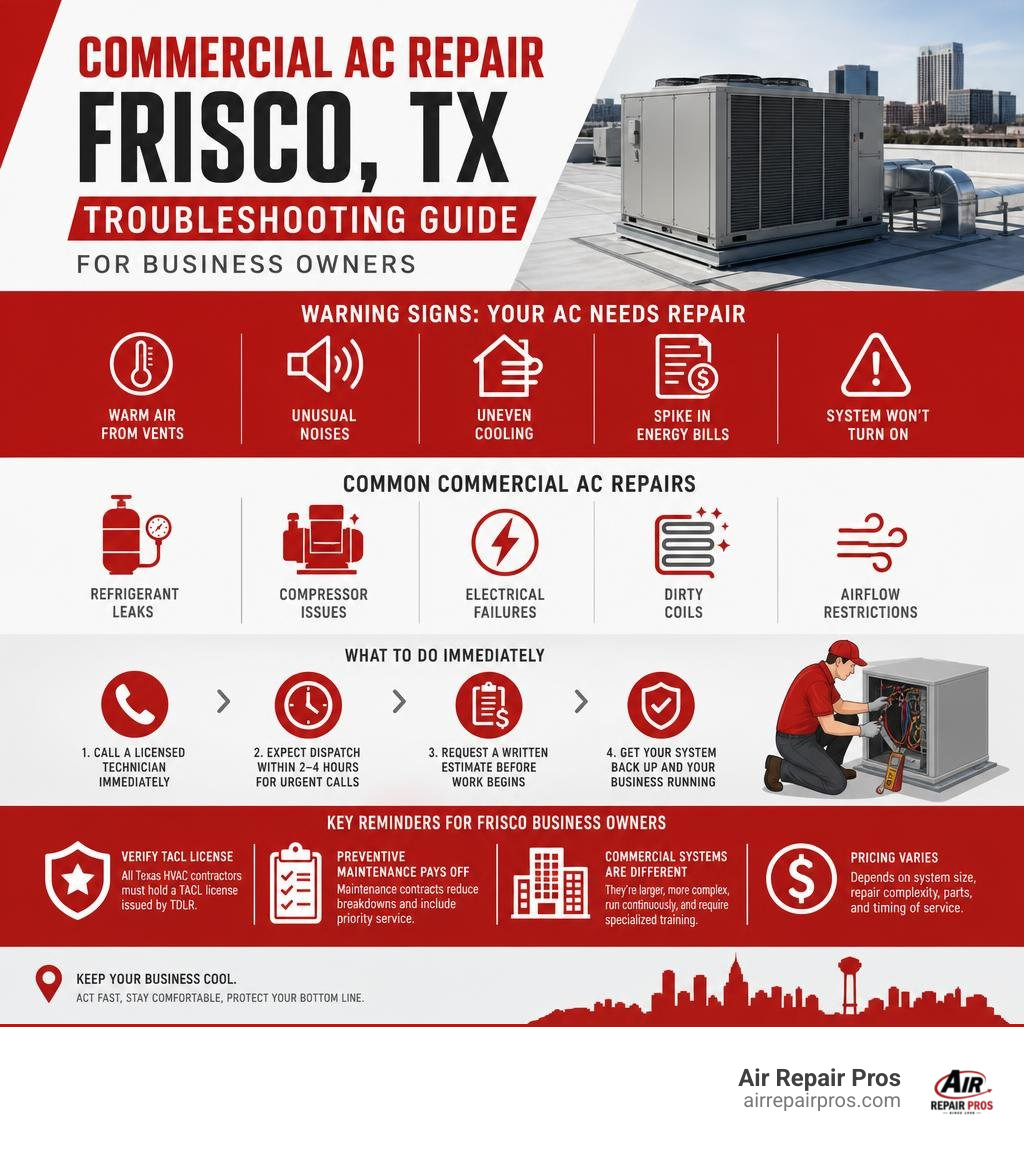
- Call a licensed technician immediately if you notice warm air from vents, unusual noises, uneven cooling, or a sudden spike in energy bills
- Expect dispatch within 2-4 hours from reputable commercial HVAC contractors for urgent emergency calls
- Common repairs include refrigerant leaks, compressor issues, electrical failures, dirty coils, and airflow restrictions
- Texas HVAC contractors must hold a TACL license issued by the Texas Department of Licensing and Regulation (TDLR), which you should always verify before hiring
- Pricing varies depending on system size, repair complexity, parts availability, and whether the work is done after hours, so you should request a written estimate upfront
- Preventive maintenance contracts significantly reduce emergency breakdowns and often include priority response times
- Commercial systems differ fundamentally from residential ones because they are larger, more complex, run continuously, and require technicians with specialized commercial training
Frisco, TX has grown into one of North Texas’s most active business hubs, with commercial corridors like The Star, Stonebriar, and Hall Park demanding reliable climate control year-round. That growth has brought a dense concentration of office buildings, retail centers, restaurants, medical facilities, and warehouses, all of which depend on commercial HVAC systems running at or near full capacity during peak summer months.
Unlike a residential AC breakdown, a commercial failure affects dozens or even hundreds of people at once. A retail store that loses cooling during a busy afternoon, or a restaurant where kitchen temperatures spiral out of control, faces immediate revenue loss on top of the repair bill. The stakes are simply higher, and the systems involved are more complex.
This guide covers everything Frisco, TX business owners need to understand about commercial AC repair, ranging from the types of systems used across the area, to common failure points, emergency response expectations, licensing requirements, and how to choose a contractor who will get your business back up and running fast.
Understanding Commercial HVAC Systems in Frisco, TX
To manage a business facility effectively, it helps to understand the hardware keeping your building comfortable. Commercial buildings in Frisco, TX, rely on heavy-duty, complex systems designed for continuous operation, high capacity, and multiple zones. These setups differ significantly from residential units in both scale and engineering.
While a home system typically uses a simple split system, commercial properties utilize specialized configurations to distribute air across thousands of square feet. When you need professional service, working with a team that understands these specific setups is vital.
Packaged Rooftop Units (RTUs)
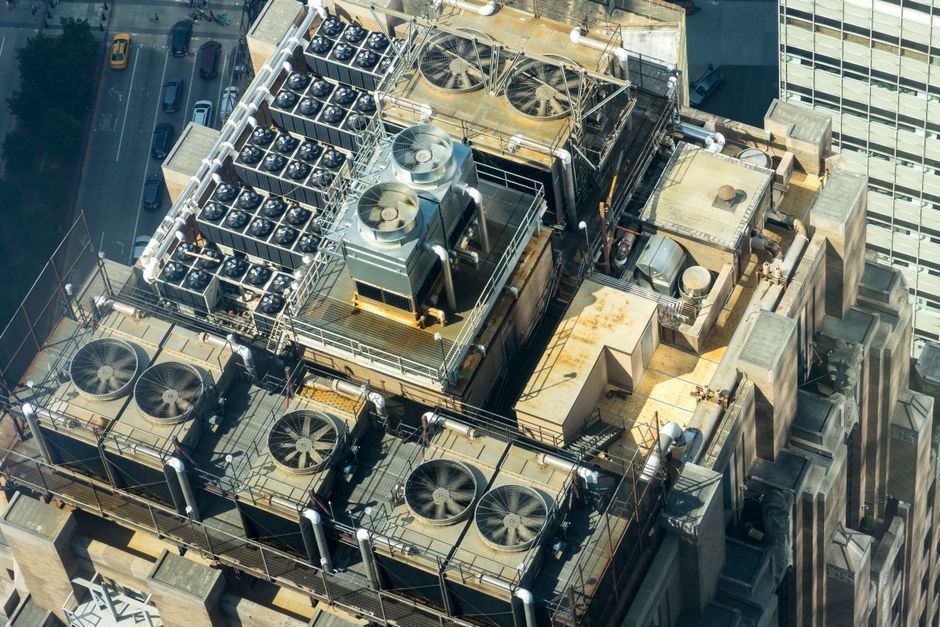
Packaged rooftop units, commonly referred to as RTUs, are the most frequent sight on Frisco, TX commercial buildings. These heavy-duty systems consolidate all air conditioning components (the compressor, condenser, evaporator coil, and fan) into a single weather-resistant cabinet installed on the roof.
RTUs are highly favored for several reasons:
- Space Preservation: By sitting on the roof, they release valuable indoor floor space and keep noisy machinery away from employees and customers.
- Easy Maintenance Access: Technicians can perform repairs, filter changes, and seasonal tune-ups on the roof without entering your workspace or disrupting daily business activities.
- Multi-Zone Cooling: Modern RTUs can be integrated with sophisticated dampers and thermostats to deliver precise, multi-zone cooling, ensuring the sunny conference room stays just as comfortable as the shaded corner office.
Split Systems and VRF Technology
For businesses where rooftop installation is not feasible or where highly customized temperature control is required, split systems and Variable Refrigerant Flow (VRF) technology provide excellent alternatives.
Commercial split systems divide components between an indoor air handler and an outdoor condenser. They are frequently used in smaller retail spaces, stand-alone offices, or strip centers throughout Collin County.
VRF technology represents the cutting edge of commercial climate control. Instead of moving massive volumes of air through heavy ductwork, VRF systems circulate refrigerant directly to multiple small, indoor fan coil units mounted throughout the building. By adjusting the flow of refrigerant precisely to each zone, VRF systems offer unmatched energy efficiency and allow simultaneous heating and cooling in different rooms. For a deeper look at custom commercial layouts, you can consult with our experienced technicians who specialize in designing and maintaining advanced commercial HVAC systems for North Texas commercial properties.
Common Commercial AC Problems in Frisco, TX
North Texas summers push commercial cooling equipment to its absolute physical limits. When a system runs continuously in triple-digit heat, even minor component wear can quickly escalate into a complete system shutdown. Recognizing these common failures early can help you schedule a repair before your building becomes a sauna.
If your system is showing signs of struggle, acting quickly is key. Booking a prompt inspection for commercial air conditioning repair Frisco, TX can save your business from an unexpected, costly interruption.
Frozen Evaporator Coils and Airflow Restrictions
It may seem counterintuitive for an air conditioner to freeze during a scorching July afternoon, but frozen evaporator coils are a incredibly common commercial issue. The evaporator coil relies on a steady stream of warm indoor air to keep the refrigerant inside from dropping below freezing temperatures.
If that airflow is restricted, the temperature of the coil drops, causing condensation on the coil to freeze solid. Common causes of this restricted airflow include:
- Clogged Air Filters: In commercial spaces with high foot traffic, filters accumulate dust, fibers, and debris rapidly, choking off the system’s air supply.
- Failing Blower Motors: If the fan motor slows down or stops entirely, air cannot move across the coils, leading to immediate ice buildup.
- Blocked Vents or Return Grilles: Stacking inventory, office furniture, or storage boxes in front of return grilles starves the system of air.
Compressor Failures and Refrigerant Leaks
The compressor is the heart of your commercial AC system, responsible for pumping refrigerant between the indoor and outdoor coils. Because commercial compressors operate under immense pressure and heat, they are highly vulnerable to wear and tear.
Refrigerant leaks are a primary driver of compressor failure. When a system loses refrigerant through tiny cracks in the copper lines, the compressor must work twice as hard to cool the building. This extra strain causes the unit to overheat, eventually leading to electrical shorts or mechanical seizure. Keeping an eye on refrigerant levels is a key part of maintaining system health and protecting this expensive component.
The Cost of Commercial AC Repair Frisco, TX vs. Residential Repairs
Many business owners wonder why commercial AC services are priced differently than residential repairs. The short answer is that commercial systems are larger, operate under higher electrical voltages, require specialized safety equipment, and utilize components that are significantly more expensive to manufacture and replace.
To help visualize these differences, here is a general comparison of how commercial and residential HVAC services differ across key operational categories:
| Operational Category | Residential HVAC Systems | Commercial HVAC Systems |
|---|---|---|
| System Location | Ground level or backyard crawlspaces | Rooftops, mechanical rooms, or suspended ceilings |
| Electrical Voltage | Single-phase (120V to 240V) | Three-phase (208V, 240V, 480V, or higher) |
| Zoning Complexity | Typically 1 to 2 zones per household | Dozens of independent zones with complex VAV boxes |
| Technician Training | Standard residential EPA licensing | Advanced commercial diagnostic and safety certifications |
| Diagnostic Process | Straightforward, single-unit evaluation | Complex multi-system, ductwork, and ventilation audits |
While commercial repairs represent a larger business expense, they are essential for protecting your property and maintaining daily operations. Business owners should request a professional estimate from a trusted provider to understand the specific scope of work required for their system. You can explore our specialized services by visiting our main commercial HVAC service page.
Key Factors Influencing Commercial AC Repair Frisco, TX Costs
When a technician evaluates your commercial system, several distinct factors will influence the final repair estimate:
- System Size and Tonnage: Commercial systems are measured in tons of cooling capacity. A 15-ton rooftop unit uses larger, more robust parts than a standard 3-ton residential unit, which naturally increases the cost of replacement components.
- Accessibility and Equipment: If your system is located on a multi-story roof that requires a crane to lift heavy parts, or if technicians need specialized scaffolding to reach suspended equipment, these logistical needs will affect the overall cost.
- Parts Availability: Standard residential parts are highly commoditized and easily sourced. Specialized commercial components, such as high-capacity scroll compressors or proprietary electronic control boards, may need to be ordered directly from the manufacturer.
Repair vs. Replacement Decisions for Frisco, TX Businesses
When faced with a major repair bill, business owners must weigh whether it makes more financial sense to fix the existing system or invest in a replacement. As a general rule, if your system is over 15 years old and the cost of the repair approaches a significant percentage of a new unit’s value, replacement is often the smarter long-term business decision.
Newer commercial systems must meet strict energy efficiency guidelines set by the U.S. Department of Energy. Upgrading to a modern, high-efficiency unit can dramatically lower your monthly utility bills, helping to offset the initial installation cost over time. If your business is located nearby in Collin County, planning ahead with professional McKinney, TX commercial AC installation services can ensure a seamless transition with minimal disruption to your daily operations.
Minimizing Downtime with Emergency Commercial AC Repair Frisco, TX
When your business’s cooling system fails in the middle of a Texas heatwave, every hour of downtime can mean lost customers, spoiled inventory, and frustrated employees. Having a reliable plan for emergency service is critical for protecting your business continuity.
When a crisis strikes, you need a partner who can respond at any hour of the day or night. You can count on reliable, rapid support by utilizing Frisco, TX heating and cooling commercial repairs 24-7 to keep your business safe and comfortable.
Rapid Response Times for Urgent Commercial AC Repair Frisco, TX
Reputable commercial HVAC providers prioritize emergency calls from local businesses. When you contact a professional service team, you should expect a technician to be dispatched to your location within 2 to 4 hours.
To ensure the fastest possible resolution, look for companies that maintain fully stocked service vehicles. When a technician arrives with a wide array of common commercial replacement parts already on board, they can often complete the repair in a single visit, saving you from waiting days for a simple part to be delivered. Working with established Frisco, TX commercial HVAC companies ensures you have access to local technicians who understand the rapid pace of the Frisco, TX business community.
Strategies to Prevent Operational Disruptions
While emergency repairs are sometimes unavoidable, there are several steps business owners can take to minimize the impact of an HVAC breakdown:
- Schedule Off-Hour Repairs: If your system is still functioning but needs attention, coordinate with your contractor to perform the repairs early in the morning or after your business closes for the day.
- Utilize Temporary Cooling: For critical areas like server rooms or medical clinics, keep portable spot-coolers on hand to maintain safe temperatures while the main system is being serviced.
- Establish a Clear Communication Plan: Keep your staff informed about the repair timeline and adjust employee schedules or offer temporary remote-work options if building temperatures become unsafe.
Preventive Maintenance and Choosing the Right Contractor
The single best way to avoid the stress and expense of an emergency commercial AC breakdown is to invest in a proactive maintenance plan. Regular inspections allow professional technicians to identify and resolve minor issues before they cause a complete system failure. If your system is already struggling, scheduling prompt AC repair before peak summer demand can help prevent a small issue from turning into a full business disruption.
When choosing a service partner, it is important to select a company with a proven track record of commercial expertise. You can learn more about establishing a reliable service agreement by exploring professional commercial AC repair and maintenance options in the local area with a trusted provider like Air Repair Pros.
Licensing and Certification Requirements in Texas
In the state of Texas, anyone performing commercial HVAC work must be properly licensed and certified. When evaluating potential contractors, always verify the following credentials:
- TACL License: The lead contractor must hold a Texas Air Conditioning License (TACL) issued by the Texas Department of Licensing and Regulation. You can easily verify a company’s license status online to ensure they are in good standing.
- EPA Section 608 Certification: Any technician handling regulated refrigerants must hold this certification from the U.S. Environmental Protection Agency to ensure safe, legal handling of chemical refrigerants.
- NATE Certification: North American Technician Excellence (NATE) is the gold standard for technician testing. Choosing a company with NATE-certified technicians ensures your system is serviced by a highly trained professional.
Establishing a Commercial HVAC Maintenance Schedule
A comprehensive commercial maintenance plan should include at least two major tune-ups per year: one in the early spring before the cooling season begins, and one in the early fall before switching to heating. Businesses that want priority emergency response times, seasonal tune-ups, and year-round peace of mind can also consider joining Air Repair Pros’ commercial comfort club as part of their long-term maintenance strategy.
During a typical maintenance visit, a technician will perform several critical checks:
- Inspecting electrical connections and safety controls
- Cleaning evaporator and condenser coils to maintain optimal heat transfer
- Checking refrigerant charge levels and inspecting lines for potential leaks
- Verifying blower motor operation and lubricating moving parts
- Replacing air filters and checking ductwork for leaks or blockages
For local business owners, setting up a consistent schedule for commercial HVAC maintenance in Frisco, TX is the most effective way to protect your equipment investment, lower your monthly energy costs, and enjoy total peace of mind all year long.
Frequently Asked Questions About Commercial AC Repair in Frisco, TX
How often should commercial AC filters be replaced in Frisco, TX?
In most Frisco, TX commercial environments, air filters should be replaced every 1 to 3 months. High-traffic businesses like retail stores, restaurants, or medical clinics may require monthly filter changes to maintain proper airflow and prevent dust buildup on system components, while quiet office spaces may only need replacements quarterly.
What are the signs that my commercial AC compressor is failing?
Common warning signs of a failing commercial compressor include loud banging or clanging noises during startup, frequent system short-cycling, a sudden drop in cooling performance, and electrical breakers tripping repeatedly. If you notice any of these signs, turn off the system and call a technician immediately to prevent complete component failure.
Do commercial HVAC installations in Collin County require permits?
Yes, commercial HVAC installations, including rooftop unit replacements and major system retrofits, require building permits in Frisco, TX and throughout Collin County. A licensed commercial contractor will handle the permitting process and ensure the new installation complies with all local building codes and safety regulations.
What is the average lifespan of a commercial rooftop AC unit?
With regular preventive maintenance, a commercial packaged rooftop unit (RTU) typically lasts between 15 and 20 years. However, the extreme summer heat in North Texas can accelerate wear and tear, meaning systems that have suffered from deferred maintenance may begin to experience major component failures closer to the 10-to-12-year mark.
How does high humidity affect commercial AC performance in Texas?
High humidity levels force your commercial AC system to work much harder. The system must remove excess moisture from the air before it can effectively lower the indoor temperature. If your system is undersized or struggling, high humidity can lead to a damp, uncomfortable indoor environment and increase the risk of mold growth in ductwork.
Can a faulty thermostat cause a commercial AC system to short-cycle?
Yes, a faulty, poorly calibrated, or improperly located thermostat can cause a commercial system to short-cycle (turning on and off rapidly without completing a full cooling cycle). This issue can also be caused by loose wiring, incompatible smart thermostat configurations, or placing a thermostat too close to a supply register.
What is the difference between a single-stage and variable-speed commercial AC?
A single-stage commercial AC operates at only one speed: 100% capacity. It turns on at full blast until the target temperature is reached, then shuts off. A variable-speed system can adjust its operating speed precisely to match the building’s current cooling demand, running continuously at lower, highly energy-efficient speeds to maintain a perfectly consistent temperature.
How do I verify if an HVAC technician is licensed in Texas?
You can verify an HVAC contractor’s licensing credentials by visiting the official website of the Texas Department of Licensing and Regulation (TDLR). Simply enter the company’s name or their TACL license number into the public search database to confirm that their license is active and free of unresolved disciplinary actions.
What should I do immediately if my commercial AC stops cooling?
If your system stops cooling, first check your thermostat settings to ensure it is set to “cool” and the temperature is set below the current room temperature. Next, check your building’s electrical panel for any tripped breakers. If the system still does not respond, turn it off to prevent mechanical damage and contact a licensed commercial HVAC contractor for a diagnostic evaluation.
Are commercial HVAC maintenance plans worth the investment?
Absolutely. Commercial HVAC maintenance plans are a highly cost-effective investment. Regular tune-ups extend the overall lifespan of your expensive equipment, improve monthly energy efficiency, and identify minor component wear before it escalates into a catastrophic, expensive emergency breakdown that disrupts your business operations.
Conclusion
Protecting your business from the disruptive impact of a commercial AC failure requires a proactive approach, a clear understanding of your building’s unique cooling needs, and a trusted service partner you can call at a moment’s notice. When temperatures soar, having a reliable team on standby is the ultimate business security measure.
When you need prompt, professional, and honest service, the experts at Air Repair Pros are here to help. Serving the North Dallas, TX area since 1998, we provide top-tier commercial cooling and heating solutions designed to keep your business comfortable and your operations running smoothly. With our fully stocked service trucks containing over 85% of standard replacement parts, we are equipped to resolve most issues in a single visit, minimizing your business’s downtime.
If your system is struggling right now, do not wait for a complete shutdown; contact our commercial AC repair technicians and schedule with Air Repair Pros today to schedule your professional diagnostic service.