7 Critical Signs Your Frisco, TX Home Needs Furnace Repair
If your furnace is blowing cold air, making loud banging or squealing noises, showing a yellow pilot flame instead of a steady blue one, or turning on and off every few minutes, your heating system needs professional attention before winter arrives. Other warning signs include a sudden spike in energy bills, heavy dust around supply vents, and equipment that has passed the 15-year mark. Recognizing these subtle performance drops early allows homeowners to protect indoor comfort, maintain safety, and avoid total system failure during peak cold spells across North Texas.
Winter weather across Frisco, TX and surrounding Collin County communities can change rapidly. While mild autumn afternoons in September might make heating feel secondary, sudden Arctic cold fronts place immense stress on residential heating equipment. Industry data reveals that 60% of residential HVAC failures occur without prior warning, and heating system breakdowns spike by 40% during December and January. Watching for the seven clear indicators below ensures your system receives timely heating furnace repair service before minor mechanical friction escalates into an expensive emergency.
1. Inconsistent Heating and Cold Air Delivery
When a furnace blows lukewarm or cold air instead of steady warmth, the issue rarely resolves on its own. Restricted heat delivery usually points to one of several critical mechanical or electrical faults within the system cabinet:
- Dirty or Oxidized Flame Sensor: The flame sensor confirms that a safe flame is present after the gas valve opens. When coated in soot, oxidation, or carbon deposits, it cannot detect the flame, prompting the control board to shut off fuel delivery within seconds to prevent raw gas accumulation.
- Failing Blower Motor or Run Capacitor: A malfunctioning blower motor or a degraded capacitor prevents warm air from circulating through your supply ductwork. This malfunction leaves distant bedrooms cold while the furnace cabinet overheats internally.
- Failed Hot Surface Ignitor: Ignitors experience extreme thermal cycles and typically require replacement every five to seven years. A cracked or weakened ignitor prevents the burners from lighting altogether, leaving the blower fan circulating unheated ambient air.
- Draft Inducer Motor Malfunctions: If the draft inducer fan fails to create sufficient negative pressure, the integrated pressure switch prevents ignition as a critical safety lockout.
If your system runs continuously without reaching the set temperature on the thermostat, review practical furnace troubleshooting tips to check basic system settings before mechanical wear worsens.
2. Unusual Banging, Squealing, or Rattling Noises
Heating equipment operates with a low, consistent hum when functioning correctly. Sudden, jarring noises indicate internal mechanical distress that demands prompt attention from experienced technicians:
- Loud Banging or Popping at Startup: A loud boom or bang when the heating cycle begins is a classic sign of delayed ignition. Gas builds up inside the combustion chamber before finally igniting all at once. This explosive ignition sends violent shockwaves through the system cabinet, creating significant physical stress that can crack the heat exchanger over time.
- High-Pitched Squealing or Screeching: Squealing sounds point toward a worn blower motor bearing, a slipping fan belt, or an unlubricated motor shaft nearing total mechanical seizure.
- Rattling and Excessive Vibration: Loose access panels, unbalanced blower wheel assemblies, or cracked internal framing cause persistent rattling while the fan operates.
- Scraping or Metal-on-Metal Grinding: A scraping noise often signals a broken blower wheel that has come loose and is hitting the metal housing, which requires immediate system shutdown.
Ignoring these operational sounds risks turning a simple part replacement into catastrophic equipment failure and costly structural repairs.
3. Rapidly Increasing Energy Bills
While heating bills naturally rise during colder winter months, an unexpected surge in fuel or electrical consumption without an accompanying drop in outdoor temperatures signals declining operational efficiency throughout your heating system.
When burners become clogged with soot, blowers struggle against restricted airflow, or internal sensors drift out of factory calibration, the system must run significantly longer cycles to deliver the same amount of heat. Restricted airflow forces the blower motor to draw more amperage, while dirty heat exchanger surfaces impede thermal transfer from the combustion gases into the circulating air stream. If your heater struggles with continuous operation, discover why a furnace cycling too often causes energy waste and accelerates component wear across the entire heating assembly.
4. Discolored Pilot Flame and Carbon Monoxide Risks
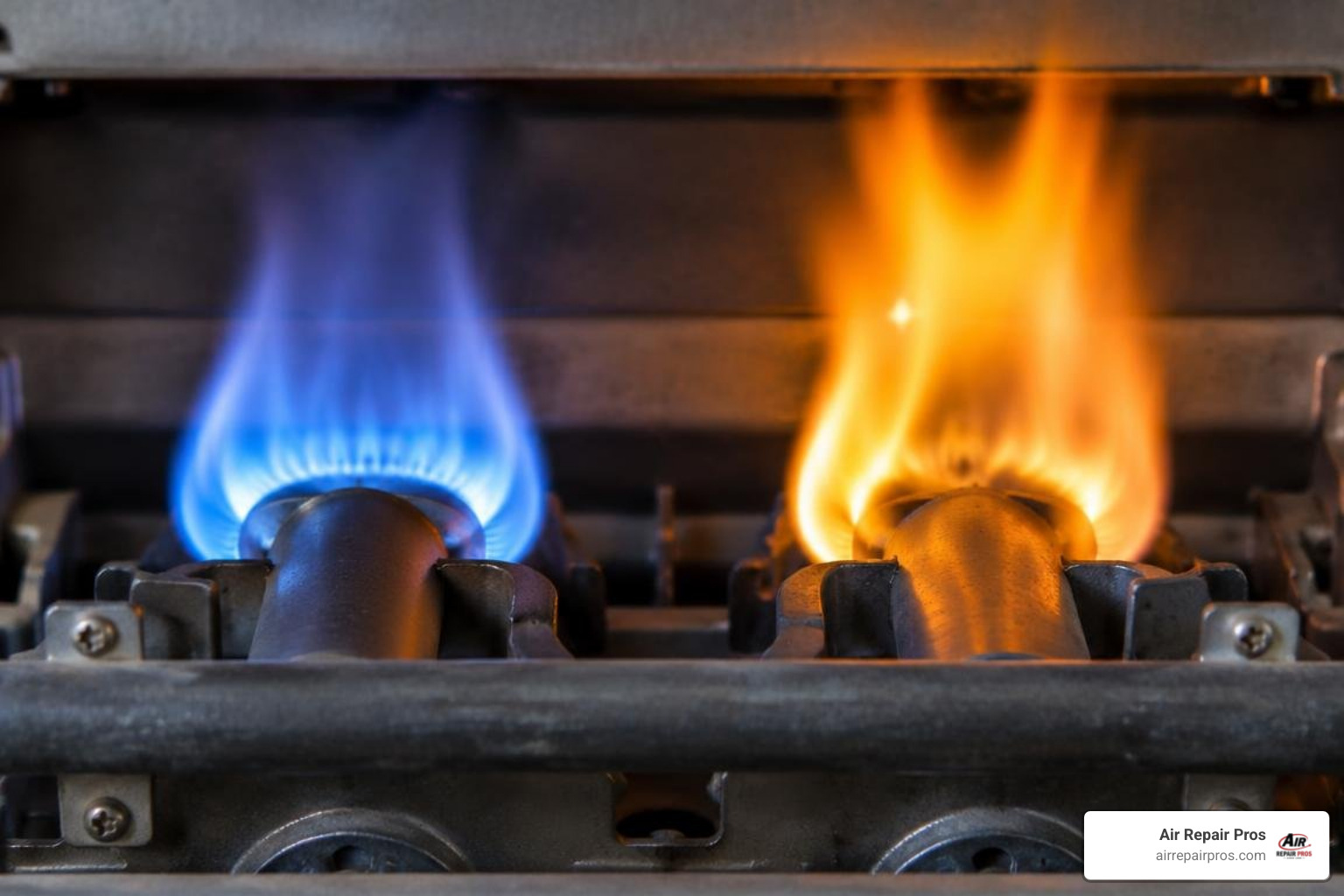
A healthy gas furnace burner should always produce a crisp, steady blue flame with minimal yellow tips. This blue color indicates complete combustion, meaning fuel is burning cleanly, safely, and efficiently.
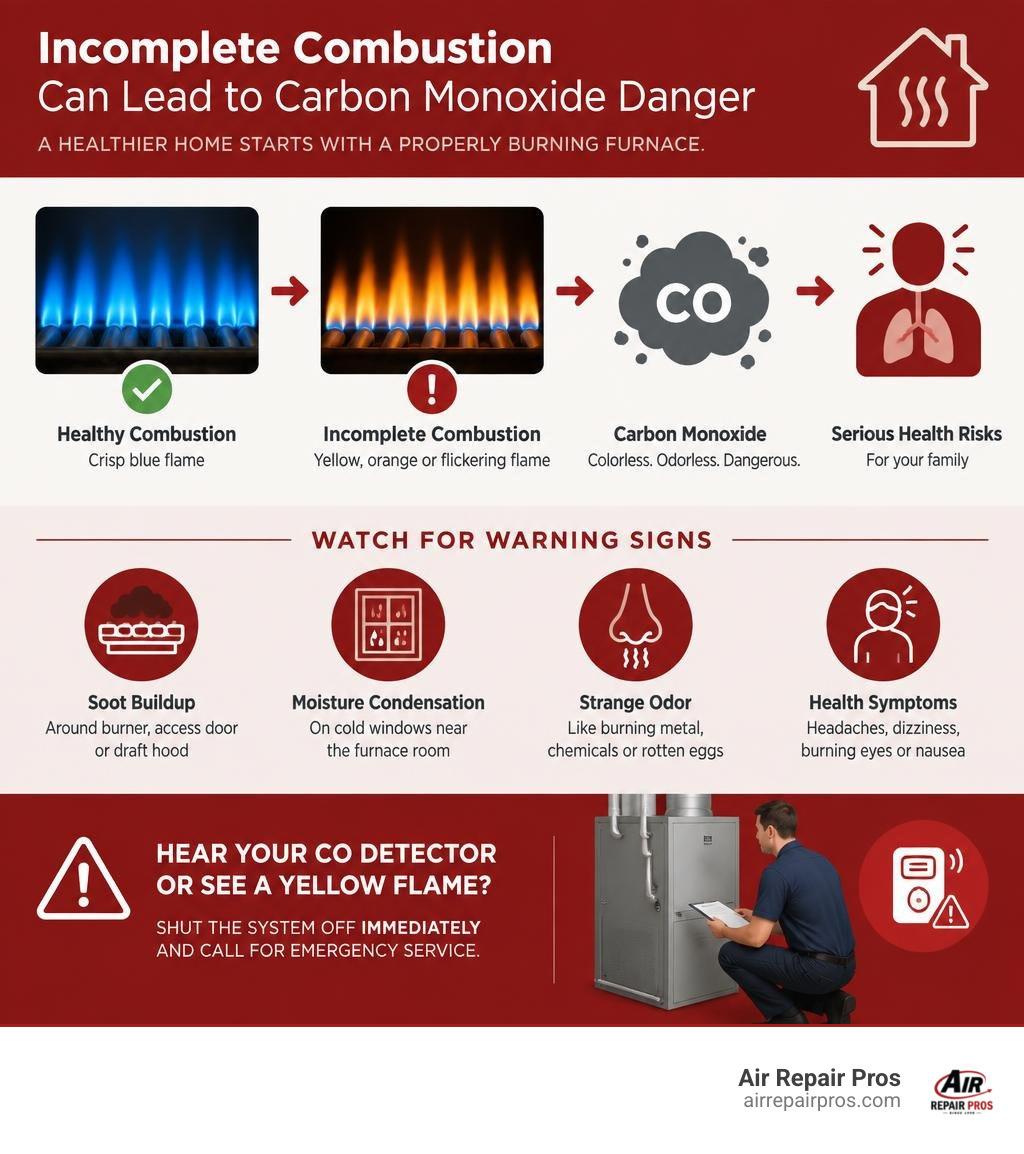
A yellow, orange, or flickering burner flame indicates incomplete combustion. This hazardous condition often results from dirty burner ports, improper gas manifold pressure, or restricted combustion intake air. Incomplete combustion generates dangerous byproducts, most notably carbon monoxide (CO). The U.S. Consumer Product Safety Commission (CPSC) warns that carbon monoxide is a colorless, odorless gas that poses severe health hazards to household occupants.
Homeowners should monitor their heating equipment for physical indicators of combustion issues, including:
- Heavy soot accumulation around the burner compartment, access door, or draft hood.
- Moisture condensation forming on cold windows near the furnace utility room.
- A faint, acrid odor resembling burning metal, aldehyde chemicals, or rotten eggs (which indicates added mercaptan in gas lines).
- Frequent, unexplained headaches, morning dizziness, burning eyes, or nausea among family members.
If your carbon monoxide detectors sound or your burner flame burns entirely yellow, shut the system off immediately and schedule emergency service.
5. Short Cycling and Constant Thermostat Adjustments
Short cycling occurs when a furnace turns on, runs for only two or three minutes, shuts down prematurely, and then restarts shortly afterward. This rapid cycling prevents your home from reaching the target temperature and places immense electrical strain on starting capacitors, relays, and ignitors.
Common causes of short cycling include:
- Severe Airflow Restriction: A clogged air filter traps heat inside the heat exchanger cabinet. The high-limit safety switch detects excessive internal temperatures and shuts down the burners to prevent a fire.
- Malfunctioning High-Limit Switch: If the switch itself becomes faulty, corroded, or out of calibration, it trips prematurely even when operating temperatures remain within normal ranges.
- Oversized Heating Equipment: A unit that produces far too many BTUs for the home square footage heats the air near the supply vents too quickly, shutting down before establishing balanced airflow.
- Faulty Thermostat Wiring or Sensor Drift: Degraded thermostat wiring or dying internal batteries cause erratic signal loss between the control board and the wall unit.
- Corroded Flame Sensor Rods: Microscopic oxidation on the sensor rod interrupts the microamp signal to the control board, cutting off fuel delivery immediately.
6. Diminished Indoor Air Quality and Heavy Dust Buildup
Your furnace plays a central role in managing whole-home air circulation during winter. When internal components deteriorate or seasonal maintenance is neglected, indoor air quality suffers noticeably across all living areas:
- Excessive Dust around Vents: If you notice sudden layers of fine dust, soot, or pet dander accumulating near supply registers, your filtration system is failing, filter seals are bypassed, or return ducts are drawing contaminants from unconditioned attic spaces.
- Dry, Stale, or Irritating Air: Failing blower assemblies generate friction that burns collected debris, circulating microscopic particulate matter throughout bedrooms and living spaces.
- Musty or Burning Odors: Persistent burning smells after the initial seasonal startup point to electrical wiring overheating, loose wire connections melting insulation, or a blower motor running with high internal friction.
- Humidity Imbalances: Degraded heating operation creates uneven indoor relative humidity levels, leading to increased static electricity, dry skin, and sinus irritation.
Routine filter changes help, but persistent dust and poor airflow require a comprehensive technician inspection to clean internal blower wheels, evaporator coils, and inspect return duct connections.
7. System Age Exceeding 15 Years
The standard service life of a residential gas furnace ranges between 15 and 20 years with diligent maintenance. As heating equipment passes the 15-year milestone, internal components experience metal fatigue, electrical resistance increases, and factory replacement parts become harder to source.
Operating an aging unit often leads to frequent breakdowns, diminishing efficiency ratings, noisy mechanical cycles, and heightened safety risks like heat exchanger corrosion or microscopic hairline fractures. When repair bills begin mounting on an older system, evaluating a planned furnace replacement is often more cost-effective than continually paying for temporary fixes on an obsolete platform.
DIY Furnace Troubleshooting Steps Before Calling a Professional
Before requesting a professional diagnostic visit, homeowners can complete several safe, non-invasive troubleshooting steps to rule out basic external issues.
Safe Homeowner Diagnostic Checklist
- Verify Thermostat Configuration: Ensure your thermostat switch is set firmly to “Heat” and the target temperature is set at least five degrees above current room temperature. Replace weak thermostat batteries if the display is dim or unresponsive.
- Inspect the Electrical Panel: Locate the dedicated circuit breaker for your heating system in the main breaker panel. If the breaker has tripped to the middle position, switch it firmly to “Off” and then back to “On” once. If it trips again immediately, leave it off and call a professional technician.
- Check the System Power Switch: Ensure the power switch mounted on or near the furnace cabinet (which resembles a standard light switch) has not been bumped into the “Off” position.
- Replace Clogged Air Filters: Remove and inspect the furnace filter. A filter loaded with dirt restricts return airflow, prompting high-limit switches to lock out operation. Replace standard one-inch pleated filters every 30 to 90 days.
- Clear Supply and Return Vents: Ensure that furniture, rugs, heavy drapes, or storage boxes are not blocking airflow registers throughout your home.
- Inspect the Exterior Vent Terminal: Check that exterior PVC exhaust and intake pipes on high-efficiency systems are free from leaves, bird nests, ice, or snow blockages.
Critical Red Flags That Require Immediate Shutdown
Safety Warning: Never attempt DIY repairs on gas lines, combustion chambers, ignition modules, or high-voltage electrical wiring. Heating equipment involves natural gas, high voltage, and toxic combustion byproducts that require specialized tools, digital combustion analyzers, and professional licensing to service safely.
Turn your system off at the breaker and contact emergency professionals immediately if you experience:
- A strong smell of natural gas (sulfur or rotten egg odor).
- A loud booming sound followed by the smell of unburned fuel.
- An active carbon monoxide alarm sounding anywhere in the residence.
- Visible smoke, scorch marks, or charring on the furnace exterior cabinet.
Repair vs. Replacement: Choosing the Best Long-Term Option
When facing unexpected furnace repairs, determining whether to invest in fixing the existing unit or upgrading to modern equipment is a major financial decision. HVAC professionals rely on the industry-standard 50% Rule: if the cost of the repair exceeds 50% of the value of a new system, and the unit is over 12 to 15 years old, replacement is generally the smarter investment.
The table below outlines how equipment age, repair scope, and operating costs influence this decision:
| Evaluation Factor | Recommend Furnace Repair | Recommend Furnace Replacement |
|---|---|---|
| Equipment Age | Under 10 to 12 years old | Over 15 years old |
| Repair Frequency | First repair in multiple seasons | Multiple repair calls in the last two years |
| Repair Cost Scope | Minor to moderate component fix | Major structural failure (e.g., cracked heat exchanger) |
| Energy Efficiency | Stable monthly heating utility bills | Persistent, unexplained increases in fuel costs |
| Safety Integrity | Sealed, intact heat exchanger and flue | Corroded, fractured, or compromised combustion chamber |
| Comfort Delivery | Even temperatures maintained room to room | Persistent cold zones and poor humidity control |
According to the U.S. Department of Energy (DOE), modern high-efficiency heating systems can achieve Annual Fuel Utilization Efficiency (AFUE) ratings above 95%, significantly reducing monthly operational expenses compared to older 80% AFUE units.
Understanding Furnace Repair Costs and Factors
The total investment required for furnace repair depends heavily on several critical factors:
- Specific Component Failure: Minor repairs such as replacing a flame sensor, hot surface ignitor, or limit switch require lower part expenses than major component overhauls like blower motor assemblies, draft inducers, or smart control boards.
- Diagnostic Precision: Comprehensive electrical testing and combustion analysis identify the true root cause rather than treating superficial symptoms.
- System Accessibility: Units located in tight crawlspaces or complex attic configurations require additional labor time to service safely.
- Warranty Status: If your equipment is under ten years old, manufacturer parts warranties may cover the cost of replacement hardware, leaving only standard labor expenses.
Flexible financing options and seasonal manufacturer rebates can also help homeowners manage unexpected repairs or system upgrades without placing sudden strain on household budgets.
Professional Heating Furnace Repair Service and Maintenance
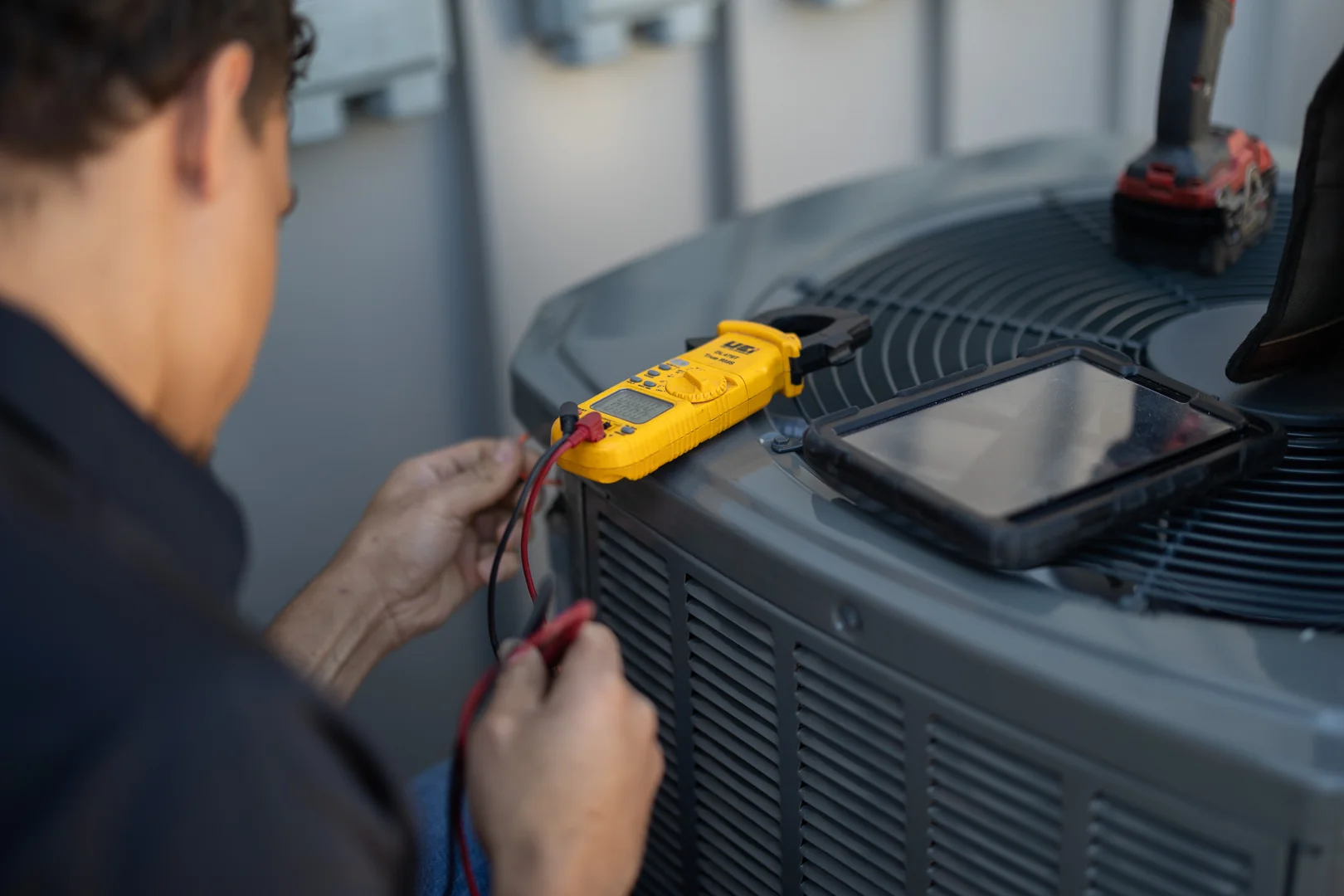
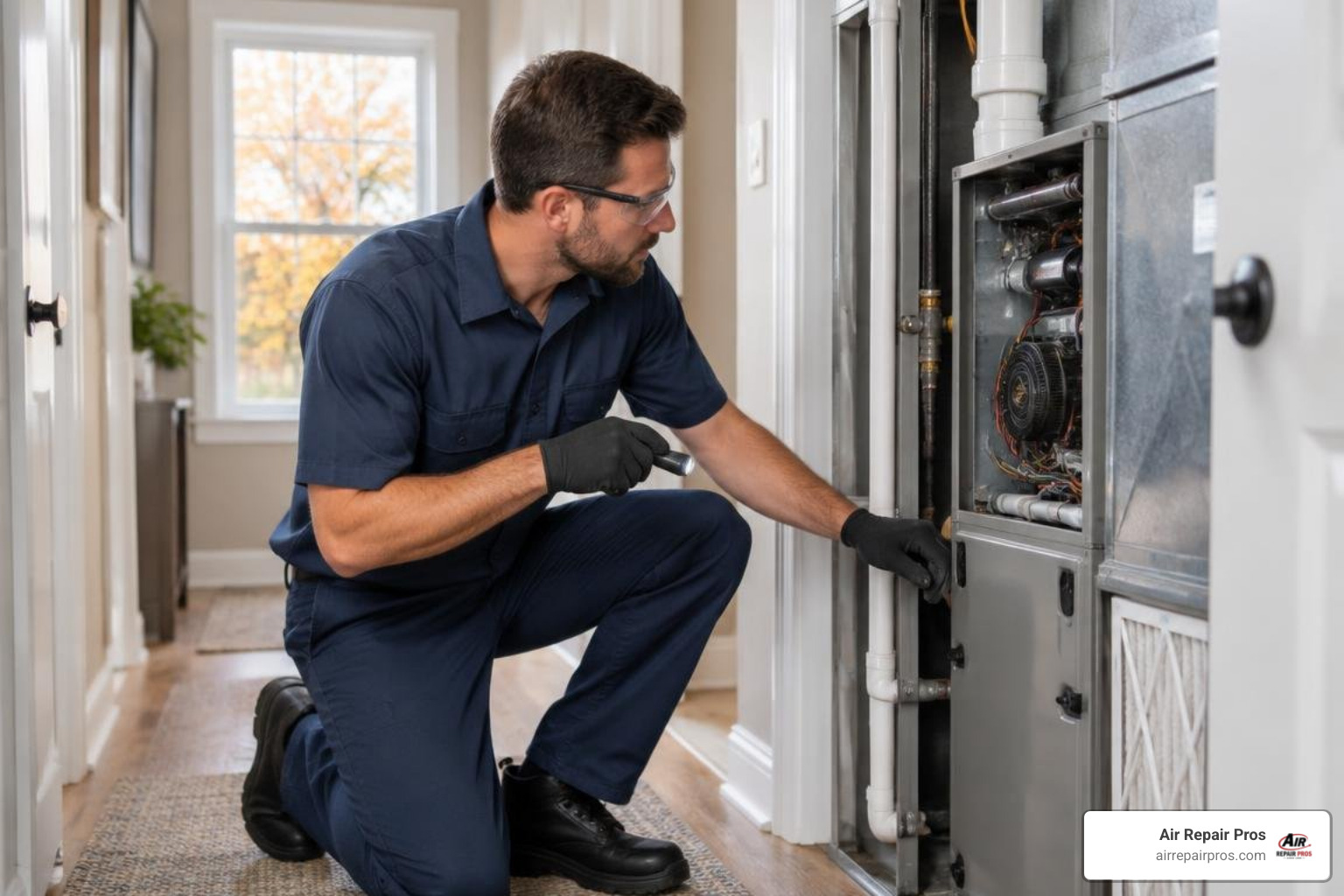
When basic troubleshooting does not resolve heating troubles, scheduling professional heating repair or dedicated furnace repair service ensures your system is inspected and restored safely. A certified technician utilizes specialized diagnostic equipment, including digital manometers, combustion analyzers, and multimeters, to evaluate gas pressures, electrical draw, and thermal safety switches. For urgent situations, our emergency heating repair team is available around the clock to restore warmth when you need it most.
Preventative care remains the single most effective way to eliminate unexpected breakdowns. Routine seasonal checkups allow technicians to catch component fatigue early. By referencing a detailed furnace tune up checklist, technicians clean burner assemblies, lubricate moving bearings, verify flue draft integrity, and test safety limit switches before cold weather arrives. In fact, research demonstrates that 92% of homeowners avoid seasonal breakdowns by completing annual maintenance.
What to Expect During a Heating Furnace Repair Service Visit
A professional service visit should follow a structured, transparent process designed to give homeowners total clarity:
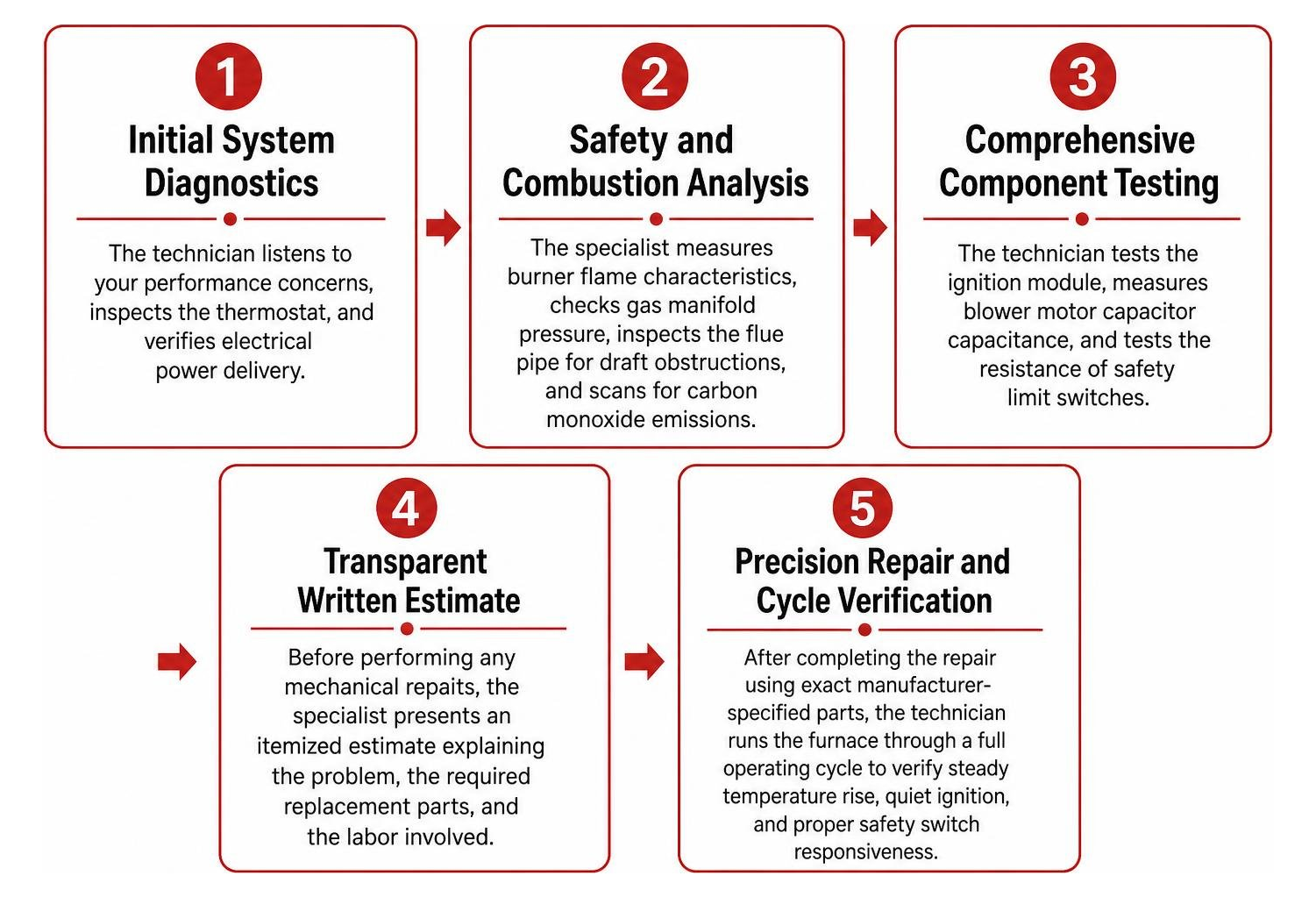
- Initial System Diagnostics: The technician listens to your performance concerns, inspects the thermostat, and verifies electrical power delivery and breaker stability.
- Safety and Combustion Analysis: The specialist measures burner flame characteristics, checks gas manifold pressure, inspects the flue pipe for draft obstructions, and scans for carbon monoxide emissions.
- Comprehensive Component Testing: The technician tests the ignition module, measures blower motor capacitor capacitance, and tests the resistance of safety limit switches.
- Transparent Written Estimate: Before performing any mechanical repairs, the specialist presents an itemized estimate explaining the problem, the required replacement parts, and the labor involved.
- Precision Repair and Cycle Verification: After completing the repair using exact manufacturer-specified parts, the technician runs the furnace through a full operating cycle to verify steady temperature rise, quiet ignition, and proper safety switch responsiveness.
Homeowners seeking dedicated local care can count on comprehensive furnace repair in Frisco, TX to keep their heating systems operating at peak performance all winter long.
Emergency Heating Furnace Repair Service and Response Times
During severe North Texas freezes, a broken furnace quickly shifts from an uncomfortable inconvenience to a serious safety hazard involving freezing plumbing pipes and dangerous indoor temperatures.
Air Repair Pros prioritizes emergency heating calls across Frisco, TX, McKinney, TX, Plano, TX, Little Elm, TX, and Allen, TX. With 24/7 emergency dispatch and fully stocked service vehicles carrying over 85% of standard replacement parts, certified technicians can resolve most heating failures during the very first visit.
Frequently Asked Questions About Furnace Repair
What are the most common furnace problems homeowners face?
The most frequent furnace problems include dirty flame sensors causing burner lockouts, cracked hot surface ignitors, clogged air filters triggering high-limit switches, failing blower motors, and miscalibrated thermostats.
How can I troubleshoot my furnace before calling a technician?
Verify that the thermostat is switched to Heat and set above current room temperature. Check that the furnace cabinet power switch is on, inspect the main breaker panel for tripped switches, and replace any dirty air filters restricting airflow.
What is the typical cost of furnace repair in North Texas?
Repair costs vary based on the failing component, system accessibility, and warranty coverage. Simple sensor cleanings and minor switch replacements require less investment, while advanced parts like draft inducers, blower motors, and electronic control boards require more extensive labor and hardware.
How do I determine whether to repair or replace my furnace?
Use the 50% rule: if the repair cost exceeds half the price of a new heating system and your current equipment is over 12 to 15 years old, replacing the system provides better long-term reliability and energy efficiency.
What are the warning signs of a cracked heat exchanger or CO leak?
Signs of a compromised heat exchanger include a flickering yellow burner flame, excessive soot inside the furnace cabinet, strange chemical odors, water pooling around the furnace base, and the activation of carbon monoxide detectors.
What should homeowners expect during a professional repair visit?
Homeowners should expect a complete diagnostic inspection, including electrical load testing, combustion analysis, airflow measurements, a clear explanation of findings, and an itemized written quote before any work begins.
How does regular maintenance prevent costly furnace breakdowns?
Regular tune-ups clean critical sensors, lubricate bearings, test safety switches, clear burner ports, and identify minor component wear before it leads to full system failure during freezing weather.
Why is choosing a certified HVAC contractor essential?
Certified contractors ensure all repairs adhere to local building codes, preserve existing manufacturer warranties, use authentic factory parts, and maintain strict combustion safety standards to protect your home.
Are financing options or rebates available for furnace repair and replacement?
Yes, flexible financing plans, local utility energy efficiency incentives, and manufacturer seasonal rebates are frequently available to help manage unexpected repairs and modern high-efficiency system replacements.
What qualifies as an emergency heating repair situation?
An emergency heating situation involves complete heating loss during sub-freezing outdoor weather, smelling natural gas, seeing smoke or scorch marks on the furnace cabinet, or an sounding carbon monoxide alarm.
Conclusion: Ensuring Reliable Winter Comfort
Preparing your heating system before winter arrives is the best way to safeguard your home against unexpected breakdowns and dangerous cold snaps. By paying close attention to early warning signs like cold airflow, unusual banging noises, discolored burner flames, and rapid cycling, you can resolve minor mechanical issues before they compromise your safety or comfort.
Serving North Dallas since 1998, Air Repair Pros delivers trusted residential heating solutions across Frisco, TX, McKinney, TX, Plano, TX, Little Elm, TX, and Allen, TX. With fully stocked service trucks carrying 85%+ of standard parts for rapid one-trip repairs, 24/7 emergency readiness, and experienced, certified technicians, our team ensures your home remains warm and safe all season. To restore dependable heating performance or schedule your seasonal inspection, contact our heating repair specialists today.