

When a High Water Bill Means Trouble Below Your Foundation
A slab leak water bill spike is one of the clearest warning signs that something is seriously wrong beneath your home. If your water bill jumped suddenly and you cannot find a dripping faucet or running toilet to explain it, the source may be underground, hidden beneath your concrete foundation.
Here is what a slab leak does to your water bill at a glance:
| Factor | What Happens |
|---|---|
| Leak size | Even a pinhole leak can waste around 10,000 gallons per month |
| Bill impact | Expect roughly $60 to $120 or more added per billing cycle |
| Speed of damage | Soil erosion and mold can begin within 24 to 48 hours |
| Cost of waiting | A small repair can grow 5 to 10 times more expensive if ignored |
| Fix available | Yes, licensed plumbers can detect and repair without full excavation |
A slab leak is a break or pinhole in a water pipe running beneath your home’s concrete slab. Because the pipe is buried under several inches of concrete and soil, you never see the water escaping. You only see the consequences: a water meter that will not stop spinning, floors that feel warm or damp, and a monthly bill that keeps climbing.
North Texas homeowners in Frisco, TX, Plano, TX, and McKinney, TX, face a particular risk. The expansive clay soil common throughout the Dallas, TX, area shifts with moisture changes, putting constant stress on under-slab pipes. That stress accelerates corrosion and pipe movement, making slab leaks more likely here than in many other regions.
The good news is that catching a slab leak early makes a significant difference in what you pay to fix it. A small repair handled quickly is a very different situation than one ignored for months.
Air Repair Pros helps North Dallas, TX, homeowners identify and resolve slab leaks before they turn into foundation emergencies. This guide walks you through every step: what causes a slab leak, how to spot one, how professionals find and fix it, and how to recover some of your water costs.
What is a Slab Leak and How Does It Cause a High Slab Leak Water Bill?
To understand how a hidden plumbing failure can cause your slab leak water bill to skyrocket, it helps to look at how modern homes in North Texas are built. Most houses in Frisco, TX, McKinney, TX, and surrounding communities are constructed on a concrete slab foundation.
During construction, plumbers lay the main water supply lines directly into the ground before pouring the concrete. Once the concrete cures, these pipes are permanently encased beneath several inches of solid concrete and heavy soil.
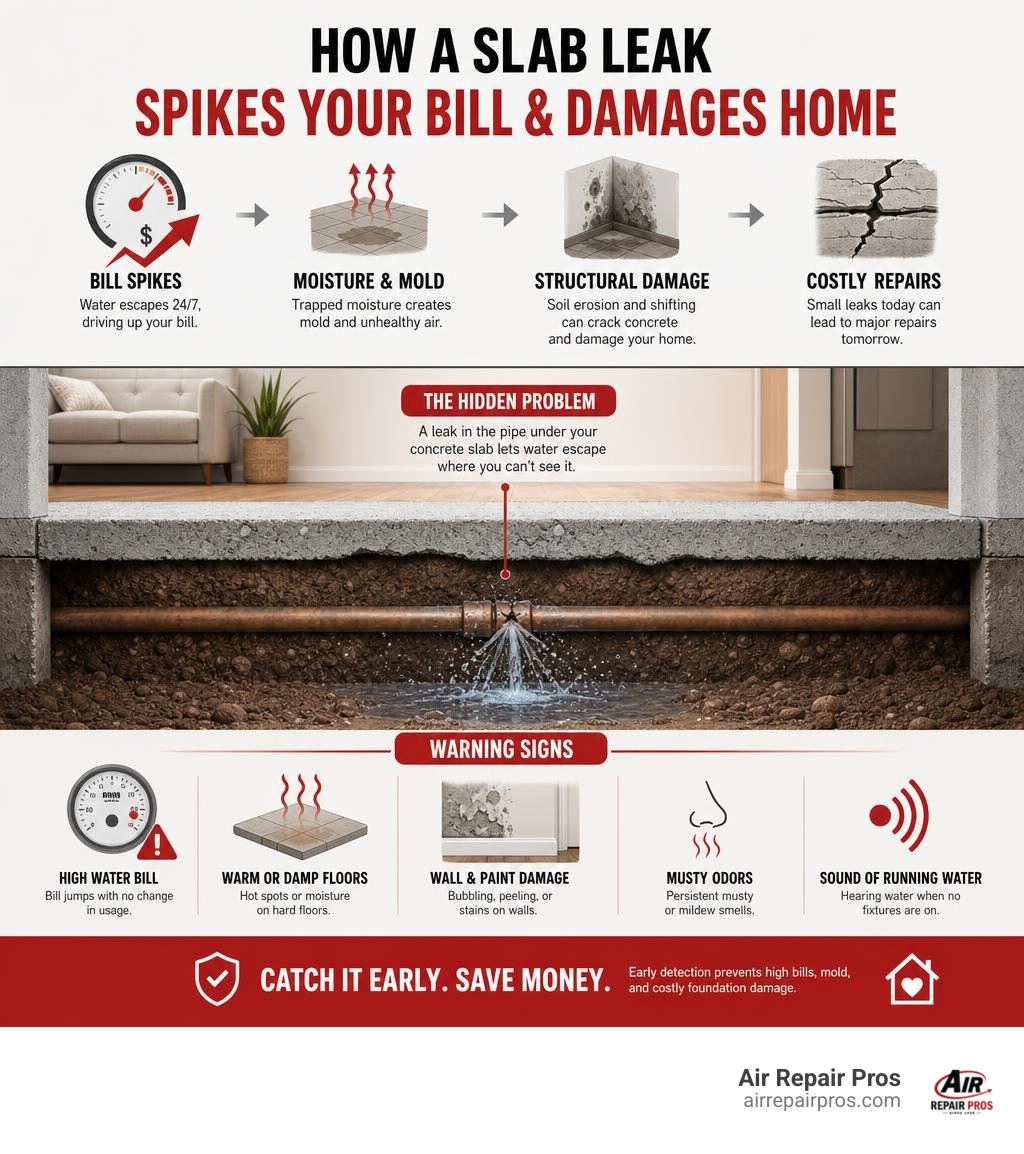
When a pipe under your slab develops a leak, it is almost always on a pressurized water line. Unlike drain lines, which only carry water when a fixture is in use, supply lines are constantly under pressure. This means water is escaping 24 hours a day, seven days a week, at a rate determined by the size of the breach.
Even a tiny pinhole leak, about the size of a pinhead, can release an incredible amount of water over time. A small leak losing just one gallon of water per hour adds up to 720 gallons of water wasted every single month. If that pinhole expands slightly, it can easily waste 10,000 gallons of water per month.
Because this water is running continuously under pressure, it never has a chance to pool on the surface where you can see it. Instead, it saturates the soil beneath your foundation. In North Texas, this constant saturation causes the highly expansive clay soil to swell and shift. As the wet clay expands, it exerts uneven upward pressure on your concrete foundation, which can lead to foundation cracking and severe structural damage.
Professional leak detection services can identify hidden plumbing failures before they cause this kind of destruction, giving homeowners a faster path from a suspicious water bill to a targeted repair.
Warning Signs of a Hidden Foundation Leak
Because slab leaks occur out of sight, homeowners must rely on secondary clues to identify them. While a sudden spike in your slab leak water bill is often the first financial indicator, several physical warning signs inside your home can confirm your suspicions.
If you suspect water is escaping beneath your home, look and listen for the following signs:
- The Sound of Running Water: In a quiet room, you might hear a faint, continuous hissing, rushing, or splashing sound behind your walls or beneath your floors, even when all faucets, showers, and appliances are completely turned off.
- Warm or Hot Spots on the Floor: If a hot water line is leaking, the heat from the escaping water will transfer through the concrete and warm up your flooring. Homeowners often notice these warm spots on tile or carpet when walking barefoot. Pets are also excellent at finding these spots, as they will often sleep on an unusually warm patch of floor.
- Damp Flooring or Warped Wood: Over time, the water beneath the slab will find its way upward through the porous concrete. This can cause damp spots on carpets, warped hardwood floorboards, or loose vinyl tiles.
- Cracks in Walls and Foundation: As the clay soil beneath your home expands and contracts due to the water saturation, your foundation will begin to settle unevenly. This movement causes structural stress, resulting in cracks in your exterior brickwork, interior drywall, or concrete slab.
- Musty and Mildew Odors: Damp, dark environments under your floors are perfect breeding grounds for mold. Mold spores can activate and begin colonizing wet drywall and flooring within 24 to 48 hours of moisture exposure, leading to a persistent musty smell.
- Reduced Water Pressure: If a significant amount of water is escaping through a broken pipe under your slab, you may notice a sudden drop in water pressure when you turn on your shower or kitchen faucet.
- A Constantly Running Water Heater: If the leak is on a hot water line, your water heater will work overtime to replace the hot water that is constantly escaping, causing your energy bills to rise alongside your water bill.
Structural shifts, moisture signs, and unexplained utility increases are all covered in Air Repair Pros‘ beginner’s guide to Dallas, TX, slab leak repair, which explains how these symptoms show up in local homes and why fast action matters.
How to Confirm a Slab Leak Water Bill Spike Using Your Water Meter
If your water bill has increased but you cannot find a visible leak inside your home, you can perform a simple DIY leak verification test using your municipal water meter. This test will tell you if water is actively moving through your plumbing system when it should not be.

To perform this test, follow these steps:
- Turn Off All Water: Ensure that every faucet, shower, washing machine, dishwasher, and outdoor sprinkler is completely turned off. Do not flush any toilets during the test.
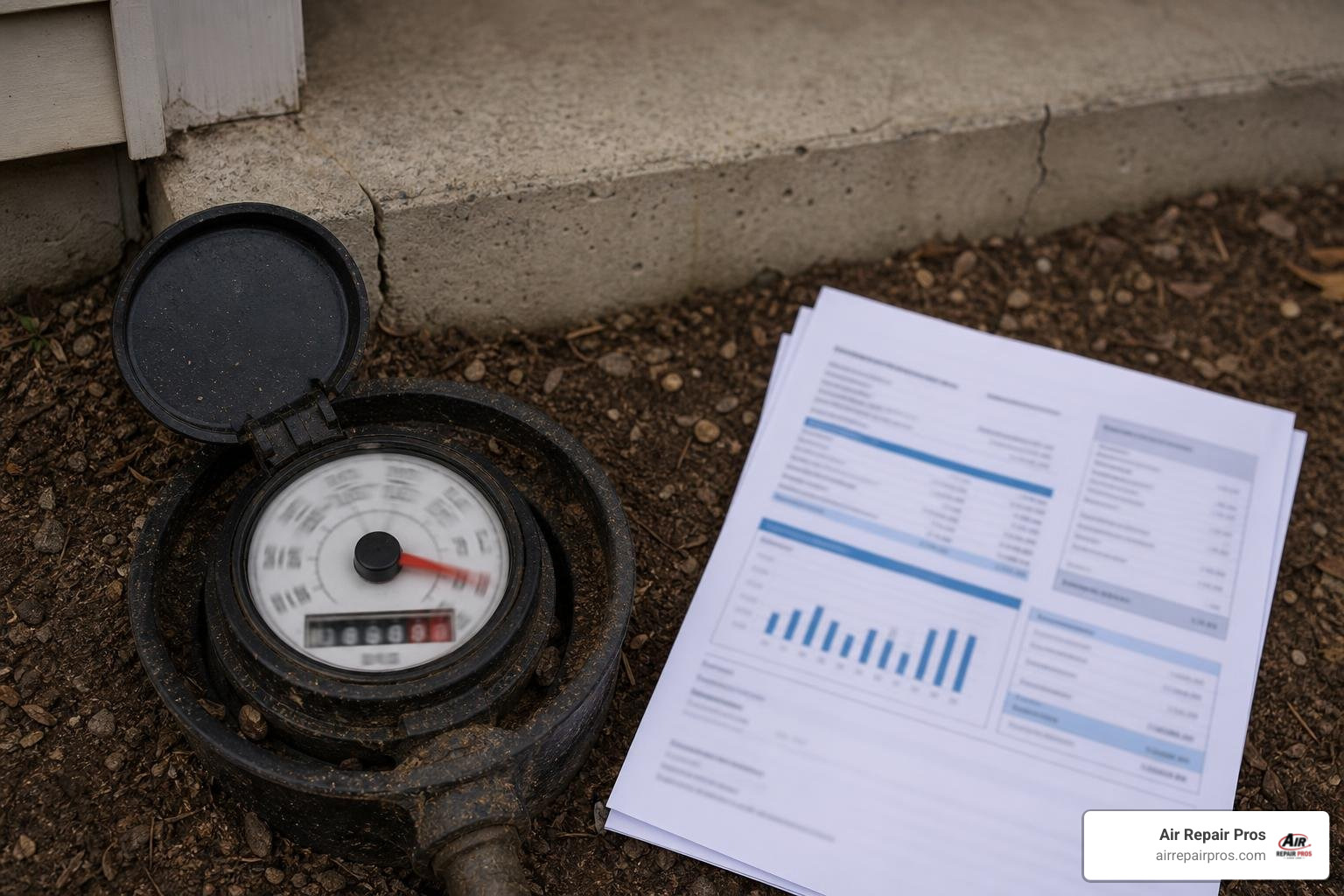
- Locate Your Water Meter: In most North Texas cities like Plano, TX, and McKinney, TX, your water meter is located in a concrete box near the street curb. Carefully lift the metal lid to access the meter dial.
- Check the Leak Indicator: Most modern water meters have a small, sensitive dial known as a leak indicator. This is often shaped like a small triangle, star, or gear. If this indicator is spinning even slightly while all water is shut off, you have an active leak.
- Perform a Time-Based Test: If your meter does not have a visible leak indicator, write down the exact numbers currently shown on the odometer display. Leave all water turned off and return to the meter in 30 minutes. If the numbers have changed, water is escaping somewhere in your system.
If this test confirms a continuous flow of water and you have ruled out running toilets or dripping faucets, professional leak repair options can address the issue before more water escapes beneath the foundation.
Why a Hot Water Line Slab Leak Water Bill Increase is More Common
Statistically, slab leaks occur more frequently on hot water lines than on cold water lines. This is due to a combination of physical forces and chemical reactions that target hot water pipes under your concrete foundation.
First, hot water lines experience thermal expansion. Every time hot water flows from your water heater through the pipes under your floor, the metal heats up and expands. When the water stops flowing, the pipe cools down and contracts. This continuous cycle of expansion and contraction causes the pipe to rub against the abrasive concrete and soil surrounding it. Over time, this friction wears down the outer wall of the pipe, eventually creating a pinhole leak.
Second, chemical reactions and electrolysis accelerate copper pipe corrosion. Many older homes in Plano, TX, and McKinney, TX, utilize copper piping beneath the slab. When copper pipes come into contact with dissimilar metals or specific minerals in the soil, an electrical charge is created that corrodes the metal from the outside in. This process is accelerated by the higher temperatures inside hot water lines.
Additionally, the hard water minerals common in North Texas municipal water supplies can create internal scaling, which strains the pipe joints and weakens the metal over time. When a hot water line fails, it not only wastes water but also puts a continuous load on your water heater, driving up your gas or electric bills. Air Repair Pros also explains common causes and warning signs in its broader slab leak overview, so homeowners can better understand when a plumbing issue needs professional attention.
How Plumbers Detect and Repair Under-Slab Leaks
Homeowners are often relieved to learn that finding a slab leak does not require tearing up their entire floor. Modern plumbing technology allows licensed technicians to pinpoint the exact location of an underground leak using non-invasive diagnostic tools.
When a professional plumber from Air Repair Pros arrives at your home, they will typically use three key detection methods:
- Acoustic Listening Devices: Plumbers use highly sensitive ground microphones and acoustic receivers to listen for the sound of escaping water. By amplifying the sound of water spraying or hissing under the concrete, they can locate the leak to within a few inches.
- Thermal Imaging Cameras: Infrared cameras detect temperature variations on the surface of your floor. A hot water leak will show up as a bright red or orange heat signature, while a cold water leak will create a distinct cooling pattern in the surrounding concrete.
- Line Pressure Testing: By connecting pressure gauges to your plumbing lines, technicians can measure pressure drops to determine which specific pipe is compromised.
Once the leak is located, there are three primary repair options. The best choice depends on the age of your plumbing, the condition of your pipes, and your long-term goals for your home.
| Repair Method | How It Works | Best For | Pros & Cons |
|---|---|---|---|
| Spot Repair | Technicians break through a small section of concrete to access and patch the broken pipe. | Newer homes with a single, isolated point of damage. | Pros: Direct fix. Cons: Disruptive to flooring; does not prevent future leaks on the same pipe. |
| Pipe Rerouting | The damaged under-slab pipe is abandoned, and a new line is run through your walls or attic. | Homes with aging copper pipes where breaking concrete is undesirable. | Pros: Avoids damaging floors; permanently removes the pipe from the ground. |
| Whole-Home Repipe | All under-slab water lines are replaced with modern, durable PEX piping run through the attic. | Older homes experiencing repeated slab leaks or severe pipe corrosion. | Pros: Eliminates the risk of future slab leaks entirely. Cons: Higher initial investment. |
When the problem points to a slab-specific failure, slab leak repair specialists can recommend whether a spot repair, reroute, or whole-home repipe is the safest long-term fix.
Insurance Coverage and Municipal Water Bill Adjustments
When facing a high slab leak water bill and the prospect of plumbing repairs, homeowners naturally wonder how they will cover the costs. Navigating insurance claims and municipal policies is an important part of managing the financial impact of a slab leak.
First, it is important to understand how homeowners insurance handles slab leaks. Standard homeowners insurance policies typically distinguish between the plumbing repair itself and the resulting water damage:
- What is usually covered: Most policies will cover the “tear-out” costs, which is the expense of breaking through the concrete slab to access the pipe, as well as the cost to repair water-damaged drywall, flooring, and cabinets.
- What is usually excluded: Standard policies generally exclude the actual plumbing repair of the pipe itself. This means you will likely be responsible for the cost of patching or rerouting the line.
- Gradual vs. Sudden Damage: Insurance companies are much more likely to cover claims if you act quickly. If you ignore a leak for months, they may deny the claim under the “gradual damage” exclusion, arguing that the damage could have been minimized with prompt action.
Second, you may be able to recover some of the money spent on your high water bills. Many municipal water providers in North Texas offer leak adjustment policies to help homeowners who have suffered a hidden plumbing failure. For example, some cities offer a credit of up to 50 percent of the excess water charges once you provide proof that the leak was professionally repaired.
To qualify for these adjustments, you must typically submit an application within 60 days of the repair, accompanied by a paid invoice from a licensed plumber stating that a hidden slab leak was resolved.
Frequently Asked Questions About Slab Leaks
What is a slab leak?
A slab leak is a leak, crack, or pinhole that develops in a water supply line or drain line running beneath your home’s concrete slab foundation. Because these pipes are buried under concrete and soil, the leak is hidden from view and requires specialized equipment to detect.
How much does a slab leak typically increase my monthly water bill?
A slab leak can increase your monthly water bill significantly, often adding roughly $60 to $120 or more per billing cycle. The exact increase depends on your local municipal water rates and the size of the leak, with small pinhole leaks wasting up to 10,000 gallons of water per month.
What should I do if my water bill spikes but I cannot find a visible leak?
If your water bill spikes and you cannot find a visible leak, you should immediately turn off all water fixtures and check your water meter. If the meter’s leak indicator is spinning or the numbers continue to change while all water is shut off, you should contact a licensed plumber to perform professional leak detection.
Can a slab leak cause my foundation to collapse?
While a total foundation collapse is rare, a slab leak can cause severe structural damage. The continuous flow of pressurized water erodes the supporting soil beneath your slab, causing the concrete foundation to crack, settle unevenly, or shift, which can lead to expensive structural damage throughout your home.
How do plumbers find a leak under concrete without breaking the floor?
Plumbers use non-invasive diagnostic tools to locate slab leaks without damaging your floors. They utilize acoustic listening devices to amplify the sound of escaping water, thermal imaging cameras to detect temperature differences on the floor surface, and line pressure testing to isolate the leaking pipe.
What are the repair options for a slab leak?
The three primary repair options are spot repairs, pipe rerouting, and a whole-home repipe. A spot repair involves opening a small section of the concrete to fix the pipe directly. Rerouting bypasses the slab by running new pipes through your walls or attic, while a whole-home repipe replaces all supply lines to eliminate future slab leak risks.
Does homeowners insurance cover slab leak repair and water damage?
Standard homeowners insurance usually covers the cost of tearing out the concrete to access the leak and repairing the resulting water damage to your flooring and walls. However, the actual plumbing repair to fix or replace the broken pipe itself is typically excluded and must be paid out of pocket.
Can I get a water bill adjustment from my utility company after fixing a slab leak?
Yes, many municipal water utilities offer leak adjustments or credits for hidden leaks that occur beyond the homeowner’s control. To qualify, you must typically submit an application within 60 days of the repair, along with a copy of the licensed plumber’s invoice proving the leak was fixed.
What happens if I ignore a slab leak and a high water bill?
Ignoring a slab leak will lead to escalating financial and structural damage. Over time, the escaping water will erode the soil beneath your home, crack your foundation, ruin your flooring, and promote mold growth within 24 to 48 hours, turning a simple plumbing repair into a major structural restoration project.
How long does the slab leak detection and repair process take?
Professional slab leak detection typically takes two to four hours. The repair process itself, whether performing a spot repair or a pipe reroute, usually takes one to two days. However, drying out water-damaged flooring and restoring drywall can take several additional days or weeks depending on the severity of the saturation.
Protect Your Home from Foundation Water Damage
A high slab leak water bill is more than just an unwanted expense; it is an urgent warning that your home’s foundation is under threat. In North Texas, where shifting clay soils put constant stress on underground plumbing, ignoring a hidden leak can quickly lead to severe structural damage, warped flooring, and mold growth. Taking prompt action is the single most effective way to protect your property and keep your repair costs manageable.
Air Repair Pros has provided reliable, high-quality residential plumbing and HVAC solutions to homeowners in Frisco, TX, McKinney, TX, Plano, TX, Little Elm, TX, and Allen, TX. The team of certified plumbers arrives in fully stocked trucks carrying the parts needed to resolve most issues in a single trip. Available for emergency plumbing services, they use advanced, non-invasive technology to locate and repair slab leaks quickly, minimizing disruption to your home.
Do not wait for foundation cracks or mold to appear before addressing an unexplained spike in your water usage. To protect your home’s structural integrity and get your utility bills back under control, contact our slab leak repair specialists to schedule a professional diagnostic inspection today.