
How Often Should You Maintain Your AC in Texas?
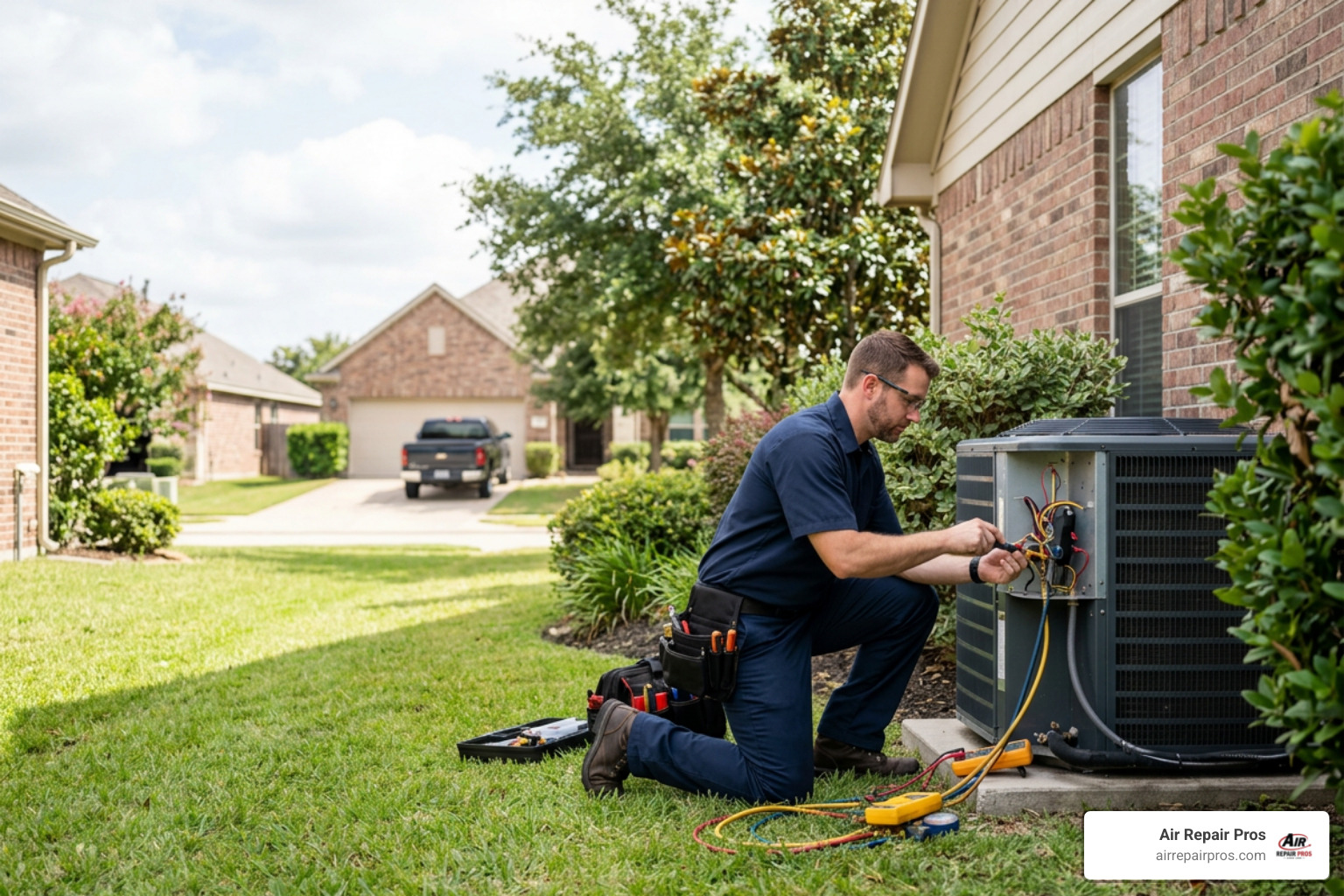
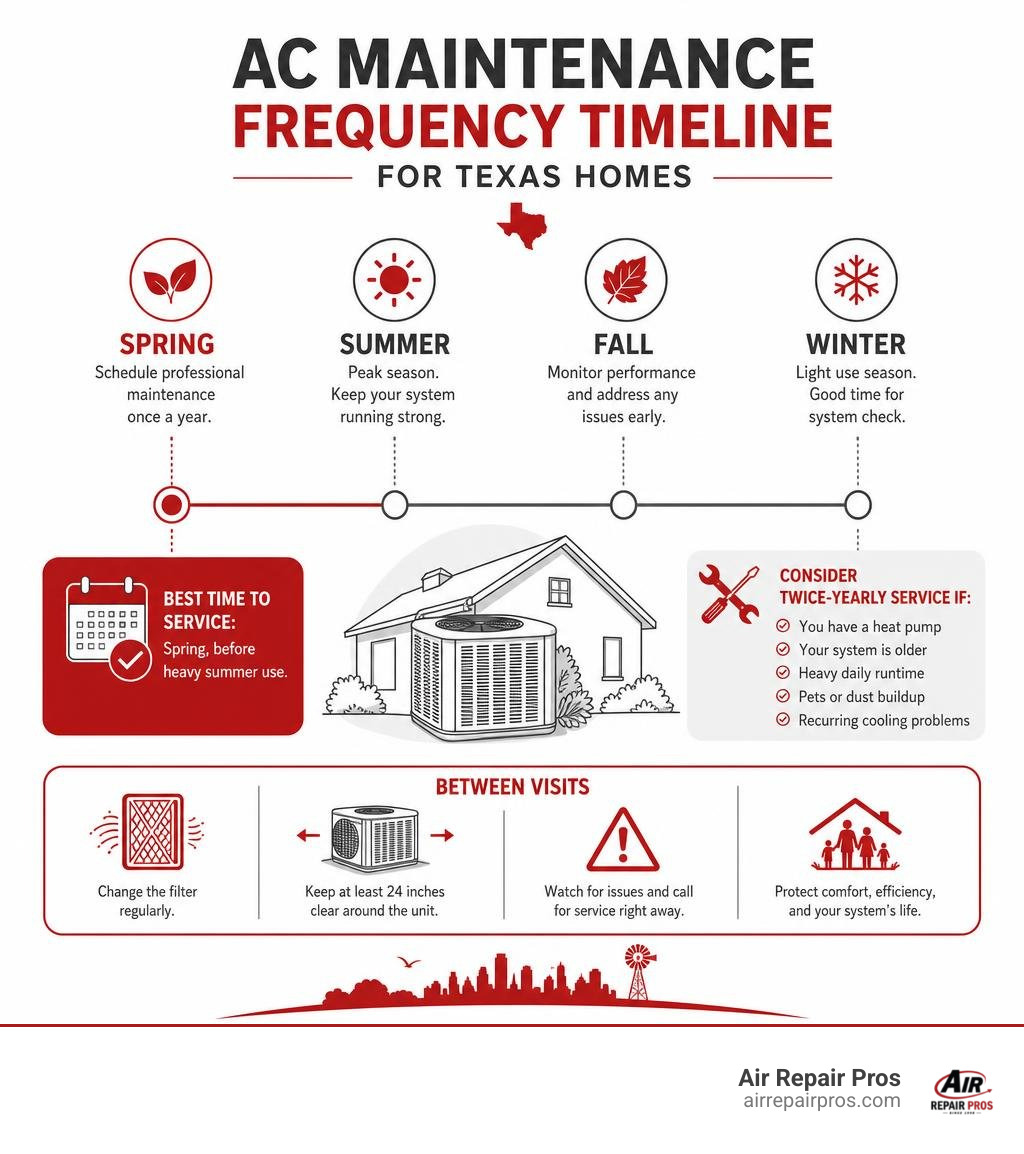
For most North Texas homes, schedule professional AC maintenance at least once a year, ideally in early spring before intense summer weather arrives. A biannual schedule, meaning service once in the spring for cooling and once in the fall for heating, is recommended for homes equipped with heat pumps, systems older than ten years, households with pets, or properties subject to heavy airborne dust and high daily cooling runtimes.
The extended summer heat in Texas places immense mechanical and thermal demands on residential cooling equipment. When outdoor temperatures consistently exceed ninety or one hundred degrees, an air conditioning system may run for twelve to sixteen hours every day. Under these continuous operating conditions, clean coils, calibrated refrigerant levels, and tight electrical connections make a substantial difference in efficiency, comfort, and operational reliability.
Neglected systems suffer from restricted airflow, dirty heat exchangers, and gradual electrical wear. These hidden issues force the compressor and fan motors to consume significantly more power while struggling to satisfy thermostat settings. Over time, minor neglect escalates into frozen evaporator coils, clogged condensate lines, premature component failures, and sudden emergency breakdowns during the hottest weeks of July and August.
Between professional service visits, homeowners should check air filters monthly, maintain a clear zone around outdoor condensing units, and monitor system performance. If you notice unusual noises, lukewarm supply air, weak airflow, or rising utility bills, schedule an inspection promptly. At Air Repair Pros, our certified team views planned maintenance as an essential investment in household comfort, energy efficiency, and extended equipment lifespan.
Determining the Right AC Maintenance Frequency for Modern Cooling Systems
Selecting the right service schedule for your cooling setup depends on system configuration, equipment age, daily runtime, and local environmental conditions. Modern central cooling systems are sophisticated thermodynamic machines that depend on precise airflow balance, clean heat transfer surfaces, and tightly calibrated electrical controls. While current cooling systems are built to high engineering standards, operating them without routine preventative care inevitably leads to progressive efficiency losses and accelerated component wear.
Leading HVAC industry organizations and equipment manufacturers agree that establishing a structured AC maintenance frequency prevents unexpected mechanical failures and protects baseline energy ratings. Arranging regular professional AC maintenance allows trained technicians to clean heat exchangers, verify safety switches, measure operating currents, and ensure moving components remain properly lubricated.
Manufacturer AC service guidance also reinforces the importance of planned inspections, especially when equipment runs heavily or contains larger refrigerant charges. Following established HVAC system service frequency guidelines gives homeowners a dependable schedule based on equipment type and operating environment. A unit running under mild conditions requires different technical attention than a system operating under high ambient heat and heavy humidity.
Standard Annual vs. Biannual AC Maintenance Frequency Guidelines
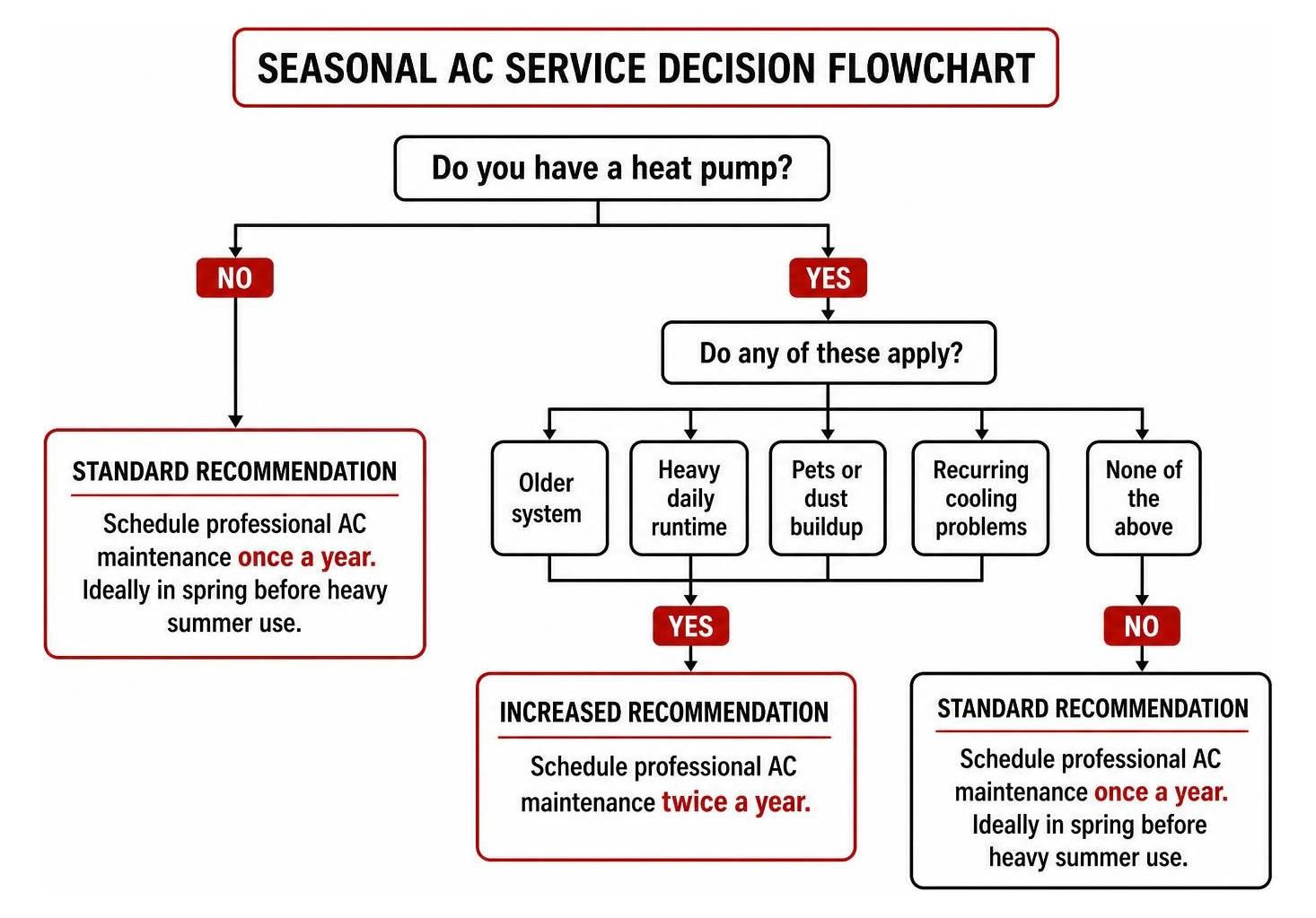
A traditional split system consisting of a central air conditioner paired with an indoor gas furnace generally requires a dedicated cooling tune-up once each spring and a separate heating inspection each fall. This single annual cooling service allows technicians to clean condenser coils, inspect contactors, test capacitors, and verify refrigerant pressures before extreme summer weather begins.
In contrast, homes utilizing heat pump systems require a biannual maintenance schedule because the same equipment provides both cooling throughout the summer and heating during the winter. Because heat pumps operate during all four seasons, components such as reversing valves, defrost control boards, outdoor fan motors, and auxiliary heating elements experience continuous wear. Learning why regular seasonal tune-ups are needed shows how twice-yearly evaluations catch early mechanical wear before it leads to system outages.
How Regional Weather and Usage Alter Your AC Maintenance Frequency
Local weather patterns have a direct impact on the workload placed on residential air conditioning equipment. In mild climates, a central AC unit might accumulate only a few hundred operating hours per season. In North Texas communities such as Frisco, TX, Plano, TX, McKinney, TX, Allen, TX, and Little Elm, TX, residential cooling equipment routinely logs several thousand runtime hours every year.
High ambient temperatures force the compressor to operate under elevated discharge pressures for hours at a time. High relative humidity increases the latent cooling load, requiring the evaporator coil to extract gallons of condensed moisture from indoor air each day. Meanwhile, airborne pollen, construction dust, and yard debris settle into the outdoor condenser fins, obstructing heat transfer. Homeowners preparing for intense Texas summer heat often adopt a biannual service cadence to ensure their cooling hardware can withstand the thermal stresses of the season.
Essential Components of a Professional Air Conditioner Inspection
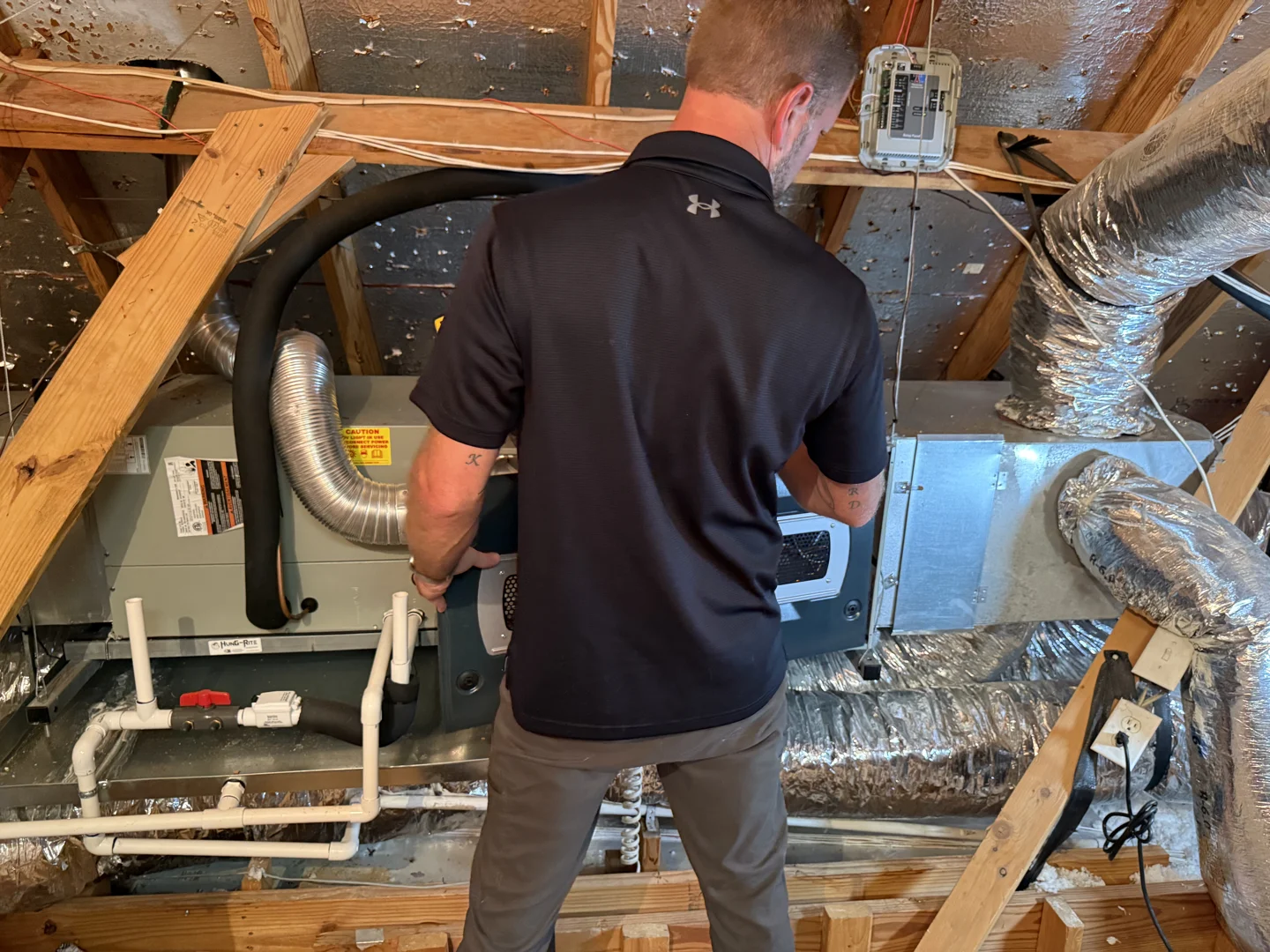
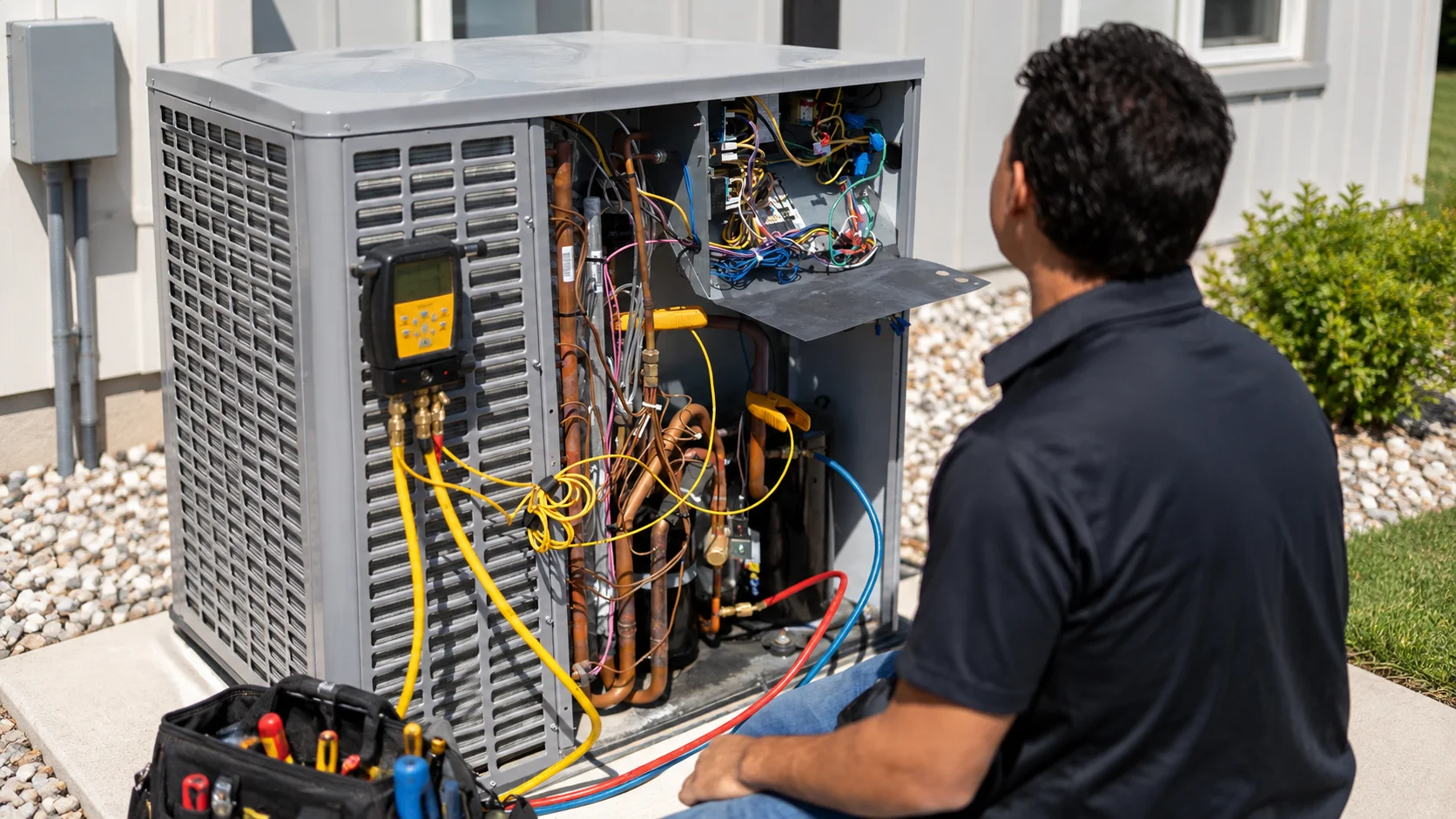
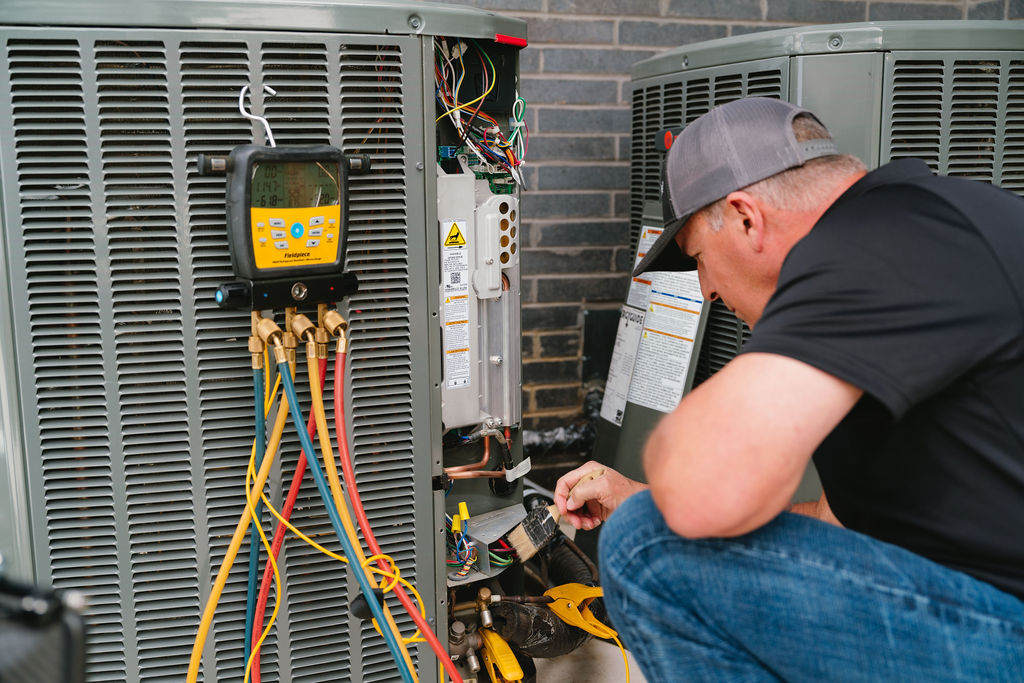
A professional AC tune-up involves an in-depth mechanical, electrical, and airflow evaluation designed to restore factory operating specifications. Certified technicians follow rigorous multi-point checklists to inspect every critical component of the refrigeration circuit, electrical distribution network, and air delivery system.
Following industry standards for servicing your AC ensures that vital operating measurements like static duct pressure, superheat, subcooling, and temperature splits are accurately analyzed. Scheduling a thorough seasonal air conditioning tune up confirms that your cooling system is fully prepared to deliver reliable comfort during peak heat.
Refrigerant Verification, Coils, and Electrical Systems
During a professional service appointment, technicians complete several essential diagnostic, calibration, and cleaning tasks:
- Refrigerant Level and Charge Calculation: Technicians measure suction and liquid line pressures, calculating superheat and subcooling to ensure the refrigerant charge matches manufacturer design specifications. Incorrect refrigerant levels reduce heat transfer and risk serious compressor damage.
- Coil Cleaning and Fin Inspection: Technicians remove dirt, pollen, and debris from outdoor condenser coils and evaluate the indoor evaporator coil. Restoring clean metal surfaces ensures optimal heat dissipation and efficient cooling cycles.
- Electrical Diagnostics and Safety Testing: Technicians measure running amperage and voltage on compressor and fan motors, test motor run capacitors for microfarad drift, tighten loose electrical connections, and inspect contactor points for pitting or oxidation.
- Condensate Drain Line Service: Technicians inspect and flush the primary condensate drain line, clear microbial buildup, and test safety float switches to prevent condensate overflow and indoor water damage.
- Blower Motor and Assembly Inspection: Technicians examine the blower wheel for dust accumulation, check motor bearings, measure airflow static pressure, and inspect duct connections at the plenum.
Safe DIY Upkeep Versus Certified Technician Protocols
Homeowners can perform simple preventative maintenance between professional service visits to maintain baseline airflow and equipment cleanliness:
- Filter Replacements: Inspect air filters every thirty to sixty days and replace dirty filters promptly. Using quality filters with suitable MERV ratings captures airborne dust without restricting system airflow.
- Outdoor Clearance: Maintain at least twenty-four inches of clear space around the outdoor condenser cabinet by trimming back shrubs, tall grass, vines, and tree branches.
- Vent Inspection: Clean supply registers and return air grilles regularly, ensuring that drapes, furniture, and rugs do not obstruct air movement.
- Cabinet Observation: Inspect the exterior housing for physical damage, listen for abnormal vibrating sounds, and inspect indoor air handler closets for signs of moisture or water pooling.
Safety Warning: High-voltage electrical enclosures and pressurized refrigerant lines present severe electrical shock, fire, and chemical hazards. Homeowners should never open electrical service panels, disassemble motors, or attach manifold gauges to refrigerant lines. These complex technical procedures require specialized diagnostic tools and EPA certification. Scheduling professional HVAC maintenance with Air Repair Pros guarantees that all mechanical and electrical servicing is conducted safely and in full compliance with industry standards.
Financial and Operational Return on Routine AC Tune-Ups
Investing in regular preventative maintenance delivers substantial financial, operational, and safety returns over the lifetime of your cooling system. Rather than dealing with unexpected emergency repair costs during extreme weather, proactive maintenance allows homeowners to manage operational expenses reliably while preserving indoor comfort.
| Performance Factor | Maintained System | Neglected System |
|---|---|---|
| System Lifespan | Maximized operational life | Premature system replacement |
| Energy Consumption | Preserves rated baseline efficiency | Progressive efficiency loss |
| Emergency Repairs | Minimized breakdown risk | Frequent component failures |
| Factory Warranty Status | Protected with documented service | Risk of denied warranty claims |
| Airflow & Temperature | Balanced airflow and steady cooling | Inconsistent temperatures and weak airflow |
Energy Efficiency Gains and Lower Utility Bills
When airborne dirt coats the outdoor condenser coils, heat cannot escape into the outdoor air efficiently. This thermal barrier forces the compressor to operate at higher head pressures and run for longer cycles to achieve the thermostat setpoint. Clogged air filters, dirty evaporator coils, and minor refrigerant imbalances create additional mechanical resistance, reducing seasonal energy efficiency.
Cleaning heat transfer surfaces, calibrating electrical components, and lubricating moving parts lowers overall system resistance. A properly tuned cooling system cycles normally, keeping electricity consumption aligned with factory specifications throughout long summer billing periods.
Extended Lifespan, Warranty Protection, and Prevented Breakdowns
Major cooling components such as compressors, fan motors, and control boards are engineered for long service lives when operating within design limits. However, uncorrected electrical drift, restricted airflow, and high operating temperatures accelerate thermal breakdown and lead to premature failure. Learning how an HVAC maintenance plan can save you from stress shows how scheduled care prevents the inconvenience of unexpected summer equipment shutdowns.
Most HVAC equipment manufacturers require documented annual maintenance performed by licensed professionals to keep limited parts warranties active. If a critical component fails, manufacturers typically ask for maintenance documentation before approving warranty claims. Maintaining detailed service records from Air Repair Pros protects your warranty coverage and avoids out-of-pocket expenses for covered components.
Frequently Asked Questions About AC Maintenance Frequency
How often should you schedule professional AC maintenance?
Standard central air conditioning systems should receive a professional tune-up once per year, ideally during early spring before the arrival of warm weather. If your home uses a heat pump for year-round heating and cooling, schedule professional maintenance twice per year, once in the spring for cooling and once in the fall for heating.
What factors determine whether you need maintenance once or twice a year?
Key factors include equipment type, system age, daily runtime, and environmental conditions. Homes with heat pumps, units over ten years old, multiple pets, high indoor dust, household allergy sufferers, or extended summer cooling seasons benefit from twice-yearly tune-ups to keep mechanical parts and airflow in optimal condition.
What are the signs that your AC needs immediate service?
Signs that your system requires immediate technical service include weak airflow from supply registers, warm air blowing during cooling cycles, frequent short cycling, unusual squealing or grinding noises, standing water near the indoor air handler, and sudden unexplained increases in monthly electricity bills.
What does a professional AC tune-up typically include?
A professional tune-up includes testing electrical capacitors and contactors, measuring motor amp draws, checking refrigerant levels and operating pressures, cleaning outdoor condenser coils, flushing condensate drain lines, inspecting the indoor blower assembly, and verifying thermostat calibration.
Can you perform AC maintenance yourself, and what tasks are safe for DIY?
Homeowners can safely replace air filters every thirty to sixty days, dust supply and return grilles, and maintain a two-foot clear perimeter around the outdoor condenser cabinet. Complex technical tasks involving high-voltage electrical panels, internal wiring, and sealed refrigerant circuits must always be performed by licensed technicians.
How does regular maintenance affect energy bills, system lifespan, and repair costs?
Regular maintenance keeps energy consumption near original factory ratings, helps equipment achieve its full expected operational lifespan, and reduces the likelihood of emergency breakdowns by identifying and correcting worn electrical and mechanical parts early.
How does climate affect air conditioner maintenance frequency?
Regions with prolonged summer heat, high ambient humidity, or heavy airborne dust place severe operational demands on cooling equipment. These challenging climate conditions cause faster dirt accumulation on coils and accelerate electrical component wear, making twice-yearly service intervals practical for many households.
Is annual AC service required to keep the manufacturer warranty valid?
Most HVAC equipment manufacturers require proof of documented annual maintenance performed by a licensed technician to keep limited parts warranties in good standing. Failing to maintain verifiable service records can lead to denied warranty claims if a major component fails.
What happens if you skip AC maintenance for a year or more?
Skipping maintenance allows dirt to coat heat exchange coils, strains blower motors, increases electrical resistance across contactors, and causes drain lines to clog with microbial growth. Over time, neglect causes reduced cooling capacity, higher energy bills, frozen coils, and potential compressor breakdown.
How much does AC maintenance typically cost, and is a maintenance plan worth it?
Maintenance costs vary based on system type, age, and local service specifications. Enrolling in an ongoing maintenance plan is generally worthwhile because it bundles seasonal tune-ups, provides priority scheduling during extreme weather, offers diagnostic discounts, and keeps your service history organized.
Conclusion
Keeping your cooling equipment on a consistent maintenance schedule is the most dependable way to ensure reliable home comfort, manage monthly utility costs, and prevent unexpected mid-summer equipment breakdowns. While standard split systems in moderate climates perform dependably with a single annual spring tune-up, homes with heat pumps or extended regional cooling demands benefit significantly from twice-yearly service.
For homeowners in Frisco, TX, McKinney, TX, Plano, TX, Little Elm, TX, and Allen, TX, maintaining a clean, well-calibrated air conditioning system protects both your indoor comfort and your household budget. To keep your cooling equipment operating smoothly through every season, contact our professional AC maintenance technicians at Air Repair Pros today to schedule your next seasonal service visit.