Introduction
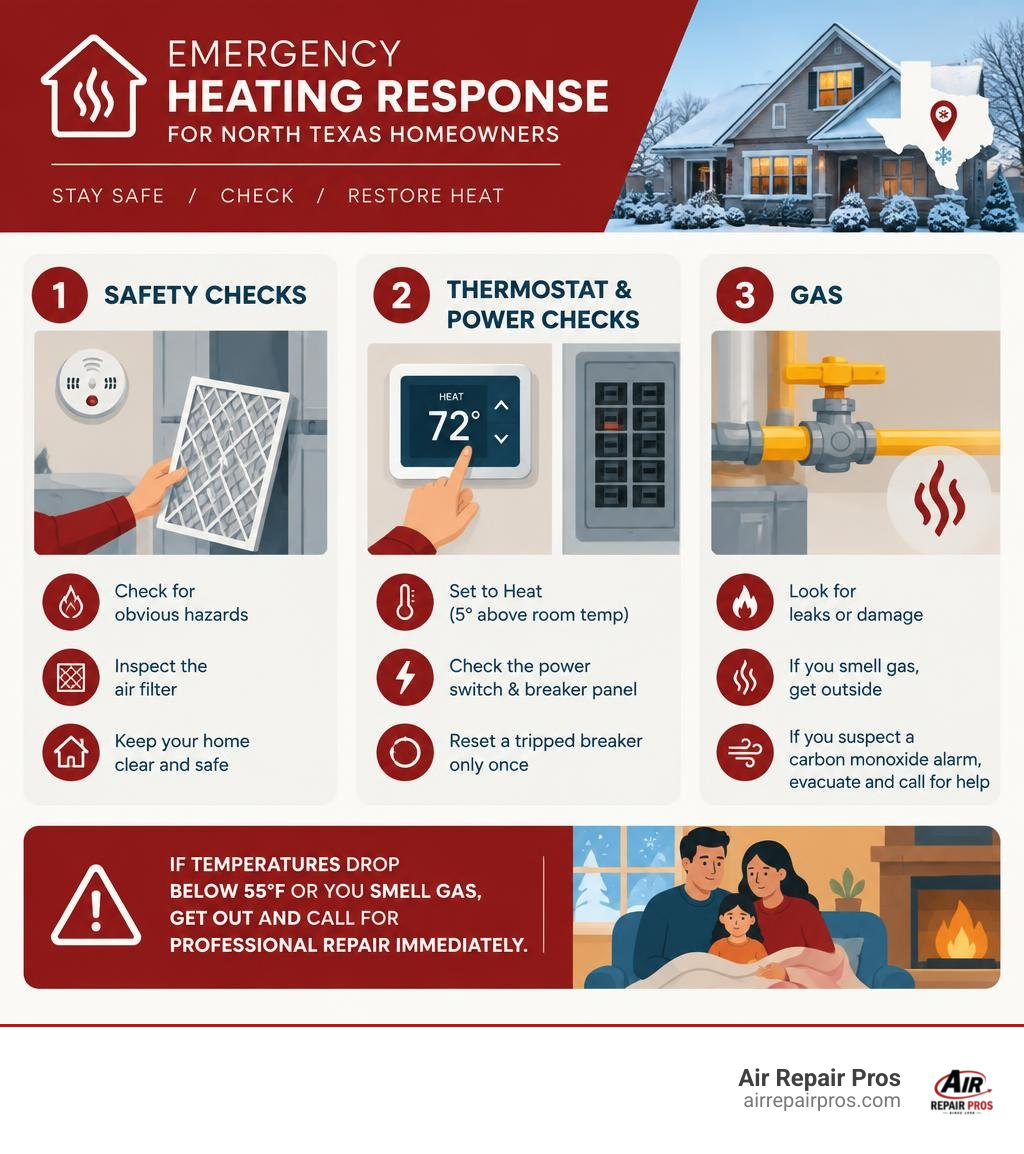
If your heating fails during a North Texas freeze, start with safe emergency checks: confirm the thermostat is set to Heat and raised at least 5 degrees above room temperature, check the furnace power switch and breaker panel, reset a tripped breaker only once, and inspect the air filter for heavy blockage. If indoor temperatures drop below 55°F, you smell gas, or a carbon monoxide alarm sounds, evacuate as needed and call for professional heating emergency repair immediately.
When Arctic air plunges into North Texas, indoor temperatures can plummet rapidly if your HVAC equipment suddenly fails. Extreme freeze-thaw cycles create acute mechanical stress on residential heating units across communities like Frisco, TX, McKinney, TX, and Plano, TX. A total loss of heat during a severe winter storm presents significant hazards, ranging from catastrophic pipe bursts to hazardous carbon monoxide accumulation. Implementing rapid response protocols ensures your home remains safe and insulated while certified technicians troubleshoot and resolve critical mechanical failures.
Residential HVAC systems in northern Texas are primarily configured to manage long, hot summers, meaning heating components may sit dormant for months before being suddenly called upon to run continuously against sub-freezing outdoor weather. This abrupt transition exposes hidden electrical, mechanical, and fuel delivery weaknesses that can paralyze a furnace or heat pump when warmth is needed most. Having a comprehensive understanding of urgent troubleshooting steps, equipment warning signs, and professional repair standards empowers homeowners to protect their families, safeguard their structural plumbing, and restore reliable indoor climate control without delay.
Critical Causes of Heating Emergencies During Extreme Texas Weather
Sudden outdoor temperature drops force residential heating equipment to operate continuously under maximum load. When temperatures stay near or below freezing, heating systems encounter thermal shock, component fatigue, and heightened stress across electrical and fuel delivery infrastructure.
During regional severe weather events, energy delivery networks experience massive strain. Power grid fluctuations, localized pressure drops in natural gas pipelines, and intense thermal expansion or contraction contribute to accelerated component failure rates. Residential furnaces and heat pumps that operated normally in mild weather can quickly fail when pushed beyond their operating limits.
Thermostat and Electrical Supply Failures
The electrical control network of a heating unit regulates every stage of the heating cycle. High electrical demand, winter grid instability, or localized electrical surges can cause circuit breakers to trip or internal control fuses to blow.
Furthermore, aging or depleted thermostat batteries often cause intermittent communication loss between the interface and the furnace control board. Modern smart thermostats may also experience software faults or lose 24-volt transformer power if safety switches inside the air handler open unexpectedly. Loose or corroded electrical wiring and failed contactor relays immediately halt blower operation and ignition sequences, cutting off heat delivery entirely. When control voltages drop below standard thresholds, sensitive digital microprocessors enter lockout modes that demand specialized diagnostics to safely reset.
Gas Supply, Pilot, and Ignition Malfunctions
Natural gas heating systems rely on precise fuel-to-air ratios and synchronized electronic sequencing. When supply pressures fluctuate or internal components wear down, ignition problems occur:
- Dirty Flame Sensors: A flame sensor coated in oxidation cannot detect the burner flame, triggering a safety shutdown within seconds of ignition.
- Faulty Gas Valves: Sticking or burned-out solenoids prevent gas from entering the burner assembly.
- Electronic Igniter Degradation: Hot surface igniters and direct spark assemblies become brittle over time and can crack under sudden thermal load.
- Blocked Pilot Assemblies: Debris or carbon buildup can choke pilot flames on older systems, disrupting the thermocouple signal.
- Draft Inducer Blower Failures: Blocked flue pathways or failed inducer motors prevent pressure switches from closing, which completely inhibits burner ignition.
When these components fail to ignite safely, calling for professional furnace repair services ensures the gas train is tested, cleaned, and restored without risking dangerous gas accumulation.
Mechanical Wear and Airflow Restrictions
Restricted airflow ranks among the leading causes of mid-winter furnace failure. Severely clogged air filters suffocate the heat exchanger, driving internal temperatures above manufacturer safety limits. This triggers the high-limit switch, causing the furnace to cycle off repeatedly before heating the living space.
Continuous short-cycling places extreme thermal stress on metal components. Over time, this stress can cause the heat exchanger to crack, creating an immediate carbon monoxide danger. Similarly, seized blower motor bearings and deteriorated fan belts halt heat dissipation entirely. Understanding what to look for when scheduling emergency heating services allows homeowners to recognize these mechanical warnings before a complete breakdown occurs. When blower assemblies fail under heavy operational loads, heat builds up rapidly inside the cabinet, frequently warping metal components and degrading vital safety limit switches.
When to Call for Heating Emergency Repair in North Texas
Not every heating issue requires an immediate midnight service call, but severe conditions demand swift action. When outdoor temperatures drop below freezing and indoor temperatures decline steadily, prolonged delays risk frozen indoor plumbing and hypothermia for vulnerable occupants, including infants, seniors, and individuals with underlying medical conditions.
You must treat any signs of gas odors (a distinct rotten-egg smell), active carbon monoxide detector alarms, electrical burning odors, or violent mechanical banging as immediate safety emergencies.
| Situation Indicator | Standard Heating Issue | Emergency Heating Situation | Action Required |
|---|---|---|---|
| Indoor Temperature | Home maintains 65°F or higher | Indoor temp drops rapidly below 55°F during a freeze | Call for 24/7 emergency response |
| System Odors | Slight dusty smell at initial seasonal startup | Rotten-egg sulfur odor or strong acrid electrical burning | Evacuate immediately and shut off main power/gas |
| Operating Sounds | Normal airflow and gentle cycling | Loud metal-on-metal screeching, grinding, or banging | Shut system down at thermostat to prevent motor seizure |
| System Cycling | Cycles 2 to 3 times per hour | Short-cycling off within 30 to 90 seconds of ignition | Replace filter; if cycling persists, call an emergency technician |
| Life Safety Devices | CO detector silent and functional | CO alarm sounding or flashing warning codes | Evacuate premises immediately and call 911 |
Step-by-Step DIY Troubleshooting Before Calling a Technician
Homeowners can execute safe, preliminary checks before scheduling an emergency dispatch.
SAFETY WARNING: Never attempt to disassemble gas lines, bypass electrical safety switches, ignite burners manually, or adjust internal combustion mechanisms. DIY repairs on gas or high-voltage electrical components present severe risks of explosion, electrocution, and carbon monoxide poisoning. Professional technicians possess specialized diagnostic tools and safety certifications required to service dangerous heating equipment.
Follow these safe troubleshooting steps:
- Verify Thermostat Configuration: Ensure the thermostat is set explicitly to Heat and the target temperature is set at least 5 degrees above current room temperature. Check display screens for low-battery alerts.
- Inspect the Power Disconnect: Verify the furnace power switch (often resembling a standard light switch on or near the indoor unit) is toggled to the ON position.
- Check the Electrical Breaker Panel: Locate the dedicated heating breaker. If tripped, reset it firmly once. If it trips a second time immediately, stop and wait for a professional to prevent electrical fire hazards.
- Inspect and Replace the Air Filter: A clogged filter chokes airflow. Remove it and install a fresh, clean filter to relieve pressure on the high-limit switch.
- Inspect Exterior Vent Terminations: For high-efficiency condensing furnaces, ensure exterior PVC intake and exhaust pipes are clear of snow, ice, or animal debris.
- Mitigate Pipe Freezing: While waiting for help, open cabinet doors beneath kitchen and bathroom sinks along exterior walls and let faucets run with a tiny trickle of water to maintain movement through the pipes.
Critical Safety Protocols During Severe Heating Failures
When safety threats arise, life safety protocols take absolute precedence over equipment troubleshooting:
- Gas Leak Protocol: If you smell natural gas, evacuate all occupants and pets immediately. Do not flip light switches, operate phones indoors, or start vehicles nearby. Once safely outside, call 911 and your gas utility.
- Carbon Monoxide Alert: If your carbon monoxide alarm sounds, leave the home immediately and move to fresh air. The Consumer Product Safety Commission highlights carbon monoxide as a silent, colorless hazard that requires immediate professional evaluation and fresh-air evacuation.
- Safe Auxiliary Heating: Never use outdoor propane heaters, charcoal grills, or kitchen ovens to heat your home. These produce lethal levels of indoor carbon monoxide. Use only UL-listed electric space heaters placed on flat, hard floors away from flammable materials.
If your home heating fails during freezing conditions, contact our team for rapid emergency HVAC services to secure immediate diagnostic support.
How Technicians Prioritize and Execute Heating Emergency Repair
Certified technicians rely on systematic triage procedures to diagnose and restore failed heating systems safely and rapidly. When responding to emergency calls, technicians focus first on life safety verification, followed by operational integrity and thermal output efficiency.
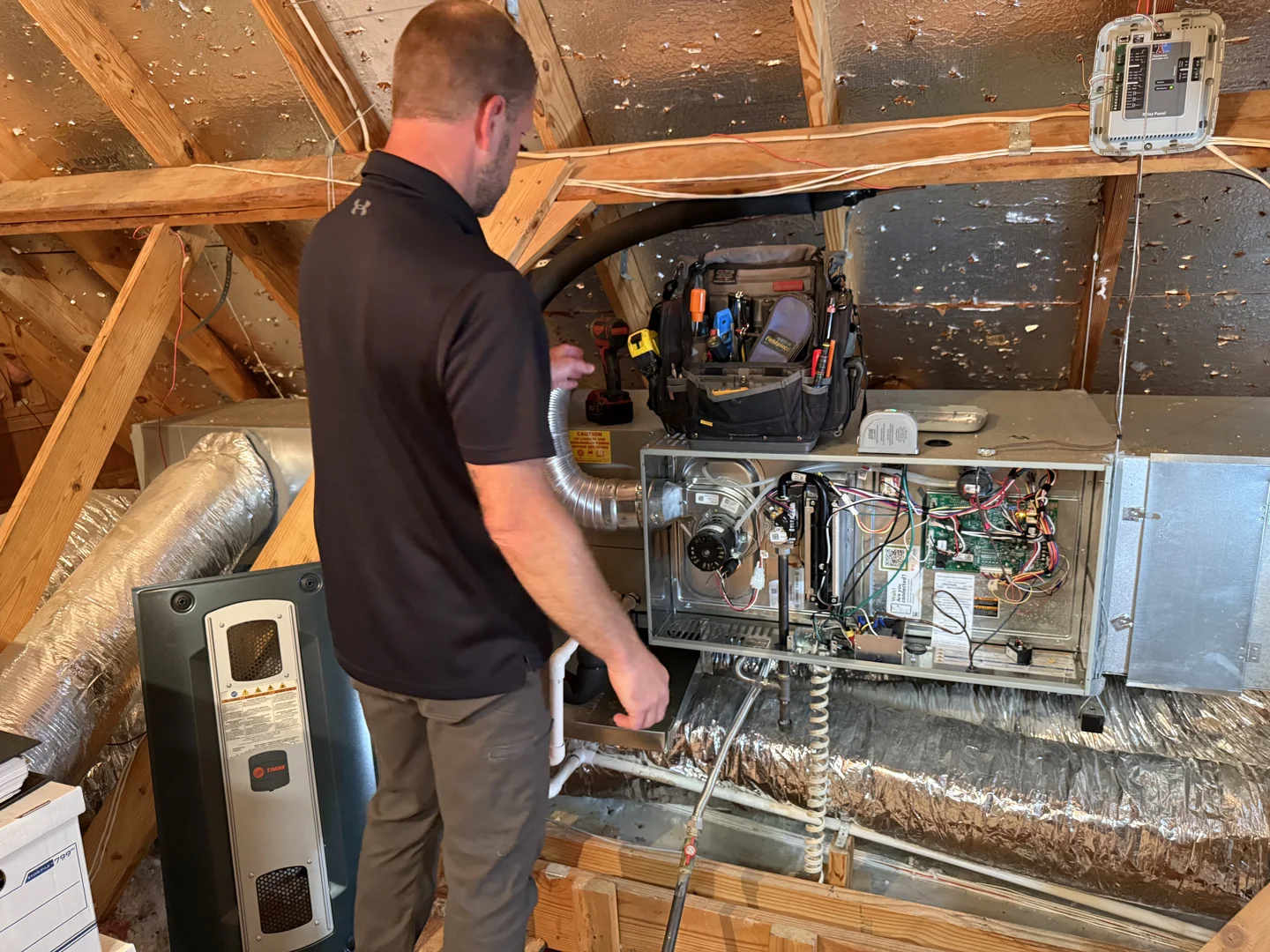
Service vehicles stocked with 85%+ of commonly needed replacement parts enable one-trip repairs when the required parts are available. This eliminates unnecessary travel delays during hazardous weather conditions, ensuring heating restoration happens as quickly as possible.
Diagnostic Protocols for Fast Heating Emergency Repair
Technicians use specialized testing tools to isolate system faults systematically:
- Flame Rectification Verification: Using microamp digital multimeters, technicians measure the minute DC current passing through the flame sensor to confirm safety circuit operation.
- Static Airflow and Pressure Testing: Manometers measure static pressure across the evaporator coil and ductwork to identify internal airflow blockages.
- Gas Manifold Pressure Calibration: Technicians verify both inlet and manifold gas pressures to confirm clean, complete fuel combustion according to manufacturer specifications.
- Combustion Analysis: Flue gas analyzers check for proper oxygen, carbon dioxide, and carbon monoxide levels to verify that the heat exchanger is intact and venting safely.
- Electrical Resistance and Amp-Draw Analysis: Technicians evaluate transformer output, capacitor microfarad ratings, and motor winding resistance against original equipment tolerances.
Applying Pre-Failure Assessments to Avoid Heating Emergency Repair
Modern HVAC maintenance incorporates predictive testing methods to spot degrading parts before they cause a complete mid-winter shutdown. During multi-point inspections, technicians evaluate component-level health metrics:
- Run-Capacitor Degradation: Measuring microfarad capacitance values reveals whether a motor capacitor is slipping out of its safe operating tolerance.
- Blower Motor Amp Draw: Evaluating operating amperage against the manufacturer’s rated full-load amps (FLA) identifies internal bearing resistance early.
- Igniter Resistance Profiling: Measuring electrical resistance across hot surface igniters helps identify elements near the end of their operational life.
- Thermal Imaging of Electrical Connections: Infrared thermal cameras identify loose terminal connections, corroded wiring lugs, and overheating contactors before they arc or weld shut.
Addressing these weak links during regular maintenance prevents unexpected heating breakdowns when severe weather strikes.
Computational Network Resilience and Restoration Strategies
On a larger scale, modern utility engineering uses mathematical frameworks like the Impact Increment Method (IIM) to prioritize infrastructure restoration. In complex district heating grids and combined municipal networks, IIM evaluates which damaged components cause the highest incremental disruption across the system.
By quantifying post-failure impact values, engineering models prioritize repairs on the most critical network segments first. Furthermore, integrating multi-carrier energy networks, such as coordinating electricity, natural gas, and distributed district heat, creates alternative routing pathways during natural disasters. This multi-layered approach ensures heating service is restored efficiently across critical community infrastructure.
Proactive Strategies to Prevent Emergency Heating Breakdowns
Routine preventive maintenance remains the most reliable defense against unexpected winter equipment failures. Scheduling a comprehensive furnace or heat pump tune-up each autumn ensures your system is thoroughly cleaned, calibrated, and tested before freezing temperatures arrive. Professional service visits allow technicians to check electrical terminals, measure motor friction, verify thermostat calibration, and clear burner assemblies of accumulated debris.
Homeowners should replace air filters every 30 to 90 days, install whole-home surge protection to guard delicate control boards against grid spikes, and maintain at least three feet of clear space around outdoor heat pump units and indoor mechanical closets. Sealing perimeter drafts around doors and windows reduces heating system load and helps maintain stable indoor temperatures during extreme cold. For further guidance on seasonal system care, the U.S. Department of Energy provides comprehensive recommendations on optimizing home heating efficiency and equipment longevity.
Protecting North Texas Homes Across Frisco, McKinney, and Denton
Rapid freeze cycles in North Texas demand reliable, local HVAC support. Homes throughout the region face distinct challenges, from severe ice storms to sudden sub-freezing cold snaps that stress residential mechanical systems.
Air Repair Pros delivers dedicated local coverage tailored to these communities:
- Fast, localized dispatch for emergency heating repair in Frisco, TX
- Dedicated round-the-clock service with 24-hr heating repair in McKinney, TX
- Specialized diagnostic solutions for emergency heating repair in Denton, TX
- Comprehensive service across neighboring areas including Plano, TX, Little Elm, TX, and Allen, TX
Frequently Asked Questions About Heating Emergencies
What constitutes an immediate heating emergency in North Texas?
An immediate heating emergency occurs when your heating system fails completely during sub-freezing outdoor weather, indoor temperatures fall below safe living thresholds, or the system produces dangerous indicators such as gas odors, carbon monoxide alarms, electrical burning smells, or loud banging.
How low can indoor temperatures drop before home pipes risk freezing?
Home plumbing lines, particularly those located within exterior walls, unheated crawlspaces, or attics, enter severe freezing danger when indoor ambient temperatures fall below 55°F during sustained sub-freezing weather.
What should I do immediately if I smell gas near my furnace?
Evacuate all household occupants and pets immediately without turning electrical switches on or off. Once you are safely away from the home, contact 911 and your natural gas utility provider from an outside mobile phone.
Can I safely use my gas oven or an outdoor heater to warm my home?
No, never use kitchen gas ovens, ranges, or outdoor fuel-burning heaters inside an enclosed living space. These devices produce hazardous levels of odorless carbon monoxide that can quickly reach fatal concentrations indoors.
How do severe winter storms cause sudden heating pipeline failures?
Severe winter storms cause rapid soil shifting, freezing moisture accumulation, and extreme thermal contraction, which can stress underground natural gas pipelines and residential distribution fittings, leading to sudden pressure fluctuations or localized line disruptions.
What role does the Impact Increment Method (IIM) play in heating system repair prioritization?
The Impact Increment Method (IIM) is an advanced computational modeling approach used in large-scale energy networks to calculate the exact operational impact of each damaged component, allowing engineers to sequence system repairs for the fastest possible restoration.
How do pre-failure and post-failure assessments minimize heating downtime?
Pre-failure assessments identify weakened, worn electrical and mechanical components before they fail under load, while post-failure assessments establish clear, priority-based triage protocols to restore core system functions rapidly after an outage.
How do integrated power, gas, and heating systems improve emergency recovery?
Integrated energy systems link power, natural gas, and thermal networks together, providing alternative energy routing pathways and secondary backup options that improve community resilience during widespread grid interruptions.
What basic checks should I perform before calling an emergency technician?
Verify that your thermostat is set to Heat with the temperature adjusted upward, check your electrical panel for tripped circuit breakers, confirm the furnace power switch is turned on, and inspect the air filter for heavy dirt blockages.
How long does a typical emergency heating repair take once a technician arrives?
Most standard emergency heating repairs require between one and three hours once on site, especially when technicians operate fully stocked service vehicles equipped with common replacement parts such as flame sensors, igniters, motors, and control boards.
Conclusion
When freezing winter conditions threaten the warmth and safety of your home, having a dependable heating partner makes all the difference. North Texas weather can shift rapidly, making rapid-response reliability and professional expertise essential for protecting your property and family from the dangers of sudden heating loss.
Since 1998, Air Repair Pros has proudly delivered premier heating, AC, and full-scale residential plumbing solutions throughout Frisco, TX, McKinney, TX, Plano, TX, Little Elm, TX, and Allen, TX. With certified technicians operating fully stocked trucks equipped with 85%+ of commonly needed parts for fast one-trip repairs, their team is prepared to handle your urgent heating needs around the clock. If your heating system fails during a freeze, schedule prompt heating repair or contact our heating emergency repair specialists immediately to restore safe, reliable warmth to your home.