


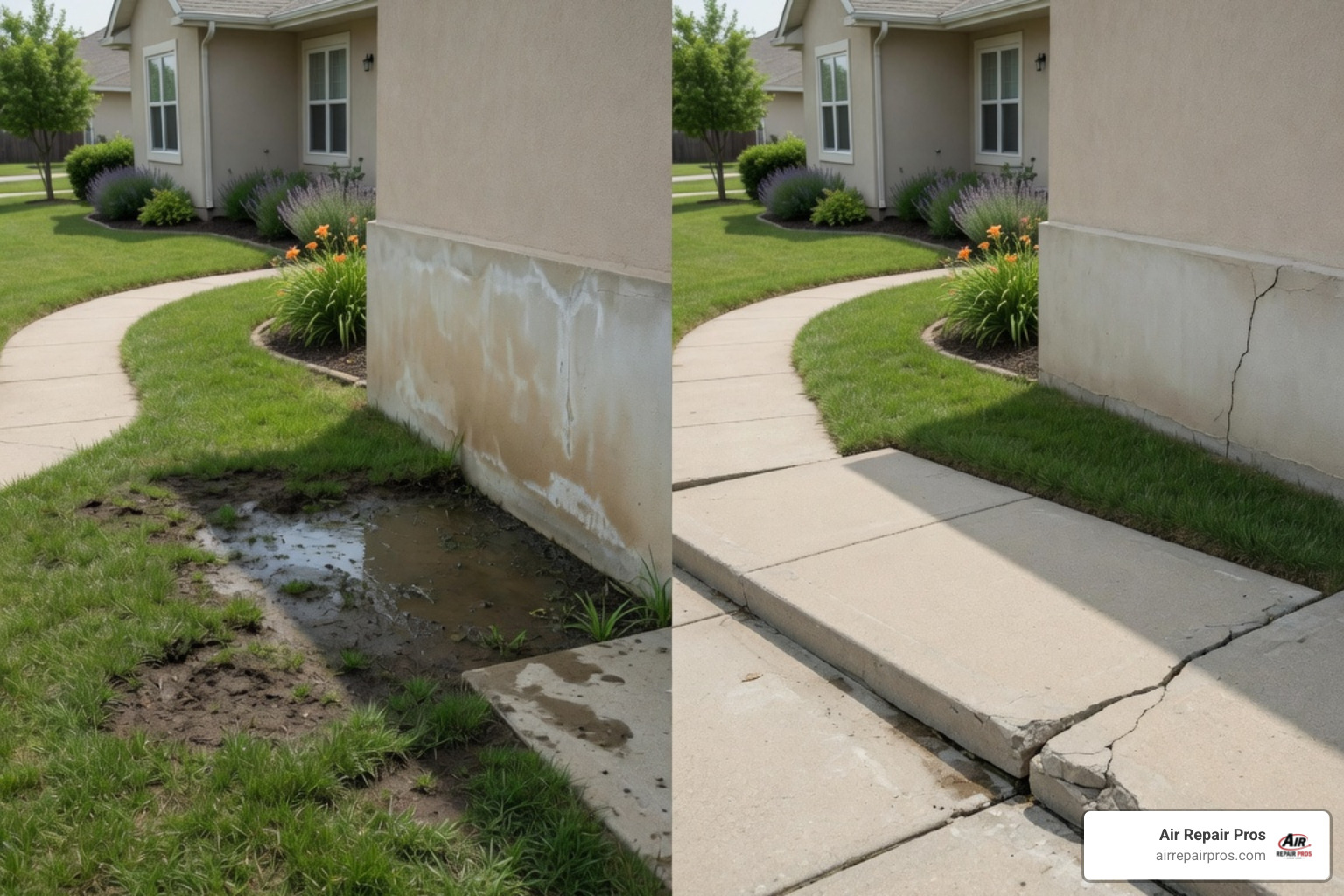
Slab Leak or Foundation Issue? Here’s How to Tell Them Apart
When homeowners search for slab leak vs foundation leak, they usually want one thing fast: to know which problem they have and how serious it is.
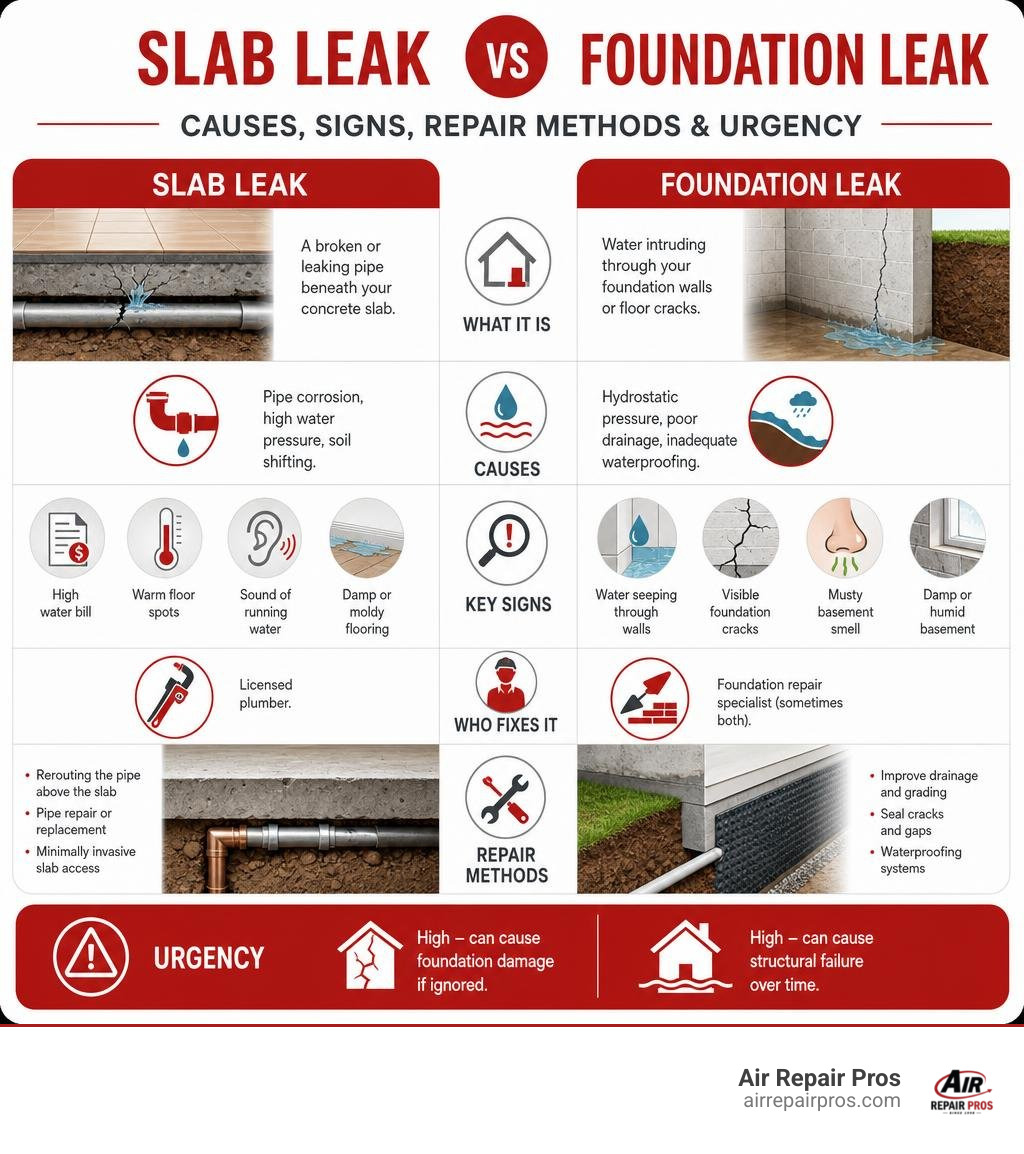
Here is the quick answer:
| Slab Leak | Foundation Leak | |
|---|---|---|
| What it is | A broken or leaking pipe beneath your concrete slab | Water intruding through your foundation walls or floor cracks |
| Primary cause | Pipe corrosion, high water pressure, soil shifting | Hydrostatic pressure, poor drainage, inadequate waterproofing |
| Key signs | High water bill, warm floor spots, sound of running water | Water seeping through walls, visible foundation cracks, musty basement |
| Who fixes it | Licensed plumber | Foundation repair specialist (sometimes both) |
| Urgency | High, as it can cause foundation damage if ignored | High, as it can cause structural failure over time |
These two problems are often confused because they share some symptoms. But they are very different in cause, location, and solution.
A slab leak is a plumbing failure. A pipe under your concrete floor has cracked, corroded, or burst. Water is escaping into the soil beneath your home.
A foundation leak is a structural or drainage problem. Water is finding its way into your home through cracks or gaps in the foundation walls or floor itself.
Here is why the distinction matters: a slab leak left untreated can become a foundation problem. A tiny pinhole leak releasing just one gallon of water per hour adds up to 720 gallons per month. That is more than enough to saturate the soil beneath your slab, erode its support, and trigger the kind of structural settling that costs far more to fix than the original pipe repair.
For North Texas homeowners in areas like Frisco, TX and Plano, TX, this risk is even higher. The region’s expansive clay soil shifts dramatically with moisture changes, making both types of leaks more likely and more damaging than in other parts of the country.
The sections below break down causes, warning signs, detection methods, repair options, and what to expect from a cost and insurance standpoint.
Understanding the Core Differences: Slab Leak vs Foundation Leak
To properly address water damage in your home, you must first understand the geological and mechanical forces at play. Homeowners often use these terms interchangeably, but they represent entirely different systems. A slab leak is fundamentally an issue with the pressurized water delivery or drainage systems built beneath the concrete slab. In contrast, a foundation leak is an issue with the structural envelope of the home failing to keep environmental moisture out.
According to research from the United States Geological Survey (USGS) on groundwater and soil saturation, groundwater tables and soil moisture levels fluctuate constantly. When the soil surrounding a home becomes oversaturated, it exerts immense hydrostatic pressure against the concrete foundation. If there are any micro-cracks or gaps in the concrete, this pressure forces groundwater inward. This is a classic foundation leak, and it is driven entirely by external water sources like rain, poor yard grading, or a rising water table.
To understand how these two issues diverge, it is helpful to look at their mechanics side by side. The following comparison table outlines the primary differences in how these leaks behave and how they are managed:
| Feature | Slab Leak | Foundation Leak |
|---|---|---|
| Water Source | Pressurized domestic water lines or gravity-fed drain lines | Rainwater, surface runoff, or rising groundwater table |
| Primary Location | Beneath or embedded within the poured concrete slab | Within basement walls, crawl spaces, or foundation joints |
| Driving Force | Municipal water pressure or gravity drainage | Hydrostatic pressure from saturated external soil |
| Diagnostic Tool | Acoustic listening devices and thermal imaging cameras | Visual inspection, moisture meters, and structural elevation surveys |
| Primary Specialist | Licensed residential plumbing technician | Structural engineer and foundation repair contractor |
When you are dealing with a slab leak vs foundation leak, identifying the source of the water is the first step toward a permanent solution. A slab leak is a plumbing emergency that requires immediate isolation of the water line, whereas a foundation leak is a structural challenge that often requires drainage correction and concrete reinforcement.
Defining a Slab Leak vs Foundation Leak in Residential Plumbing
A slab leak occurs when the plumbing pipes installed beneath or directly inside the concrete foundation slab develop a rupture. In modern residential construction across Frisco, TX, McKinney, TX, and Plano, TX, plumbing lines are laid out before the concrete slab is poured. These lines include pressurized fresh water supply lines and non-pressurized sewer or drain lines.
When these pipes fail, they release water directly under the concrete floor. Because the water in supply lines is highly pressurized, even a tiny pinhole leak can spray water continuously, washing away the supporting soil and creating large voids beneath the home.
Older homes in North Texas often feature copper pipes, which are highly susceptible to chemical reactions with the surrounding soil and concrete. Newer homes typically use PEX piping, which is flexible and highly resistant to corrosion but can still suffer from mechanical damage during installation or from extreme soil shifting. If you suspect a pressurized plumbing line has failed under your floor, you will need professional plumbing slab leak repair to locate and repair the damaged section of the pipe before the soil erosion undermines your entire structure. For more background on how these sub-slab plumbing systems are structured, you can use homeowner resources that explain what slab leaks are, how they are detected, and when repair is urgent.
Defining a Foundation Leak vs Slab Leak in Texas Homes
A foundation leak is not caused by a broken plumbing pipe. Instead, it occurs when environmental water from outside the home penetrates the concrete foundation. This is particularly common in areas with basement walls, crawl spaces, or slab-on-grade foundations subjected to poor exterior drainage.
The geological conditions in North Texas make our homes especially vulnerable to these issues. As explained by the Texas A&M AgriLife Extension on managing expansive clay soils, the clay soil in cities like Allen, TX, and Little Elm, TX, acts like a sponge. It swells significantly when wet and shrinks dramatically during hot, dry summer months. This constant movement causes the concrete foundation to bend and flex. Because concrete is strong under compression but weak under tension, this movement inevitably leads to concrete cracks.
When heavy rain falls, surface runoff pools next to the foundation because of clogged gutters or improper yard grading. The water saturates the clay soil, creating high hydrostatic pressure that forces the water through those newly formed concrete cracks. To understand the relationship between soil movement and water intrusion, focus on the way plumbing leaks, drainage problems, and foundation movement can reinforce one another in slab homes.
Common Causes of Sub-Slab and Structural Foundation Failures
Understanding why these failures occur can help homeowners in Frisco, TX and surrounding areas take proactive steps to protect their properties. The causes of sub-slab plumbing failures and structural foundation leaks are distinct, though they often interact in destructive ways.
Here are the primary causes of slab leaks in residential plumbing systems:
- Chemical Corrosion and Electrolysis: When copper pipes come into direct contact with certain minerals in North Texas soil or the concrete itself, chemical reactions occur. Electrolysis can also happen when electrical currents travel through the earth, causing the copper to degrade and form tiny pinhole leaks.
- Soil Shifting and Friction: The expansive clay soil in McKinney, TX and Plano, TX moves constantly. As the soil shifts, it moves the pipes embedded within it. If a pipe rubs against the rough concrete slab or abrasive gravel base, the friction will eventually wear a hole through the pipe wall.
- High Water Pressure: Municipal water systems sometimes deliver water at pressures exceeding 80 psi. High water pressure puts constant stress on plumbing joints and thin pipe walls, accelerating wear and causing weak points to rupture.
- Thermal Expansion: Hot water lines expand and contract as hot water flows and cools. This constant physical movement causes the pipe to scrape against the surrounding concrete, leading to premature failure.
If you suspect that a plumbing pipe has failed due to high pressure or corrosion, securing professional water line repair is critical to stopping the water flow before it causes major structural shifting.
For structural foundation leaks, the causes are almost entirely environmental and structural:
- Hydrostatic Pressure: Saturated clay soil holds an immense amount of water. This water exerts heavy pressure against foundation walls and the underside of the slab, forcing moisture through porous concrete and micro-cracks.
- Poor Drainage Systems: If your gutters are clogged, or if your yard slopes toward your home rather than away from it, rainwater will pool directly against your foundation. This pooling water saturates the soil and guarantees eventual water intrusion.
- Inadequate Waterproofing: During construction, foundations should be sealed with waterproofing membranes and equipped with French drains to direct water away. If these systems were poorly installed or have degraded over time, groundwater will find its way inside.
Homeowners who want a broader look at local plumbing risks can use the complete homeowner’s guide to plumbing in Frisco, TX to understand how water pressure, seasonal soil movement, and aging plumbing systems affect North Dallas homes.
Key Signs and Symptoms: How to Diagnose the Issue
Because both slab leaks and foundation leaks involve water under or inside your home, telling them apart can be tricky. However, each issue leaves unique clues. Knowing these signs can help you call the right professional immediately, saving you time and preventing escalating damage.
If you are dealing with a slab leak, you will likely notice symptoms related to water consumption and localized plumbing behavior:
- Unexplained Water Bill Spikes: If your water bill suddenly doubles or triples without a change in your household habits, you have an active leak. A continuous pressurized leak will waste thousands of gallons of water a month.
- Warm Spots on the Floor: If a hot water line under your slab ruptures, the heat will transfer through the concrete and flooring. Walking barefoot and feeling an unusually warm patch on your carpet, tile, or laminate is a classic sign of a hot water slab leak.
- The Sound of Running Water: When your home is completely quiet at night, listen closely. If you hear a faint hissing, rushing, or gurgling sound behind your walls or under your floors when all faucets are turned off, water is escaping from a pressurized pipe.
- Low Water Pressure: A significant break in your main water line under the slab will divert water away from your fixtures, resulting in a sudden drop in water pressure throughout the home.
For foundation leaks, the signs are more structural and environmental:
- Water Seeping Through Walls or Floor Cracks: During or immediately after a heavy North Texas rainstorm, you may see water pooling on your basement floor or trickling down foundation walls.
- Musty Odors and Mold Growth: Damp soil pushing moisture through concrete cracks creates a perfect environment for mold. If you smell a persistent musty odor in lower levels or notice mold growing along baseboards, you likely have an environmental moisture problem.
- Visible Foundation Cracks: While minor settling cracks are common, large horizontal or stair-step cracks in your exterior brickwork or interior sheetrock indicate that soil movement is actively damaging your foundation.
If you notice any of these warning signs, it is vital to contact a professional for plumbing leak repair to pinpoint the source of the water and prevent further structural movement.
Professional Detection and Repair Methods
Locating a leak hidden beneath inches of concrete and flooring requires specialized equipment. Professional plumbers do not simply start jackhammering your floors to find a leak. Instead, they use non-invasive diagnostic tools to pinpoint the exact location of the break.
The standard professional detection process includes:
- Acoustic Listening Devices: Technicians use highly sensitive ground microphones to listen for the distinct sound of escaping water. By placing these microphones on the floor, they can trace the sound to its loudest point, often pinpointing the leak within a few inches.
- Thermal Imaging Cameras: Infrared cameras detect temperature differences on the floor surface. A hot water slab leak will show up as a bright, circular heat signature on the camera screen, even through thick tile or carpet.
- Pressure Testing: By isolating different sections of your plumbing system and measuring pressure drops, technicians can confirm which line is leaking and whether it is a hot, cold, or sewer line.
Once the leak is located, there are several modern repair methods available, depending on the age of your home and the condition of your pipes.
For localized repairs, a plumber can perform a spot repair by carefully cutting a small hole in the concrete slab to access and replace the broken section of pipe. However, in older homes with corroded copper pipes, a spot repair is often a temporary fix, as another leak is likely to develop nearby.
The most common and recommended choice is pipe rerouting. Instead of breaking your concrete floor, the plumber abandons the leaking pipe beneath the slab and runs a new, durable PEX pipe through your walls or attic. This completely removes the plumbing from the harsh sub-slab environment. For severe cases where multiple lines are failing, a whole-home repipe may be necessary.
If you suspect you have a leak under your concrete floor, scheduling professional plumbing slab leak detection is the best way to get an accurate diagnosis. Homeowners in Frisco, TX can often prevent a small leak from turning into a larger foundation concern by having the line located before repair decisions are made.
Financial Impacts, Insurance Coverage, and Prevention Strategies
Ignoring a slab leak or foundation leak can have devastating financial consequences. The cost of delaying repairs escalates rapidly. A minor plumbing leak that could be resolved with a straightforward reroute can quickly turn into a major structural disaster requiring foundation piering, extensive water damage restoration, and mold remediation.
When it comes to homeowners insurance, coverage can be complex and depends heavily on the cause of the water damage. Generally, standard homeowners insurance policies in Texas cover water damage that is sudden and accidental. For a slab leak, this means your policy will often cover the cost of tearing out and replacing the concrete slab to access the broken pipe, as well as repairing the water damage to your flooring, drywall, and personal property. However, insurance policies typically do not cover the actual plumbing repair itself, meaning the homeowner is responsible for the cost of fixing the pipe.
For foundation leaks caused by hydrostatic pressure, rising groundwater, or surface runoff, standard insurance policies rarely provide coverage unless you have a specific flood insurance policy or a specialized water backup endorsement. This makes proactive prevention strategies essential for protecting your investment.
To prevent slab leaks and foundation issues in North Texas, homeowners should implement the following best practices:
- Install a Water Pressure Regulator: Keep your home’s water pressure between 40 and 60 psi. This prevents unnecessary stress on your sub-slab pipes and plumbing joints.
- Use a Water Softener: Hard municipal water can accelerate internal pipe corrosion. Installing a water softener protects your plumbing system from mineral buildup and chemical degradation.
- Maintain Your Gutters and Downspouts: Ensure your gutters are clean and that downspouts discharge water at least five feet away from your foundation.
- Control Soil Moisture: Use a soaker hose system around your foundation during dry summer months to keep the clay soil at a consistent moisture level, preventing the extreme shrinking and swelling that cracks concrete and breaks pipes.
Many slab leak prevention steps overlap with the repair decisions covered in the beginner’s guide to Dallas slab leak repair, especially for homeowners comparing rerouting, spot repair, and long-term protection against future pipe failures.
Frequently Asked Questions About Slab and Foundation Leaks
Navigating the complexities of sub-slab plumbing and structural foundation issues can be overwhelming. Below are answers to ten of the most common questions homeowners ask when trying to diagnose and resolve these problems.
What is the main difference between a slab leak and a foundation leak?
The main difference is the source of the water. A slab leak is a plumbing failure involving a broken fresh water supply line or sewer pipe running beneath your concrete floor. A foundation leak is a structural or drainage issue where environmental groundwater or rainwater penetrates the concrete foundation through cracks or porous areas.
Can a slab leak cause a foundation leak?
Yes. If a slab leak is left untreated, the continuous flow of pressurized water will saturate the clay soil beneath your home. This causes the expansive soil to swell and heave, putting immense upward pressure on your concrete slab. Over time, this movement cracks the concrete, allowing water to seep into your home and causing severe structural settling.
How do I know if my high water bill is from a slab leak?
You can perform a simple water meter test. Turn off every faucet, shower, washing machine, and water-using appliance in your home. Go outside and locate your water meter. If the low-flow indicator dial is still spinning, water is actively flowing somewhere in your system. If you have no visible leaks inside the house, the water is likely escaping from a pipe beneath your slab.
Does homeowners insurance cover slab leak repairs in Texas?
In most cases, Texas homeowners insurance policies cover the “tear-out” costs required to access the leak and the restoration of water-damaged property, provided the leak was sudden and accidental. However, the cost of the actual plumbing repair, such as replacing the broken pipe section, is typically excluded and must be paid out of pocket.
What are the most common causes of slab leaks in North Texas?
The two most common causes are expansive clay soil shifting and chemical corrosion of copper pipes. The clay soil in North Texas swells and shrinks with seasonal moisture changes, putting physical stress on buried pipes. Additionally, older copper pipes react chemically with the minerals in the local soil and concrete, leading to pinhole leaks.
Is it better to reroute pipes or cut concrete to fix a slab leak?
Rerouting is almost always the preferred option. Cutting concrete with a jackhammer is noisy, messy, and can weaken the structural integrity of your slab. Rerouting involves bypassing the broken pipe entirely and running new, durable PEX lines through your walls or attic, which keeps your plumbing accessible and protects it from future soil movement.
How long can you ignore a slab leak before foundation damage occurs?
You should never ignore a suspected slab leak. Because these leaks are pressurized, they can wash away the supporting soil and create large voids under your home in a matter of weeks. The cost of delaying repairs is incredibly high, as a simple plumbing fix can quickly turn into a major structural foundation repair project if left untreated for several months.
Can a slab leak cause mold to grow in my home?
Yes. The water escaping from a sub-slab leak will eventually wick upward through the porous concrete floor. This moisture gets trapped beneath your carpets, hardwood flooring, or laminate, creating a warm, damp environment where mold can establish itself within 24 to 48 hours. Mold remediation can add significant expenses to your overall repair costs.
How do professionals detect a leak hidden under concrete?
Professional plumbers use advanced, non-invasive diagnostic equipment. This includes acoustic listening devices that amplify the sound of escaping water, thermal imaging cameras that detect temperature changes on the floor surface caused by hot water leaks, and pressure testing equipment to isolate the leaking plumbing line.
How can I prevent slab and foundation leaks in Frisco, TX?
The best prevention strategies include installing a water pressure regulator to keep your home’s water pressure below 60 psi, using a water softener to prevent chemical corrosion of your pipes, keeping your gutters clean, and using a foundation watering system during dry summer months to keep the clay soil around your home stable.
Conclusion
Distinguishing between a slab leak vs foundation leak is critical for protecting your home’s structural integrity and your family’s safety. Whether you are dealing with a sudden spike in your water bill, a mysterious warm spot on your kitchen floor, or moisture seeping through your foundation walls, acting quickly is the key to minimizing damage and keeping repair costs manageable.
For homeowners in Frisco, TX, Plano, TX, McKinney, TX, Little Elm, TX, and Allen, TX, the expert team at Air Repair Pros is ready to help. Since 1998, we have provided dependable, high-quality residential plumbing and HVAC solutions across the North Dallas area. With our fully stocked service trucks and highly trained technicians, we can accurately diagnose your leak and implement a lasting repair in a single trip.
Do not wait for a plumbing issue to compromise your home’s foundation. If you suspect a leak under your concrete floor, contact our professional slab leak repair technicians today to schedule a professional evaluation and restore your peace of mind.