
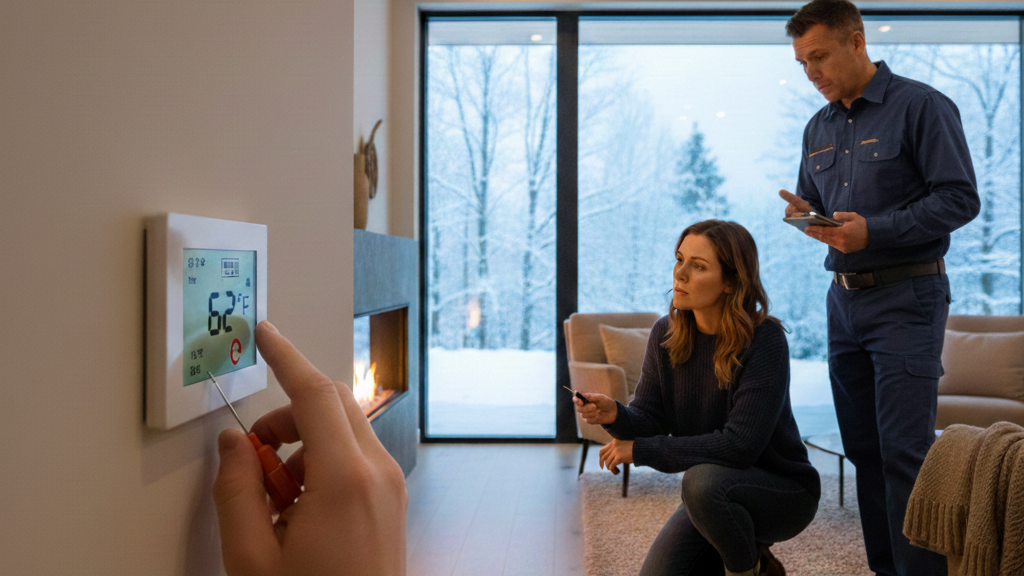
When the temperature drops in winter, a thermostat failure doesn’t just feel inconvenient; it turns a warm home into a cold, unpredictable space. One moment, the furnace runs nonstop; the next, it won’t turn on at all. Rooms heat unevenly. Bills climb for no reason. And you’re left wondering what went wrong.
Most homeowners don’t realize how quickly comfort declines when the thermostat stops working. It’s the brain of the entire heating system. When it fails, every part of the system starts slipping, the furnace cycles wrong, temperatures swing, and the home never settles into the warmth you expect.
A detailed heating system tune-up in Frisco, TX can uncover these problems before winter gets worse and restore the accuracy your home depends on. If your home feels colder, or the thermostat is off by even a few degrees, don’t wait for a full breakdown. Let us make it easy for you to understand why thermostats fail, what actually happens behind the scenes, and the real fixes that get your system back on track fast and reliably. Ready to get comfortable again? Let’s break it down.
What Happens When a Thermostat Fails?
When a thermostat fails, the entire heating system starts to fall out of sync. The furnace may stop responding altogether, refuse to turn on, or shut off before the home reaches the right temperature. In many cases, the thermostat misreads the indoor temperature, resulting in uneven comfort; some rooms feel cold while others overheat.
A failing thermostat can also cause short cycling, where the furnace turns on and off repeatedly. This strains the equipment, wastes energy, and shortens the life of key components. Homeowners may see a sudden increase in energy bills because the system runs longer than it should or repeatedly restarts to compensate for incorrect signals.
In severe cases, the thermostat screen may go blank or freeze, preventing setting adjustments. All of this happens because the thermostat is the control center. Once its sensors, wiring, or internal components fail, the furnace loses reliable feedback and can no longer maintain consistent heat throughout the home.
Causes of Thermostat Temperature Problems
A thermostat only works well when everything around it works in sync. When one part slips, the whole heating experience starts to feel off. Below is a detailed overview of the causes of winter temperature issues and their underlying drivers, which can cause problems with thermostats.
1. Wrong Thermostat Settings
This one sounds too simple, but it’s a common issue. If the thermostat isn’t set to Heat mode, or the fan is locked to On instead of Auto, the system operates in a way that doesn’t match the homeowner’s expectations. Heat mode calls for actual heating. Fan On keeps the blower running continuously, even when the furnace isn’t producing warm air. This creates a drafty feeling.
Why does this matter in winter?
The furnace activates only when the thermostat sends the correct signal. If the settings are incorrect, the system cycles erratically, wastes energy, or fails to reach the expected temperature.
2. Dirty or Misplaced Thermostat
Dust inside the thermostat interferes with the internal temperature sensors. When those sensors get coated, they misread the room temperature. Placement also makes a big difference. A thermostat that is too close to sunlight, drafty doors, kitchen appliances, or vents may sense the wrong temperature.
Why is it essential during winter?
A thermostat in a warm spot thinks the house is hotter than it really is. The furnace shuts off early, leaving bedrooms or living areas cold.
3. Weak Batteries or Power Interruptions
Many thermostats depend on batteries or a low-voltage power supply from the furnace. When batteries weaken or a breaker trips, the thermostat loses connection to the heating system.
Why does winter make it worse?
The system stops responding or cycles randomly. Temperature shifts become noticeable fast when it’s cold outside.
4. Faulty Wiring or Loose Connections
Wiring wears down over time, terminals loosen, and corrosion builds up. Any of these issues can interrupt communication between the thermostat and the furnace.
Why does winter affect this?
Even a minor wiring issue can cause the thermostat to misread signals, delay heating, or fail to trigger the furnace.
5. Airflow Problems in the Heating System
This is the silent cause behind many thermostat complaints. When airflow drops, the furnace struggles to distribute heat evenly. The thermostat responds by sending more heating cycles, which increases wear and tear.
What makes this significant in winter?
Even when the thermostat is set to the right temperature, restricted airflow can leave some rooms warm and others cold, making the entire home feel uneven during winter.
Effective Solutions For Heating System Tune-Up In Frisco, TX
A heating system tune-up is more than a quick inspection. A professional tune-up targets the reasons your heater stops working, eliminating the factors that lead to unpredictable temperature swings and mid-winter breakdowns. Technicians follow a thorough checklist, ensuring each step targets key issues.
Here’s what they fix and how these actions deliver long-term solutions to heating-system temperature problems.
1. Correcting Wrong Thermostat Settings
To keep the furnace operating as intended, the technician carefully verifies the thermostat setup. During a tune-up, the technician checks:
- Mode (Heat / Cool / Auto)
- Fan settings
- Scheduling problems
- Temporary override issues
The system begins heating the home consistently. The furnace runs only when needed, reducing cold spots and unnecessary energy use.
2. Cleaning the Thermostat and Adjusting Placement
Dust, improper placement, or blocked airflow can cause inaccurate readings, so the thermostat requires proper maintenance. A complete thermostat cleaning includes:
- Opening the thermostat housing
- Removing dust from sensors and electronic boards
- Checking heat-anticipator settings (on older models)
If the thermostat is poorly placed, the technician may recommend relocating it to a stable, central area. Temperatures become more accurate. Heating cycles match actual room conditions, not artificial heat from appliances or drafts.
3. Fixing Power Problems
Fixing power problems begins with a thorough inspection of the system. The detailed inspection includes:
- Battery levels
- Low-voltage wiring
- Furnace control board connections
- Breaker status and fuse conditions
The thermostat communicates reliably with the furnace, eliminating blank screens, delayed responses, and inconsistent heating cycles.
4. Repairing or Replacing Faulty Wiring
Repairing or replacing faulty wiring is essential to restore reliable airflow and balanced heating. This part of the tune-up includes:
- Tightening thermostat terminals
- Testing continuity in low-voltage wires
- Replacing brittle or corroded wires
The furnace receives clean, stable signals. That means faster heat responses and fewer system shutdowns.
5. Fixing Airflow Problems Inside the Heating System
This is where a tune-up makes the most significant difference. The technician inspects:
- Air filters
- Blower motor performance
- Belt tension (for older systems)
- Duct leaks
- Return and supply airflow volume
They clean components, clear obstructions, lubricate moving parts, and restore proper air movement. Rooms heat evenly. The furnace doesn’t overwork. Thermostat readings stabilize because warm air is circulating properly.
Final Thoughts!
When your thermostat stops reading temperatures correctly, it doesn’t just throw off the heat. It throws off your entire winter routine. This is where a professional heating system tune-up in Frisco, TX makes all the difference. A tune-up doesn’t just tighten a few screws. It restores your heating system’s heartbeat. It brings the thermostat back into sync, stabilizes temperatures, smooths airflow, and keeps the furnace operating as designed. The home feels steady again. Warm again. Predictable again.
Air Repair Pros has built its name on making that feeling the standard, not the exception. We don’t treat tune-ups as a checkbox. We treat them as a complete comfort reset. Our technicians examine sensor accuracy, wiring health, furnace performance, airflow balance, and the small details most companies overlook. That’s why homeowners trust us. That’s why the repairs last. And that’s why winter feels easier with them in your corner. Contact us to schedule a tune-up via our website or by reaching out to our team directly. We will ensure your heating system works as it should quietly, efficiently, and reliably all season long.