
Plan Your AC Maintenance Schedule in Allen, TX
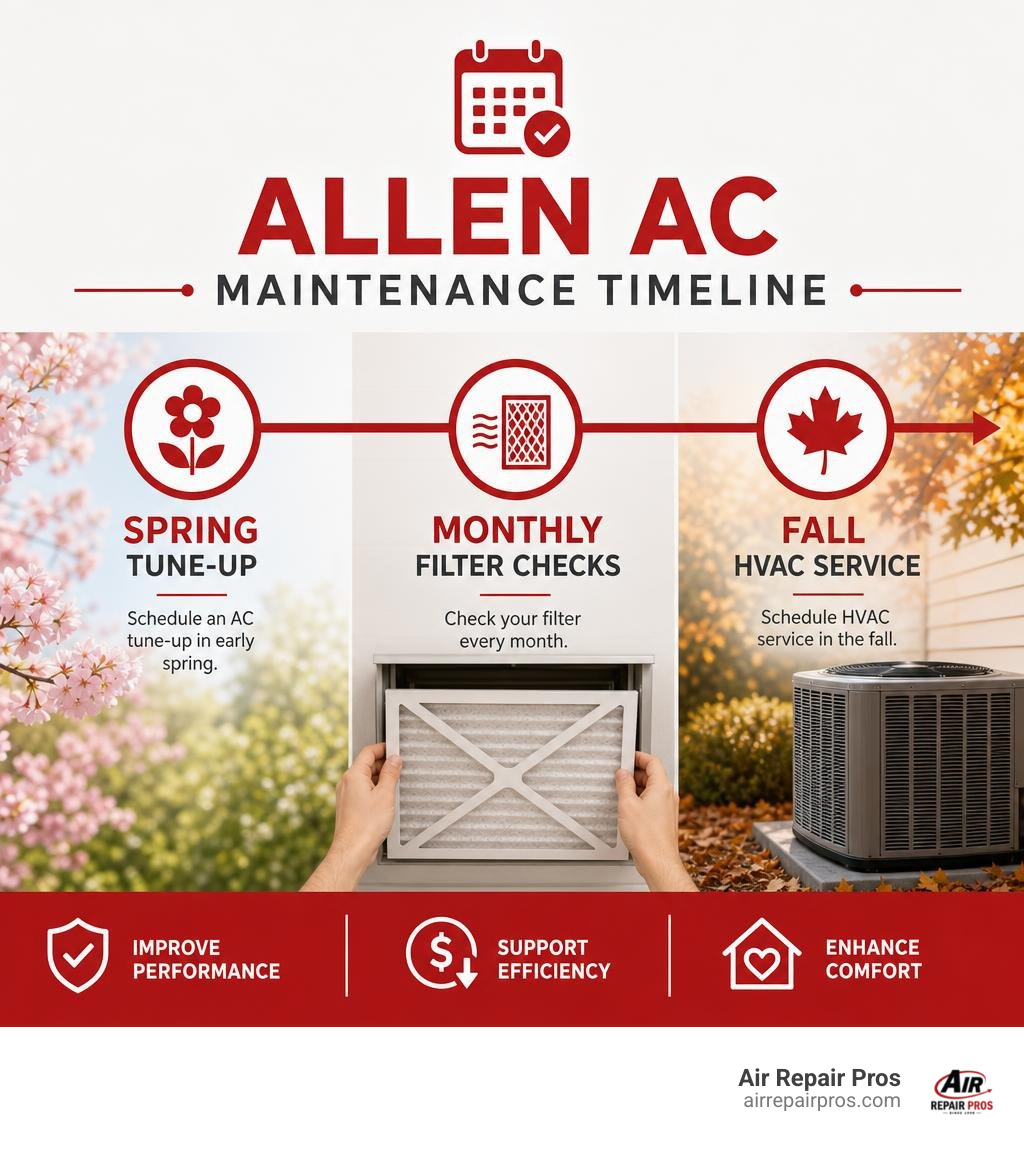
For a reliable AC maintenance schedule in Allen, TX, arrange a professional cooling tune-up in early spring, before heavy summer use, and schedule heating service in fall. Between visits, check your filter monthly, replace it every 1 to 3 months as needed, keep at least 2 feet of space around the outdoor unit, and watch for drainage or airflow problems.
Allen’s long hot seasons and humid days can make an AC run for hours at a time. That extra workload puts stress on coils, electrical parts, and the condensate drain. Regular care helps your system cool more efficiently, manage humidity, and catch small issues before they become a no-cool emergency.
A well-timed visit from the Air Repair Pros team can include system performance checks, coil and drain inspection, thermostat testing, electrical safety checks, and a review of any concerns you have noticed at home.
Why Routine Cooling Care Matters in Collin County, TX
Living in North Texas means depending on your air conditioner for nearly half the year. The extended cooling season in Collin County, TX places continuous mechanical demands on residential cooling systems. When an air conditioner operates day after day without routine care, small inefficiencies compound into higher utility bills, uneven cooling, and premature component failure.
Homeowners often ask how often they should service an air conditioner to protect their investment. The answer comes down to preventive care. High humidity combined with scorching temperatures can force a cooling system to run prolonged cycles. Routine checkups help internal components operate within manufacturer specifications, support healthy indoor air quality, and protect applicable warranty requirements.
| Performance Factor | Maintained System | Unmaintained System |
|---|---|---|
| Energy Consumption | Operates at optimal seasonal efficiency | Experiences rising energy consumption |
| Airflow Consistency | Balanced delivery through all vents | Reduced volume due to dirty coils and filters |
| Breakdown Risk | Minor wear caught during planned checkups | Higher risk of an unexpected midsummer shutdown |
| Indoor Humidity | Consistent moisture removal | Poor dehumidification and clammy air |
| Equipment Lifespan | Maximized system operating life | Accelerated wear on compressor and fan motors |
A well-maintained air conditioner does far more than just blow cold air. It removes excess moisture from indoor spaces, keeping indoor humidity at comfortable levels. Without proper care, dirty coils and restricted airflow reduce the system’s ability to extract humidity, leaving your home feeling sticky even when the thermostat displays a low temperature.
The Impact of Texas Heat on Cooling Systems
Summers in Allen, TX frequently bring consecutive weeks of triple-digit heat. When outdoor temperatures climb past one hundred degrees, the temperature difference between outdoor air and indoor setpoints creates a substantial thermal load on the compressor. The compressor must work significantly harder to pump refrigerant through the cycle, generating internal heat and mechanical stress.
During these peak summer stretches, systems can run nearly continuously. Electrical contacts endure higher wear, capacitors can lose capacity under constant thermal stress, and fan motors run hot. Annual seasonal tune-ups give a professional an opportunity to address stressed electrical components, worn bearings, and potential refrigerant leaks before severe ambient heat triggers a major system failure.
Recommended AC Maintenance Schedule Allen Residents Depend On
Keeping your home comfortable throughout the year requires a clear, calendar-based strategy. Rather than waiting for a complete breakdown in the middle of July, following a structured AC maintenance schedule Allen homeowners rely on ensures your cooling equipment receives timely care throughout every season.
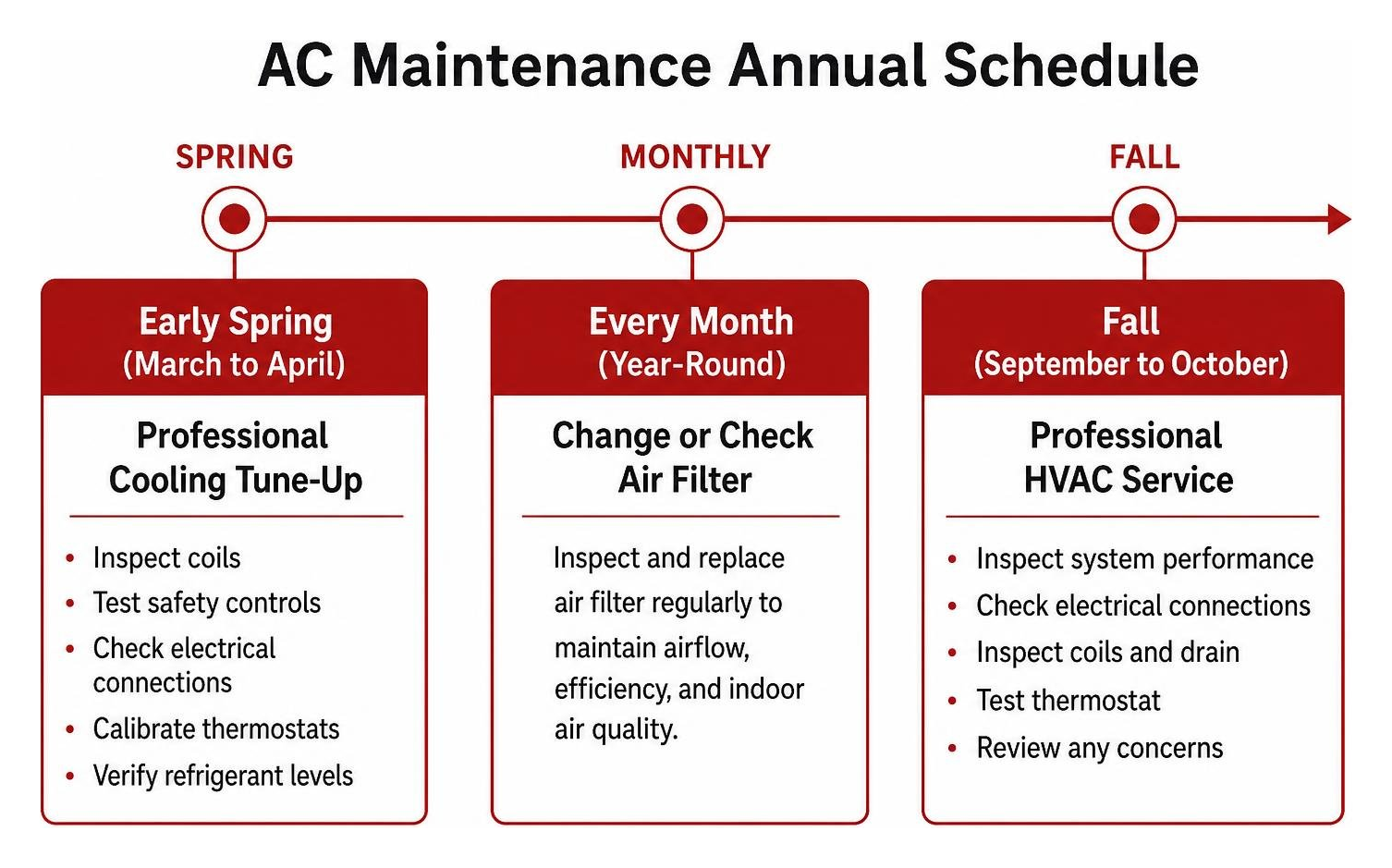
Seasonal AC Maintenance Schedule Allen Climate Demands
In North Texas, a comprehensive maintenance calendar balances professional expertise with routine homeowner checks:
- Early Spring (March to April): Schedule a professional cooling tune-up before daily high temperatures arrive. Technicians inspect coils, test safety controls, check electrical connections, calibrate thermostats, and verify proper refrigerant levels.
- Late Spring (May): Perform a complete homeowner check. Inspect visible ductwork for disconnections, confirm condensate lines drain freely outside, and clean supply registers and return grilles.
- Summer Peak (June to August): Monitor filter cleanliness every 30 days. Maintain clear clearance around the outdoor condenser and observe system run cycles for signs of short cycling.
- Early Autumn (September to October): Transition from cooling to heating with a professional furnace and heat pump inspection. Clean blower assemblies and check carbon monoxide detectors.
- Winter (November to February): Keep outdoor units clear of winter storm debris and monitor indoor air quality filters.
Investing in an ongoing maintenance strategy delivers peace of mind. Exploring the benefits of an HVAC maintenance plan can help homeowners streamline these seasonal visits, secure priority scheduling, and extend the overall lifespan of their cooling infrastructure.
Monthly Checklist for Optimal Airflow
Restricted airflow forces your blower motor to work harder, reduces cooling output, and can even cause the indoor coil to freeze. A simple monthly checklist keeps conditioned air circulating freely throughout your floor plan:
- Check the Air Filter: Inspect the return air filter every 30 days. Replace single-use pleated filters or clean washable media if dust, pet hair, or pollen is visible across the pleats.
- Select Proper MERV Ratings: Use filters with a Minimum Efficiency Reporting Value (MERV) rating between 8 and 11 for standard residential equipment. These capture pollen, dust mites, and mold spores without creating excessive airflow restriction.
- Inspect Return and Supply Vents: Ensure indoor return grilles and supply registers remain unobstructed by drapes, rugs, or furniture. Blocked vents disrupt system static pressure.
- Examine Visible Duct Connections: Inspect exposed duct runs in accessible attic areas or closets for visible air leaks, loose foil tape, or torn insulation jackets.
- Check Outdoor Perimeter: Confirm leaves, grass clippings, and garden mulch have not accumulated against the base of the outdoor condensing unit.
What Happens During a Professional AC Tune-Up
A comprehensive professional service visit goes far beyond simply replacing an air filter. Professional technicians evaluate mechanical efficiency, electrical safety, and thermodynamic performance across your entire cooling installation. Reviewing an HVAC tune-up checklist for summer reveals just how many critical checkpoints are evaluated during an inspection.
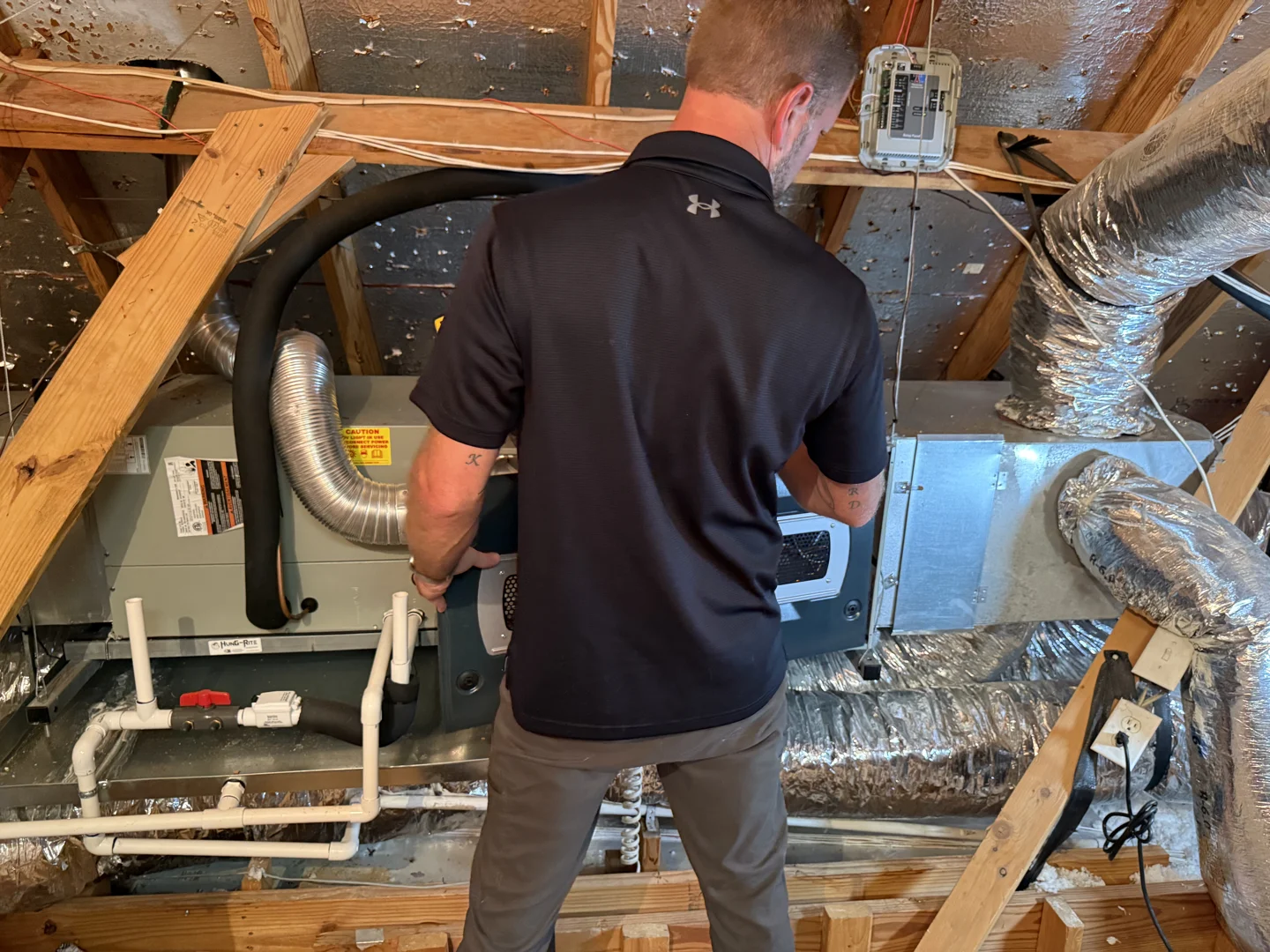
Homeowners can schedule a comprehensive AC tune-up to have certified professionals perform an exhaustive multi-point inspection. During this visit, technicians execute vital system adjustments:
- Electrical Tightening and Contact Inspection: Technicians inspect electrical contactors, tighten wire connections, test voltage drops, and assess start and run capacitors for proper microfarad ratings.
- Motor Lubrication and Current Draw: Technicians lubricate motor bearings where applicable and test amperage draws against manufacturer nameplate ratings to identify impending motor failure.
- Thermostat Calibration: Technicians verify temperature sensor accuracy against calibrated digital thermometers, ensuring your system cycles at true setpoint temperatures.
- Safety Control Verification: Technicians test high and low pressure switches, float switches, and emergency drain pan cutoffs to guarantee the system safely shuts down if an operational failure occurs.
Refrigerant Level Verification and Leak Checks
Refrigerant is the chemical medium that absorbs indoor heat and releases it outdoors. An air conditioner does not consume or burn refrigerant over time; the closed loop must maintain an exact charge to perform properly. Low refrigerant indicates a leak somewhere in the coils, copper tubing, or service valves.
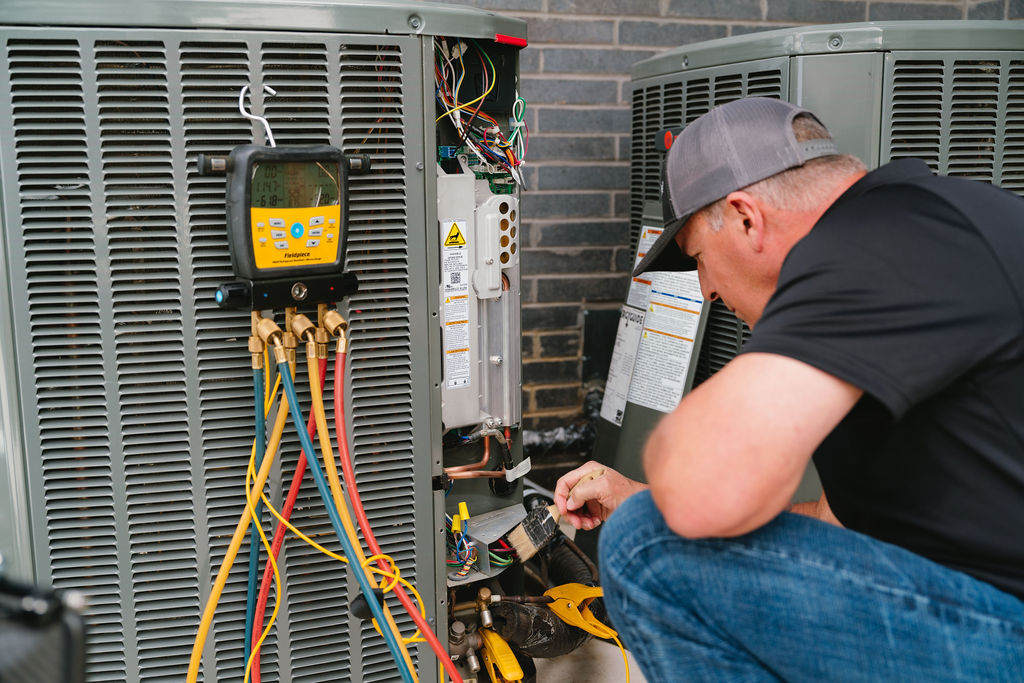
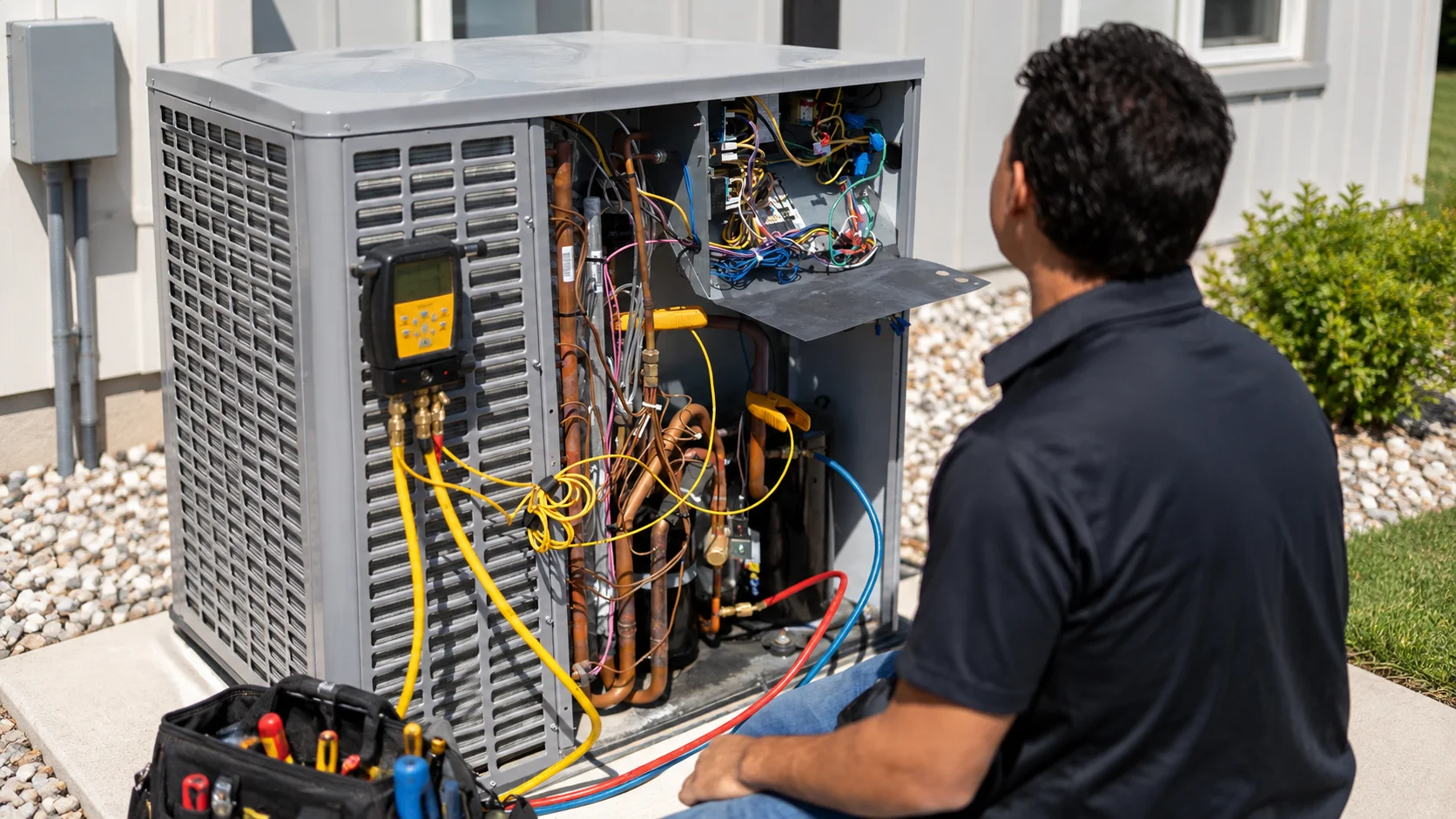
During a professional tune-up, certified technicians connect specialized manifold gauges to measure operating pressures, subcooling, and superheat values. Operating an air conditioner with an incorrect refrigerant charge causes the evaporator coil to drop below freezing, encasing the coil in a block of ice and potentially causing permanent damage to the compressor.
Condensate Drain Line Clearing and Coil Cleaning
During a typical summer day in Allen, TX, an air conditioning system extracts gallons of moisture from indoor air. That condensed water collects in an internal drain pan and exits through a PVC condensate line. In humid environments, algae, bacteria, and dust mix inside the warm, dark drain line to create thick clogs.
A blocked condensate drain line is a primary cause of emergency AC shutdowns and severe ceiling water damage. During a tune-up, technicians clear the drain line, inspect the primary and secondary drain pans, test float safety switches, and clean dirt from both the indoor evaporator coil and outdoor condenser coil. Clean coil surfaces allow rapid heat exchange, reducing running times and lowering electric bills.
Essential Homeowner Maintenance Tasks Between Visits
While professional tune-ups handle complex electrical and refrigeration tasks, homeowner care between service visits keeps the equipment running at peak efficiency. Regular attention prevents avoidable system strain and keeps small issues from escalating.
Safety Warning: Always shut off electrical power to the air conditioner at both the thermostat and the main service disconnect before inspecting or cleaning any equipment. Never attempt to open sealed electrical control panels, handle refrigerant, or service moving mechanical parts yourself.
Homeowners can maintain their systems safely using this monthly task list:
- Inspect air filters every month and replace pleated filters every 1 to 3 months.
- Gently rinse dust and lawn debris from the exterior condenser fins using a garden hose at low pressure.
- Clear away grass clippings, fallen twigs, and yard clutter from the base of the outdoor unit.
- Inspect the outdoor condensate drain termination point to confirm water flows freely when the system runs.
- Check indoor supply registers to confirm air flows steadily into every living area.
DIY Tasks for Your AC Maintenance Schedule Allen Checklist
A dependable routine between professional tune-ups requires only a few minutes each month.
First, maintain a clear 2-foot perimeter around your outdoor condensing unit. Trim back shrubs, ornamental grasses, and low-hanging tree branches to permit unrestricted airflow across the exterior coils. When mowing the lawn, direct the mower discharge chute away from the AC unit to prevent grass clippings from clogging the delicate aluminum fins.
Second, pour a cup of distilled white vinegar into the condensate drain line access port every 30 to 60 days during the cooling season. The mild acid inhibits algae growth, keeps the PVC interior clean, and prevents sludge buildup that triggers emergency drain pan overflow switches.
Preparing Your Home for an AC Service Visit
To get the most value from a professional maintenance visit, take a few minutes to prepare your home before the technician arrives:
- Clear Access Pathways: Ensure open access to the outdoor condensing unit, indoor air handler or furnace, attic pull-down stairs, and the main electrical breaker panel.
- Secure Household Pets: Place pets in a separate, quiet room to keep them safe and allow the technician to move freely between indoor and outdoor work areas.
- Document Observed Symptoms: Make a quick note of unusual noises, rooms that stay warmer than others, or recent fluctuations in your utility bills so the technician can investigate them directly.
- Provide Thermostat Access: Ensure hallways and wall areas around your thermostats are clear for calibration testing.
Signs You Need Immediate HVAC Repair in Allen
Even with consistent seasonal maintenance, mechanical components experience wear and can fail unexpectedly. Recognizing early warning signs helps you address cooling issues before they escalate into complete system breakdowns during extreme weather.
If your system displays any of the following warning signs, contact a qualified professional right away:
- Warm Air Discharge: The outdoor condenser and indoor blower run, but air blowing from the supply vents feels lukewarm or room temperature.
- Weak Airflow: Air barely trickles out of supply registers, indicating blower motor trouble, duct leaks, or severe coil blockages.
- Unusual Mechanical Noises: Grinding, screeching, buzzing, or metal-on-metal clanking sounds signal loose components, failing motor bearings, or compressor problems.
- Musty or Burning Odors: Persistent sour odors point to biological growth in the drain pan or ducts, while sharp electrical burning smells indicate overheating wiring or failing capacitors.
- Rapid Short Cycling: The unit turns on and off repeatedly in short bursts of a few minutes without adequately cooling the home or removing humidity.
- Visible Ice Accumulation: Frost or ice visible along the outdoor copper refrigerant lines or across the indoor evaporator coil cabinet.
When severe performance failures strike during high summer heat, knowing when is AC repair a real emergency in Allen, TX can help you protect your home and family from dangerous indoor temperatures. In these situations, scheduling prompt air conditioning repair in Allen, TX restores cooling performance and prevents long-term damage to major components.
Frequently Asked Questions About AC Maintenance in Allen
Why is regular AC maintenance important for homeowners in Allen, Texas?
Regular maintenance helps cooling equipment handle extended summer runtimes, manage high indoor humidity, and lower energy consumption. Routine tune-ups identify worn electrical and mechanical components early, preventing unexpected breakdowns during extreme heat waves and extending the system’s operational lifespan.
What is the recommended frequency for an AC maintenance schedule in Allen?
The recommended schedule includes professional service twice per year. Schedule an AC tune-up in early spring before daily cooling demand begins, and schedule a heating inspection in early autumn. Between visits, homeowners should check air filters monthly and replace them every 1 to 3 months.
What specific steps are included in a professional AC tune-up?
A professional tune-up includes cleaning the condenser and evaporator coils, clearing the condensate drain line, verifying refrigerant charge, tightening electrical connections, testing capacitors, lubricating moving parts, calibrating the thermostat, and testing all built-in safety controls.
How can homeowners prepare for an AC maintenance visit?
Homeowners can prepare by clearing pathways to the indoor air handler, attic access, outdoor condenser, and electrical panel. Securing household pets and writing down any unusual noises, hot spots, or recent performance concerns helps the technician address specific issues during the visit.
What DIY maintenance tasks can I perform between tune-ups?
Homeowners can inspect and replace air filters every 1 to 3 months, maintain a 2-foot clear perimeter around the outdoor condenser, gently rinse dust and lawn clippings from exterior coil fins with a garden hose, and pour white vinegar into the condensate drain access port to inhibit algae buildup.
How much does an AC tune-up typically cost in the Allen area?
The cost of an AC tune-up varies based on system size, the number of units in the home, equipment accessibility, and whether the service is purchased as a single visit or through an ongoing seasonal maintenance agreement. Service agreements often provide discounted multi-point inspections and priority scheduling.
What are the signs that my AC needs immediate maintenance or repair?
Warning signs include warm air blowing from vents, weak airflow, short cycling, ice accumulation on refrigerant lines, water pooling around the indoor unit, burning or musty odors, and screeching or buzzing noises from the equipment.
Does regular AC maintenance prevent emergency repairs and lower bills?
Yes. Preventative tune-ups keep coils clean and electrical connections tight, allowing the system to run at designed efficiency without wasting power. Technicians can spot and replace worn parts like failing capacitors before they cause sudden midsummer system shutdowns.
How does Allen’s hot and humid climate affect cooling equipment?
The combination of high humidity and extended summer temperatures forces air conditioners to run longer, more frequent cooling cycles. This sustained workload places extra stress on compressors and fan motors while generating large amounts of condensation that can clog drain lines if left uninspected.
How long does a typical professional AC tune-up take?
A standard professional tune-up for a single residential air conditioning system generally takes between one and two hours. Homes with multiple cooling zones or older systems requiring detailed electrical and refrigerant diagnostics may take slightly longer.
Conclusion
Following a dependable seasonal care routine protects your home comfort, lowers monthly utility bills, and helps prevent costly equipment failures during the hottest days of summer. From monthly filter checks and drain line flushes to twice-yearly system evaluations, proactive maintenance helps keep your cooling system operating efficiently throughout the year. When you need dependable cooling support, the certified technicians at Air Repair Pros are ready to help. Serving North Texas since 1998 with fully stocked service trucks and 24/7 emergency response, our team works to deliver complete, one-trip service whenever possible. To arrange your seasonal tune-up, contact our AC maintenance specialists and keep your home cool and comfortable all summer long.