
Key Signs It Is Time for a Heating System Upgrade
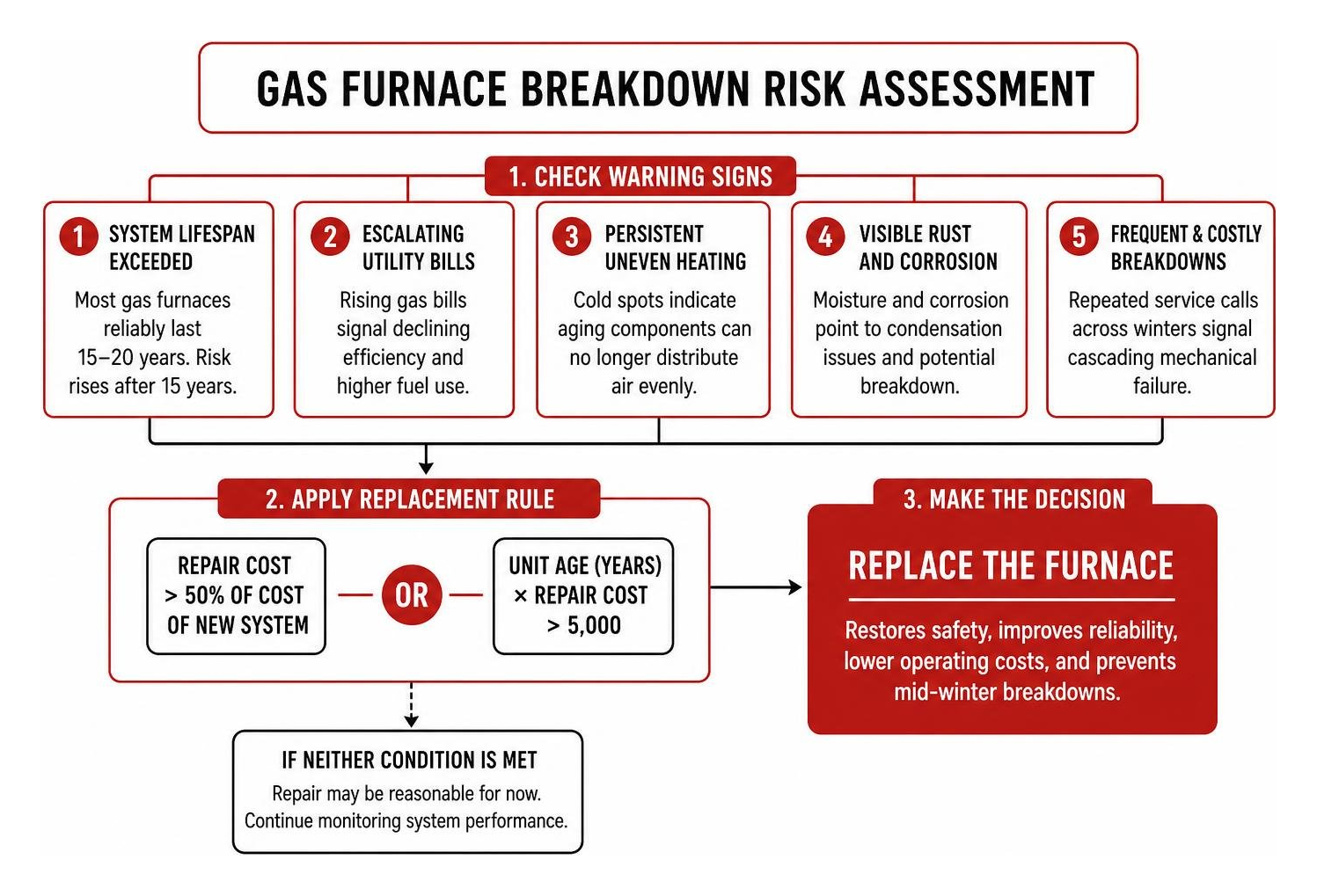
Preparing a home for unpredictable Texas cold snaps requires a heating system you can trust. A central furnace does not simply stop working without warning. In most cases, it exhibits several warning signs over several months before failing completely. Recognizing these signs early allows homeowners to plan a heating system replacement on their own schedule rather than enduring an emergency outage in freezing weather.
- System Lifespan Exceeded: Most standard gas furnaces operate reliably for 15 to 20 years. Once a unit crosses the 15-year threshold, critical components such as the heat exchanger, blower motor, and gas valve suffer from thermal fatigue and metal stress.
- Escalating Utility Bills: If your gas bills rise steadily each winter despite consistent usage habits, internal components are losing operational efficiency and burning extra fuel to meet your thermostat demands.
- Persistent Uneven Heating: Cold spots in upstairs bedrooms or back hallways often indicate that an aging blower fan or deteriorating burner assembly can no longer distribute conditioned air evenly.
- Visible Rust and Corrosion: Moisture buildup around the vent pipe, draft inducer housing, or burner compartment points to chronic condensation issues and potential combustion chamber breakdown.
- Frequent and Costly Breakdowns: Needing repeated service calls across consecutive winters signals cascading mechanical failure. When deciding between system types, evaluating gas vs electric heating systems for Frisco homes helps determine the right fuel source and efficiency profile for your specific floor plan.
- Unusual Operational Noises: Rattling, banging, whining, or screeching sounds during ignition or blower activation indicate serious mechanical distress, such as misaligned blower wheels, cracked belts, or delayed burner ignition.
- Degraded Indoor Air Quality: Excessive dust accumulation, lingering dry air, or faint soot traces near register vents point to failing combustion chambers and restricted airflow across old internal coils.
Evaluating Repair Costs vs New System Value
Deciding whether to repair an older heating unit or invest in modern equipment comes down to safety, reliability, and long-term operating costs. A dependable industry benchmark is the 50% repair rule: if a pending repair quote exceeds 50% of the cost of a brand-new heating system, or if the unit’s age multiplied by the repair estimate exceeds 5,000, replacement is the more sensible financial decision.
Aging systems also rely on obsolete components that operate at low annual fuel utilization efficiency (AFUE). Older units frequently run at 65% to 70% AFUE, meaning that 30 to 35 cents of every utility dollar escapes up the chimney rather than warming your living spaces. Investing in modern heating equipment restores safety margins, lowers monthly operating expenses, and prevents mid-winter breakdowns. For realistic planning, reviewing furnace replacement cost Frisco TX gives homeowners clear insight into modern equipment and professional installation standards.
Step-by-Step Natural Gas Furnace Installation Process
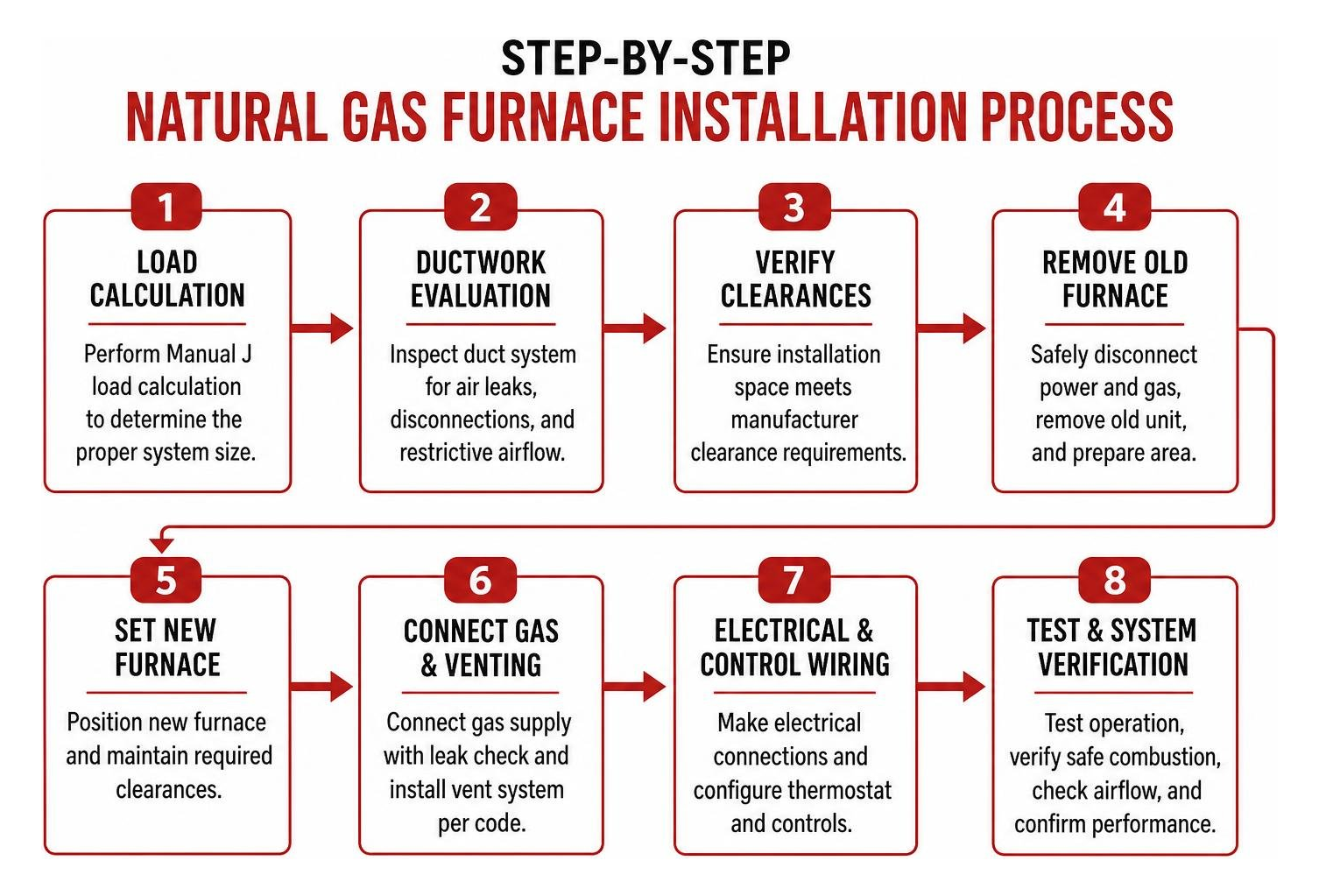
A high-performance heating installation requires precision, technical diagnostic tools, and strict adherence to fuel-gas building codes. Manufacturers design modern heating systems to tight tolerances. Every phase of installation must align with the National Fuel Gas Code (NFPA 54) as well as ANSI Z21.47 safety standards. Following a proven, methodical workflow ensures optimal efficiency, equipment longevity, and safe combustion. To see how these components connect during a scheduled visit, explore the furnace installation process explained step by step.
Preparing Your Home for Natural Gas Furnace Installation
- Conducting a Manual J Load Calculation: Technicians calculate the exact heat loss of the structure based on square footage, window orientations, insulation values, and local weather data rather than simply matching the physical size of the old cabinet.
- Evaluating Static Pressure and Ductwork: The duct system is inspected for air leaks, disconnected joints, and restrictive airflow pathways to ensure the new blower motor operates within factory-rated total external static pressure (TESP) limits.
- Verifying Physical Clearances: The installation space must satisfy manufacturer clearances to combustible materials, typically maintaining zero to three inches along rear and side panels, at least one inch around supply plenums, and a minimum of 24 to 30 inches in front for maintenance access.
- Setting the Non-Combustible Base: If installed in an upflow or horizontal configuration over combustible surfaces, a certified sub-base or non-combustible pad is placed underneath. In garages, burner assemblies are elevated at least 18 inches above the floor to comply with local mechanical safety codes. Working with certified experts for professional heating installation guarantees that structural and safety requirements are fully addressed.
Gas Piping, Electrical Wiring, and Flue Connections
- Sediment Trap Installation: A dedicated drip leg (sediment trap) must be installed upstream of the gas control valve to capture pipe scale, metal shavings, and moisture before they can enter and foul the internal valve orifices.
- Gas Line Sizing and Manifold Calibration: The gas supply line is verified for adequate volume and pressure. Technicians hook up a digital manometer to adjust the manifold gas pressure to exact factory specifications (commonly 3.5 inches water column for natural gas).
- Dedicated Electrical Circuit and Polarity: The control board requires an uninterrupted 115V single-phase electrical supply with verified polarity and true earth grounding to prevent electrostatic discharge (ESD) damage to sensitive microprocessor controls.
- Flue Gas Vent Routing: Depending on unit design, venting is configured as a Category I metal chimney system or a Category IV sealed combustion PVC, CPVC, or polypropylene direct-vent system. All horizontal runs must maintain an upward pitch of at least 1/4 inch per foot toward the outdoor termination point.
Post-Natural Gas Furnace Installation Safety and Testing
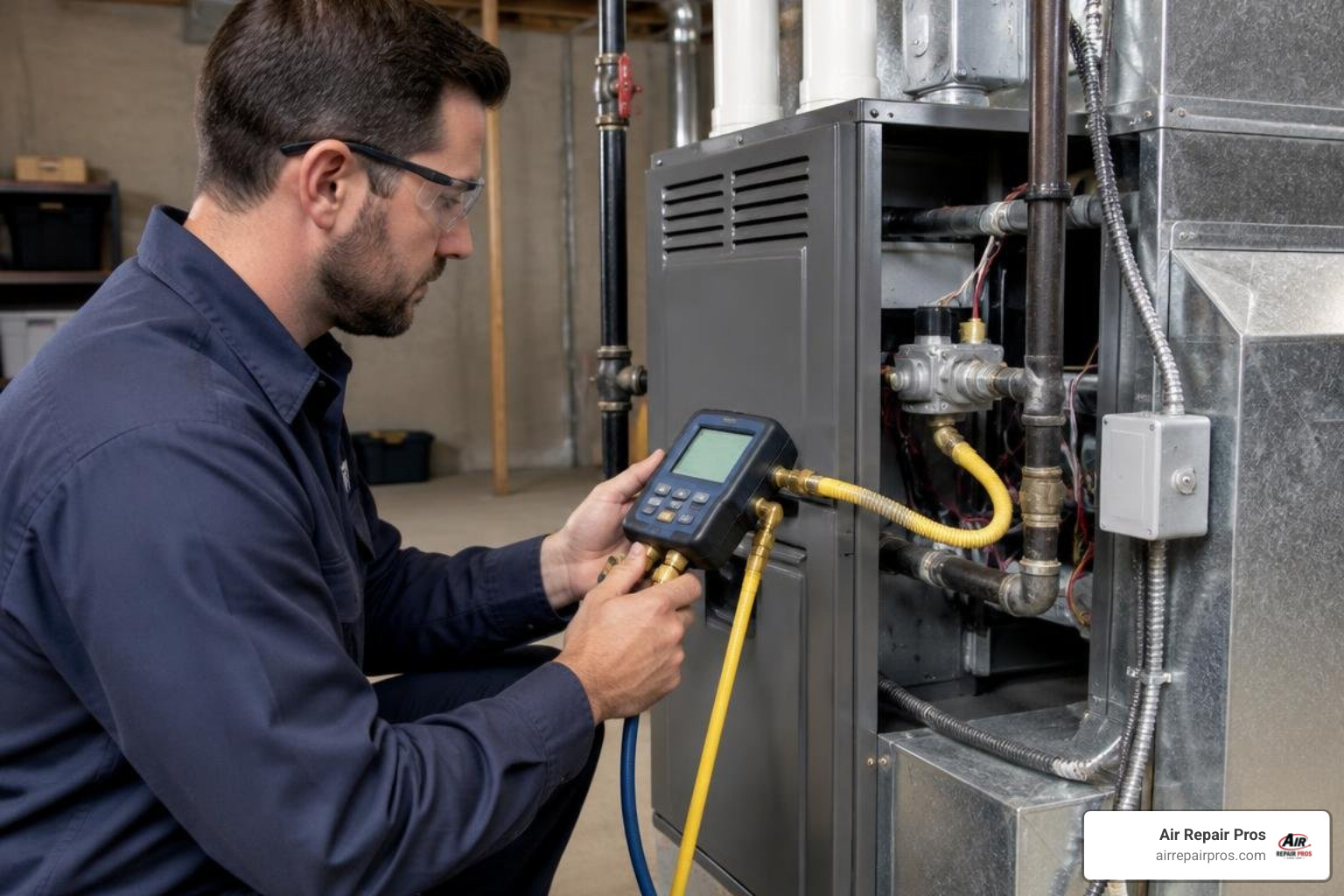
- Bubble Solution Leak Testing: Technicians apply an approved commercial gas leak detection solution to every joint, union, and shut-off valve. Technicians never use an open flame to check for gas leaks.
- Condensate Trap Priming: On condensing high-efficiency models, water must be manually poured into the internal condensate trap until it drains freely out the discharge port. Priming prevents toxic flue gases from backing up through the drain line into your indoor air.
- Measuring Temperature Rise: The installer measures supply and return air temperatures to calculate the system’s actual temperature rise, verifying that it falls squarely within the range stamped on the manufacturer rating plate.
- Combustion and Carbon Monoxide Verification: Flue gases are analyzed using a calibrated combustion analyzer to check oxygen levels, draft pressure, and verify carbon monoxide (CO) emissions remain well within safe environmental guidelines.
Sizing, Efficiency, and North Dallas Climate Considerations
Selecting the proper heating system for communities such as Plano, TX, McKinney, TX, and Frisco, TX involves balancing winter heating capacity with seasonal humidity control and summer airflow needs. Installing an oversized furnace leads to short cycling, which creates uncomfortable temperature swings, wears out igniters prematurely, and fails to distribute warmth evenly. Conversely, an undersized furnace runs continuously on sub-freezing nights without ever reaching your thermostat setpoint.
Modern heating systems are categorized by their Annual Fuel Utilization Efficiency (AFUE) ratings:
| Furnace Category | AFUE Rating Range | Venting Type | Typical Heat Exchanger Style | Best Suited Home Application |
|---|---|---|---|---|
| Standard Efficiency | 80% AFUE | Type B-1 double-wall metal flue | Single aluminized steel heat exchanger | Mild winter climates; tight budget considerations |
| Mid-Efficiency | 82% to 85% AFUE | Type B-1 metal flue or power vent | Enhanced single heat exchanger | Moderate heating demand with standard duct systems |
| High Efficiency Condensing | 90% to 96% AFUE | Direct-vent sealed PVC or Polypropylene | Primary steel + secondary stainless steel condensing coil | Homes seeking lowest energy consumption and quiet performance |
| Ultra-High Efficiency | 97% to 98.5% AFUE | Two-pipe direct-vent PVC/Polypropylene | Modulating gas burner + variable-speed ECM blower | Maximum energy savings and precision multi-zone comfort |
For North Dallas homes, the right furnace depends on more than its efficiency rating. A qualified HVAC team should match the equipment to your home’s heat-loss calculation, ductwork, and the airflow needs of your central AC system. Air Repair Pros can help homeowners compare options through our guide to furnace installation in Frisco, TX. For an independent overview of high-efficiency furnace features, see the ENERGY STAR furnace guidance.
Matching Airflow with Existing Central AC Systems
In North Texas homes, central furnaces serve a dual purpose: providing winter combustion heating and functioning as the primary air handler for the central AC system during sweltering summer months. When technicians design a natural gas furnace installation, they must verify that the furnace blower motor provides sufficient cubic feet per minute (CFM) of airflow across the indoor evaporator coil. A mismatch between the furnace blower output and the cooling tonnage leads to frozen evaporator coils, reduced cooling efficiency, and premature compressor failure.
Professional vs DIY: Why Certified Gas Furnace Installation Matters
While some home improvement tasks make great weekend DIY projects, heating replacement is not one of them. Attempting a self-installation poses severe hazards to personal safety and property integrity. Working with volatile fuel gas lines, high-voltage electrical circuits, and dangerous combustion exhaust requires professional training, specialized diagnostic equipment, and municipal building permits.
Critical Safety and Code Compliance Factors
- Carbon Monoxide and Gas Leak Prevention: Flue gas leaks are invisible, odorless, and potentially deadly. Licensed technicians use electronic sniffers and chemical leak solutions to verify 100% airtight integrity across every gas fitting and flue collar.
- Protecting Equipment Warranties: Major heating equipment manufacturers require proof of professional installation by a licensed HVAC contractor. DIY installations immediately void multi-year component and heat exchanger warranties.
- Permit and Code Compliance: Cities throughout Collin and Denton counties enforce municipal building codes based on NFPA 54 and the International Mechanical Code. Certified contractors handle local permitting and schedule final municipal safety inspections.
- Electrostatic Discharge Protection: Modern control boards contain delicate integrated microprocessors. Technicians use grounding protocols to discharge static electricity before handling electronics, preventing silent component damage during assembly.
- Airflow Balancing and Static Pressure Tuning: Improperly matched duct transitions create severe static pressure restrictions that cause premature heat exchanger cracking and blower motor burnout.
For reliable safety and peace of mind, turn to dedicated heating furnace installation services to ensure your installation meets all manufacturer specifications and municipal safety codes.
Frequently Asked Questions About Gas Furnace Replacement
How long does a residential natural gas furnace typically last?
A well-maintained residential gas furnace lasts an average of 15 to 20 years. Regular annual tune-ups, timely air filter replacements, and prompt mechanical repairs help equipment reach the upper end of that operational lifespan while maintaining peak combustion efficiency and safe heat exchanger operation.
What is the best time of year to replace a furnace in North Dallas?
Early autumn is the ideal time for heating replacement across North Texas. Upgrading during September or October ensures full equipment availability, flexible installation scheduling, and complete peace of mind before the first winter cold front arrives in communities like Plano, TX and Frisco, TX.
How do technicians safely test for gas leaks after installation?
Technicians apply an approved bubbling soap solution or liquid leak detector to every pipe joint, valve fitting, and connection point while the gas line is pressurized. Technicians also utilize calibrated digital combustible gas sniffers to detect microscopic leaks. Open flames are never used to test for leaks under any circumstances.
What are the required combustible clearances around a new gas furnace?
Clearances vary by specific unit design, but upflow furnaces generally require zero inches at the back and sides, one inch around the supply air plenum for the first 36 inches, and a minimum of 24 to 30 inches of open clearance in front to allow for future maintenance and filter access.
Why does a condensate trap need to be primed during installation?
High-efficiency condensing furnaces produce acidic moisture as flue gases cool in the secondary heat exchanger. Priming the trap by filling it with clean water creates an airtight hydraulic seal that prevents toxic exhaust gases, including carbon monoxide, from escaping through the condensate drain line into your home.
What factors determine the right furnace size for a North Dallas home?
Sizing is determined by an industry-standard Manual J heat loss calculation. This comprehensive assessment evaluates total home square footage, ceiling heights, window types, insulation R-values, home orientation, duct leakage rates, and regional design temperatures rather than rough estimations or physical cabinet dimensions.
What building and safety codes govern gas furnace installations in Texas?
Installations are governed by the National Fuel Gas Code (NFPA 54 / ANSI Z223.1), the International Residential Code (IRC), the International Mechanical Code (IMC), and the National Electrical Code (NEC), alongside specific municipal code amendments enforced across Denton and Collin counties.
What is the difference between direct-vent and non-direct-vent configurations?
A direct-vent (two-pipe) setup pulls fresh outdoor air directly into a sealed combustion chamber through one pipe and exhausts flue gases outdoors through a second pipe. A non-direct-vent (single-pipe) system draws combustion air from the surrounding indoor room or attic and vents exhaust gases outside.
Where should carbon monoxide detectors be placed after a new furnace install?
Carbon monoxide alarms should be installed on every level of the home, immediately outside each separate sleeping area, and within 10 to 15 feet of the furnace mechanical room or attic access point. Homeowners should test detectors monthly to confirm battery and sensor function.
How much can a modern high-efficiency furnace reduce winter utility bills?
Upgrading from an older 65% to 70% AFUE furnace to a 96% high-efficiency condensing model can reduce heating-related gas consumption by 20% to 30%. This improvement delivers noticeable monthly utility savings and superior whole-home comfort throughout the winter heating season.
Conclusion: Prepare Your North Dallas Home for Winter Warmth
Taking proactive steps to upgrade an aging, inefficient heating system before winter arrives protects your household from unexpected cold-weather breakdowns, elevates home comfort, and trims unnecessary energy expenses. Modern heating equipment delivers cleaner combustion, quieter operation, and reliable safety controls designed to keep your family warm through the coldest Texas nights.
Since 1998, Air Repair Pros has provided premier HVAC solutions to homeowners across Frisco, TX, McKinney, TX, Plano, TX, Little Elm, TX, and Allen, TX. The team arrives in fully stocked service trucks carrying 85%+ of all necessary replacement parts to complete installations and service calls in a single trip. Whether you need a comprehensive pre-winter safety inspection or a complete system replacement, contact our professional furnace installation technicians today to schedule your in-home consultation.