Why Frisco Homeowners Can’t Afford to Ignore AC Repair
If you need AC repair in Frisco, TX, here is what you need to know right away:
Quick answers for Frisco homeowners:
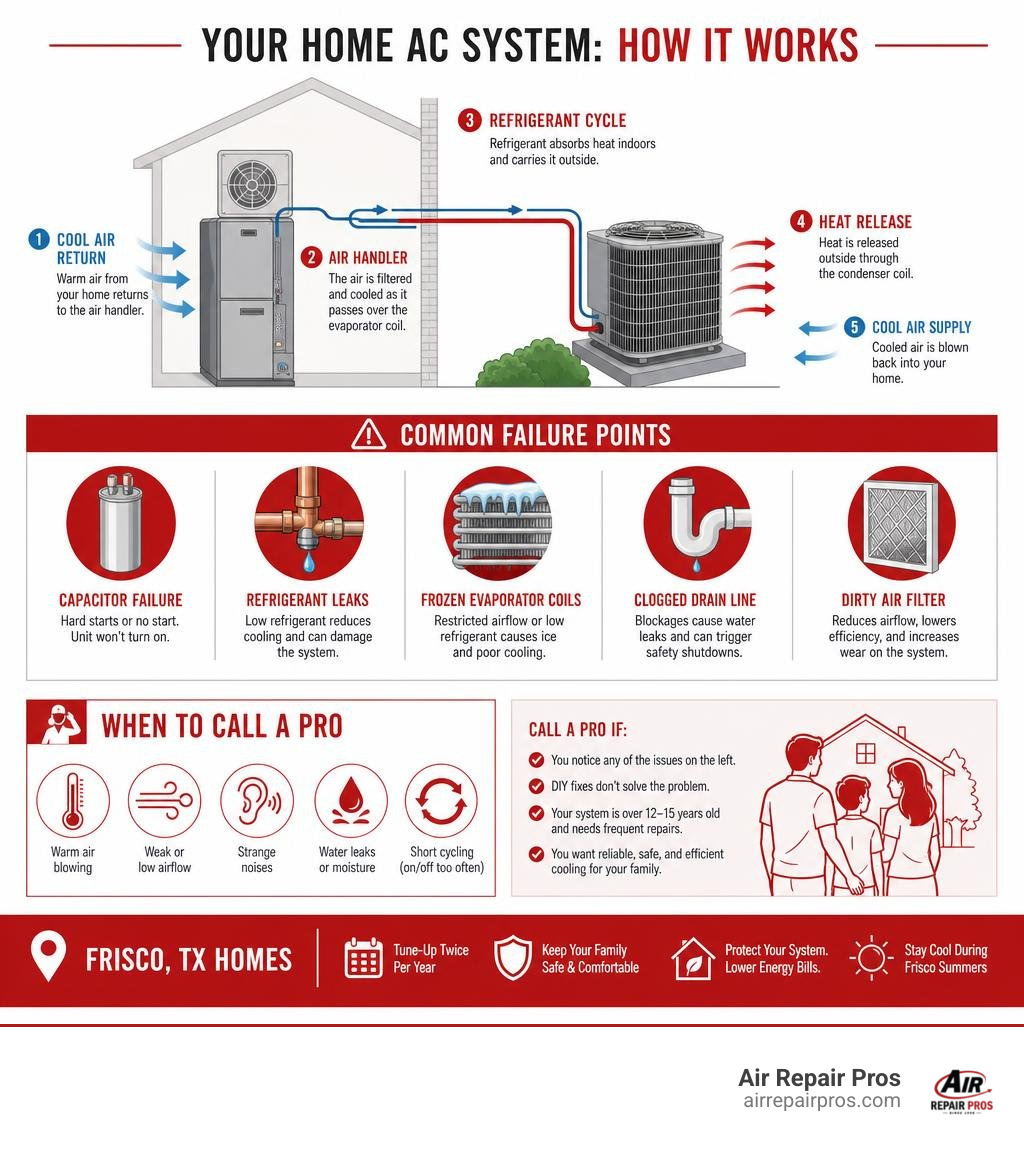
- Most common problems: Capacitor failure, refrigerant leaks, frozen evaporator coils, and clogged condensate drain lines
- When to call a pro: Warm air blowing, weak airflow, strange noises, water leaks, or frequent on/off cycling
- How fast can you get help: Many certified local companies offer same-day and 24/7 emergency service
- Typical repair vs. replacement threshold: Systems over 12-15 years old with recurring issues are often better replaced than repeatedly repaired
- Licensing to verify: Confirm any contractor holds a valid TACL license through the Texas Department of Licensing and Regulation (TDLR)
- Maintenance schedule: Schedule professional tune-ups twice per year, once in spring before summer heat arrives and once in early fall
Frisco, TX has transformed from a small North Texas town into one of the fastest-growing cities in the entire country. That explosive growth brought hundreds of thousands of new homes, most of them built during a concentrated construction boom between 2005 and 2015. In June 2026, many of those homes are now sitting on HVAC systems that are squarely inside their first major wear window.
Texas summers are unforgiving. Frisco regularly sees temperatures climb well above 100°F, and an AC system that is struggling, cycling too often, or blowing warm air is not just an inconvenience. For families, elderly residents, and young children, a failing air conditioner during peak summer heat is a genuine safety concern.
What makes Frisco’s situation particularly interesting is that the housing boom was so concentrated and rapid that a large share of the city’s HVAC systems are aging at roughly the same time. Neighborhoods across the city are seeing similar failure patterns simultaneously, which is why demand for professional AC repair in Frisco, TX surges every summer and continues to grow year over year.
Whether your system just stopped cooling, is making a noise it has never made before, or you are simply trying to stay ahead of a breakdown before the hottest months hit, this guide covers everything a Frisco homeowner needs to know, from diagnosing the most common problems to understanding your repair and replacement options.
Understanding the Unique HVAC Challenges in Frisco, TX
Operating an air conditioner in North Texas is vastly different from running one in milder parts of the country. Homeowners in Frisco, TX face a unique set of circumstances shaped by the local climate, the rapid population growth of the area, and the specific ways our modern neighborhoods were built. Understanding these factors can help you make better decisions when choosing a Frisco, TX HVAC repair company to service your home.
The Impact of the 2005 to 2015 Construction Boom
During the historic housing boom in North Texas, thousands of homes were built in rapid succession. To keep up with demand, many builders installed standard builder-grade HVAC equipment. While these units performed adequately during their initial years, they were not always configured for maximum longevity under extreme Texas heat.
Because these homes were constructed in a relatively tight timeframe, Frisco is now experiencing a phenomenon known as synchronized system aging. This means entire neighborhoods built during the same period are experiencing equipment failures at the exact same time. The average system lifespan for a residential AC unit in Texas is roughly 12 to 15 years. For homes constructed during the peak of this boom, their systems have reached or exceeded this natural wear window.
Additionally, the heavy construction dust generated during this period often settled inside the outdoor coils and indoor blower motors of early installations. This dust buildup acts as an insulating blanket, forcing systems to run hotter and work harder from day one, which accelerates mechanical wear. Maintaining your system according to the U.S. Department of Energy Guide on Home Cooling is essential to combatting these long-term environmental effects.
How Large Floor Plans Affect AC Performance
Frisco is known for its spacious, beautiful homes. However, large square footage, open floor plans, and soaring two-story ceilings present serious challenges for climate control. An AC system must move a massive volume of air to keep these spaces comfortable, which leads to longer run cycles and increased mechanical strain.
Multi-level homes often suffer from severe temperature imbalances, with upstairs rooms running significantly warmer than the downstairs living areas. To manage this, many local homes utilize zoned systems with dampers that direct airflow to specific areas. While zoning improves comfort, it adds complexity. A failure in a zone damper or control board can cause one part of your home to freeze while another swelters, requiring highly specialized diagnostics to resolve.
Common AC Problems Faced by Frisco Homeowners
When the summer sun beats down on Collin and Denton counties, your AC system operates under extreme pressure. Over years of continuous service, several common issues tend to crop up. Recognizing these problems early can save you from a complete system breakdown. If you are already experiencing issues, scheduling an air conditioner repair in Frisco, TX as soon as possible is the best way to protect your equipment.
Capacitor and Contactor Failures
The run capacitor is a small, cylindrical component that acts like a temporary battery, providing the electrical boost needed to start and run the compressor and fan motor. Due to the intense heat in Texas attics and outdoor condenser units, capacitors are the most frequent failure point we encounter.
When a capacitor begins to fail, you may hear a clicking or humming sound coming from your outdoor unit, or your AC may struggle to start. Running a system with a failing capacitor places immense strain on the compressor motor, which can lead to a far more expensive repair. Similarly, the electrical contactor, which acts as the physical switch turning your system on and off, can wear down or suffer from pitted electrical contacts over time, leading to system failure or electrical faults.
Refrigerant Leaks and Frozen Evaporator Coils
Your air conditioner does not actually “create” cold air; instead, it uses refrigerant to absorb heat from inside your home and release it outdoors. Because an AC is a hermetically sealed system, it should never lose refrigerant. If your system is low on refrigerant, it means there is a leak somewhere in the copper lines or the evaporator coil.
Low refrigerant levels cause the pressure inside the system to drop, which in turn causes the temperature of the indoor evaporator coil to plunge below freezing. Moisture from your indoor air then condenses and freezes on the coil, turning it into a solid block of ice. This restricts airflow and can cause liquid refrigerant to flood back into the compressor, causing permanent damage. A restricted thermal expansion valve (TXV) can also mimic these symptoms by blocking the proper flow of refrigerant. For more information on how refrigerant levels impact efficiency, consult the ENERGY STAR Guide on Heating and Cooling.
Clogged Condensate Drain Lines
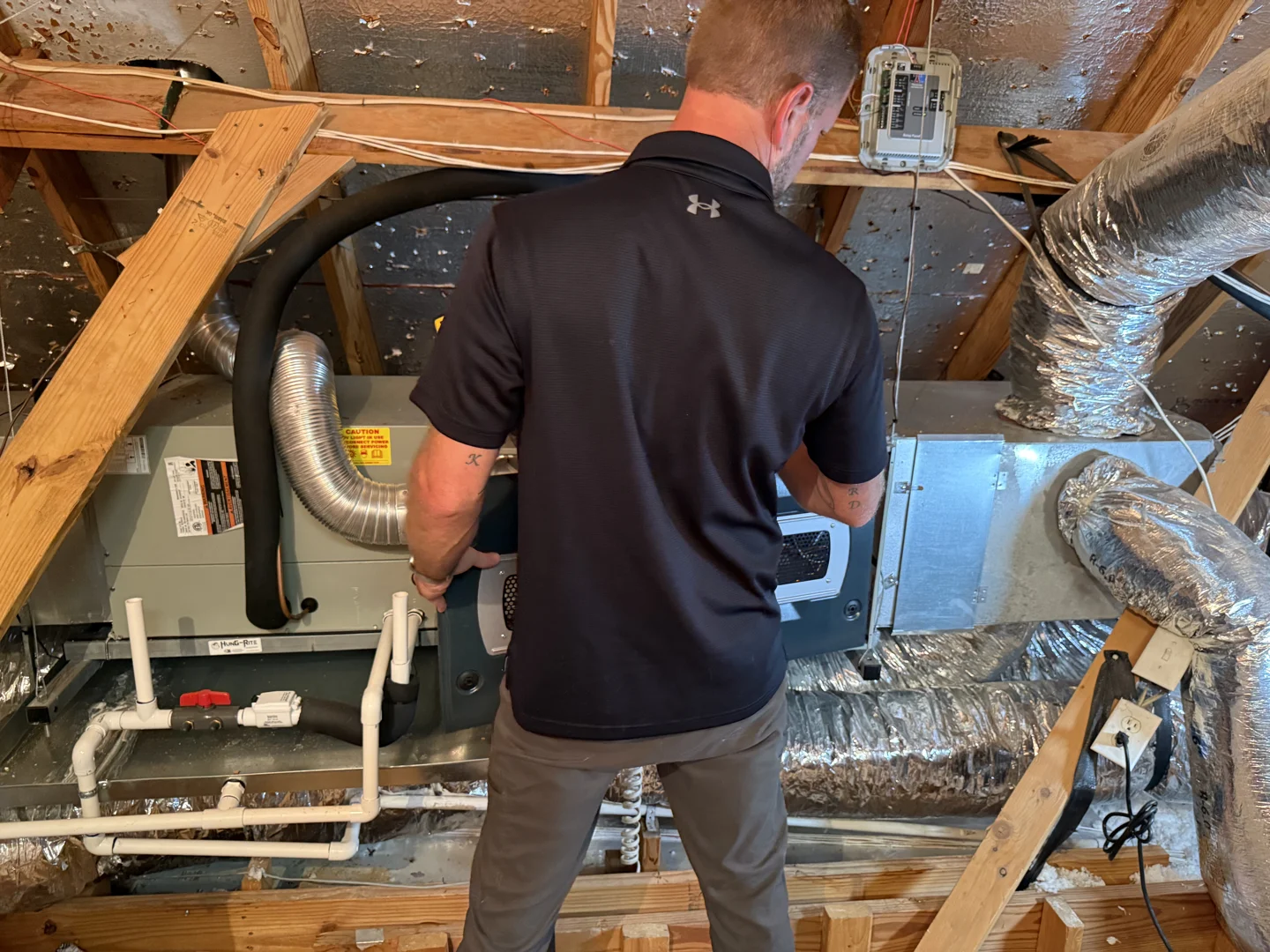
As your AC cools your home, it also dehumidifies the air. The moisture removed from the air collects in a drain pan beneath your indoor evaporator coil and flows out of your home through a condensate drain line.
Because this environment is warm and dark, algae, mold, and bacteria can easily build up inside the PVC drain pipes, creating a thick clog. When the drain line becomes blocked, water backs up into the pan. Modern systems are equipped with a safety float switch designed to shut down the system immediately when water levels rise, preventing catastrophic water damage to your ceilings and walls. If your system suddenly shuts down and will not turn back on, a clogged drain line is often the culprit.
Professional AC Repair Frisco, TX vs. Routine Maintenance
Many homeowners wonder when they should call for emergency AC repair Frisco, TX and when their system simply needs a routine seasonal tune-up. Distinguishing between these two types of service is key to managing your home maintenance budget and protecting your comfort.
Signs Your System Needs Immediate AC Repair Frisco, TX
Some symptoms indicate a mechanical or electrical failure that requires immediate professional diagnostics. You should contact a technician right away if you notice:
- Warm Air: The system is running, but the air blowing from your vents is warm or room-temperature.
- Weak Airflow: You can feel cool air, but it is barely trickling out of the registers.
- Strange Noises: You hear loud squealing, grinding, rattling, or thumping sounds from either the indoor or outdoor unit.
- Frequent Cycling: The system turns on and off every few minutes, a condition known as short-cycling.
- Unexplained Water: You notice pooling water around your indoor unit or water dripping from your ceiling.
If your system is completely unresponsive, refer to our guide on dealing with an AC not turning on Frisco, TX, for initial troubleshooting steps before calling for service.
The Role of Bi-Annual HVAC Maintenance
While repairs resolve existing failures, routine maintenance is designed to prevent those failures from happening in the first place. Professional Frisco, TX air conditioning services should be scheduled twice per year: once in the spring to prepare for the cooling season, and once in the fall to inspect your heating components.
During a typical maintenance visit, a certified technician will clean the condenser coils, inspect all electrical connections, test the capacitor and contactor, verify refrigerant levels, clear the condensate drain line, and check the overall system static pressure. This proactive care keeps your system running at peak efficiency, lowers your monthly energy bills, and can extend the overall lifespan of your equipment by several years.
DIY Maintenance and Crucial Safety Warnings
There are several tasks homeowners can perform to support their HVAC system, but it is vital to know where DIY maintenance ends and professional service begins.
What you can safely do yourself:
- Change your air filters: Replace your standard 1-inch filters every 30 to 60 days during the summer, or every 90 days during milder months. Clean filters ensure proper airflow and protect your indoor air quality.
- Clear debris around the outdoor unit: Keep grass, weeds, leaves, and shrubs trimmed back at least two feet from your outdoor condenser to ensure adequate airflow.
- Inspect your outdoor drain line: Ensure the condensate drain line is dripping water outside when the system is running.
What you must leave to a professional:
Air conditioners rely on high-voltage electricity and contain pressurized chemical refrigerants. Attempting to repair electrical components or handle refrigerant without proper certification is incredibly dangerous. High-voltage hazards can cause severe injury, and improper handling of refrigerant violates federal environmental laws. Always rely on a licensed professional for any internal diagnostics or component replacements.
Repair vs. Replacement: Making the Right Decision for Your Home
When an aging system breaks down during a hot Texas summer, homeowners face a critical decision: should they invest in another repair, or is it time to plan for a complete system replacement?
When to Choose AC Repair Frisco, TX
Opting for a repair is generally the most sensible choice if:
- The system is relatively young: If your air conditioner is under 10 years old, it likely has plenty of useful life remaining.
- The repair is minor: Replacing a capacitor, clearing a clogged drain line, or replacing a simple fan motor are straightforward, cost-effective fixes.
- The system has been well-maintained: If you have scheduled regular tune-ups and the unit has been highly reliable, repairing it is a low-risk investment.
Signs It Is Time for a Full System Replacement
It may be time to consider a full AC system replacement if:
- The system is over 12 to 15 years old: At this age, the compressor and coils are nearing the end of their reliable lifespan.
- You experience frequent breakdowns: If you are calling for repairs multiple times a summer, those costs will quickly add up to the price of a new unit.
- Your energy bills are skyrocketing: Older systems lose efficiency over time, forcing you to pay more for less cooling power.
- The system uses R-22 refrigerant: Production of R-22 refrigerant was phased out completely in 2020. If your older system has a major refrigerant leak, the cost of repairing it and sourcing reclaimed R-22 is often prohibitively expensive.
- The R-410A phase-out is affecting your options: Under the EPA AIM Act, manufacturers stopped producing new R-410A equipment at the start of 2025. While existing R-410A systems can still be serviced, new installations in 2026 utilize modern, eco-friendly refrigerants like R-32 or R-454B, which offer superior efficiency and environmental safety.
To help you compare your options, consider the following decision matrix:
| Factor | Lean Toward Repair | Lean Toward Replacement |
|---|---|---|
| System Age | Under 10 years old | Over 12-15 years old |
| Refrigerant Type | R-410A or newer | R-22 (phased out) |
| Repair Cost | Minor or covered under warranty | Exceeds a significant portion of system value |
| Energy Efficiency | Meets your monthly budget | Causing high monthly utility bills |
| Reliability | Rarely breaks down | Fails multiple times per season |
What to Expect: Costs, Regulations, and Choosing a Contractor
Navigating the business side of HVAC service can feel overwhelming. Understanding local guidelines, pricing models, and licensing requirements will help you make an informed decision.
Understanding AC Repair and Replacement Costs
When scheduling service, most reputable companies will charge a standard diagnostic fee to send a technician to your home, perform a complete inspection, and identify the root cause of the issue. In many cases, this diagnostic fee is waived if you authorize the recommended repair.
For actual repairs, look for companies that offer flat-rate pricing. This ensures you pay a set price for the specific repair, regardless of how long it takes the technician to complete the work, protecting you from unexpected hourly charges. For full system replacements, homeowners should request a professional estimate. A proper estimate should include a detailed heat-load calculation to ensure the new system is sized correctly for your home’s unique footprint. Many companies offer flexible financing options and assistance with manufacturer warranty registration to help make replacements more manageable.
Local Regulations and Permit Requirements in Frisco, TX
The state of Texas takes HVAC safety very seriously. Anyone performing AC work in Texas must hold a valid Texas Air Conditioning License (TACL) issued by the Texas Department of Licensing and Regulation (TDLR). You can easily verify a contractor’s license status on the TDLR website.
Additionally, local building codes in Collin County require licensed contractors to pull official permits for any full system replacements. This ensures that the installation is inspected by local officials and meets all current safety and energy codes. Technicians must also hold EPA 608 Universal Certification to legally handle, recover, or recharge refrigerants, including the newer R-32 and R-454B compounds entering the market in 2026.
How to Choose the Right HVAC Repair Company
To ensure you receive high-quality service, look for a company that prioritizes:
- Certified Technicians: Ensure the technicians are NATE (North American Technician Excellence) certified, which represents the gold standard of technical competency in the HVAC industry.
- Excellent Local Reviews: Look for companies with a proven track record of positive customer reviews in your immediate area.
- Rapid Emergency Response: When temperatures soar, you cannot afford to wait days for service. Look for providers that offer prompt, 24/7 emergency dispatch.
- Fully Stocked Trucks: Companies that keep their service vehicles stocked with a wide variety of common parts can often complete your repair in a single visit, saving you time and restoring your comfort quickly.
If you are looking for dependable service nearby, we provide comprehensive heating and cooling solutions across neighboring North Dallas communities, ensuring your home remains comfortable year-round.
Frequently Asked Questions About AC Repair in Frisco, TX
1. What are the most common AC problems in Frisco, TX?
The most frequent issues include failed run capacitors and contactors, refrigerant leaks in the evaporator coils, clogged condensate drain lines, and frozen indoor coils. These issues are often accelerated by the extreme summer heat and the natural aging of systems installed during local housing booms.
2. How do I know if my AC needs professional repair or routine maintenance?
If your system is blowing warm air, making loud or unusual noises, leaking water, or refusing to turn on, you need professional repair. If your system is running normally but you want to ensure it operates efficiently and safely before the summer heat arrives, you should schedule a routine maintenance tune-up.
3. How much does AC repair typically cost in Frisco, TX?
Pricing can vary depending on several factors, including the complexity of the issue, the specific components that need to be replaced, and whether your system is still under warranty. Homeowners should request a professional estimate from a licensed technician to get an accurate assessment of repair costs.
4. How often should I schedule AC maintenance to prevent costly repairs?
You should schedule professional maintenance twice per year. We recommend a spring tune-up to prepare your air conditioner for the intense summer cooling season and a fall check-up to ensure your heating components are safe and ready for the winter.
5. What are the signs that my AC system may need replacement instead of repair?
Key signs include a system age of 12 to 15 years or older, frequent and costly breakdowns, high monthly energy bills, and major refrigerant leaks on older units that use phased-out R-22 refrigerant.
6. What HVAC brands and system types are most common in Frisco, TX homes?
Most local homes utilize standard split-system air conditioners or heat pumps from major national brands. Due to the large size of many local homes, zoned systems, dual-fuel systems, and high-efficiency variable-speed units are also highly common to help manage temperature imbalances and utility costs.
7. Are there any local regulations or permits required for AC repairs or replacements in Frisco, TX?
Yes. Texas law requires all technicians to hold a valid TACL license from the TDLR. While simple repairs do not require permits, local building codes in Collin and Denton counties require licensed contractors to pull official permits for all full system replacements.
8. What financing or warranty options are typically available for AC repairs in Frisco, TX?
Many reputable HVAC companies offer flexible financing options for major repairs or system replacements. New equipment typically comes with a 10-year manufacturer parts warranty, and quality contractors will also provide their own labor warranties and ongoing maintenance plans.
9. How quickly can I expect emergency AC repair service in Frisco, TX during peak summer months?
During the hottest summer months, demand for service rises dramatically. However, leading local service providers prioritize emergencies and often offer same-day diagnostics and 24/7 emergency dispatch to restore your comfort as quickly as possible.
10. What is the new refrigerant regulation for 2026, and how does it affect my AC?
Under the EPA AIM Act, the manufacturing of new R-410A systems was phased out. New systems installed in 2026 utilize environmentally friendly, low-GWP refrigerants like R-32 and R-454B. If you have an existing R-410A system, it remains completely legal to operate and service, and parts and refrigerant will remain available for many years to come.
Conclusion

Living in North Texas means relying on your air conditioning system to keep your family safe and comfortable for a large portion of the year. When your system shows signs of trouble, ignoring the issue can quickly lead to more extensive, costly damage. By understanding the common problems unique to our local housing stock and partnering with a trusted professional, you can keep your home cool even during the hottest summer afternoons.
When you need reliable, prompt assistance, Air Repair Pros is here to help. Serving North Dallas since 1998, we provide certified technicians, 24/7 emergency availability, and fully stocked trucks carrying 85%+ of common parts for efficient, one-trip service. For expert service or to schedule your next seasonal tune-up, contact our HVAC professionals at Air Repair Pros for dependable heating and cooling repair service in Frisco, TX, today.