

Why Slab Leak Detection Methods in Plano, TX Homes Demand Immediate Attention
Slab leak detection methods in Plano, TX are something every local homeowner should understand before a hidden pipe problem turns into a full-blown foundation crisis. We can’t live without water, but finding water where you don’t want it, specifically beneath your home’s concrete slab, can signal the start of serious and expensive trouble.
Here is a quick overview of the most common professional slab leak detection methods used in Plano, TX:
- Acoustic/electronic listening devices: Microphones placed on the floor detect the sound of water escaping from a pressurized pipe underground.
- Thermal imaging: Infrared cameras identify warm or cool anomalies on floor surfaces caused by leaking hot or cold water lines.
- Ground-penetrating radar (GPR): Sends radar pulses through the slab to map pipe locations and voids without breaking concrete.
- Helium gas testing: Non-toxic helium is pumped into a pipe; sensors on the surface trace exactly where the gas escapes.
- Remote sewer camera inspection: A flexible camera is fed through a sewer cleanout to visually inspect the inside of pipes for cracks or breaks.
- Hydrostatic pressure testing: Sections of the plumbing system are sealed and pressurized to isolate which line is losing pressure.
Plano, TX sits on some of the most expansive clay soil in North Texas. That soil swells when it absorbs water and shrinks when it dries out. This constant movement puts enormous stress on the pipes buried beneath your home’s slab, year after year. Add in aging copper or galvanized metal pipes, and the risk of a hidden leak goes up considerably.
What makes slab leaks especially dangerous is how quietly they develop. You might hear the faint sound of running water beneath the floorboards when no fixtures are in use, or notice your water bill climbing for no obvious reason. By the time visible damage appears, the leak may have already been undermining your foundation for weeks or months.
The good news is that modern detection technology makes it possible to find and fix these leaks without tearing up your entire floor. The key is knowing which method to use and, more importantly, who to call.

Understanding Under-Slab Leaks in Plano, TX
To understand why slab leaks are so common in Plano, TX, it helps to look at what lies directly beneath your home. The North Texas region is famous for its highly active, expansive clay soil. This type of soil acts like a giant sponge. During heavy rainy seasons, the clay absorbs water and swells significantly, lifting sections of your concrete foundation. When hot, dry Texas summers arrive, the clay loses moisture and shrinks, causing the foundation to settle.
This continuous cycle of expansion and contraction keeps your home and the soil beneath it in constant motion. When the soil shifts, it exerts immense hydrostatic pressure on your foundation and the plumbing lines running through it. If the soil shifts unevenly, it can bend, crimp, or snap the pipes buried in the ground.
Another primary cause of under-slab leaks is the material used in older plumbing systems. Many Plano, TX homes built several decades ago rely on copper or galvanized metal pipes. While copper is a durable material, it is highly vulnerable to chemical reactions with metallic elements and minerals found in the Texas soil. Over time, these chemical reactions lead to corrosion and electrolysis, which eat away at the metal. This process eventually creates tiny pinhole leaks that release pressurized water directly into the ground.
Improper pipe installation during the home construction phase can also lead to early failure. If a pipe was bent too sharply during installation, or if it was not properly insulated where it passes through the concrete slab, the constant friction of water flowing through the pipe can wear down the outer wall. Over several years, this friction creates a weak spot that eventually bursts. If you suspect your home has aged or damaged pipes that are beyond simple repairs, the Air Repair Pros team can help you evaluate pipe replacement options that protect your property.
When dealing with under-slab leaks, homeowners often overlook the impact on their home’s climate control. High humidity from under-slab water accumulation can place an immense load on your AC system. In Texas, where summer temperatures regularly exceed triple digits, an overworked air conditioner can quickly break down. That is why integrated home maintenance, including both plumbing and HVAC services, is so critical for properties in Plano, TX.
Top Warning Signs of an Under-Slab Leak
Because under-slab leaks occur deep beneath several inches of concrete, they can easily go unnoticed for months. Homeowners must stay vigilant and look for subtle clues. Here are the top warning signs that your Plano, TX home has an active under-slab leak:
- Warm Spots on Floors: If you walk barefoot across your tile, hardwood, or laminate flooring and suddenly feel a warm spot, you likely have a hot water line leaking directly beneath that area.
- Buckling Flooring Materials: Water pooling under your slab will eventually find its way upward. This moisture can cause wood floors to warp, laminate to buckle, and carpets to become damp or stained.
- Musty Smells and Mold: Excess moisture trapped under your floors creates the perfect breeding ground for mold and mildew. If you notice a persistent musty odor that does not go away after cleaning, water is likely pooling under your home.
- Spikes in Water Bills: A sudden, unexplained increase in your monthly water bill is one of the most reliable indicators of a hidden plumbing leak.
- Running Water Sounds: If you hear the faint sound of running or rushing water, particularly near a bathroom or kitchen when all faucets and appliances are turned off, water is actively escaping from your pipes.
- Unexplained Foundation Cracks: When water accumulates under your foundation, it can wash away the supporting soil. This causes the concrete slab to sink and crack under the weight of your home.
Recognizing these signs early can save you from catastrophic foundation failure. If you ever experience a sudden plumbing emergency, the first few minutes matter, and this burst pipe emergency guide explains practical steps homeowners can take while waiting for professional help.
Advanced Slab Leak Detection Methods Plano, TX Specialists Use
Locating a leak buried deep beneath a concrete slab requires highly specialized, non-invasive diagnostic tools. Years ago, plumbers had to guess the location of a leak and break through the concrete floor with jackhammers just to find it. Today, professional technicians use advanced technology to pinpoint the exact location of a leak within inches, saving homeowners time, money, and unnecessary structural damage.
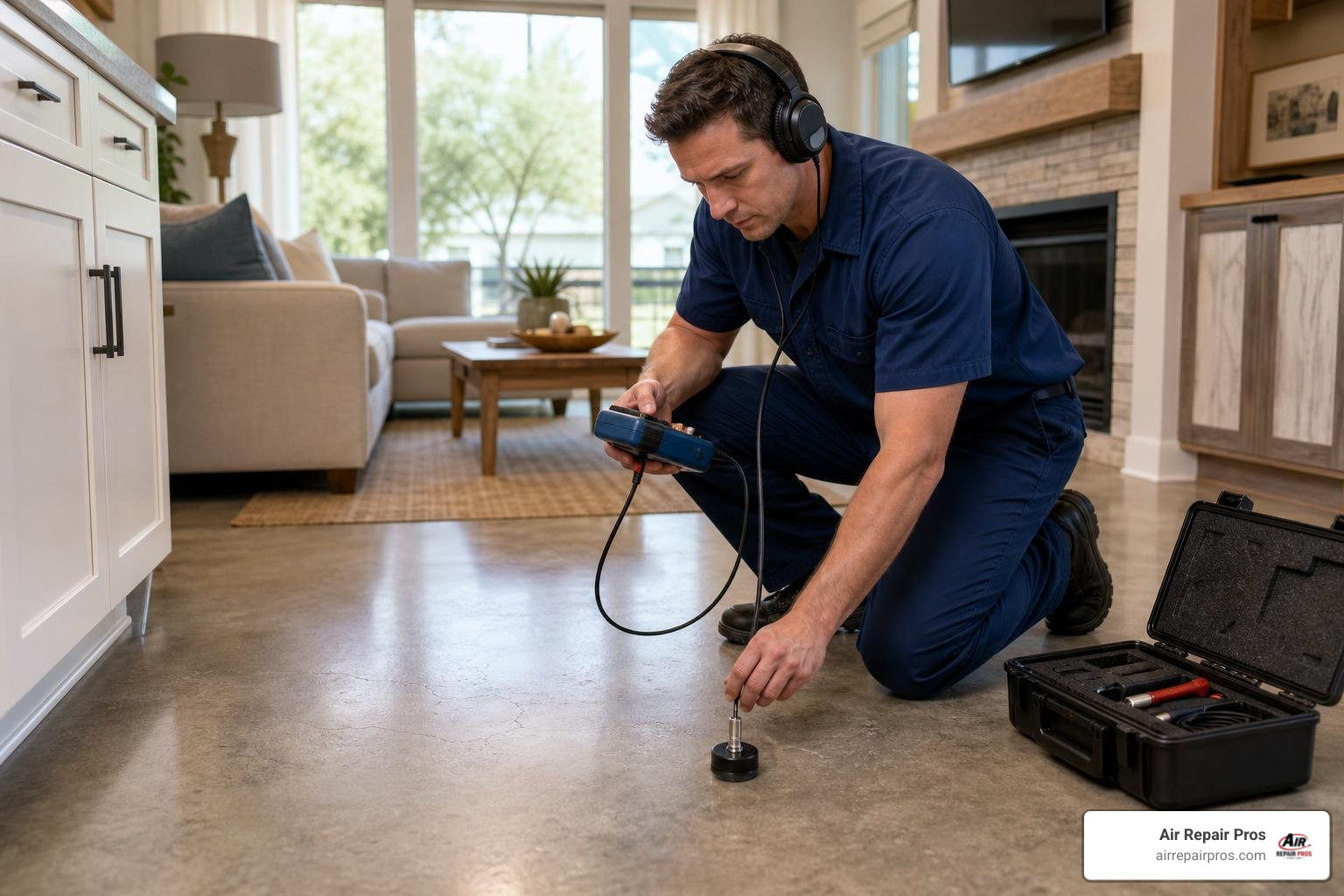
One of the most common non-invasive diagnostics is acoustic testing. Technicians use highly sensitive electronic listening devices, including ground microphones and acoustic amplifiers, to listen for the sound of escaping water. As water leaks from a pressurized pipe, it creates a distinct hissing or whooshing sound. By systematic mapping of the floor, the technician can identify the exact spot where the sound is loudest.
Another cutting-edge tool is ground-penetrating radar (GPR). This method sends high-frequency radar pulses into the concrete slab. By analyzing the reflected signals, a specialist can map the layout of the buried pipes and identify underground voids created by escaping water washing away the soil.
For hot water line leaks, thermal imaging is incredibly effective. Technicians use infrared cameras to scan the floor surface. The camera displays temperature variations, showing a clear thermal map of where the hot water is spreading beneath the concrete.
If the leak is very small or difficult to hear, helium gas testing is used. The technician drains the water from the plumbing system and pumps a safe, non-toxic, lightweight helium gas into the pipes. Because helium is lighter than air, it escapes through the leak and rises through the concrete slab. The technician then sweeps the floor with a highly sensitive gas detector to locate where the helium is emerging.
Additionally, specialists utilize remote sewer cameras by inserting them directly into the sewer cleanout. This allows them to visually inspect the interior of your sewer lines to find cracks, root intrusions, or broken joints. If you suspect a leak in your own home, the Air Repair Pros team can provide professional leak detection before the damage spreads.
How Under-Slab Leaks Impact Your HVAC and AC Systems in Plano, TX
Many homeowners do not realize that a hidden plumbing leak beneath the concrete foundation can directly impact their indoor climate control. In many older homes in Plano, TX, air ducts are actually routed through or beneath the concrete slab. When a pipe leaks, water can seep into these sub-slab HVAC ducts, leading to standing water in your ventilation system. This standing water causes high indoor humidity, forcing your AC system to work twice as hard to cool your home. Overworked AC units are prone to premature failure, requiring professional AC repair or comprehensive HVAC services to restore efficiency. If you notice musty odors coming from your air vents alongside a spike in your water bill, you may be dealing with a combined plumbing and HVAC issue that requires immediate professional attention.
Why Traditional Plumbing Companies Struggle with Slab Leak Detection Methods Plano, TX
Many homeowners assume that any local plumbing company can handle a slab leak. However, traditional plumbers often struggle with slab leak detection methods in Plano, TX because they lack the highly specialized equipment and concrete-handling expertise required for these complex jobs.
Traditional plumbers are excellent at fixing leaky faucets, clearing clogged drains, and replacing water heaters. However, they do not work with concrete slabs for a living. Pinpointing a leak beneath a foundation requires expensive electronic listening devices, thermal cameras, and specialized training that many general plumbing businesses do not invest in. Without these tools, a general plumber may rely on guesswork, which can lead to unnecessary damage to your floors.
Furthermore, some plumbers may charge more for diagnostics because they must rent the equipment or hire a third-party subcontractor to locate the leak. When you work with a dedicated specialist who possesses fully stocked service trucks and in-house diagnostic technology, you receive an accurate diagnosis without the added coordination burden. If you want diagnostics handled by professionals with the right tools, the Air Repair Pros team provides plumbing services in Plano, TX designed to get the job done right the first time.
When to Schedule Slab Leak Detection Methods Plano, TX Homeowners Trust
Knowing when to call for professional leak detection can prevent minor issues from turning into major structural disasters. There are several key situations when Plano, TX homeowners should schedule a professional diagnostic check:
- Pre-Foundation Repair Checks: If your home is showing signs of foundation settling and you are planning to have foundation piers installed, you should always perform slab leak detection first. Shifting foundations can cause pipes to leak, and lifting a foundation without fixing an active leak can cause further pipe damage.
- Post-Foundation Repair Verification: After your foundation has been lifted and stabilized, it is critical to perform a follow-up leak detection test. The physical movement of lifting a concrete slab can put sudden stress on older pipes, potentially cracking them during the process.
- Annual Preventative Checks: If you live in an older Plano, TX home with copper pipes or reside in an area with highly active clay soil, an annual preventative check is a smart investment to catch hidden leaks before they cause visible damage.
- Sudden Water Pressure Drops: If you notice a sudden, unexplained drop in your home’s water pressure, it could indicate that a large volume of water is escaping from a broken pipe beneath your slab.
If you are experiencing any of these issues, you can discover our slab leak detection services to gain peace of mind and protect your home’s structural integrity.
Comparing Under-Slab Leak Repair Options
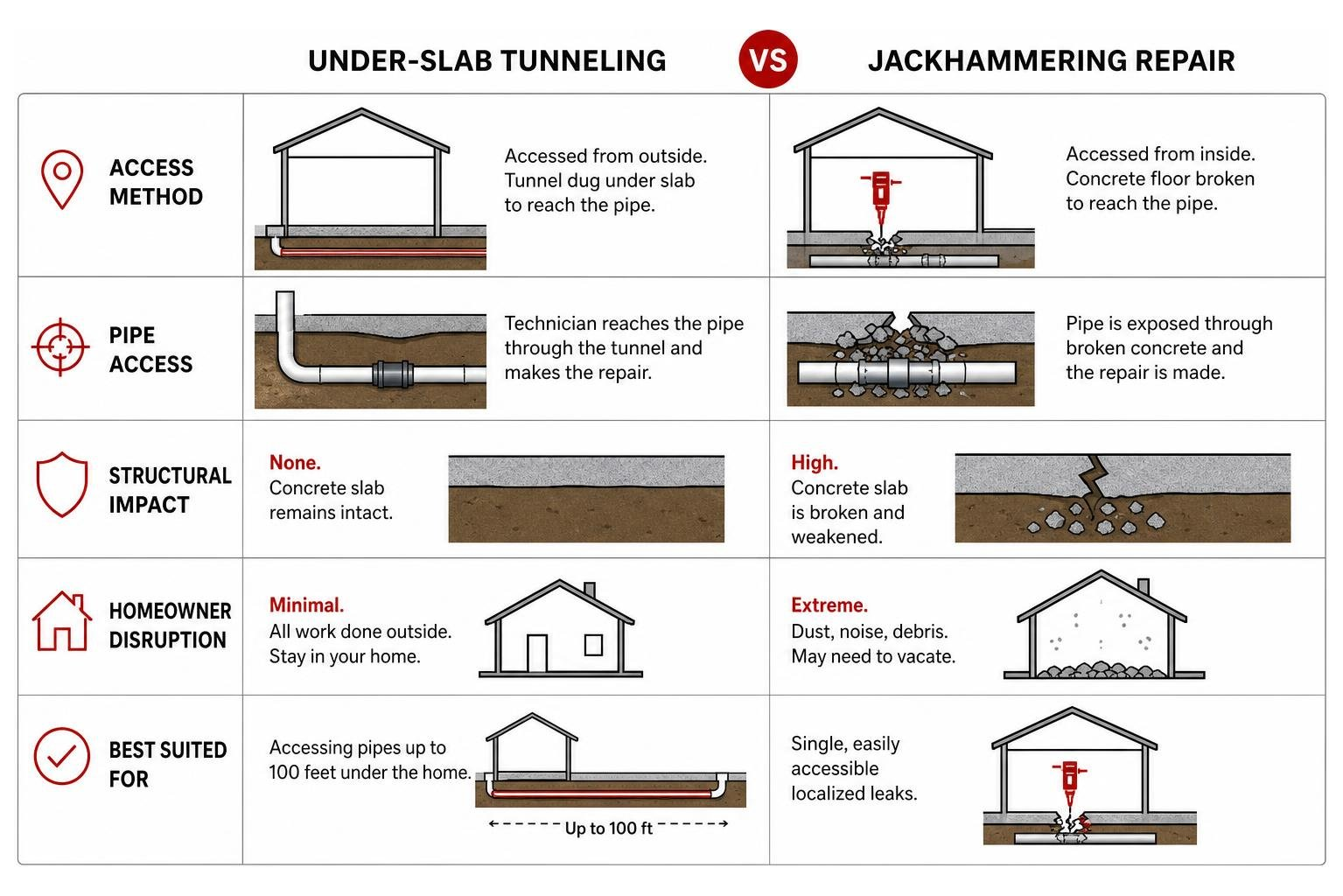
Once a leak is detected, the next step is determining the best repair method. Homeowners generally have three primary options: under-slab tunneling, jackhammering through the floor, or epoxy pipe lining. Each method has its advantages and disadvantages depending on the location of the leak, the age of the pipes, and your budget.
| Repair Method | Structural Impact | Homeowner Disruption | Best Suited For |
|---|---|---|---|
| Under-Slab Tunneling | None (preserves concrete slab) | Minimal (all work done outside) | Accessing pipes deep under the home |
| Jackhammering Floors | High (breaks structural concrete) | Extreme (dust, noise, must vacate) | Single, easily accessible localized leaks |
| Epoxy Pipe Lining (CIPP) | None (no digging required) | Very Low (done through cleanouts) | Restoring older, corroded sewer or drain lines |
Under-slab tunneling is widely considered the superior method for repairing pipes under a concrete slab. Qualified foundation and plumbing specialists have the experience and equipment to reach affected pipes beneath a concrete slab once they have confirmed the location of the leak. This method preserves the structural integrity of your home’s foundation because it does not require cutting through the concrete floor inside your living room or kitchen. It also allows families to remain in their homes during the repair process without dealing with massive amounts of dust, noise, and debris.
Jackhammering, on the other hand, involves cutting directly through your flooring and concrete slab from inside the home. While this can sometimes be a faster way to access a single, shallow leak, it creates a massive mess, damages your indoor flooring, and can weaken the structural integrity of the concrete slab.
For sewer and drain line leaks, epoxy pipe coating or cast-in-place piping (CIPP) offers a non-invasive, trenchless alternative. This method involves inserting a flexible, epoxy-coated lining inside the existing damaged pipe. Once the lining is in place, it is inflated and cured, creating a brand-new, seamless, durable pipe inside the old one. If you want to explore these options further, you can find out more about slab leak repair to see which method is right for your home.
The Role of Sewer Cleanouts in Leak Detection and Repair
A sewer cleanout is a dedicated plumbing pipe with a removable cap that is connected directly to your home’s main sewer line. It is usually located outside your home, near the foundation wall, or in your yard.
During the slab leak detection phase, the sewer cleanout serves as a vital entry point for technicians. It allows them to insert high-resolution sewer cameras directly into the drain system without having to remove toilets or cut into indoor walls. Technicians can also use the cleanout to perform hydrostatic pressure testing, which helps determine if your sewer line is holding water pressure or leaking into the soil beneath your slab.
If a leak is found in the sewer line, the cleanout provides the necessary access for clearing blockages and applying trenchless repair solutions like epoxy pipe lining. Homeowners dealing with drain line issues can also use these Allen sewer line repair tips to understand warning signs, cleanout access, and when to bring in a professional team.
Navigating Insurance and Choosing the Right Specialist in Plano, TX
Many homeowners mistakenly assume that repair costs for under-slab leaks are automatically covered by their homeowner’s insurance policy, but coverages and limits vary widely. Navigating insurance claims for slab leaks can be complicated, and understanding how your policy works is essential.
In most standard homeowner’s insurance policies, coverage depends on the cause of the leak and the specific wording of your policy. Generally, insurance policies cover “sudden and accidental” water damage. This means that if a pipe suddenly bursts and damages your flooring, furniture, or drywall, the cost of repairing the indoor water damage is usually covered.
However, many policies exclude the cost of actually repairing the plumbing pipe itself. Additionally, the cost of tearing out and replacing the concrete slab to access the leak may or may not be covered depending on whether your policy includes related foundation water damage protection. Because of these exclusions, it is highly recommended that you review your policy details with your insurance agent before an emergency occurs.
When it comes to choosing the right specialist, homeowners should look for a company that offers comprehensive, professional services. While some general plumbers can fix basic pipes, a company that specializes in both advanced plumbing solutions and structural diagnostics is ideal.
When selecting a specialist in Plano, TX, look for the following qualifications:
- Licensing and Certifications: Ensure the technicians are fully licensed by the state of Texas and possess specialized certifications in slab leak detection.
- Fully Stocked Service Trucks: A reputable company should arrive in fully stocked service trucks containing specialized electronic detection gear, allowing them to complete diagnostics and repairs efficiently.
- Experience in North Texas Soils: Choose a provider that understands the unique challenges of Plano’s expansive clay soil and has a proven track record of protecting home foundations.
Working with an experienced, certified team ensures that your home’s structural integrity is protected throughout the entire process.
Frequently Asked Questions About Slab Leaks
What causes under-slab leaks in Plano, TX?
Under-slab leaks in Plano are primarily caused by the natural expansion and contraction of the local clay soil, which shifts the foundation and puts stress on buried pipes. Other common causes include corrosion of older copper or galvanized metal pipes, hydrostatic pressure from groundwater, and friction damage from improper pipe installation during construction.
How do I know if I have a slab leak?
Common indicators of a slab leak include unexplained warm spots on your floors, buckling or warped flooring, musty odors, a sudden spike in your monthly water bills, and the sound of running water when all household fixtures are turned off. You may also notice cracks forming in your foundation walls or baseboards.
Can a slab leak cause foundation damage?
Yes. Water leaking beneath a concrete slab can wash away the supporting soil, creating large voids. Without proper soil support, the heavy concrete slab will sink and crack under the weight of the home. Conversely, excessive water can cause clay soil to swell unevenly, lifting portions of the foundation and causing severe structural shifting.
How long does professional slab leak detection take?
In most cases, professional slab leak detection takes between one to three hours. Using non-invasive electronic listening equipment, thermal imaging, and pressure testing, a certified technician can locate the exact source of the leak relatively quickly without damaging your floors.
Is under-slab tunneling better than jackhammering?
Yes, under-slab tunneling is generally considered the superior method. Tunneling allows technicians to access and repair pipes up to 100 feet beneath the slab without breaking your indoor concrete floors. This preserves the structural integrity of your foundation, minimizes indoor noise and dust, and allows you to remain in your home during the repair.
What is cast-in-place piping (CIPP)?
Cast-in-place piping (CIPP) is a non-invasive, trenchless pipe repair method. It involves inserting a flexible lining coated with a specialized epoxy resin into the damaged pipe. Once positioned, the lining is inflated and cured, creating a durable, seamless new pipe within the old, damaged pipe without the need for excavation.
Does homeowner’s insurance cover slab leak repairs in Plano, TX?
Coverage varies widely depending on your policy. Standard policies often cover the cost of repairing indoor water damage caused by a sudden leak, as well as the cost of tearing out the concrete to access the pipe. However, they rarely cover the cost of repairing the plumbing pipe itself unless you have specific optional riders.
How is a sewer cleanout used during leak detection?
A sewer cleanout provides an accessible entry point for diagnostic equipment. Technicians use it to insert high-resolution sewer cameras to visually inspect the pipes, and to perform hydrostatic pressure tests to determine if the drain lines under your slab are leaking.
Can I live in my home during slab leak repairs?
If you choose under-slab tunneling, you can easily live in your home during the repairs. Because all excavation and plumbing work occur beneath the home from the outside, there is minimal disruption to your daily routine, and your indoor living spaces remain clean and quiet.
How can I prevent future under-slab leaks?
You can minimize the risk of future leaks by maintaining a consistent watering schedule around your foundation to prevent clay soil from shrinking. Additionally, installing a water pressure regulator can prevent high pressure from stressing your pipes, and scheduling annual plumbing inspections can help catch minor issues early.
Conclusion
Active clay soils and aging pipes make under-slab leaks a common reality for homeowners in Plano, TX. However, catching these leaks early through advanced slab leak detection methods in Plano, TX can save your home from severe foundation damage and costly structural repairs. By utilizing non-invasive diagnostic tools like acoustic listening devices and thermal imaging, specialists can pinpoint issues quickly and accurately, allowing for modern, clean repair solutions like under-slab tunneling and trenchless epoxy lining.
Since 1998, Air Repair Pros has provided top-tier residential plumbing and HVAC solutions across North Dallas, including Frisco, TX, McKinney, TX, Plano, TX, Little Elm, TX, and Allen, TX. With fully stocked service trucks designed for one-trip convenience, certified technicians, and 24/7 emergency support, the team is always ready to protect your home’s comfort and structural safety. If you suspect an under-slab leak, do not wait for foundation cracks to appear. Please contact our professional slab leak repair specialists today to schedule a comprehensive diagnostic check.