When a Pipe Bursts at Home, the First 10 Minutes Are Everything
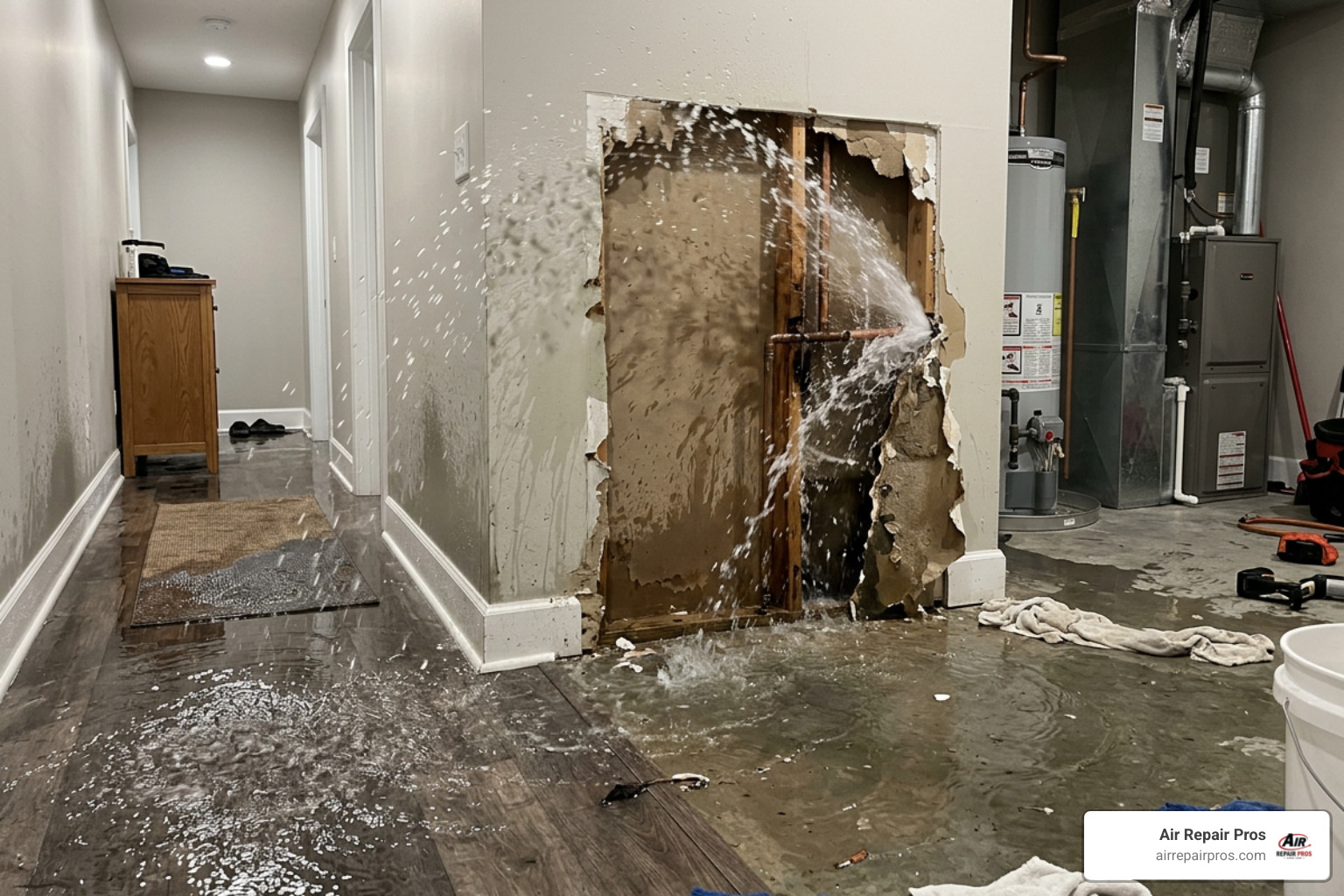
Knowing what to do about a burst pipe in the first few minutes can be the difference between a manageable repair and thousands of dollars in structural damage, mold remediation, and insurance headaches. A single broken pipe can release hundreds of gallons of water per hour. That water moves fast, soaking into drywall, warping flooring, and reaching electrical or HVAC systems before most homeowners even realize what is happening.
At Air Repair Pros, our team knows that plumbing emergencies and HVAC failures often go hand in hand. When winter storms hit Texas, a failing heating system can quickly lead to frozen, ruptured water lines.
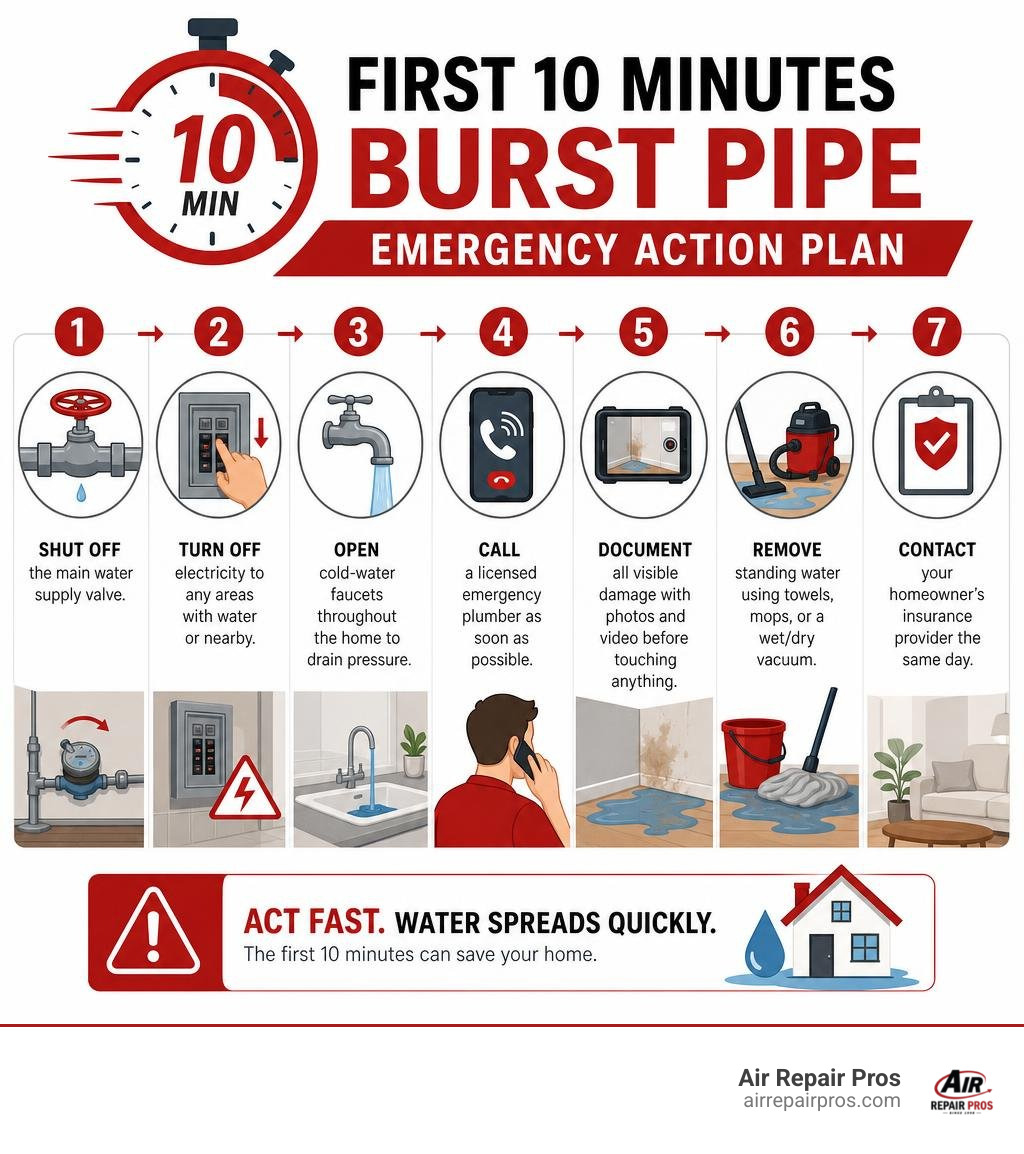
If you have a burst pipe right now, here is what to do immediately:
- Shut off the main water supply valve to stop the flow of water into your home.
- Turn off electricity to any rooms or circuits where water is present or nearby.
- Shut down your HVAC system if water is leaking near your AC unit, furnace, or air handler.
- Open cold-water faucets throughout the home to drain pressure from the pipes.
- Call a licensed emergency plumber as soon as possible.
- Document all visible damage with photos and video before touching anything.
- Remove standing water using towels, mops, or a wet/dry vacuum.
- Contact your homeowner’s insurance provider the same day.
That is the short version. The rest of this guide walks you through each step in detail, explains what causes pipes to burst, and shows you how to protect your home before the next cold snap or plumbing failure hits.
For North Dallas homeowners in particular, burst pipes are not just a winter worry. Aging plumbing, high water pressure, and shifting soil conditions across areas like Frisco, TX, Plano, TX, and Allen, TX can all put your pipes at risk year-round. And when something goes wrong, the clock starts immediately.
Mold can begin growing in as little as 24 to 48 hours once moisture reaches your walls and subfloor. That is not a lot of time to figure out what to do next. Acting fast and in the right order is what keeps a plumbing emergency from turning into a full-scale renovation project.
Emergency Action Plan: Burst Pipe What to Do Immediately
When water is actively pouring into your living space, panic is your greatest enemy. Having a structured sequence of actions allows you to gain control of the situation and protect your property. The very first step is to call a certified emergency plumber to get a technician on the way, but while the team is driving to your home, you must take immediate physical action to stop the flooding.
Locating and Safely Shutting Off the Main Water Supply Valve
You cannot wait for a professional to arrive to turn off your water. Every second the main valve remains open, more water is pumped into your walls and ceilings.
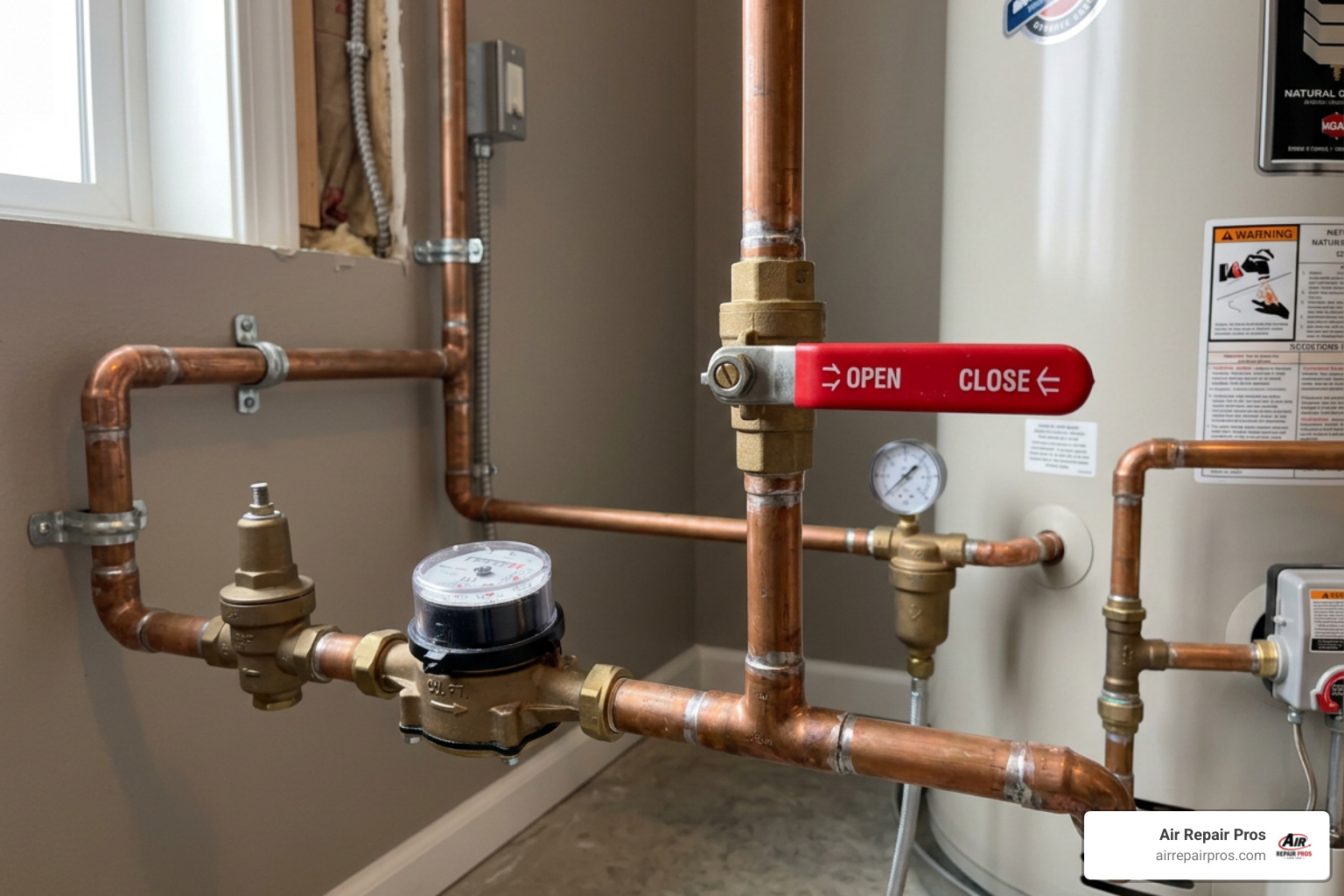
To shut off the main water supply, you need to locate your home’s main shut-off valve. In most North Dallas homes, this valve is located in one of three places:
- The Utility Room or Garage: Look near your water heater or water softener system.
- An Exterior Wall: In warmer climates like Texas, the valve is often located on an outside wall, sometimes protected by a plastic or metal cover, near an outdoor faucet.
- The Water Meter Box: This is a concrete or plastic box recessed into the ground near the street curb. You may need a meter key or a pair of pliers to open the lid and turn the valve.
Once you locate the valve, determine what type it is:
- Ball Valve: This style features a single straight lever. To turn the water off, pull the lever a quarter-turn until it is perpendicular to the pipe.
- Gate Valve: This style looks like a round wheel. Turn the wheel clockwise (remembering the classic rule: righty-tighty) until it cannot turn any further.
When and Why to Turn Off the Electricity and HVAC Systems
Water and electricity are a deadly combination. If the water leaking from your burst pipe is pooling near electrical outlets, light fixtures, appliances, or your main electrical panel, you must address the electrical safety of your home immediately.
Go to your home’s main electrical breaker panel and shut off the power to the affected zones. Additionally, if water is leaking near your indoor AC unit, furnace, or HVAC air handler, shut down your heating and cooling system at the thermostat and the breaker immediately. Water entering your HVAC system can ruin expensive electronic control boards, destroy blower motors, and create severe electrical hazards.
If there is standing water directly beneath or near the breaker panel itself, do not attempt to touch it. In this extreme scenario, evacuate the home immediately and contact your local utility provider or an emergency electrician to safely isolate the power. Never step into standing water if you suspect it has come into contact with live electrical currents.
Draining the Remaining Water to Relieve Pressure
Once the main water valve is completely closed, there is still a significant amount of water trapped inside your home’s plumbing system. To prevent this remaining water from continuing to leak through the burst section, you must relieve the system’s pressure.
Go to the lowest sink or faucet in your home (often a utility sink or a downstairs bathroom) and turn on both the hot and cold taps completely. Next, go to the highest level of your home and open those faucets as well. Finally, flush all the toilets in the house. This allows gravity to drain the remaining water safely out of your faucets instead of allowing it to escape through the break in your pipe.
Recognizing the Warning Signs of a Broken Water Line
Not every burst pipe announces itself with a massive indoor waterfall. Many pipe failures occur behind drywall, beneath floorboards, or underground. Recognizing the early signs of a leak allows you to schedule professional leak detection before a minor crack turns into a catastrophic rupture.
Keep an eye out for these common warning signs:
- Sudden Drop in Water Pressure: If your shower or kitchen faucet suddenly loses its normal spray power, water may be escaping through a broken pipe elsewhere in the system.
- Unexplained Wall and Ceiling Stains: Damp patches, bubbling paint, or yellowing rings on drywall indicate water is actively pooling behind the surface.
- The Sound of Running Water: If you hear hissing, whistling, or dripping sounds behind your walls when all faucets and water-using appliances are turned off, you likely have a leak.
- Spike in Water Bills: If your monthly water utility bill jumps dramatically without a corresponding change in your household usage, a hidden pipe failure is the most common culprit.
Identifying Hidden Slab Leaks in Texas Homes
In North Dallas communities like Frisco, TX, many homes are built on concrete slab foundations. The highly expansive clay soil in this region constantly expands and contracts as weather patterns shift, causing foundation movement. This shifting can put immense stress on the copper or plastic pipes buried beneath the concrete, resulting in a slab leak.
To catch a slab leak early, you should watch for specific localized symptoms. If you notice warm spots on your tile or laminate flooring, it can point to a hot water line break beneath the slab. You might also notice damp spots on your carpets, cracks forming along baseboards, or a persistent musty smell in a specific room. For more detail on the warning signs and next steps, read this beginner’s guide to Dallas slab leak repair.
Managing the Aftermath: Water Cleanup and Mold Prevention
Once the water is shut off and an emergency technician is on the way to perform the necessary pipe repair, your focus must shift to damage control. The longer water sits on your wood floors, carpets, and drywall, the more structural damage it causes.
Start by moving your furniture, electronics, rugs, and sentimental belongings out of the wet areas. Use a wet/dry vacuum to extract as much standing water from carpets and hard floors as possible. If you do not have a wet/dry vacuum, use dry towels and mops to contain the spread.
To prevent mold growth, which can establish itself in wet conditions within 24 to 48 hours, you must dry the area completely. Open windows if the outdoor humidity is low, and set up high-velocity fans and industrial-grade dehumidifiers. Do not rush this process. Even after the surface looks dry, moisture can remain trapped deep within your subfloor and wall cavities.
Dealing with Potential Sewage and Drain Line Backups
If the burst pipe in your home is connected to your drainage or sewer system, you are dealing with a biohazard situation. Sewage water, also known as black water, contains harmful pathogens, bacteria, and sewer gases that pose severe health risks to your family.
If you suspect sewage is involved in your leak, do not attempt to clean it up yourself. Avoid contact with the contaminated water and keep children and pets far away from the area. In these cases, professional sewer line repair is required to safely resolve the plumbing issue, and a professional biohazard restoration company should handle the cleanup to ensure your home is properly sanitized. Homeowners in Plano, TX should always prioritize safety and avoid breathing in sewer fumes.
Navigating Insurance Claims for Sudden Water Damage
Filing an insurance claim for water damage can be a complicated process. Standard homeowners insurance policies generally cover water damage if it is sudden and accidental, such as a pipe freezing and bursting overnight. However, if the damage is determined to be the result of long-term neglect or lack of maintenance, your claim may be denied.
| Damage Category | Typically Covered? | Common Examples |
|---|---|---|
| Sudden & Accidental | Yes | Frozen pipe bursts, sudden appliance hose ruptures, water line breaks |
| Gradual & Neglected | No | Slow faucet leaks ignored for months, rotting wood from long-term pipe corrosion |
| Regional Flooding | No (Requires separate policy) | Rising outdoor rivers, heavy storm runoff entering from ground level |
Documenting a Burst Pipe What to Do for Insurance Claims
To ensure your insurance claim is processed smoothly, you must gather extensive documentation before any major cleanup or repair work begins:
- Take Extensive Photos and Videos: Capture wide shots of the flooded rooms as well as close-up images of the damaged drywall, flooring, and personal items.
- Keep the Damaged Section of Pipe: Ask your plumber to save the burst piece of pipe. The insurance adjuster may want to inspect it to verify the cause of the failure.
- Save All Receipts: Keep detailed records and receipts for any emergency materials you purchase, such as fans, wet vacuums, or plastic sheeting, as well as the initial invoice from your plumber.
- Write Down a Timeline: Note the exact time you discovered the leak, when you shut off the water, and when the plumbing professional arrived.
Root Causes and Long-Term Prevention Strategies
Understanding why pipes fail is the first step toward preventing a future emergency. As we look at the plumbing and climate landscape in Texas, several factors consistently contribute to pipe failures:
- Freezing Temperatures: When water freezes inside a pipe, it expands. This expansion creates immense pressure within the pipe, eventually causing the material to split.
- Corrosion: Older metal pipes, especially those made of galvanized steel or copper, thin and weaken over time due to chemical reactions with water minerals.
- High Water Pressure: Water pressure exceeding 80 PSI puts constant stress on pipe joints and valves, significantly increasing the risk of a sudden blowout.
- Clogs: Severe blockages create localized pressure points within your drain lines, which can lead to pipe failure.
- HVAC Condensate Line Blockages: During hot Texas summers, your AC runs constantly. If the AC condensate drain line becomes clogged, water can back up into your home, causing localized water damage that mimics a burst pipe.
Preventing a Frozen Burst Pipe: What to Do Before Winter
For residents in North Dallas, winter storms can bring sudden, extreme temperature drops. Pipes can freeze in as little as 6 to 8 hours when outdoor temperatures drop below 20 degrees Fahrenheit. Following basic cold weather tips for Frisco, TX can save your home from a winter disaster.
Your home heating and HVAC system plays a critical role in preventing frozen pipes. If your furnace or heat pump fails during a freeze, the indoor temperature will drop rapidly, putting your indoor plumbing at immediate risk. Proper home insulation and weatherization are key steps to maintaining indoor warmth and protecting your utility systems during extreme weather.
Before the cold weather arrives in Allen, TX, take these preventative steps:
- Insulate Exposed Pipes: Wrap foam pipe insulation around water lines located in unheated areas like your attic, crawl space, and garage.
- Disconnect Outdoor Hoses: Remove garden hoses from outdoor spigots and cover the faucets with insulated foam domes.
- Drip Your Faucets: During extreme freezes, allow your faucets to drip slightly. This keeps water moving and relieves pressure within the system, preventing a freeze from causing a burst.
- Open Cabinet Doors: Keep kitchen and bathroom cabinet doors open during cold snaps to allow warm air from your home heating system to circulate around the pipes.
- Maintain Consistent Heat: Set your thermostat to at least 55 degrees Fahrenheit, even if you are planning to be away from home for an extended period. Ensure your HVAC system is serviced before winter to prevent unexpected heating failures.
If a pipe breaks despite those precautions, Air Repair Pros can explain when to call for urgent help, how emergency plumbing service works, and what homeowners can expect when a technician arrives.
Hidden plumbing problems often show up through unexplained water sounds, pressure changes, musty odors, or moisture stains before a small leak turns into major water damage.
Professional Maintenance to Avoid Plumbing and HVAC Emergencies
Regular professional maintenance is the most effective way to protect your home from sudden plumbing and HVAC failures. Scheduling annual drain cleanings helps clear away stubborn blockages before they can build up dangerous pressure inside your pipes.
Additionally, a licensed professional can install a water pressure regulator to ensure your home’s water pressure remains at a safe, consistent level. Regular plumbing inspections, which may include video camera line assessments, can identify hidden corrosion, minor leaks, and tree root intrusions before they escalate into an expensive emergency. Investing in professional drain cleaning and annual HVAC system checkups keeps your home’s water lines and comfort systems running safely year after year.
Frequently Asked Questions About Burst Pipes
1. What is the very first thing I should do when a pipe bursts?
The absolute first thing you must do is shut off your home’s main water supply valve. Stopping the flow of incoming water immediately limits the volume of water entering your home and prevents further structural damage.
2. How long does it take for a frozen pipe to burst?
Pipes can freeze in as little as 6 to 8 hours when outdoor temperatures drop below 20 degrees Fahrenheit. The actual burst often occurs as the ice begins to thaw and water pressure builds up behind the remaining ice blockage.
3. Does homeowners insurance cover water damage from a burst pipe?
Most standard homeowners insurance policies cover water damage if the burst was sudden and accidental. However, if the insurance adjuster determines the burst was caused by long-term neglect, wear and tear, or a failure to maintain heat in the home, the claim may be denied.
4. Should I call my insurance company or a plumber first?
You should always call an emergency plumber first. Your immediate priority is to stop the active water leak and stabilize your home. Once the emergency is under control, you should contact your insurance provider to file a claim.
5. How quickly does mold start growing after a pipe bursts?
Mold can begin to grow on wet drywall, wood, and carpeting in as little as 24 to 48 hours. Quick water extraction, proper ventilation, and dehumidification are critical to preventing mold spores from taking root.
6. Can I use a temporary patch or clamp to fix a burst pipe myself?
While temporary repair sleeves or clamps can sometimes slow down a leak in an accessible area, they are not permanent solutions and can easily fail under normal water pressure. Always have a licensed plumber perform a professional, code-compliant repair to ensure your home’s safety.
7. Where is the main water shut-off valve usually located?
The main shut-off valve is typically located in a utility room or garage near the water heater, on an exterior wall near an outdoor faucet, or inside a recessed plastic or concrete box near the street curb.
8. What should I do if water is leaking near my electrical panel?
If water is leaking near your electrical panel, do not touch the panel or step into any standing water nearby. Evacuate your home immediately and contact your local electrical utility provider or emergency services to safely isolate the power.
9. How can I tell if a pipe burst underground or under my slab?
Common signs of an underground or slab leak include unexplained warm spots on your floors, damp carpets, cracks in your foundation or baseboards, a continuous sound of running water when all faucets are off, and a sudden spike in your monthly water bill.
10. What temperature should I keep my home to prevent pipes from freezing?
To prevent your pipes from freezing during cold winter weather, you should keep your home’s thermostat set to at least 55 degrees Fahrenheit, even when you are away from home.
Conclusion
A burst pipe is a stressful experience, but acting quickly and methodically in the first ten minutes can save your home from severe structural damage and costly repairs. By shutting off your water main, turning off the electricity to wet areas, and calling a licensed professional, you can keep a plumbing emergency under control.
When you need reliable, fast help, the experienced team at Air Repair Pros is ready to serve you. Providing full-scale residential plumbing and HVAC solutions across Frisco, TX, Plano, TX, McKinney, TX, Little Elm, TX, and Allen, TX, our certified technicians arrive in fully stocked trucks to handle your repairs in a single visit. Whether you need emergency pipe repair, leak detection, or AC and HVAC system maintenance, we are here to help.
Do not let a plumbing or heating emergency ruin your day. If you are dealing with a burst pipe or want to schedule a preventative inspection, contact our professional plumbing technicians for emergency service today!