


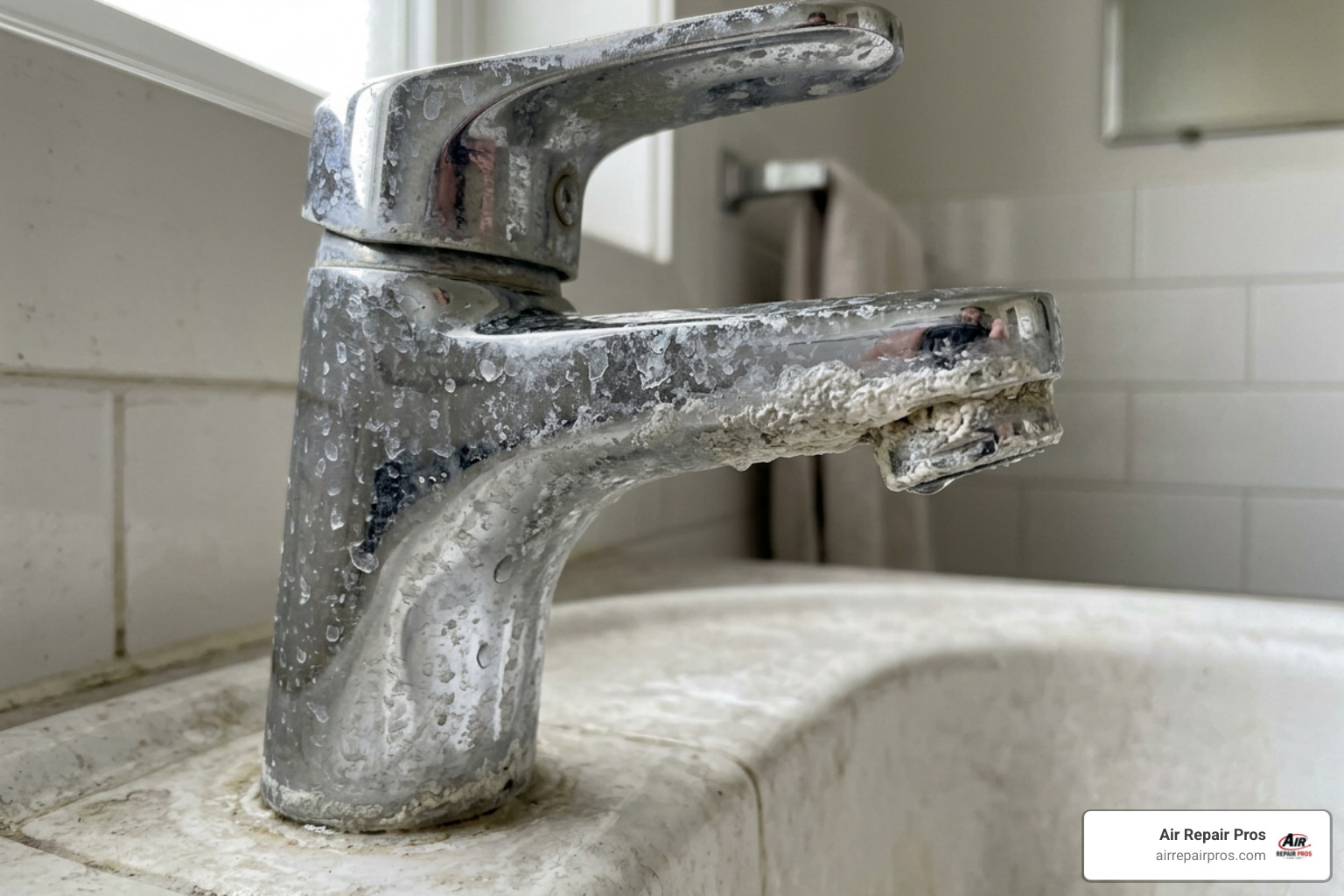
Hard Water Signs: What North Dallas Homeowners Need to Know
Hard water signs are easy to miss at first, but they show up all over your home, from your faucets and drains to your skin and appliances. Up to 85% of American homes deal with hard water, and North Dallas is no exception. The mineral-rich groundwater in this region means scale buildup and clogged drains are common, everyday problems.
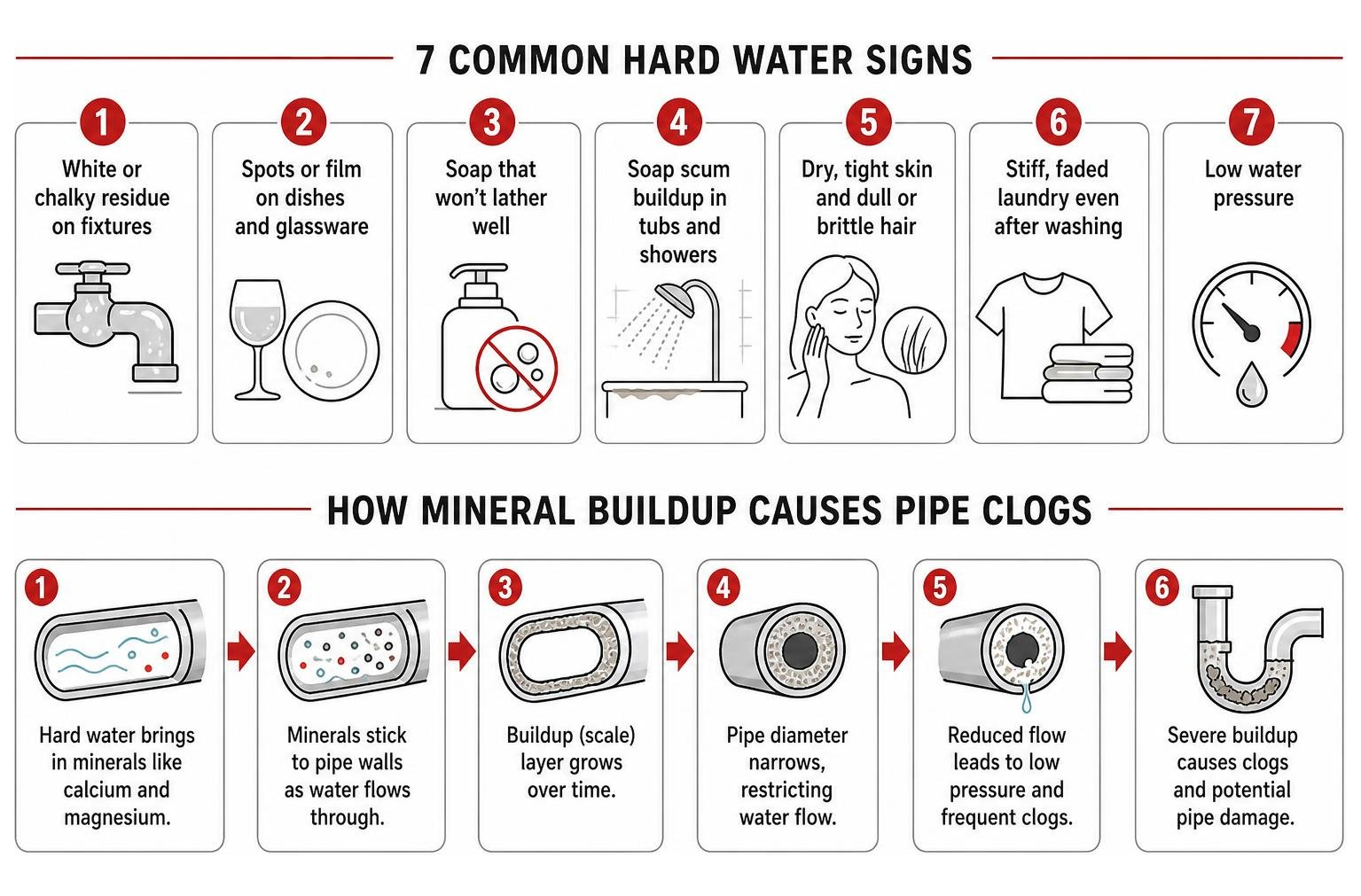
Here are the most common hard water signs to look for:
- White or chalky residue on faucets, showerheads, and fixtures
- Spots or film on dishes and glassware after washing
- Soap that won’t lather well in the sink or shower
- Soap scum buildup in tubs and on shower walls
- Dry, tight skin and dull or brittle hair after bathing
- Stiff, faded laundry even after a full wash cycle
- Low water pressure caused by mineral buildup inside pipes
- Appliances wearing out faster than they should
- Strange taste or smell in your tap water
- Hard-to-clean stains in your toilet bowl or bathtub
Hard water forms when groundwater travels through underground rock, picking up calcium and magnesium along the way. Those minerals don’t just disappear when the water reaches your home. They deposit inside your pipes, on your fixtures, and inside your appliances, building up over time until you have a real problem on your hands.
The good news is that once you know what to look for, you can act before the damage gets serious. Left untreated, hard water can shorten the life of your water heater, clog your pipes, and cost you significantly more in repairs and energy bills than you’d expect.
Understanding the Connection: How Hard Water Signs Point to Clogged Drains
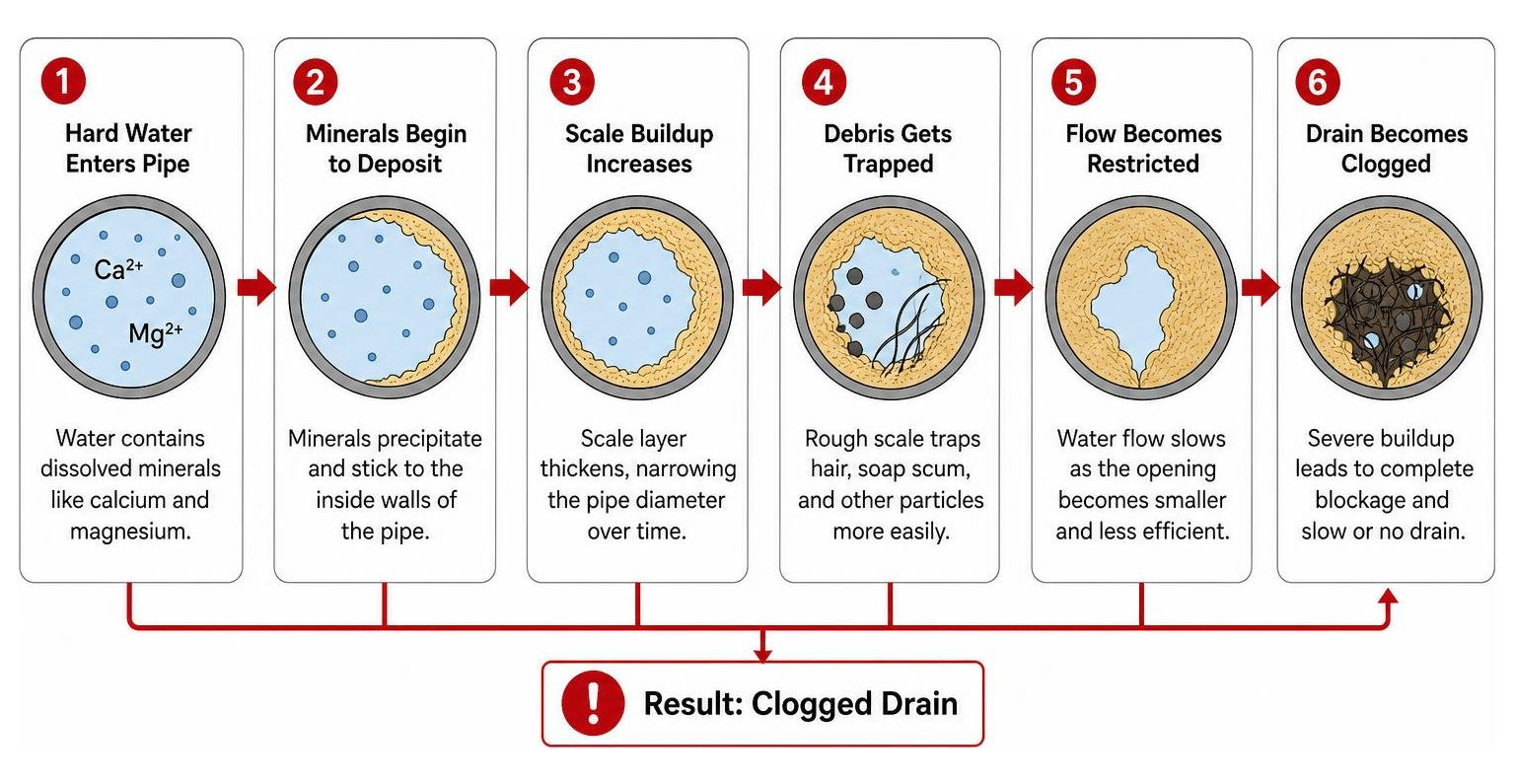
Many homeowners do not realize that the annoying white spots on their wine glasses are directly connected to the slow-clearing drains in their bathrooms. When hard water flows through your plumbing system, it carries dissolved calcium and magnesium ions. As water temperature changes or as water evaporates, these dissolved minerals precipitate out of the liquid state and solidify. This process creates a rock-hard layer of mineral scale along the inner walls of your pipes.
Over time, this scale buildup acts like cholesterol in an artery. The continuous accumulation constricts the path available for water flow, forcing your plumbing system to work much harder to move waste. This constriction is a primary driver of chronic drain clogs. The rough, chalky texture of mineral scale grabs onto hair, soap scum, food particles, and toilet paper. What would normally slide easily through a clean pipe becomes trapped on the mineral deposits, forming stubborn blockages.
If you ignore these early warnings, the internal pipe diameter will continue to shrink. Eventually, you may face complete blockages or localized pressure spikes that damage your plumbing joints. To prevent catastrophic backups, homeowners should address the root mineral issues and schedule pipe repair services when scale, pressure changes, or recurring clogs point to deeper plumbing trouble. Understanding how to tell if you have hard water and why it matters is the first step toward protecting your home from hidden, expensive plumbing problems.
The Top Hard Water Signs in Your Home’s Plumbing System
The plumbing system is the backbone of your home, and it is often the first area to exhibit undeniable proof of high mineral content. Because your plumbing is largely hidden behind walls and under floorboards, the damage can accumulate silently for years. When minerals accumulate inside water lines, they do not just slow down your drains. They also alter the pressure dynamics of your entire household.
As scale narrows the path inside your pipes, you will notice a gradual drop in water pressure. A shower that once felt powerful may turn into a weak trickle. This drop in water pressure is not just an inconvenience. It can also mask underlying leaks. When pipes are choked with scale, joint stress increases, which can lead to hidden pinhole leaks. Scheduling professional leak detection is crucial if you suspect that mineral-induced pressure changes have compromised your plumbing integrity.
Recognizing Visual Hard Water Signs on Fixtures
The most obvious visual indicators of hard water are the unsightly deposits left behind on your plumbing fixtures. When water evaporates from a faucet or showerhead, it leaves behind a white, chalky residue known as limescale. This crusty buildup is primarily composed of calcium carbonate, and it loves to collect on faucet aerators, showerhead spray holes, and drain rims.
As this residue grows, it blocks the tiny holes in your showerhead, causing water to shoot out at odd angles or stop flowing entirely. When hard water mixes with soap, the calcium and magnesium bind with the soap molecules to create an insoluble curd. This curd is the sticky, grey soap scum that coats your shower walls, glass doors, and bathtubs. It acts as a magnet for dirt and bacteria, turning your bathroom cleaning routine into a constant uphill battle and warning you that mineral buildup may already be affecting your fixtures.
How Hard Water Signs Affect Your Appliances and Water Lines
Your water-using appliances, such as washing machines, dishwashers, and water heaters, bear the brunt of hard water damage. When mineral-rich water is heated, the rate of scale precipitation increases dramatically. This makes your water heater the most vulnerable appliance in your home.
Inside a water heater, scale settles directly onto the heating elements or accumulates at the bottom of the tank. This mineral barrier acts as an insulator, preventing the heating elements from warming the water efficiently. According to industrial studies, even a thin layer of scale can reduce a water heater’s energy efficiency significantly, forcing the system to run longer and hotter to achieve the desired temperature. This extra thermal stress causes the tank metal to fatigue, leading to premature tank failure and the need for expert water line repair or full water line replacement. Washing machines and dishwashers suffer a similar fate, as scale clogs internal valves, ruins heating coils, and causes internal seals to leak, shortening their operational lifespans by up to 30 percent.
If scale has started affecting multiple fixtures or appliances, water line repair can help restore dependable flow before the damage spreads. In older North Dallas homes, severe buildup may also make water line replacement the better long-term option when pipes are too restricted or deteriorated to repair reliably.
Homeowners dealing with recurring backups should also pay attention to clogged drain causes, because hard water scale often works alongside soap residue, hair, and debris. When pressure changes become severe or a pipe fails unexpectedly, knowing burst pipe what to do can help you act quickly while waiting for a professional team to arrive.
The Impact on Skin, Hair, and Laundry
Hard water does not just damage metal and plastic. It also has a noticeable impact on your body and your fabrics. When you bathe in mineral-heavy water, the calcium and magnesium prevent soap and shampoo from lathering properly. Instead of a rich, cleansing foam, you get a thin, sticky film that is incredibly difficult to rinse away.
This soap residue stays on your skin, clogging your pores and stripping away the natural oils that keep your skin hydrated. The resulting dermatological effects include chronic dry skin, persistent itchiness, and irritated skin barriers. For residents in North Dallas, including those in Plano, TX and McKinney, TX, this mineral film can worsen skin conditions like eczema and psoriasis, particularly in young children.
Your hair suffers in the exact same way. The mineral buildup coats each hair strand, preventing moisture from penetrating the hair shaft. This leaves your hair feeling dry, straw-like, brittle, and difficult to style. Color-treated hair will fade much faster, and your scalp may become flaky and dry.
In the laundry room, those same minerals prevent detergents from pulling dirt out of fabrics. Instead, the dirt and mineral particles get trapped inside the weave of your clothing, towels, and sheets. The result is stiff laundry that feels scratchy to the touch, whites that look dingy or grey, and colorful clothes that fade long before their time.
What Works and What Doesn’t for Clearing Mineral-Clogged Drains
When faced with a slow-clearing drain, many homeowners instinctively reach for quick, do-it-yourself solutions. However, dealing with mineral-based clogs requires a different approach than dealing with simple organic blockages like hair or grease.
Many online guides recommend using a mixture of vinegar and baking soda to clear drains. While vinegar is mildly acidic and can dissolve small amounts of surface calcium carbonate, this chemical reaction is rarely strong enough to clear a thick, hardened block of scale deep inside your plumbing. The foaming action of baking soda and vinegar looks impressive, but it lacks the pressure and chemical strength needed to scour constricted pipe walls.
Even worse are commercial chemical drain cleaners. These liquid products contain highly corrosive acids or bases designed to dissolve organic matter. Unfortunately, they generate extreme heat inside your pipes. This heat can soften and deform PVC pipes or accelerate corrosion in older metal pipes, leading to leaks. Additionally, these chemicals are highly toxic, bad for the environment, and present a serious safety hazard to anyone working on the plumbing later.
For real, long-term relief from mineral-clogged drains, professional plumbing intervention is required. Professional plumbers utilize advanced methods like hydro-jetting, which uses high-pressure water streams to safely blast away rock-hard scale deposits without damaging your pipes. If you experience a sudden, complete backup due to scale accumulation, contacting an emergency plumbing service is the safest way to protect your home.
| Method | How It Works | Pros | Cons & Risks |
|---|---|---|---|
| Vinegar & Baking Soda | Mild acid-base reaction designed to loosen surface debris. | Safe, cheap, and environmentally friendly. | Cannot dissolve heavy, hardened mineral scale deep in pipes. |
| Chemical Cleaners | Corrosive chemicals designed to melt organic blockages. | Cheap and easily available at local stores. | Highly toxic, damages PVC and metal pipes, and poses severe burn risks. |
| Professional Snaking | Physical cable clears a path through the blockage. | Highly effective at clearing immediate organic clogs. | Does not completely remove mineral scale from pipe walls. |
| Hydro-Jetting | High-pressure water blasts away scale and debris. | Restores pipes to like-new condition; completely safe for sound pipes. | Requires professional equipment and trained technicians. |
Long-Term Solutions: Water Softeners and Filtration Systems
Clearing a clogged drain is a temporary fix if your water supply remains highly mineralized. To truly protect your home, plumbing, and appliances, you must address the water quality at its source. This is where whole-house water treatment systems become invaluable.
The most effective way to eliminate hard water is by installing a traditional, salt-based water softener. These systems utilize a process called ion exchange. Inside the softener tank, water passes through a bed of resin beads coated with sodium or potassium ions. As the hard water flows through, the resin beads attract and trap the heavy calcium and magnesium ions, releasing a tiny, harmless amount of sodium or potassium in their place. This physically removes the hardness minerals from your water, ensuring that scale cannot form anywhere in your home.
For homeowners who prefer a low-maintenance alternative, salt-free water conditioners are an option. Rather than removing the minerals, these systems use template-assisted crystallization to alter the physical structure of the calcium and magnesium. This prevents the minerals from binding to surfaces and forming scale, though it does not provide the slick, lather-rich feel of traditionally softened water.
Choosing the right system depends on your specific water chemistry, household size, and plumbing setup. Investing in high-quality whole house water softeners and professional water filtration installation is the single best way to secure your plumbing system’s future.
Frequently Asked Questions About Hard Water and Clogged Drains
What is hard water and what minerals cause it?
Hard water is water that contains high concentrations of dissolved minerals, specifically calcium and magnesium. It forms naturally when groundwater filters through geological rock formations like limestone, chalk, and gypsum, dissolving these minerals along the way before entering municipal or private well systems.
Can hard water cause my drains to clog?
Yes. Over time, the dissolved minerals in hard water precipitate out and attach to the inner walls of your pipes. This creates a hard, chalky mineral scale that narrows the pipe diameter, restricts water flow, and creates a rough surface that easily traps hair, soap scum, and other waste, leading to frequent clogs.
How does hard water affect my skin and hair?
Hard water reacts with soap to form an insoluble residue or film. This film remains on your skin and hair after washing, stripping away natural moisture, clogging pores, and leaving your skin feeling dry and itchy. It also coats your hair, making it feel dry, brittle, flat, and difficult to manage.
What are the most common signs of hard water in a home?
The most common indicators include white, crusty limescale deposits on faucets and showerheads, cloudy spots on glassware, a stubborn ring of soap scum in your bathtub, stiff or faded laundry, low water pressure, and skin or hair that feels dry and sticky after a shower.
How does hard water impact household appliances?
Hard water causes rapid mineral scale buildup on the heating elements of water heaters, washing machines, and dishwashers. This scale acts as an insulator, forcing the appliances to work harder, consume more energy, and wear out prematurely, often cutting their operational lifespans by up to 30%.
Can I test for hard water at home?
Yes. A simple DIY test involves filling a clean, clear plastic bottle halfway with tap water, adding a few drops of liquid dish soap, and shaking it vigorously. If the water looks cloudy with very few suds, you likely have hard water. For exact mineral measurements, you can purchase paper test strips or request a professional water analysis.
Does boiling water remove its hardness?
Boiling only removes temporary hardness, which is caused by dissolved calcium bicarbonate. When boiled, these minerals precipitate out as solid calcium carbonate (often seen as white flakes in your kettle). Boiling does not remove permanent hardness caused by calcium and magnesium sulfates.
What is the difference between a water softener and a water filter?
A water softener specifically targets and removes hardness minerals like calcium and magnesium using ion exchange. A water filter is designed to remove other contaminants, such as sediment, chlorine, heavy metals, pesticides, and bacteria, but it does not physically soften hard water.
Are there any health risks associated with drinking hard water?
No. Drinking hard water is generally safe and does not pose serious health risks. In fact, the calcium and magnesium it contains can contribute slightly to your daily dietary mineral intake. However, very hard water can have a distinct, slightly metallic or chalky taste that some find unappealing.
How often should I have my water lines inspected for scale?
It is highly recommended to schedule a professional plumbing and water line inspection at least once a year. Annual preventative maintenance allows technicians to identify early scale accumulation, flush your water heater to remove sediment, and protect your home from sudden, expensive plumbing failures.
Conclusion
Recognizing hard water signs is essential for maintaining the comfort, efficiency, and safety of your home. From the unsightly chalky buildup on your bathroom fixtures to the hidden scale restricting water flow deep inside your plumbing, hard water is an expensive nuisance that only worsens over time. If you live in Frisco, TX, McKinney, TX, Plano, TX, Little Elm, TX, or Allen, TX, the local mineral-rich groundwater makes your home especially vulnerable to these issues.
Do not wait for a major plumbing emergency or a completely clogged drain to take action. The certified team at Air Repair Pros has provided reliable, high-quality HVAC and residential plumbing solutions across the North Dallas area since 1998. With fully stocked service trucks and experienced, professional technicians, they are ready to help you diagnose your water quality, clear out stubborn scale, and install the right water treatment system for your household. To protect your home’s pipes, appliances, and fixtures, contact our professional water treatment technicians today to schedule a comprehensive water assessment and plumbing inspection.