

Why Catching Slab Leak Signs Early Can Save Your Foundation
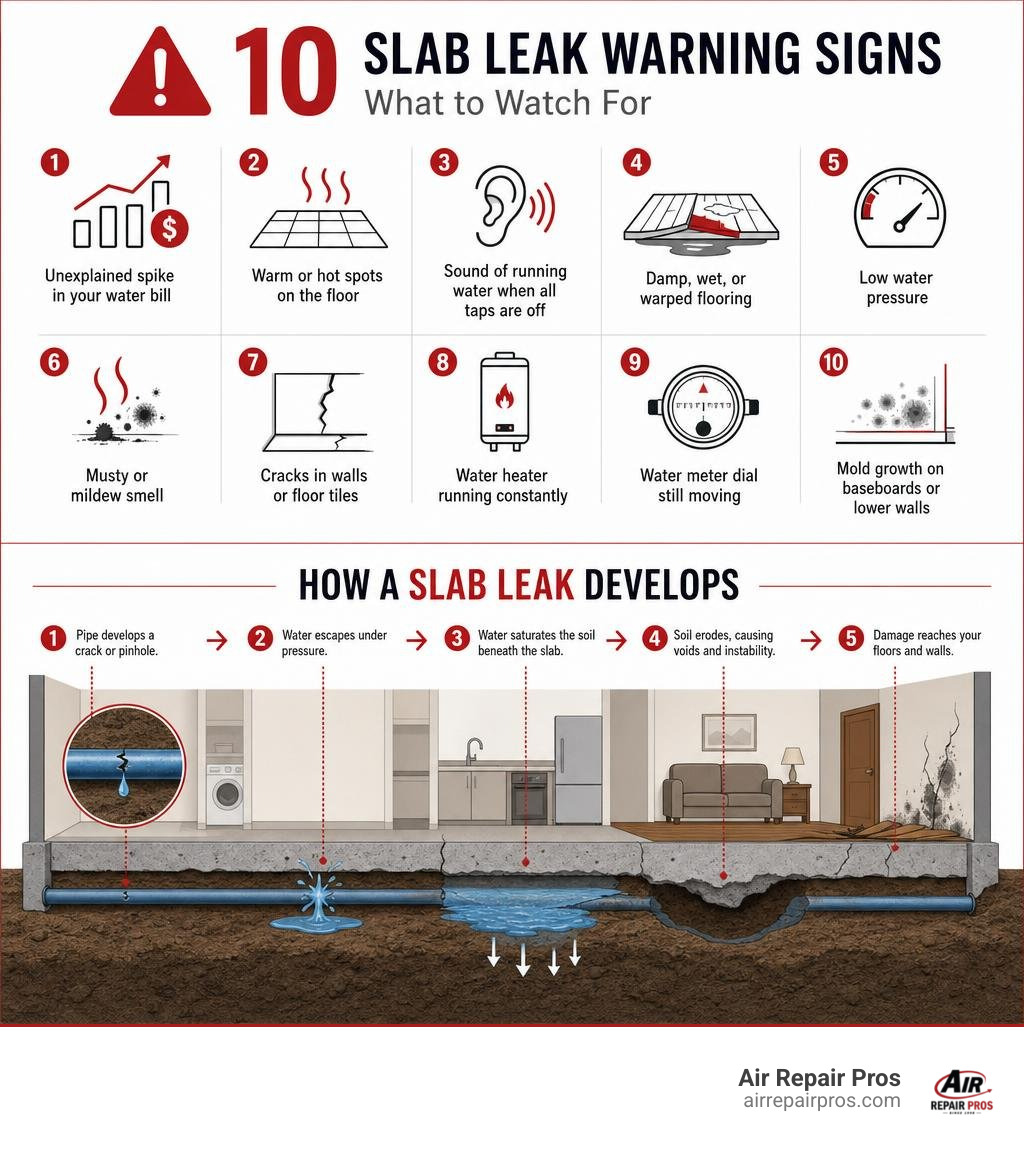
The most common slab leak signs are easy to overlook, often remaining hidden until the damage is already done. Here is a quick look at what to watch for:
Top slab leak signs at a glance:
- Unexplained spike in your water bill: a substantial jump with no change in usage
- Warm or hot spots on the floor, especially on tile or hardwood
- Sound of running water when all taps are off
- Damp, wet, or warped flooring such as carpet, vinyl, or hardwood
- Low water pressure throughout the house
- Musty or mildew smell at floor level
- Cracks in walls or floor tiles, especially near door frames
- Water heater running constantly with no clear reason
- Water meter dial still moving when every fixture is off
- Mold growth on baseboards or lower walls
If you spotted two or more of those, keep reading.
A slab leak is a break or pinhole in a pressurized water pipe running beneath your home’s concrete foundation. The water has nowhere to go. It soaks into the soil, erodes the ground under your slab, and quietly works its way up through your floors, often remaining undetected for months before a homeowner notices anything wrong.
What makes this especially serious for North Dallas homeowners is the soil. The expansive clay common across Frisco, TX, McKinney, TX, and Plano, TX shrinks and swells with every rain cycle. That constant movement puts enormous stress on the pipes embedded in your foundation. Combine that with aging copper pipes and high municipal water pressure, and slab leaks become a genuine risk instead of a rare occurrence.
The financial stakes are real. A small pinhole releasing just one gallon per hour adds up to 720 gallons per month saturating the soil beneath your foundation. According to the EPA WaterSense program, hidden household leaks can waste an incredible amount of water nationwide every year. Left unaddressed for six to twelve months, what might have been a straightforward repair can escalate into a much larger and more expensive problem involving flooring, drywall, mold remediation, and potentially the foundation itself.
The good news: caught early, a slab leak is a manageable plumbing repair. The key is knowing what to look for.
What Is a Slab Leak and Why Is It So Dangerous?
To understand why a slab leak is such a threat, you first have to look at how modern homes in North Dallas are constructed. Most houses in Frisco, TX, McKinney, TX, and Plano, TX are built on a slab-on-grade foundation. This means a thick concrete slab is poured directly onto the prepared ground, and the home is built on top of it.
Before that concrete is poured, plumbers lay out the main water supply and sewer lines. Once the concrete cures, those pipes are permanently embedded underneath or within the slab itself.
Under normal conditions, this setup works beautifully. However, these are pressurized water lines. They constantly hold water under significant pressure, usually between 40 and 80 pounds per square inch. When one of these pipes develops a pinhole or a crack, water does not just drip; it sprays out under high pressure.
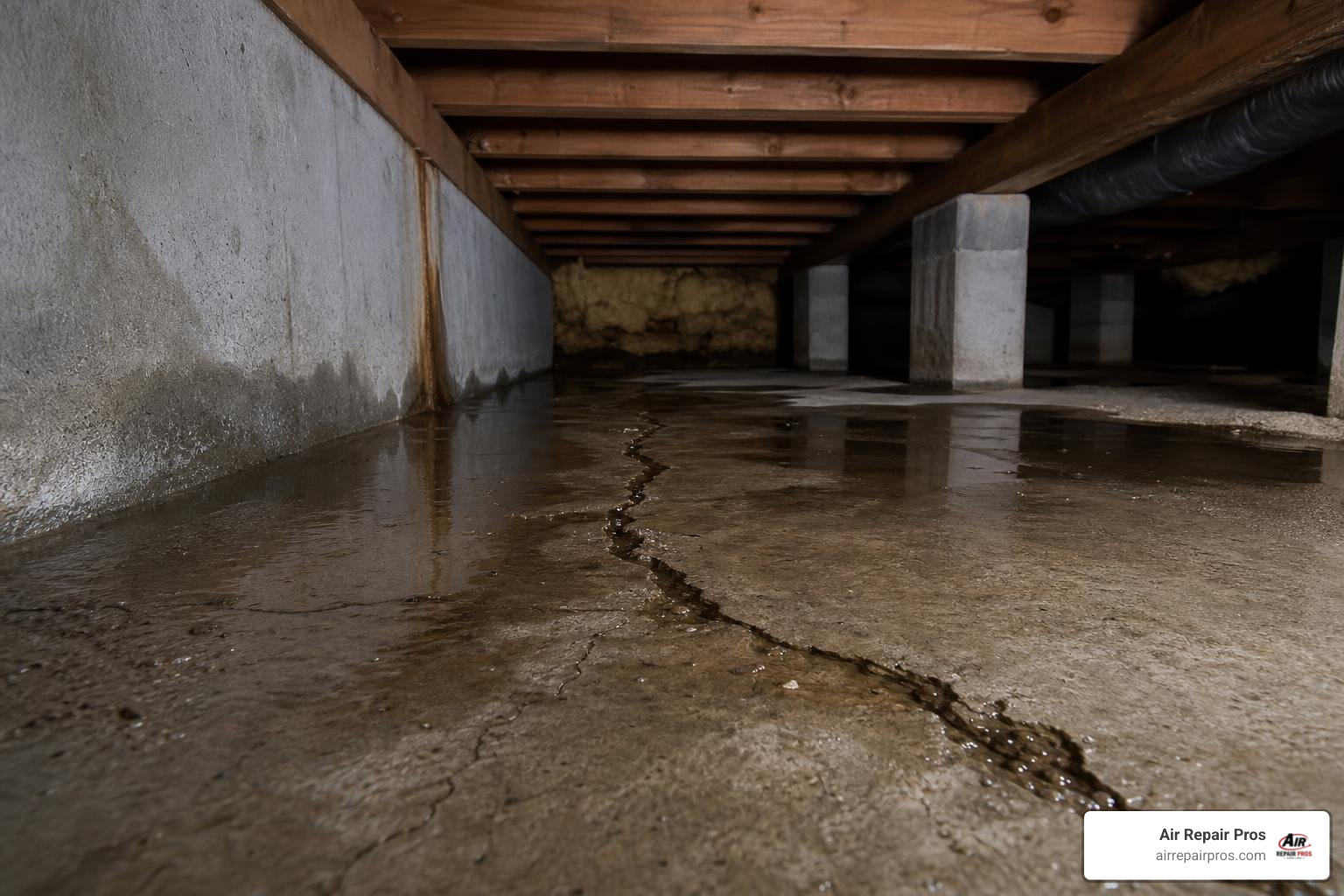
Because the pipe is encased in concrete and soil, the escaping water immediately begins to saturate the ground below. This leads to several progressive stages of structural danger:
- Soil erosion: The constant high-pressure spray washes away the supporting dirt and sand beneath the concrete slab.
- Void creation: As the soil washes away, empty pockets or voids form directly under the foundation.
- Foundation settlement: Without solid ground supporting the heavy concrete, the slab will eventually crack and sink into the empty space.
- Upward water migration: Water will always find the path of least resistance. Eventually, it forces its way up through the porous concrete slab, soaking your floors and baseboards.
This is why a slab leak is not just a simple plumbing issue. It is a direct threat to the structural integrity of your home. Homeowners who want a broader look at residential plumbing systems, water supply lines, and repair planning can use Air Repair Pros’ complete guide to plumbing services in Dallas, TX as a helpful starting point.
For homes already showing signs of hidden moisture, Air Repair Pros’ slab leak repair service explains how trained technicians locate under-slab leaks and recommend repair options without unnecessary disruption.
Red Flags: The Most Common Slab Leak Signs
Because slab leaks happen entirely out of sight, you have to rely on secondary clues to spot them. Many homeowners ignore these early red flags, assuming they are minor, unrelated issues. However, recognizing the early slab leak signs can mean the difference between a quick pipe fix and major structural restoration.
Here are the most common red flags to watch for:
- Sudden water bill spikes: If your water bill jumps significantly in a single month without any changes in your household habits, a leak is likely. A moderate under-slab leak can waste thousands of gallons of water before it ever shows up on your floor.
- The sound of running water: If you hear a faint, constant hissing, rushing, or trickling sound behind your walls or beneath your floors when every faucet is shut off, water is escaping somewhere.
- Low water pressure: A continuous leak bleeds pressure from your plumbing system. If your showers suddenly feel weak or your washing machine takes twice as long to fill, the pressure may be escaping under your foundation.
- Musty odors and mold: Water soaking into your concrete slab creates a perfect environment for mold and mildew. If you notice a damp, earthy smell near the floorboards, or if you see dark spots appearing on your carpets or drywall, mold is already growing.
- Cracked tiles and wall fractures: As the soil shifts and the slab settles, it puts stress on the structure above. You may notice cracks appearing in your floor tiles or drywall, particularly around interior door frames.
Additionally, municipal water quality can play a major role in pipe degradation. Hard water contains high levels of minerals that can corrode copper pipes from the inside out, making them much more susceptible to developing leaks. For homeowners who see white buildup on fixtures, dry skin after showers, or recurring appliance issues, Air Repair Pros’ article on the signs of hard water explains how mineral buildup can affect plumbing throughout the home.
Hot Water Line Slab Leak Signs
Slab leaks on the hot water side of your plumbing are actually more common and usually much easier to detect than cold water leaks. This is because hot water pipes expand and contract as temperature changes, causing them to rub against the surrounding concrete and wear down faster.
The most obvious sign of a hot water slab leak is a warm or hot spot on your floor. If you walk barefoot across a tile, vinyl, or hardwood floor and suddenly feel a localized warm zone, you are likely standing directly over a leaking hot water pipe.
Another major indicator is a constantly running water heater. Because the hot water line is leaking 24/7, your water heater has to work nonstop to keep up with the demand. This not only spikes your gas or electric bills but also puts immense strain on the appliance. If the appliance itself is leaking or showing related symptoms, Air Repair Pros’ water heater leaking guide can help homeowners separate water heater trouble from a possible under-slab leak.
Furthermore, the excess moisture rising from a slab leak can dramatically increase indoor humidity levels. This puts a heavy burden on your HVAC system, forcing your AC or A/C to run longer cycles to dehumidify the air, which can lead to premature wear on your cooling equipment.
Cold Water Line Slab Leak Signs
Cold water slab leaks are much sneakier. Because the water matches the ambient temperature of the ground, you will not get the warning of a warm spot on your floor.
Instead, cold water leaks are usually identified by physical dampness. You might notice carpet fibers that feel perpetually damp, hardwood planks that begin to cup or warp, or vinyl flooring that starts to bubble and lift.
Because cold water leaks are harder to feel, they often run for longer periods before detection, leading to severe soil saturation beneath the home. This makes regular water meter monitoring incredibly important.
How to Confirm a Leak Using the Water Meter Test
If you have noticed one or two of the red flags mentioned above, you do not have to guess. You can perform a simple, non-invasive DIY diagnostic test using your home’s water meter to confirm whether you have an active leak.
Follow these steps to run the water meter test:
- Turn off all water: Ensure every water-using appliance and fixture in your home is completely off. This includes faucets, showers, toilets, washing machines, dishwashers, and outdoor sprinklers.
- Locate your water meter: In North Dallas communities like Frisco, TX or McKinney, TX, your water meter is typically located near the curb in a concrete or plastic box embedded in the ground. You may need a meter key or a large screwdriver to carefully lift the lid.
- Observe the leak indicator: Look at the face of your water meter. Most modern meters have a small, triangular dial, a tiny wheel, or a digital flow indicator. If this indicator is spinning or showing active water usage while everything inside is off, you have a leak.
- Perform the two-hour test: If the indicator is not visibly moving, write down the exact numbers on the meter register. Leave all water off for exactly two hours, then check the register again. If the numbers have changed, you have a slow, hidden leak.
- Isolate the water heater: To determine if the leak is on the hot or cold side, locate the cold water shut-off valve on top of your water heater and close it. Check the water meter again. If the meter stops moving, the leak is on your hot water line. If it keeps moving, the leak is on the cold water side.
Safety warning: When locating and opening your outdoor meter box, be cautious of spiders, wasps, or snakes that may be hiding inside. Additionally, do not attempt to force a rusted or stuck main shut-off valve, as overtightening can cause the valve to break and create an immediate flooding emergency.
If the test points to an active leak, Air Repair Pros’ residential plumbing services can help homeowners in Frisco, TX, McKinney, TX, Plano, TX, Little Elm, TX, and Allen, TX move from leak confirmation to professional diagnosis.
What Causes Slab Leaks in Texas Foundations?
Slab leaks do not happen at random. They are the result of specific geological, chemical, and physical forces working against your home’s plumbing system over time. In North Texas, these forces are particularly aggressive.
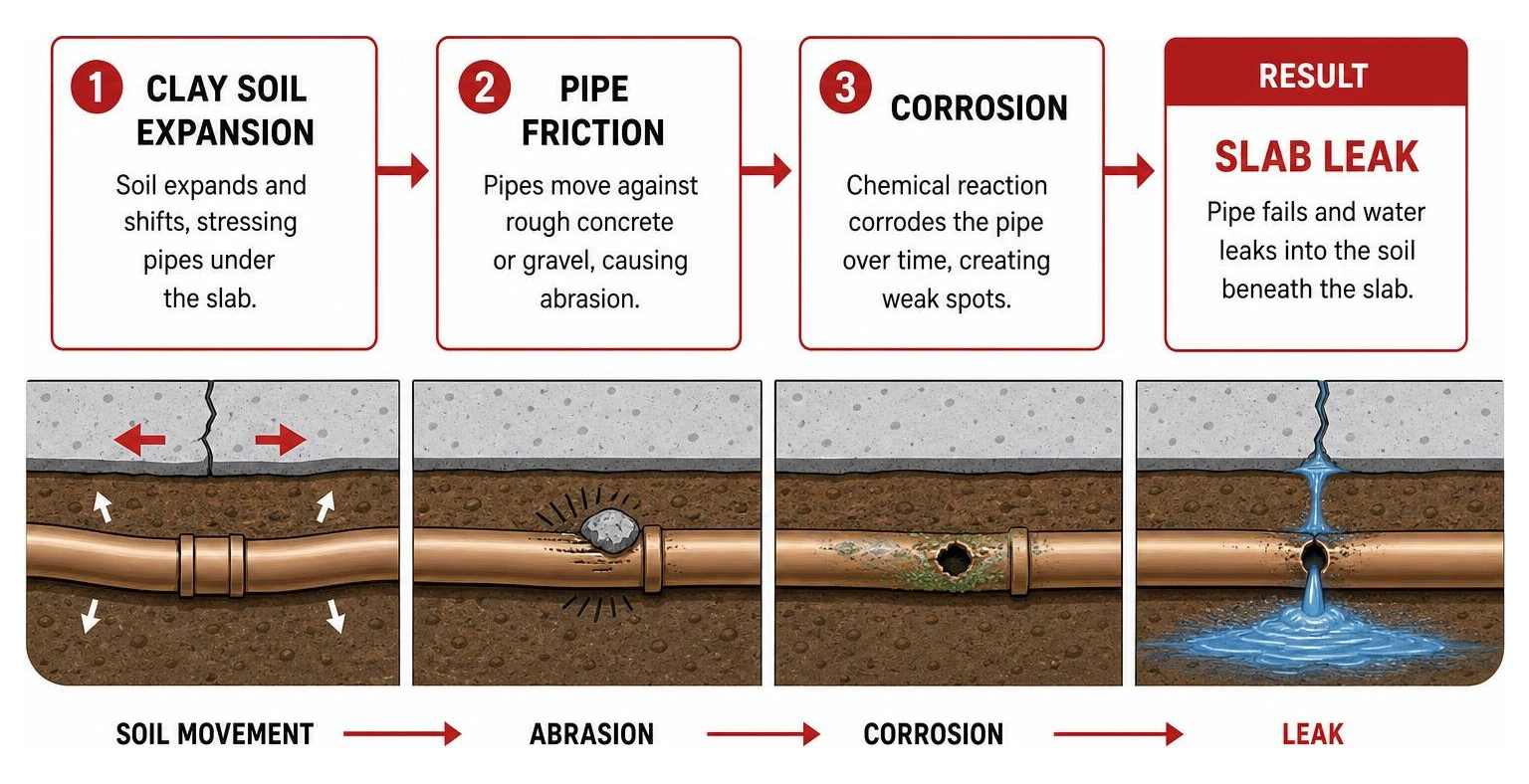
The primary causes of slab leaks include:
- Expansive clay soil: The soil in areas like Frisco, TX, McKinney, TX, and Allen, TX contains high concentrations of clay. This soil acts like a sponge, expanding dramatically when wet and shrinking during dry summer spells. This constant shifting puts immense physical stress on the concrete slab and the pipes buried within it, often causing them to bend, shear, or crack.
- Friction and abrasion: As water flows through your pipes, the metal naturally expands and contracts. If the pipes were installed directly against rough concrete or gravel without proper protective sleeving, this constant movement causes the pipe to rub against the abrasive material, eventually wearing a hole through the metal.
- Copper pipe corrosion: Many homes built before the early 2000s utilize copper plumbing beneath the slab. Over time, the chemical reaction between the copper, the surrounding soil, and minerals in the water supply can cause the metal to corrode, leading to tiny pinhole leaks.
- High water pressure: Municipal water systems often deliver water at very high pressures to reach every home in a neighborhood. If your home lacks a properly functioning pressure regulator, this excess pressure puts constant, unnecessary stress on your under-slab plumbing.
- Poor installation: If the pipes were bent improperly during construction, or if the joints were not soldered correctly, these weak points are highly likely to fail as the home ages.
Understanding how underground shifting impacts your utilities is essential for long-term home maintenance. For instance, the same soil shifts that damage water supply lines can also affect waste systems, which is why Air Repair Pros’ Allen sewer line repair tips are useful for homeowners dealing with recurring drain issues, soggy yard areas, or foundation-adjacent plumbing concerns.
Professional Slab Leak Detection and Repair Options
If your water meter test confirms a leak, the next step is calling in a professional. Years ago, finding a slab leak meant playing a guessing game, which involved jackhammering through random sections of your concrete floor until the plumber found the wet spot.
Fortunately, modern technology has made this process much less invasive. Today, plumbing specialists use advanced diagnostic tools to pinpoint the exact location of the leak within inches before any concrete is disturbed.
These professional detection methods include:
- Acoustic listening devices: Highly sensitive microphones and amplifiers that allow technicians to listen through concrete and flooring to hear the distinct hiss of a pressurized leak.
- Thermal imaging cameras: Infrared cameras that detect subtle temperature differences on the floor surface, mapping out the exact path of a leaking hot water line.
- Pressure testing: Systematically isolating and pressure-testing different zones of your plumbing to confirm which line is leaking.
Once the leak is located, you have several repair options depending on the age of your plumbing, the location of the leak, and your budget.
| Repair Method | How It Works | Best Used For | Key Advantage |
|---|---|---|---|
| Spot repair | Cutting a small hole in the concrete to repair the specific broken section of pipe. | Isolated leaks in newer plumbing systems. | Minimizes changes to the rest of the plumbing layout. |
| Pipe rerouting | Abandoning the leaking under-slab pipe and running a new line through the walls or attic. | Older copper systems or hard-to-reach leaks. | Avoids cutting into your concrete slab entirely. |
| Epoxy lining | Applying a durable epoxy coating to the inside of the existing pipe to seal leaks. | Straight pipe sections with minor pinholes. | A trenchless, non-invasive repair option. |
| Whole-home repiping | Replacing all under-slab pipes with modern, flexible PEX piping. | Homes with multiple leaks or severe corrosion. | A permanent solution that prevents all future slab leaks. |
Selecting the right repair method depends heavily on your home’s unique layout. Air Repair Pros’ beginner’s guide to Dallas slab leak repair walks homeowners through the repair process, from detection and access decisions to choosing the least disruptive long-term fix.
Homeowners Insurance and the Cost of Delay
One of the first questions homeowners ask when facing a slab leak is whether the repair is covered by their homeowners insurance. The answer is a bit complicated and depends on your specific policy.
Under a standard Texas HO-3 insurance policy, the coverage is usually split:
- What is typically covered: The insurance company will generally pay for the tear-out costs to access the leak, such as cutting the concrete, and the restoration costs to repair the water damage to your flooring, drywall, and cabinets. They may also cover mold remediation if the leak was sudden and unexpected.
- What is typically excluded: The actual plumbing repair of the pipe itself is usually considered basic home maintenance and is not covered. Additionally, standard policies almost always exclude foundation repair costs resulting from long-term, neglected leaks.
This is where the cost-of-delay multiplier comes into play. If you spot the slab leak signs and act immediately, you can resolve the issue with a straightforward, professional repair.
However, if you ignore the signs for six to twelve months, the escaping water can cause severe foundation settlement, extensive mold growth, and major structural damage. What could have been a manageable project can quickly escalate into a massive, multi-week restoration process costing many times more, much of which may not be covered by insurance.
If you are dealing with sudden water damage and need to protect your home before a technician arrives, Air Repair Pros’ 24/7 plumbing emergency steps outline practical ways to limit damage, shut off water safely, and document the issue for your insurer.
Frequently Asked Questions About Slab Leaks
What is a slab leak?
A slab leak is a leak that develops in a pressurized fresh water supply line or a sewer line running underneath or directly through your home’s concrete slab foundation.
How do I know if I have a slab leak or a regular leak?
Regular leaks usually occur in highly visible areas, such as under sinks, around toilets, or dripping from ceilings. Slab leaks are hidden beneath the concrete, and are identified by symptoms like unexplained water bill spikes, warm spots on the floor, musty floor-level odors, or a constantly spinning water meter when no water is running.
Can a slab leak cause foundation damage?
Yes. The high-pressure water escaping from a slab leak can quickly wash away the supporting soil beneath your foundation. This creates empty pockets or voids, causing the heavy concrete slab to crack, sink, and shift, which can lead to severe structural damage throughout your home.
How do professionals find a leak under concrete?
Modern plumbing specialists use non-invasive electronic detection equipment to pinpoint the exact location of the leak. This includes acoustic listening devices to hear the water escaping, thermal imaging cameras to see heat signatures from hot water leaks, and specialized line tracing equipment.
What is the most common cause of slab leaks?
In North Texas, the most common cause is the highly expansive clay soil, which constantly shifts and puts immense physical stress on buried pipes. Other common causes include copper pipe corrosion from hard water, high water pressure, and friction abrasion against rough concrete.
Is a slab leak a plumbing emergency?
Yes. Because a slab leak runs continuously under constant water pressure, it is wasting thousands of gallons of water and actively eroding the soil supporting your home. It should be addressed as quickly as possible to prevent severe foundation damage and mold growth.
Does homeowners insurance cover slab leak repairs?
Most standard homeowners insurance policies cover the cost of tearing out the concrete to access the leak and repairing the resulting water damage to your home’s interior. However, they typically do not cover the actual cost of repairing the plumbing pipe itself.
Can I live in my house during slab leak repair?
In most cases, yes. If the plumber is performing a pipe reroute or a spot repair, they can usually isolate the leaking line, allowing you to keep water service to the rest of your home. For whole-home repiping, your water may be turned off during the day, but technicians typically restore service each evening.
What is the best repair method for a slab leak?
The best method depends on the age and condition of your plumbing. For newer homes with a single isolated leak, a spot repair is often best. For older homes with aging copper pipes, routing a new line through the attic or walls is usually the safest long-term solution because it avoids cutting into the concrete slab.
How can I prevent slab leaks in my home?
You can reduce the risk of slab leaks by keeping your home’s water pressure regulated below 80 psi, installing a water softener to prevent mineral corrosion if you have hard water, and keeping the soil around your foundation consistently hydrated during hot Texas summers to minimize soil shrinkage.
Conclusion
When it comes to protecting your home, early detection is your absolute best defense. Ignoring the early warning signs of an under-slab leak can quickly transform a straightforward plumbing fix into a major structural headache. By keeping a close eye on your monthly water bills, paying attention to warm spots on your floors, and performing a quick water meter test if you suspect trouble, you can catch a leak before it threatens your home’s foundation.
If you suspect your home has a leak, do not wait for cracks to appear in your walls. Air Repair Pros has been serving homeowners across Frisco, TX, McKinney, TX, Plano, TX, Little Elm, TX, and Allen, TX since 1998. In addition to premier plumbing solutions, the team provides top-tier HVAC, AC, and A/C services to keep your entire home comfortable and efficient year-round.
The team arrives in fully stocked service trucks equipped with the advanced diagnostic tools needed to locate and resolve your plumbing issues quickly and efficiently. With certified technicians ready for 24/7 plumbing emergencies, you can count on a professional, hassle-free experience from start to finish.
To schedule a professional inspection and safeguard your home’s foundation, contact our professional slab leak technicians today.