
What a Water Heater Leaking Means for Your Home (And What to Do Right Now)
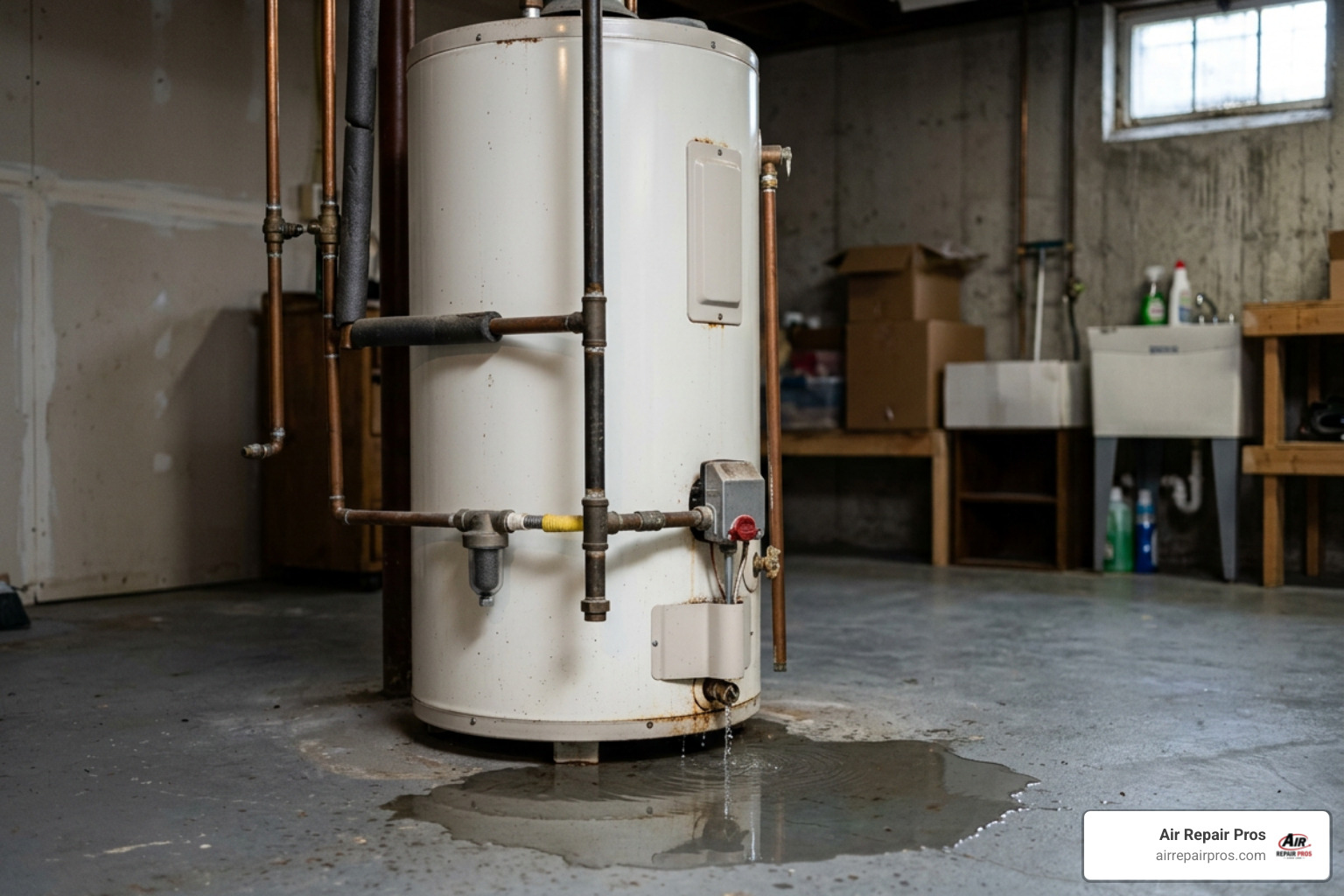
A water heater leaking is one of those problems that can go from minor nuisance to major home emergency faster than most homeowners expect. A standard residential tank holds 40 to 80 gallons of water. If that tank fails suddenly, all of it can end up on your floor in minutes.
The good news: most leaks give you warning signs first. And if you catch one early, you have options.
Here is what to do if your water heater is leaking:
- Turn off the power or gas to the unit immediately
- Shut off the cold water supply valve at the top of the tank
- Do not step in standing water if the unit is electric
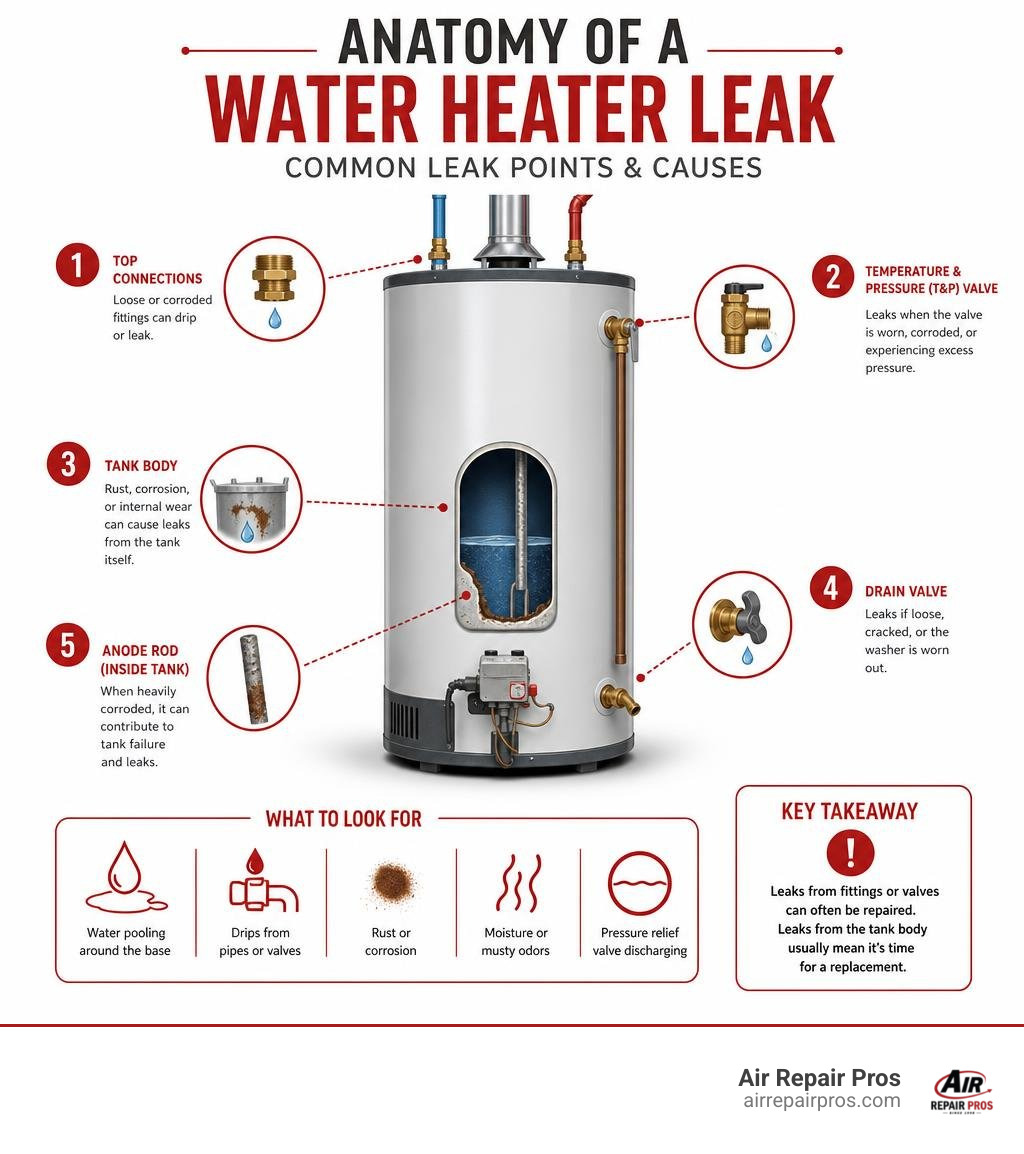
- Find the source of the leak (top connections, drain valve, T&P valve, or tank body)
- Call a licensed plumber if the leak is coming from the tank itself
A leak from a pipe fitting or valve is often repairable. A leak from the tank body almost always means it is time for a replacement.
Water heaters typically last 8 to 12 years. After that, the risk of leaks rises sharply as internal components corrode and wear down. If your unit is approaching or past that range and you are seeing moisture around the base, do not wait. Mold can begin growing within 24 to 48 hours of water exposure, and repair costs from a flooded room can reach into the thousands.
This guide walks you through everything: how to tell if it is a real leak or just condensation, how to safely shut everything down, what is causing the problem, and whether to repair or replace.
Is Your Water Heater Leaking? How to Tell Condensation from a Real Leak
Before you panic and call in a professional plumbing team, it is important to confirm that you actually have a water heater leaking and not just a harmless buildup of condensation. Water heaters can sweat, especially during the humid summer months in North Texas or when a newly installed unit is heating a full tank of cold water for the first time.
Condensation occurs when cold water enters the tank, cooling the metal exterior. When warm, humid air makes contact with this cold metal surface, moisture forms and runs down the side of the tank, pooling on the floor. This is a normal physical process and does not mean your system is broken.
To determine if the water is condensation or an active leak, perform the simple paper towel test. Start by wiping the entire unit dry with a clean cloth. Pay close attention to the area around the base, the pipes at the top, and the valves on the side. Once the unit is completely dry, place dry paper towels under the tank and around the connections.
Check back in an hour or two. If the paper towels remain dry, the moisture was likely just condensation. However, if the paper towels are damp or you see water actively dripping from the connections, you are dealing with a real leak.
Immediate Safety and Shutoff Procedures
When you discover an active water heater leaking in your home, safety must be your absolute first priority. Standing water combined with electrical components or gas lines creates a serious hazard. Never step into a puddle of water near an electric water heater, and do not touch any metal pipes or the tank itself until you are certain the power supply has been completely disconnected.
If the floor is already flooded and the water has reached nearby electrical outlets or the base of an electric water heater, do not attempt to turn off the power at the unit itself. Instead, head straight to your home electrical panel and shut off the dedicated circuit breaker. For gas water heaters, the immediate risk is a gas leak or fire hazard, meaning you must handle the gas control valve with extreme caution. If you smell gas at any point, leave the house immediately and call your local gas utility from a safe outdoor location.
Taking fast action prevents minor issues from escalating into major disasters. If you need immediate assistance with an active plumbing emergency, Air Repair Pros offers water heater repair services to get your system safely evaluated.
Immediate Steps for a Water Heater Leaking in Your Home
Once you have ensured your personal safety, you can focus on protecting your property from water damage. Start by laying down towels, old blankets, or a shallow plastic bin to contain the spreading puddle. Move any cardboard boxes, rugs, tools, or stored household items away from the base of the heater.
Before you begin cleaning up the water, take a moment to document the situation. Use your smartphone to take clear photos and videos of the water heater, the exact areas where water is dripping, the puddle on the floor, and any affected drywall or flooring. This documentation is valuable if you need to file a homeowners insurance claim later. If you want to better understand where tank leaks originate, learning how traditional water heaters store and heat water can help you spot the most likely failure points.
How to Safely Shut Off Water, Gas, and Electricity
Shutting down the system stops the flow of water and removes the energy source that keeps the water hot and pressurized. Follow these specific steps to safely disable your system:
- Turn Off the Power (Electric Units): Go to your main breaker box and locate the circuit breaker labeled for the water heater. Flip it to the “Off” position.
- Turn Off the Gas (Gas Units): Locate the gas control valve on the side of the water heater, usually a red, yellow, or black dial near the bottom. Turn the dial to the “Off” or “Pilot” position. You should also close the manual gas shutoff valve on the incoming gas pipe by turning it perpendicular to the pipe.
- Shut Off the Water Supply: Locate the cold water inlet valve at the top of the water heater. This is typically a gate valve, which has a round wheel handle, or a ball valve, which has a lever handle. Turn the wheel handle clockwise until it stops, or pull the lever handle so it is perpendicular to the pipe.

If the valve at the top of the tank is stuck or corroded, do not force it, as it could break and cause a larger leak. Instead, locate and shut off the main water valve for your entire home.
Common Causes and Warning Signs of Water Heater Failure
Water heaters operate under constant heat and pressure. Over time, this continuous stress takes a toll on the metal tank and its various connections. While traditional tanks are highly susceptible to these issues, homeowners comparing replacement options may also want to learn how tankless water heaters differ in durability, efficiency, and leak risk.
Top Causes of Water Heater Leaks
A water heater leaking can usually be traced back to one of several common culprits:
- Loose Pipe Connections: The cold water inlet and hot water outlet pipes at the top of the tank can loosen over time due to thermal expansion and contraction.
- Faulty Drain Valve: Located at the bottom of the tank, the drain valve is used for flushing sediment. Plastic drain valves are known for becoming brittle, cracking, and leaking. Even brass drain valves can fail to seal properly after being opened.
- Hard Water Corrosion: Hard water contains high levels of minerals like calcium and magnesium. These minerals settle to the bottom of the tank, creating a thick layer of sediment that insulates the water from the burner or heating element. This causes the bottom of the tank to overheat, speeding up the corrosion of the steel shell.
- High Water Pressure: If your home water pressure exceeds 80 psi, it puts excessive stress on the water heater tank and connections, leading to premature leaks.
- Dissipated Anode Rod: The sacrificial anode rod is designed to rust so your tank does not. Once this rod is completely corroded, usually after 3 to 5 years, the water begins attacking the steel walls of the tank itself.
- Cracked Tank: When internal corrosion becomes severe, the steel tank will eventually develop pinholes or cracks, resulting in an irreparable leak.
Warning Signs of Impending Tank Failure
Most water heaters do not fail without warning. If you know what to look and listen for, you can catch a failing system before it leaks. Keep an eye out for these common warning signs:
- Rusty or Discolored Water: If your hot water looks rusty or brown, but your cold water runs clear, it is a strong sign that the inside of your water heater tank is actively corroding.
- Popping or Rumbling Noises: As sediment builds up at the bottom of the tank, water gets trapped underneath the mineral layer. When the burner heats up, this trapped water boils and bubbles through the sediment, creating loud popping, rumbling, or knocking sounds.
- Frequent T&P Valve Drips: If the temperature and pressure relief valve on the side of your tank is constantly dripping, it means the pressure or temperature inside the tank is regularly reaching unsafe levels.
- Age of the Unit: If your water heater is more than 8 to 10 years old, it is on borrowed time. Even if it looks fine on the outside, the internal components are likely reaching the end of their service life.
If your system is displaying these warning signs, it is wise to start planning for the future. Replacing a failing tank before it ruptures can prevent emergency damage, and Air Repair Pros can help homeowners evaluate water heater replacement services before the situation becomes urgent.
Repair vs. Replacement: Making the Right Decision
Deciding whether to repair or replace your leaking water heater depends on the age of the unit, the location of the leak, and the overall condition of the system. While some minor leaks can be fixed with a quick component replacement, others are terminal.
If the leak is coming from the top pipe connections, the T&P valve, or the drain valve, these components can easily be repaired or replaced by a professional. However, if the leak is coming directly from the bottom of the tank or from the seams of the steel shell, the tank is compromised. Because water heater tanks cannot be patched, a tank leak always requires a complete system replacement.
When to Repair vs. Replace Your Water Heater
To make the right choice, consider the following factors:
- The Age Factor: If your water heater is under 6 years old and has a minor leak from a valve or fitting, a repair is highly cost-effective. If the unit is over 10 years old, investing money in repairs is often a temporary fix, as other components are likely to fail soon.
- Repair Costs: Homeowners should request a professional estimate for repairs. If the cost of repairing an older unit is significant, putting those funds toward a modern, energy-efficient replacement is usually the smarter long-term financial decision.
- Energy Efficiency: Modern water heaters are significantly more efficient than older models. Upgrading to a new system, such as an Energy Star certified unit, can help lower your monthly utility bills. You can explore energy-saving guidelines on the U.S. Department of Energy website.
- Household Demand: If your family has grown and you regularly run out of hot water, replacing your old tank with a larger unit or a tankless system is an excellent opportunity to improve your home comfort.
How to Prevent Your Water Heater Leaking with Regular Maintenance
The single best way to avoid the stress of a leaking water heater is to keep up with routine preventative maintenance. By taking care of your system, you can easily extend its lifespan and maintain peak operating efficiency.
First, flush your water heater tank at least once a year. This simple process involves connecting a garden hose to the drain valve and draining the water to remove accumulated sediment. This prevents the bottom of the tank from overheating and corroding. Second, have a professional check your sacrificial anode rod every 3 to 5 years and replace it when it is worn down. This inexpensive task is the most effective way to protect the steel tank from rust.
Third, monitor your home water pressure using a simple pressure gauge. If the pressure exceeds 80 psi, have a plumber install a pressure reducing valve to protect your appliances. Keeping up with water heater maintenance helps reduce corrosion risk, while homes with on-demand systems may need tankless water heater maintenance to prevent scale buildup and performance problems.
Homeowners dealing with repeated plumbing issues should also watch for related signs around the house. If mineral buildup is affecting fixtures, drains, or appliances, symptoms like cloudy spots, residue, and reduced flow can point to broader water quality problems. Understanding the signs your home has hard water can help you connect those clues before they shorten the life of your water heater.
Leaks are not the only plumbing problem that can create hidden damage. Slow drains, recurring backups, or moisture near fixtures may signal a separate issue in your plumbing system. If your water heater leak appears alongside drain problems, it may help to understand why drains keep clogging so you can address the full cause instead of treating one symptom at a time.
The Hidden Risks of Ignoring a Leaking Water Heater
It can be tempting to ignore a tiny drip or a small puddle, especially if you still have plenty of hot water. However, even a minor leak can quickly escalate into a costly nightmare.
Water seeping into your floors, baseboards, and drywall creates the perfect environment for mold and mildew, which can begin growing within 24 to 48 hours of exposure. This presents a serious health risk to your family, particularly those with allergies or respiratory issues. Over time, constant moisture will rot subflooring, ruin drywall, and weaken structural framing.
Furthermore, a small leak is often the precursor to a catastrophic tank failure. If the corroded metal shell gives way entirely, the tank can instantly dump dozens of gallons of water into your home, causing extensive property damage. Additionally, water leaking near electrical components or gas lines creates immediate shock and fire hazards.
Frequently Asked Questions About Leaking Water Heaters
1. Is a leaking water heater an emergency?
Yes. Any active leak should be treated as an urgent issue. Even a small drip can quickly worsen, causing structural damage, mold growth, or a sudden, catastrophic tank failure that releases dozens of gallons of water into your home.
2. Can I still use my water heater if it is leaking?
No, you should not continue using a leaking water heater. Using a damaged unit increases the internal pressure and heat, which can cause the leak to expand rapidly and lead to severe water damage or electrical hazards.
3. Why is my water heater leaking from the bottom?
A leak from the bottom of the tank usually indicates that sediment buildup has caused the inner steel lining to corrode and crack. This type of internal tank damage is irreparable and requires a complete replacement of the unit.
4. How long do water heaters typically last before leaking?
Most conventional tank water heaters last between 8 and 12 years. Regular maintenance, such as annual flushing and timely anode rod replacement, can help extend the lifespan of your unit toward the upper end of this range.
5. Can a leaking water heater explode?
While extremely rare, it is theoretically possible if the temperature and pressure relief (T&P) valve is blocked, capped, or fails completely while the unit continues to heat. A dripping T&P valve is a warning sign that the system needs professional attention.
6. How often should I replace my water heater anode rod?
You should have your sacrificial anode rod inspected every 3 years and replaced every 3 to 5 years. Replacing this rod before it completely dissolves is the most effective way to prevent your steel tank from rusting.
7. Why is water dripping from my temperature and pressure (T&P) relief valve?
Water dripping from the T&P valve usually means the temperature or pressure inside the tank is too high, or the valve itself has failed. High home water pressure or thermal expansion are common causes of this issue.
8. Does homeowners insurance cover a leaking water heater?
In most cases, homeowners insurance will cover the cost of repairing the resulting water damage to your floors, walls, and personal belongings. However, it typically does not cover the cost of replacing the water heater itself, as appliance failure is usually considered a maintenance issue.
9. How does hard water affect water heater leaks?
Hard water contains high levels of dissolved minerals that settle at the bottom of the tank as sediment. This buildup insulates the water from the heating source, causing the tank to overheat, crack, and leak prematurely.
10. Can I patch a leaking water heater tank with epoxy?
No. You should never attempt to patch a compromised water heater tank with epoxy, sealant, or tape. The extreme heat and pressure inside the tank will quickly cause any temporary patch to fail, leading to sudden water damage.
Conclusion
A leaking water heater is a serious issue that requires immediate attention to protect your home from extensive water damage and costly structural repairs. Whether you are dealing with a minor connection issue or a terminal tank failure, acting quickly is the key to minimizing damage and restoring your home comfort.
When you need reliable assistance, the professional plumbing team at Air Repair Pros is here to help. Serving Frisco, TX, McKinney, TX, Plano, TX, Little Elm, TX, and Allen, TX since 1998, Air Repair Pros provides full-scale residential plumbing solutions across the North Dallas area. With fully stocked trucks carrying over 85% of the parts needed for one-trip service, certified technicians, and 24/7 emergency support, the team resolves plumbing issues quickly and safely.
Do not let a small drip turn into a major flood. For professional diagnostics, system repairs, or a seamless new installation, contact our professional water heater specialists today to schedule your service.