

Why Recognizing Refrigerant Leak Signs Early Can Save Your AC (and Your Health)
Refrigerant leak signs are something no Texas homeowner wants to deal with in the middle of a scorching North Dallas summer. When temperatures outside climb past the triple-digit mark, your home relies entirely on your cooling system to remain safe and livable. But here is the reality: leaks can develop quietly, without any dramatic warning, and by the time your AC stops cooling entirely, the damage to your system may already be severe and costly to repair.
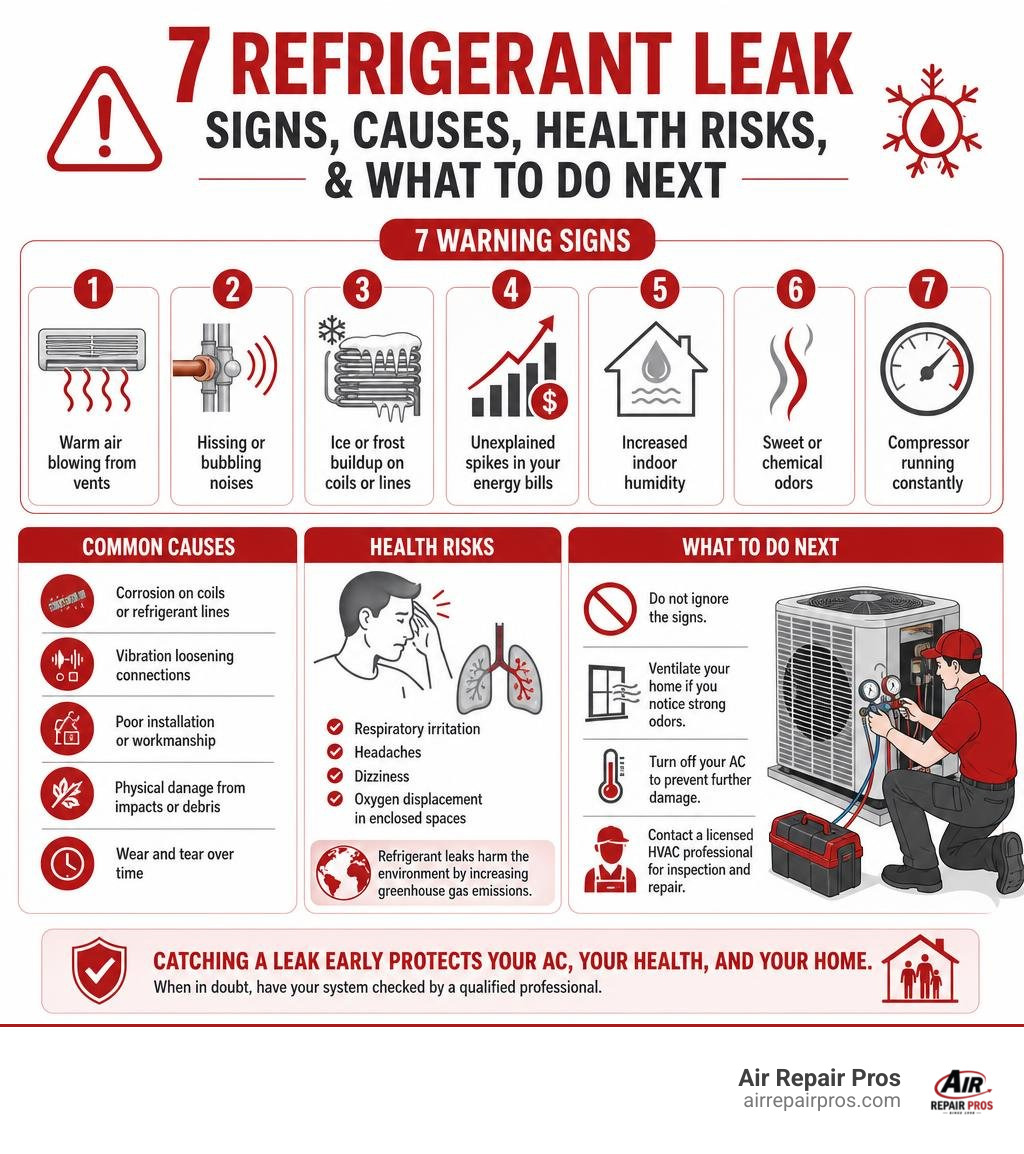
The 7 most common signs of a refrigerant leak are:
- Warm air blowing from vents even when the thermostat is set low
- Hissing or bubbling noises coming from the AC unit or refrigerant lines
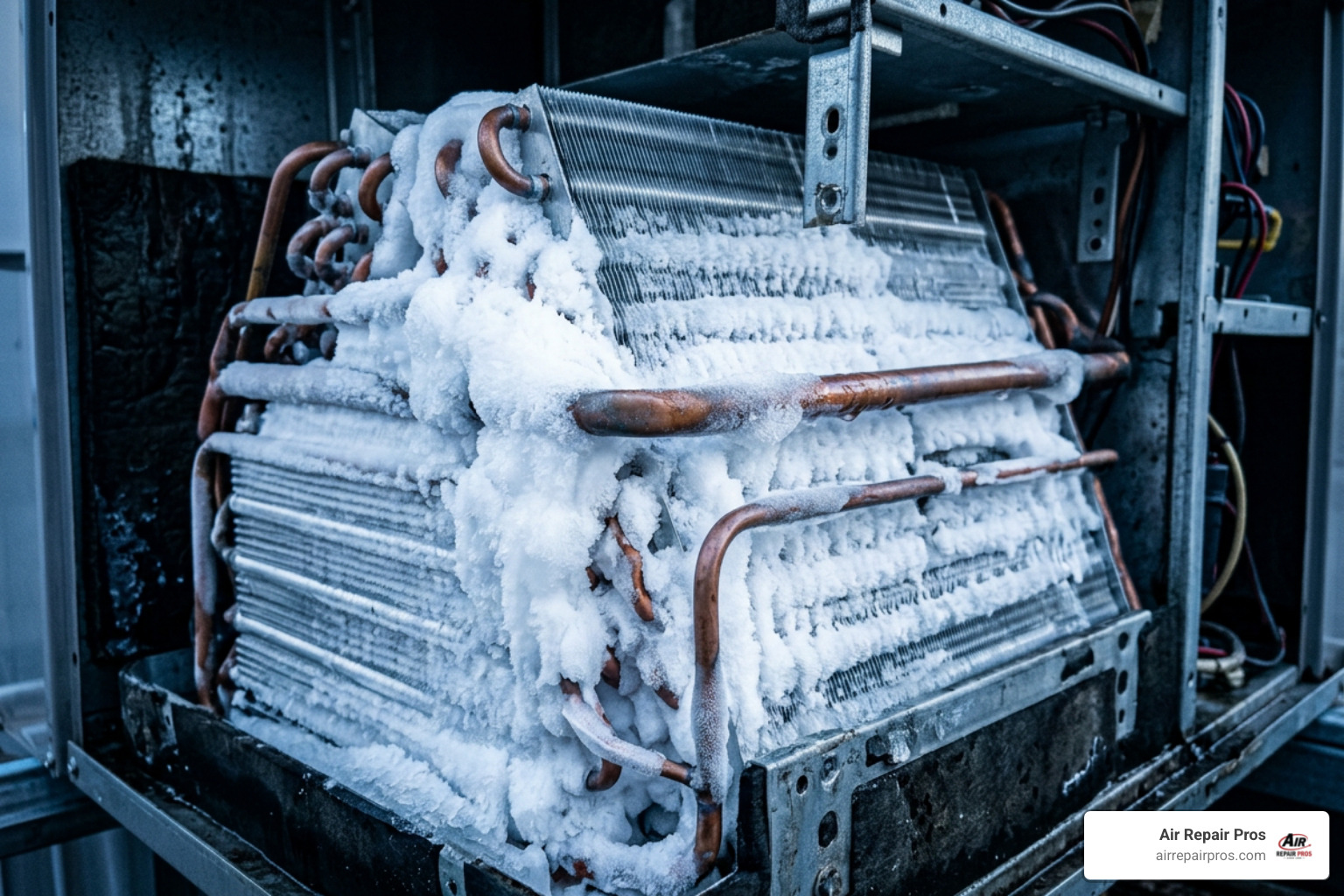
- Ice or frost buildup on the evaporator coils or copper lines
- Unexplained spikes in your energy bills
- Increased indoor humidity and a muggy feeling inside your home
- Sweet or chemical odors near the vents or indoor AC unit
- The compressor running constantly or short-cycling without reaching the set temperature
Refrigerant is the specialized chemical compound that makes your AC work. It absorbs heat from inside your home and releases it outside, cycling continuously between liquid and gas states to keep your living space comfortable. When a leak occurs, your system loses its ability to transfer heat efficiently. The AC works harder, runs longer, and still falls short of your cooling expectations. Over time, that constant strain can lead to compressor failure, which is one of the most expensive repairs a homeowner can face.
Beyond the mechanical damage, there are real health risks involved. Prolonged exposure to leaked refrigerant can cause respiratory irritation, headaches, and dizziness. In enclosed spaces, some refrigerants can even displace oxygen, creating a hazardous environment for your family and pets.
And it does not stop there. The environmental impact is significant too. Refrigerants like R-410A carry a high global warming potential, meaning even a small leak can release the equivalent of thousands of pounds of carbon dioxide emissions over time.
The good news is that catching the signs early makes a big difference. Most leaks start small, and a licensed HVAC technician can detect and repair them before they spiral into a full system replacement. Knowing what to look for is the first step to protecting your home, your wallet, and your family.
What Is Refrigerant and Why Does Your AC Need It?
To understand why a leak is so disruptive, it helps to understand what refrigerant actually does. Many people believe that an AC creates cool air by consuming refrigerant, similar to how a vehicle consumes fuel. In reality, your AC uses a closed-loop system where refrigerant is never supposed to be depleted. It simply circulates continuously to facilitate heat transfer.
The process relies on basic thermodynamics. The refrigerant cycles between a low-pressure liquid and a high-pressure gas. As it passes through the indoor evaporator coils, it absorbs heat from your indoor air. This causes the liquid refrigerant to evaporate into a gas. The system then pumps this gas to the outdoor condenser unit, where it is compressed back into a liquid, releasing the absorbed heat into the outdoor air. To get a deeper look at this cycle, you can read about how refrigerant passes through the system.
Over the years, the types of refrigerants used in residential AC systems have changed. Older systems manufactured before 2010 primarily used R-22, commonly known as Freon. Because R-22 is an ozone-depleting substance, it has been phased out under federal regulations. You can learn more about these environmental guidelines through the EPA phaseout of ozone-depleting substances.
Modern systems in Texas homes utilize R-410A, which is safer for the ozone layer but still carries global warming potential if allowed to escape into the atmosphere. More recently, newer systems are transitioning to even more eco-friendly alternatives like R-32 and R-454B to meet updated environmental standards. No matter which chemical your system uses, keeping it contained within the closed loop is essential for proper operation. When a leak occurs, the entire thermodynamic cycle is disrupted, leading to poor performance and increased wear on all components.
The 7 Most Common Refrigerant Leak Signs in Texas Homes
Detecting a leak early requires paying close attention to how your system behaves. When refrigerant levels drop, the overall balance of the system is thrown off, leading to noticeable changes in performance and efficiency.
To help you quickly identify if your system is struggling, here is a comparison of how a healthy AC operates versus one experiencing a leak.
| Operational Feature | Normal AC Operation | Leaking AC Operation |
|---|---|---|
| Vent Air Temperature | Consistently cold and crisp | Lukewarm, warm, or inconsistent |
| Indoor Humidity | Lowered and comfortable | High, sticky, or muggy |
| System Cycle Length | Standard cooling cycles | Constant running or rapid short-cycling |
| System Sounds | Quiet hum and airflow | Hissing, whistling, or bubbling noises |
| Coil Appearance | Clean, slightly damp with condensation | Covered in ice, frost, or oily residue |
| Energy Bills | Consistent with seasonal weather | Unusually high spikes without weather changes |
1. Warm Air Blowing From Vents (Subtle Refrigerant Leak Signs)
One of the earliest and most common refrigerant leak signs is a gradual decline in cooling performance. You might notice that the air coming out of your supply vents is no longer icy cold. Instead, it feels lukewarm or slightly cool, even when the system has been running for hours.
This happens because there is not enough refrigerant to absorb the heat from the air passing over the evaporator coils. As the charge drops, the cooling capacity of the system drops with it. You might find yourself constantly lowering the thermostat to chase comfort, but the temperature inside your home refuses to budge. This puts unnecessary strain on your system and increases your energy consumption. If you want to dive deeper into how this affects your system, check out our guide on AC low refrigerant signs.
2. Hissing or Bubbling Noises Near the AC Unit
Your AC should operate with a predictable, low-profile hum. If you begin hearing unusual audible sounds, it is time to investigate. A refrigerant leak can produce distinct noises depending on where the leak is located and the state of the refrigerant at that point in the system.
A high-pressure gas leak typically creates a distinct hissing or whistling sound. This is common near the indoor evaporator coil or the outdoor unit where the copper lines meet the components. If the leak is located in a section of the line where the refrigerant is in a liquid state, it may produce a bubbling or gurgling noise instead. These sounds mean that gas or liquid is actively escaping from the closed loop. If you hear these noises, exploring air conditioning leaks solutions is a smart next step to prevent further damage.
3. Frozen Evaporator Coils and Ice on Refrigerant Lines
It might seem counterintuitive that a system losing its cooling power would freeze over, but ice accumulation is a classic sign of low refrigerant. When the refrigerant level drops, the pressure inside the evaporator coil drops as well.
This drop in pressure causes the temperature of the coil to fall below freezing. Any moisture in the air that condenses on the coil will instantly freeze, creating a layer of ice. This ice acts as an insulator, further restricting airflow and preventing the remaining refrigerant from absorbing heat. The ice can quickly spread from the indoor evaporator coil all the way down the copper refrigerant lines to the outdoor unit, causing severe airflow blockages and potential system damage.
4. Unexplained Spikes in Monthly Energy Bills
If your utility bills have suddenly jumped without a clear change in outdoor temperatures or household usage, your AC could be leaking refrigerant. When the system lacks the proper refrigerant charge, it must run much longer to achieve the temperature set on your thermostat.
Because the compressor and blower motors are forced to run continuously, your home’s energy consumption skyrockets. Keeping your system well-maintained is key to avoiding these sudden financial surprises. When your system runs constantly, it not only consumes more electricity but also wears out critical components much faster, leading to premature system failure.
5. Increased Indoor Humidity and Moisture Problems
An AC does more than just lower the temperature in your home, it also plays a critical role in dehumidification. As warm indoor air passes over the cold evaporator coils, moisture condenses on the coils and drains away. This process keeps your indoor humidity at a comfortable level.
When a refrigerant leak occurs, the coils cannot get cold enough to properly extract moisture from the air. As a result, your home will start to feel sticky, humid, and muggy. This excess moisture can lead to indoor air quality issues, including mold and mildew growth. Additionally, if the ice on your frozen coils begins to melt rapidly, it can overwhelm your drain pan and lead to water damage. If you are noticing water pooling around your indoor unit, read more about why your AC is leaking water.
6. Sweet or Chemical Odors Near the Vents
Most modern refrigerants are designed to be largely odorless, but a leak can still produce a subtle scent. Some homeowners report a faint, sweet, or chemical odor resembling chloroform or nail polish remover near their vents or indoor AC unit.
This smell is often caused by the refrigerant mixing with the compressor oil as it escapes through the leak point. If you notice an unusual, sweet, or chemical scent that you cannot identify, it is important to have a professional inspect your system to rule out a leak. Breathing in these chemical fumes can be harmful to your health, so addressing the issue quickly is essential.
7. AC Compressor Running Constantly or Short-Cycling
Because a leaking system struggles to cool your home, the compressor, which is the heart of your AC, will run almost continuously. This constant operation puts immense mechanical strain on the compressor, leading to overheating and accelerated wear and tear.
Alternatively, some systems may experience short-cycling, where the AC turns on and off rapidly. This happens when safety switches detect abnormal pressure levels caused by the low refrigerant charge and shut the system down to prevent catastrophic damage. If your compressor is struggling, it is vital to recognize the signs of AC compressor failure before the entire component breaks down completely, which would require an expensive replacement.
What Causes Refrigerant Leaks in Air Conditioners?
Refrigerant leaks do not happen without a cause. Because the refrigerant lines are made of copper, brass, and aluminum, they are subject to various environmental and mechanical stressors over time.
Here are the most common reasons why leaks develop in residential AC systems:
- Formicary Corrosion: This is a specific type of corrosion caused by the interaction of copper tubes with household acids, such as those found in cleaning products, building materials, and cosmetics. It creates microscopic, ant-nest-like tunnels through the copper, leading to tiny pinhole leaks.
- Vibration Stress: As your AC runs, the compressor and fan motors create natural vibrations. Over time, these vibrations can cause the copper refrigerant lines to rub against other metal components or structural framing, wearing away the metal and creating a leak.
- Wear and Tear: Like any mechanical system, age takes a toll. Over a decade or more of service, joints, fittings, and valves can weaken and begin to seep refrigerant.
- Physical Damage: Outdoor condenser units are vulnerable to physical impacts. Lawn mowers, weed eaters, falling tree branches, or even hail can damage the delicate aluminum fins and copper tubing.
- Poor Installation: If the copper lines were not properly brazed or if the fittings were not tightened to specification during installation, leaks can develop early in the system’s lifespan.
The Dangers of Ignoring Refrigerant Leak Signs
Ignoring refrigerant leak signs can lead to serious consequences for your pocketbook, your health, and the environment. Because refrigerants are powerful chemicals, they must be handled with care and kept securely contained within your AC system. If you suspect a leak, ignoring it will only make the problem worse. Taking swift action is the best way to safeguard your home and family.
Health and Environmental Risks of Refrigerant Leak Signs
While a minor outdoor leak may not pose an immediate health threat, a major indoor leak can be dangerous. Refrigerant poisoning can occur if the gas is inhaled in high concentrations. Symptoms of exposure include respiratory irritation, headaches, dizziness, nausea, and skin irritation. In poorly ventilated or enclosed rooms, heavy refrigerant gases can displace oxygen, presenting an asphyxiation hazard for children and pets.
From an environmental standpoint, releasing refrigerants into the atmosphere contributes directly to global warming. Even though modern R-410A does not deplete the ozone layer, its global warming potential is significant, making it crucial to seal leaks promptly.
Severe Mechanical Damage and Compressor Failure
From a purely mechanical standpoint, running an AC with low refrigerant is a recipe for disaster. The refrigerant does more than just cool your home, it also carries the lubricating oil that keeps the compressor running smoothly.
Without proper lubrication, the compressor will overheat, seize, and fail. Replacing a failed compressor is a major repair that can become expensive quickly. In many cases, a failed compressor on an older system makes it more practical to replace the entire unit rather than attempting a repair. This is why addressing leaks early is so critical for your budget.
How HVAC Professionals Detect and Repair Refrigerant Leaks
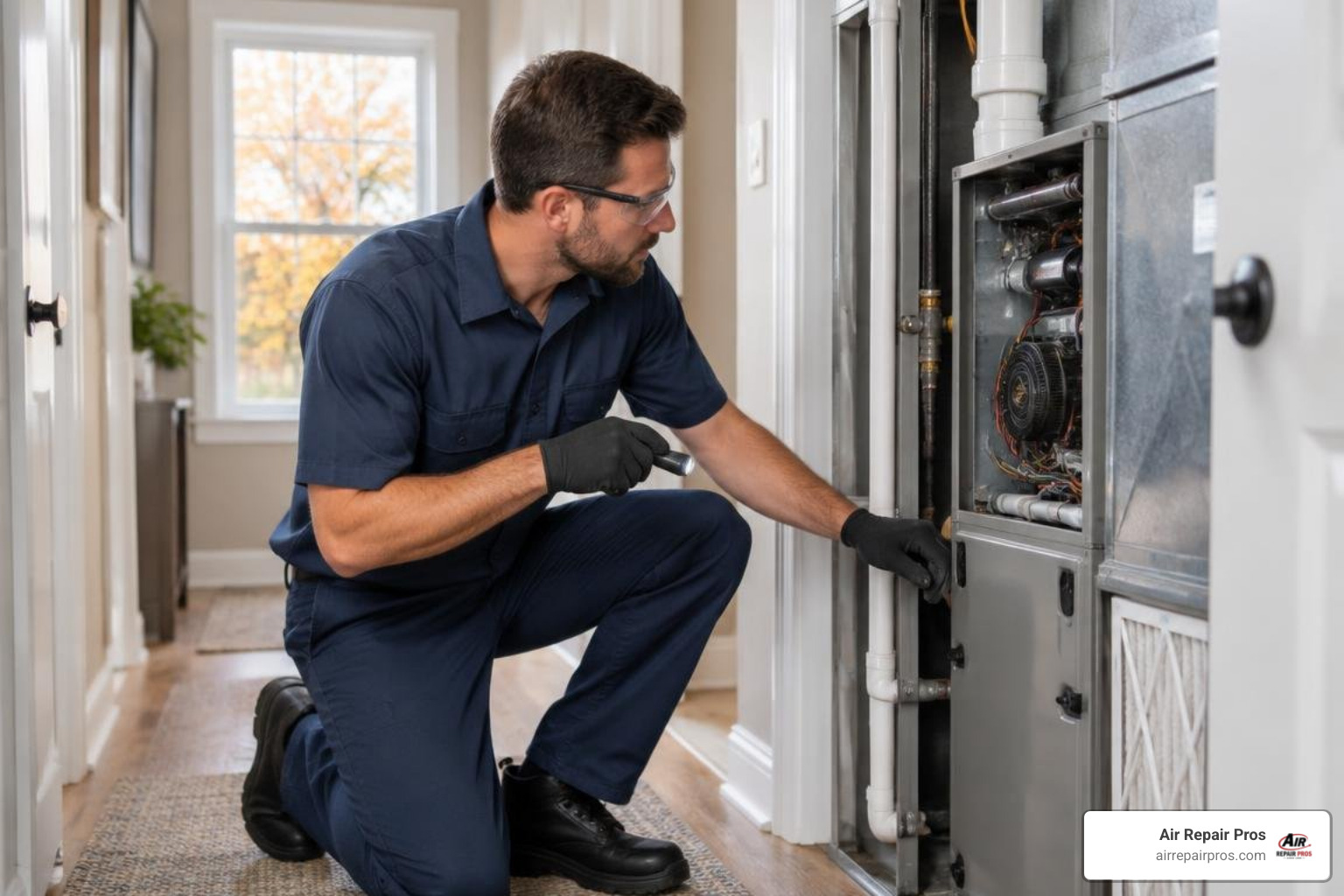
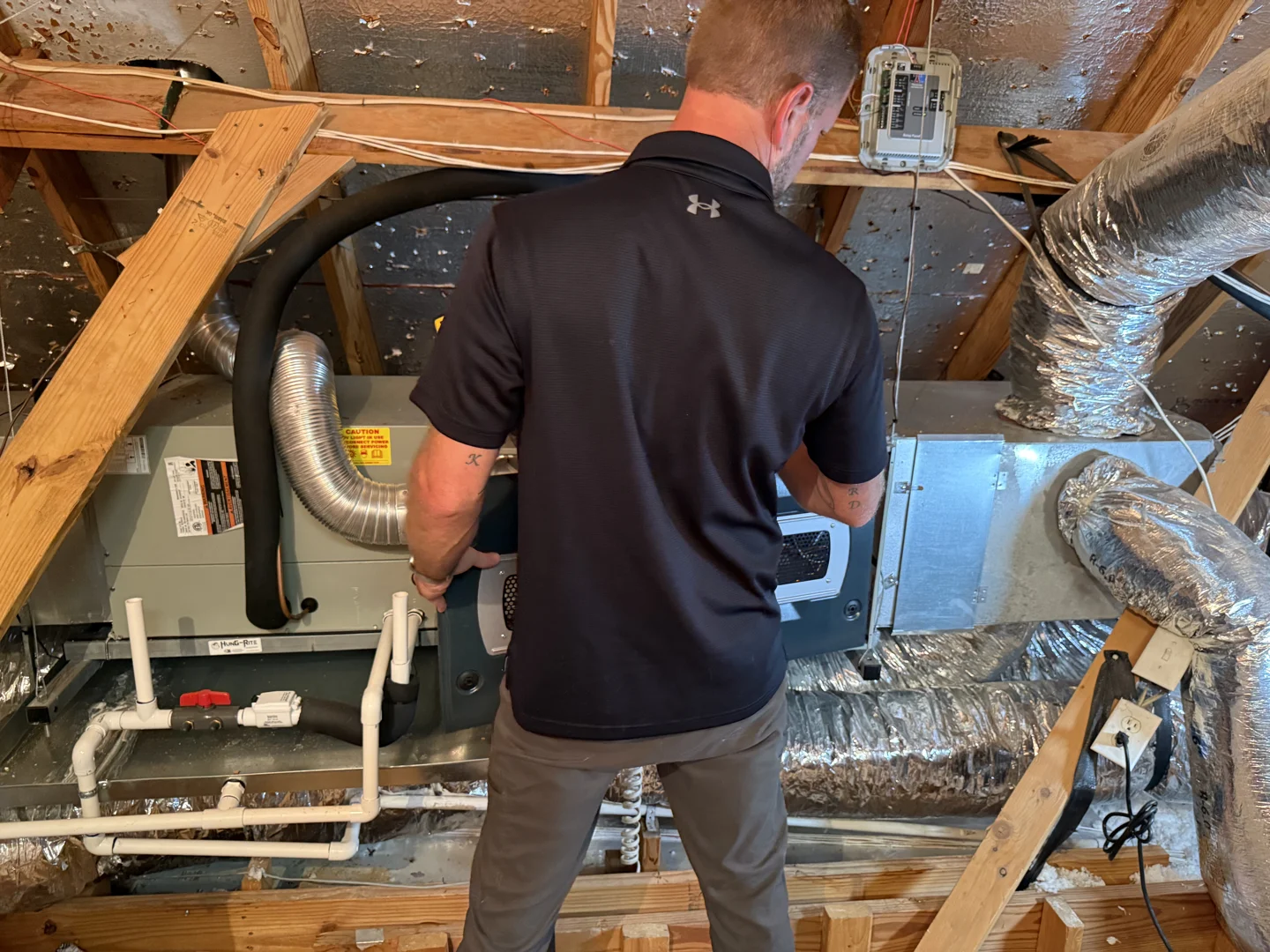
Finding and repairing a refrigerant leak is not a DIY job. It requires specialized diagnostic tools, safety equipment, and EPA certification to handle the chemicals legally and safely.
When a professional HVAC technician visits your home, they will use several advanced methods to locate the leak:
- Electronic Leak Detection: Technicians use highly sensitive electronic sniffers that can detect even the smallest trace of refrigerant gas in the air around joints and coils.
- Ultraviolet (UV) Dye Testing: A specialized fluorescent dye is injected into the refrigerant loop. After the system runs for a short period, the technician uses a UV light to visually trace the exact spot where the dye is escaping.
- Nitrogen Pressure Testing: The remaining refrigerant is safely evacuated, and the system is pressurized with dry nitrogen gas. By monitoring the pressure gauges and applying a soapy water solution to joints, the technician can pinpoint the leak by watching for bubbles.
Once the leak is located, the technician will discuss your options. For minor leaks on accessible fittings, they can often cut out the damaged section of pipe and re-braze the connection. For older coils with extensive corrosion, replacing the entire coil assembly is usually the best path forward. After the repair is complete, the technician will vacuum out any moisture and contaminants before recharging the system with the precise amount of refrigerant. To ensure your system is restored to peak efficiency, it is best to rely on professional AC repair services to handle the job safely and effectively.
Frequently Asked Questions About AC Refrigerant Leaks
What does a refrigerant leak smell like?
Most modern refrigerants are odorless, but when a leak occurs, the escaping gas often mixes with the compressor’s lubricating oil. This can create a faint, sweet, or chemical scent that some describe as smelling like chloroform or nail polish remover.
Is it safe to run my AC with a suspected refrigerant leak?
No, it is not recommended. Running your system with low refrigerant forces the compressor to work harder without proper lubrication, which can cause permanent mechanical damage and lead to a very expensive replacement.
How much does it cost to repair a refrigerant leak in Texas?
The total cost can vary significantly depending on several factors, including the location of the leak, the severity of the damage, and whether a component like the evaporator coil needs to be completely replaced. Homeowners should request a professional estimate from an HVAC team to get an accurate assessment.
Can I add refrigerant to my AC system myself?
No. Under federal law, specifically Section 608 of the Clean Air Act, only EPA-certified technicians are permitted to purchase and handle refrigerants. Attempting a DIY recharge without the proper training and tools is illegal, dangerous, and can permanently damage your system.
How do technicians find the exact location of a leak?
Technicians use a combination of electronic leak detectors, ultraviolet dye kits, and nitrogen pressure tests to find the exact point of escape.
Can a refrigerant leak cause water to leak inside my home?
Yes. Low refrigerant causes the indoor evaporator coil to freeze over. When that ice eventually melts, it can overwhelm the condensate drain pan, leading to water leaking into your home.
How long does it take to repair a refrigerant leak?
A standard leak search and minor line repair usually takes between one and three hours. More extensive repairs, such as replacing an entire evaporator coil, can take half a day or longer.
When should I replace my AC instead of repairing a leak?
If your system is over 10 to 12 years old, uses the phased-out R-22 refrigerant, or has a history of frequent breakdowns, investing in a modern, high-efficiency replacement is often more practical than paying for a major leak repair.
Does regular maintenance prevent refrigerant leaks?
Yes. Annual maintenance allows technicians to inspect fittings, clean coils, and identify minor vibration issues or corrosion early, preventing small leaks from developing into major problems.
What should I do immediately if I suspect a leak?
Turn off your AC system at the thermostat to prevent compressor damage, open windows to ventilate your home if you notice any unusual chemical smells, and contact a certified HVAC professional to inspect the unit.
Conclusion
If you are noticing any of these refrigerant leak signs in your home, do not wait for the Texas heat to make things worse. Air Repair Pros has been serving North Dallas families since 1998 with reliable, honest service. With our locations in Frisco, TX, McKinney, TX, Plano, TX, Little Elm, TX, and Allen, TX, our certified HVAC technicians are always nearby and ready to help. Our fully stocked trucks carry over 85% of the parts needed for a one-trip service, and we offer 24/7 emergency support when you need us most. Contact our professional AC refrigerant leak technicians today and keep your home cool all summer long.