

What to Do When You Smell Gas at Home: The Short Answer
If you’re dealing with a gas line smell what to do situation right now, here is what matters most:
Act immediately. Do not hesitate.
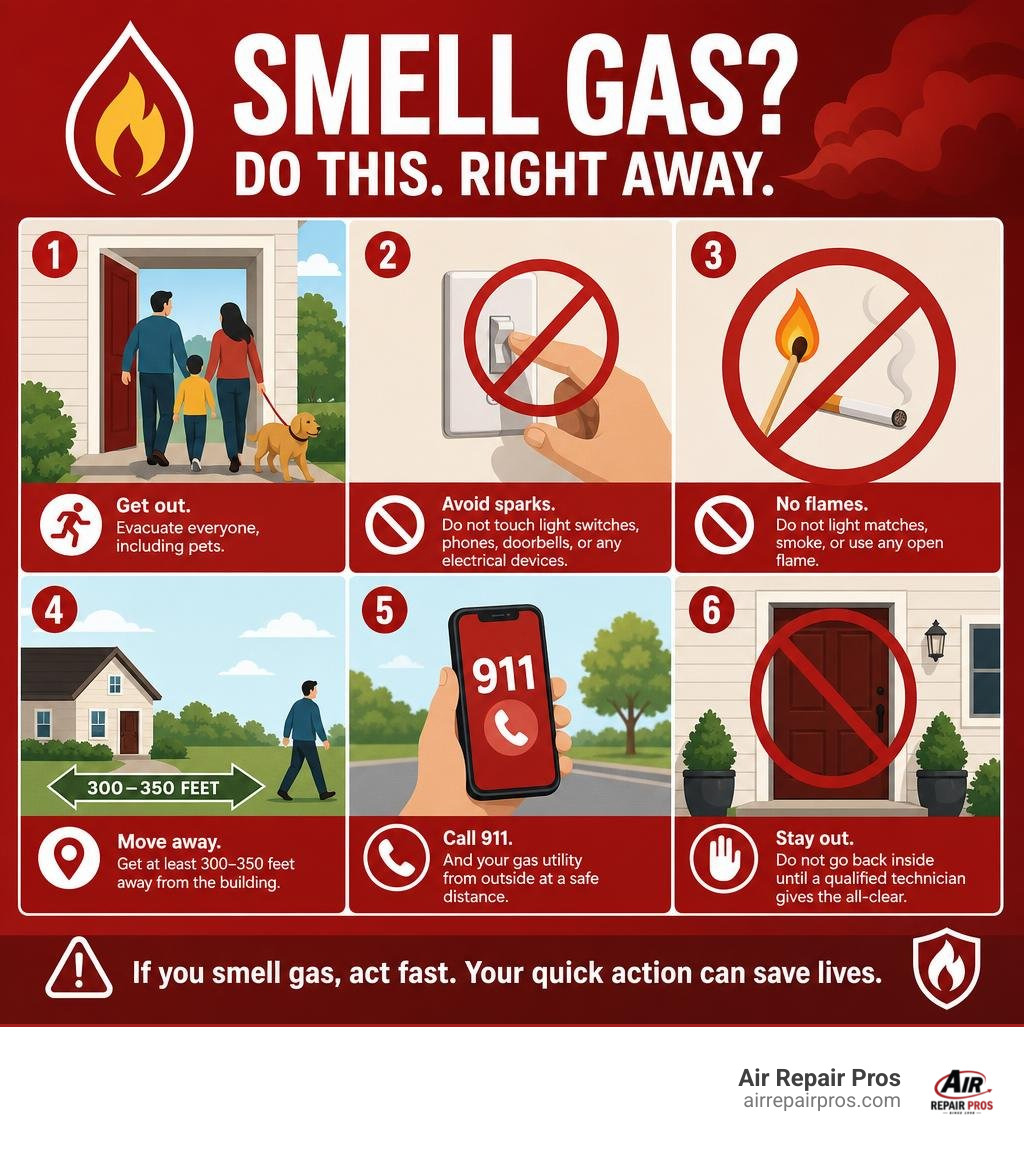
- Get out of the building right now. Bring everyone, including pets.
- Do not touch any light switches, phones, doorbells, or electrical devices on your way out.
- Do not light matches, cigarettes, or open flames.
- Move at least 300-350 feet away from the building.
- Call 911 and your gas utility from outside, once you are at a safe distance.
- Do not go back inside until a qualified technician gives you the all-clear.
Over 189 million Americans use natural gas in their homes, according to the American Gas Association. That means the vast majority of households in North Dallas and across Texas are living with gas lines every single day. Most of the time, that is completely safe. But when something goes wrong, the stakes are high and the window to act is short.
Here is something most people do not know: natural gas has no smell at all in its natural state. Gas utilities add a chemical called mercaptan to give it that sharp, distinctive odor most people describe as rotten eggs or a skunk-like smell. That smell is your early warning system. The moment you notice it, your only job is to leave and call for help.
The tricky part? Not every bad smell in your home is a natural gas leak. Sewer gas, which comes from your plumbing system, can produce a very similar rotten egg odor. Knowing the difference matters because the response is different. A sewer gas smell is a plumbing issue. A natural gas smell is an immediate emergency.
Air Repair Pros put together this guide to walk you through exactly what to do in both situations, step by step, so you are never left guessing.
Gas Line Smell What to Do: The Immediate Emergency Protocol
When you suspect a leak, there is no time for second-guessing. A minor spark can ignite pocketed gas, resulting in a severe explosion. To keep your household safe in Frisco, TX or surrounding North Dallas areas, you must follow a strict, non-negotiable safety protocol.
If you suspect the odor is coming from a main fuel line, do not waste time trying to locate the source of the leak. Leave the area immediately, keep everyone away from possible ignition sources, and call 911 and your gas utility from a safe distance outside. Once emergency crews have secured the property, contact a licensed Emergency Plumber to inspect and repair the affected gas line safely.
Step 1: Evacuate the Premises Immediately
Your absolute priority is safety. If you smell gas inside your home, gather your family members and pets and exit the building immediately. Do not stop to collect valuables, lock doors, or open windows to ventilate the house.
Once outside, move a minimum of 50 yards (150 feet) to 350 feet away from the structure. This safe distance ensures that you are clear of any potential blast zone or high-concentration vapor cloud.
Step 2: Avoid All Ignition Sources and Sparks
When natural gas leaks into an enclosed space, it mixes with oxygen and becomes highly combustible. A tiny electrical arc is all it takes to trigger an explosion.
- Do not flip light switches on or off.
- Do not unplug any appliances or pull plugs from outlets.
- Do not use your cell phone or home phone while inside the house.
- Do not ring the doorbell when leaving.
- Do not light matches, candles, or cigarettes.
- Leave all appliances exactly as they are.
Step 3: Call for Help from a Safe Distance
Once you have safely evacuated and reached a distance of at least 350 feet from your home, pull out your cell phone. Call 911 immediately to report the emergency, then contact your local gas utility provider.
Most major gas utilities maintain a 24/7 emergency dispatch team. They will immediately send a technician to shut off the gas supply at the street meter and secure the area. Only after the utility company has shut off the gas and declared the structure safe should you contact a professional team to inspect and repair your home lines.
Identifying the Odor and Recognizing Gas Leak Symptoms
To respond correctly, you must be able to identify what you are smelling. Many homeowners confuse natural gas with sewer gas because both can carry a sulfurous scent. However, they have distinct chemical origins, behaviors, and risks.
The table below highlights the key differences between these two common indoor odors:
| Characteristic | Natural Gas Leak | Sewer Gas Leak |
|---|---|---|
| Primary Chemical | Methane (with added mercaptan) | Hydrogen sulfide, methane, ammonia |
| Smell Profile | Sharp skunk, rotting cabbage, or sulfur | Rotten eggs, decaying organic matter, swampy |
| Acoustic Signs | Hissing or whistling near lines/appliances | Gurgling drains or no sound |
| Environmental Signs | Dying plants, bubbling water, blowing dirt | Odor worsens after running water |
| Physical Symptoms | Dizziness, headache, nausea, fatigue | Headaches, eye irritation, nausea |
| Primary Danger | High explosion risk, asphyxiation | Toxic in high doses, low explosion risk |
What Does a Natural Gas Leak Smell Like?
In its pure form, natural gas is completely colorless and odorless. Because of this, gas providers mix a harmless chemical odorant called mercaptan into the fuel supply. Mercaptan has a highly concentrated, offensive smell that mimics rotting eggs, sulfur, or a skunk.
Over 189 million Americans use natural gas, and this additive has saved countless lives by making leaks instantly recognizable. However, you should not rely entirely on your nose. A phenomenon known as “odor fade” can occur. This happens when the mercaptan is absorbed by new pipes, concrete, or soil, stripping the gas of its smell.
Additionally, prolonged exposure to the scent can cause “nasal fatigue,” which temporarily numbs your sense of smell.
Understanding Sewer Gas Odors and Dry P-Traps
Sewer gas is a mixture of hydrogen sulfide, methane, and ammonia that rises from decomposing waste in the municipal sewer system. It typically smells like rotten eggs or wet, swampy garbage.
The most common cause of this odor inside a home is a dry P-trap. Your sinks, showers, and floor drains have a U-shaped pipe underneath called a P-trap. This curve is designed to hold a small pool of water, creating a physical barrier that blocks sewer gases from entering your living space.
Under normal household conditions, a P-trap takes about 2 to 4 weeks to dry out completely if the drain is not used. When this water barrier evaporates, sewer gas freely flows up the drain.
If you suspect your home has a sewer line issue, you should consult with the residential plumbing experts at Air Repair Pros to schedule a comprehensive sewer line inspection.
Physical Symptoms of Gas Exposure
If a gas leak is small or located behind a wall, you might experience physical symptoms before you notice a strong smell. Natural gas displaces oxygen in the air, leading to physical distress.
Keep an eye out for these warning signs:
- Unexplained headaches or throbbing temples
- Sudden dizziness, lightheadedness, or loss of coordination
- Nausea and loss of appetite
- Extreme fatigue, lethargy, or flu-like symptoms that improve when you leave the house
- Difficulty breathing, chest tightness, or rapid respiration
- Persistent eye, nose, or throat irritation
Visual and Audible Warning Signs of a Gas Leak
Your eyes and ears can also help you spot a gas line issue. If you suspect an issue with your heating system, you can learn how to detect gas leaks furnace systems safely by watching for visual and audible indicators.
Be on the lookout for:
- Hissing or whistling sounds: A high-pressure leak in a pipe or appliance connection often makes a distinct whistling sound.
- Dead vegetation: If an underground gas line is leaking outside, the gas will displace oxygen in the soil, creating a localized patch of dead, yellowing grass or plants.
- Bubbling water: Gas escaping from an underground pipe will cause bubbles to rise through puddles, mud, or standing water.
- Blowing dirt: A ruptured underground line will blow dust, dirt, or debris into the air.
Confirming, Repairing, and Restoring Gas Service Safely
If you suspect a leak, take immediate action to keep everyone safe: clear the building, avoid anything that could create a spark, and let trained professionals secure and repair the system. Do not try to investigate the source yourself while gas may still be present.
Safe DIY Verification Methods
While you should never attempt to repair a gas line yourself, there are a few safe ways to verify a suspected minor leak at an appliance joint before calling for service.
- The Soapy Water Test: Mix a few drops of liquid dish soap with water in a spray bottle. Spray the solution onto the suspected pipe joint or connector. If you see bubbles growing and multiplying, gas is escaping.
- Track Gas Usage: If your gas bill spikes suddenly without a change in weather or appliance usage, you may have a hidden slow leak.
- Check the Burner Flame: Your gas stove burners should always burn a crisp, bright blue. If the flame is consistently orange, yellow, or red, the fuel is not burning completely. This is a sign of a malfunctioning appliance that could be releasing carbon monoxide.
Professional Gas Leak Detection and Repair Process
Once the gas utility company has shut off the main supply, a licensed plumber must perform the repairs. Air Repair Pros employs certified technicians who use advanced tools to resolve gas line issues.
The professional repair process includes:
- System Pressure Testing: Technicians isolate the gas line and pump in pressurized air to see if the system holds pressure. If the pressure drops, a leak is present.
- Electronic Gas Detection: Plumbers use handheld electronic detectors that measure gas concentrations in parts per million, allowing them to pinpoint the exact location of a leak behind walls or underground.
- Code-Compliant Repair: The damaged section of pipe is cut out and replaced with modern, durable materials. If you need a permanent fix, you can rely on our team for professional Gas Lines Repair services.
Preventive Measures for Gas Line Smell What to Do Next
Preventing gas leaks is always safer and more cost-effective than dealing with an emergency. Homeowners should take several proactive steps to protect their properties:
- Schedule Annual Inspections: If your home is over 25 years old, professional plumbers recommend annual inspections of your gas lines and plumbing systems. For newer homes, a bi-annual schedule is usually sufficient.
- Install Methane Detectors: While carbon monoxide alarms are essential, they do not detect raw natural gas. Install UL-listed residential methane detectors near your gas appliances and bedrooms.
- Replace Old Connectors: Ensure that older, uncoated brass appliance connectors are replaced with modern, plastic-coated stainless steel lines.
- Schedule Sewer Inspections: To prevent sewer odors, schedule a professional sewer line inspection every 2 to 3 years for modern homes, and annually for homes over 40 years old.
If you are remodeling or installing new appliances, always hire a licensed technician for Gas Lines Installation to ensure the work meets local building codes. For comprehensive management of your home’s fuel systems, you can learn more about our full range of services by visiting our main Gas Lines page.
Timeline and Steps for Gas Line Smell What to Do After Repair
Once the repairs are complete, you cannot simply turn the gas back on. The system must undergo a strict verification process:
- Post-Repair Pressure Test: The technician will run a final pressure test to ensure the repaired line is completely airtight.
- Municipal Code Inspection: In many Texas cities, including Frisco, TX and McKinney, TX, a city inspector must verify the repair and issue a green tag before the utility company will restore service.
- Utility Reconnection: Once the repair is certified, the gas utility company will return to turn the main valve back on, purge the lines, and relight your appliance pilot lights.
This entire process can take anywhere from a few hours to several days, depending on the severity of the leak and local inspection schedules. If your gas heating system was affected during a winter cold snap, you may also need to coordinate with our team for 24/7 Air Conditioner Repair Frisco TX and heating restoration to keep your home comfortable while waiting for the utility company. Our technicians are fully trained to handle both heating and AC systems to ensure your home remains safe and comfortable year-round.
Frequently Asked Questions About Gas Line Smells
How do I know if I smell sewer gas or natural gas?
Sewer gas typically smells like rotten eggs, wet garbage, or swampy waste, and the smell often gets worse after you run water down an unused drain. Natural gas is odorized with mercaptan, which smells like a sharp skunk, sulfur, or rotting cabbage. If you are ever in doubt, treat the odor as a natural gas leak, evacuate, and call for emergency help.
What should I do if I smell natural gas in my home?
You must evacuate the building immediately, taking all family members and pets with you. Do not touch any light switches, electrical appliances, or phones, as these can create a spark. Once you are at least 350 feet away, call 911 and your gas utility company. Do not go back inside until a professional has declared the home safe.
Is sewer gas dangerous to breathe?
Yes. In high concentrations, sewer gas can be dangerous because it contains toxic compounds like hydrogen sulfide and ammonia. It can also contain methane, which can displace oxygen in enclosed spaces and create an explosion hazard. Prolonged exposure can cause headaches, dizziness, nausea, and sinus irritation.
What causes sewer gas odors in buildings?
The most common cause of sewer gas odors is a dry P-trap in an infrequently used drain. Other causes include blocked plumbing vents on the roof, broken or cracked drain lines in crawl spaces, damaged toilet wax rings, or sulfur bacteria growing inside your water heater.
How long does it take for a P-trap to dry out?
Under normal household conditions, a P-trap takes about 2 to 4 weeks to dry out completely. This timeline can be shorter in hot, dry climates or in rooms with high air circulation. To prevent this, pour a cup of water down unused drains once a week.
Can I fix a gas line leak myself?
No. Attempting to repair a gas line yourself is extremely dangerous and illegal in most jurisdictions. Gas line work requires specialized pressure-testing equipment, licensing, and strict adherence to local building codes. Always hire a licensed professional for gas line repairs.
When should I call 911 versus a professional plumber?
You should call 911 and your gas utility company first if you smell a strong gas odor, hear a loud hissing sound, or suspect an active leak. Once the utility company has shut off the gas and secured the area, you should call a professional plumber to locate, repair, and test the damaged piping.
What are the physical symptoms of a natural gas leak?
Common symptoms of natural gas exposure include headaches, dizziness, nausea, fatigue, chest tightness, and difficulty breathing. If you notice these symptoms in yourself or your pets, and they improve when you leave the house, evacuate immediately.
How long does it take to restore gas service after a leak is repaired?
The timeline depends on the severity of the leak and local municipal requirements. After the repair is made, the line must pass a professional pressure test. In many areas, a city inspector must verify the work before the utility company will return to turn the gas back on, which can take anywhere from a few hours to a couple of days.
What should I do if I suspect an outdoor gas leak?
If you suspect an outdoor leak because of bubbling water, dead patches of grass, blowing dirt, or a skunk-like smell near your yard, clear the area immediately. Move at least 350 feet away and call 911 and your gas utility. Do not start any car engines, use power tools, or light matches near the suspected leak.
Conclusion
Dealing with a gas line smell what to do situation requires fast action, a clear head, and professional support. While sewer gas odors are a common plumbing nuisance that can often be resolved by clearing a drain or refilling a dry P-trap, a natural gas leak is a life-threatening emergency. Always prioritize evacuation and call the emergency utility line before attempting to diagnose the problem.
For homeowners in Frisco, TX, McKinney, TX, Plano, TX, Little Elm, TX, and Allen, TX, keeping your home’s gas lines and plumbing systems in top shape is essential for long-term safety. Regular professional inspections can catch small issues before they turn into costly emergencies.
When you need reliable plumbing support, the certified team at Air Repair Pros is ready to help. Our fully stocked trucks and 24/7 availability mean we can resolve your home comfort and plumbing issues quickly and safely. To schedule an inspection or keep your home safe, contact our professional gas line technicians today.