

What Causes Slab Leaks and Why North Dallas Homeowners Need to Act Fast
What causes slab leaks comes down to a handful of well-understood problems, and knowing them can save you thousands of dollars in structural repairs.
Here is a quick summary:
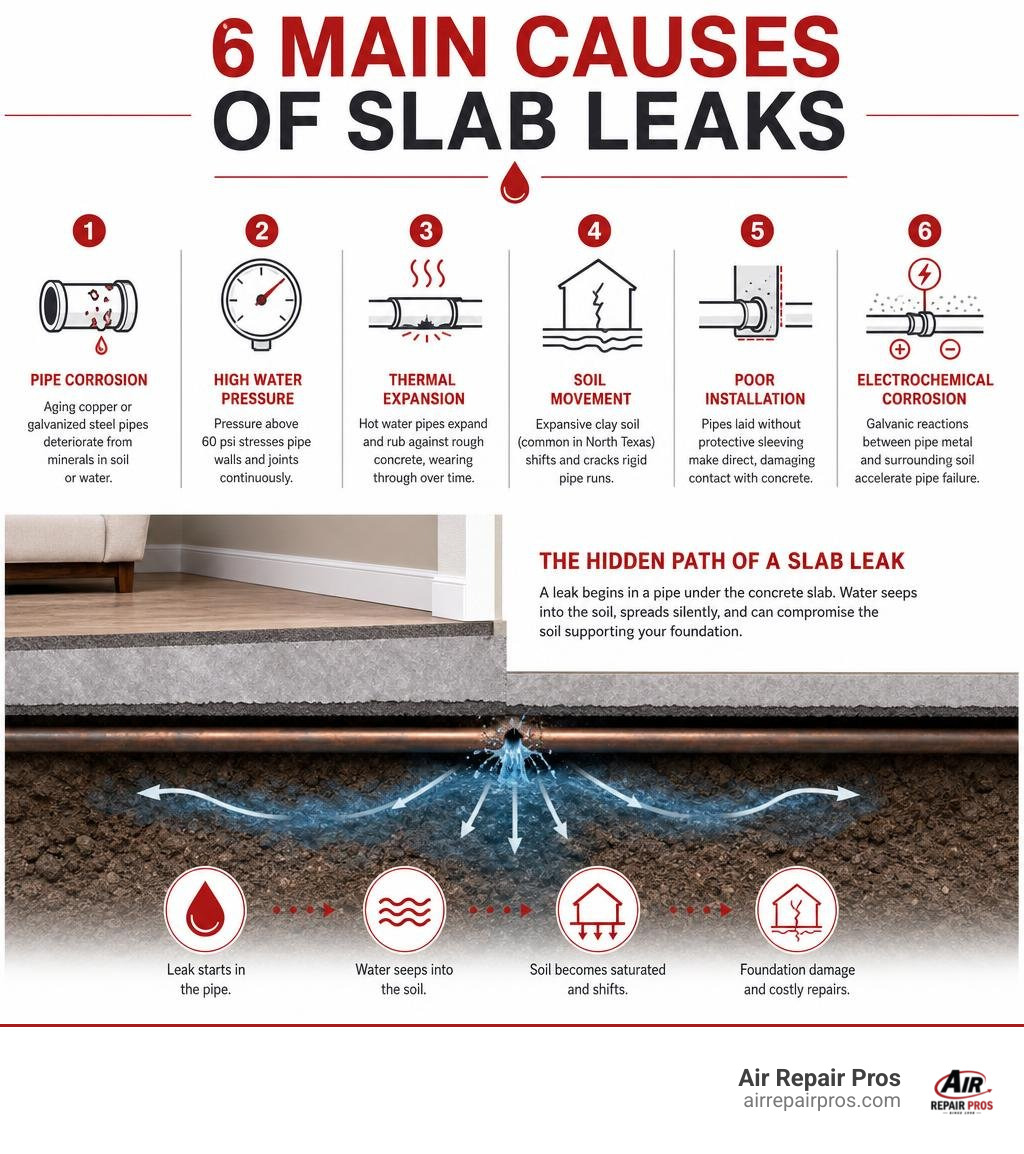
The most common causes of slab leaks are:
- Pipe corrosion: aging copper or galvanized steel pipes deteriorate from minerals in soil or water.
- High water pressure: pressure above 60 psi stresses pipe walls and joints continuously.
- Thermal expansion: hot water pipes expand and rub against rough concrete, wearing through over time.
- Soil movement: expansive clay soil common in North Texas shifts and cracks rigid pipe runs.
- Poor installation: pipes laid without protective sleeving make direct, damaging contact with concrete.
- Electrochemical corrosion: galvanic reactions between pipe metal and surrounding soil accelerate pipe failure.
A slab leak starts hidden beneath your home’s concrete foundation. By the time you notice a warm spot on the floor or a spike in your water bill, water may have already been silently soaking the soil underneath your home for weeks. This moisture can also impact other home systems, such as your HVAC system. For example, excess moisture rising from a slab leak can dramatically increase indoor humidity, forcing your AC unit to work harder and leading to premature AC wear.
That matters more than most people realize. A small pinhole leak releasing just one gallon per hour adds up to 720 gallons per month, which is enough to saturate and erode the soil that supports your entire foundation.
The financial stakes are just as serious. A repair caught early is a focused plumbing fix. Left alone for six to twelve months, that same leak can escalate into a major structural restoration project costing many times more.
Slab leaks are dramatically more common in homes built before 1990, in regions with expansive clay soil like Frisco, TX, and in homes where water pressure consistently runs too high. If your home checks any of those boxes, this guide is for you.
What is a Slab Leak and Where Does It Occur?
To understand how these failures develop, it helps to look at how modern homes are built. A concrete slab foundation is a thick layer of concrete poured directly onto the ground to support a home. This foundation style is incredibly popular, used in over 70% of new homes constructed in 2024.
Before the concrete is poured, plumbers lay out the home’s primary plumbing lines. These lines are divided into two main systems:
- Pressurized supply lines: These pipes carry clean water into the home under continuous pressure, typically ranging from 40 to 80 pounds per square inch (psi).
- Drain lines: These larger pipes rely on gravity to carry wastewater away from sinks, toilets, and showers to the municipal sewer system.
Once the pipes are positioned, the concrete slab is poured directly over them. This means the plumbing lines are permanently encased within or located directly beneath the heavy concrete foundation.
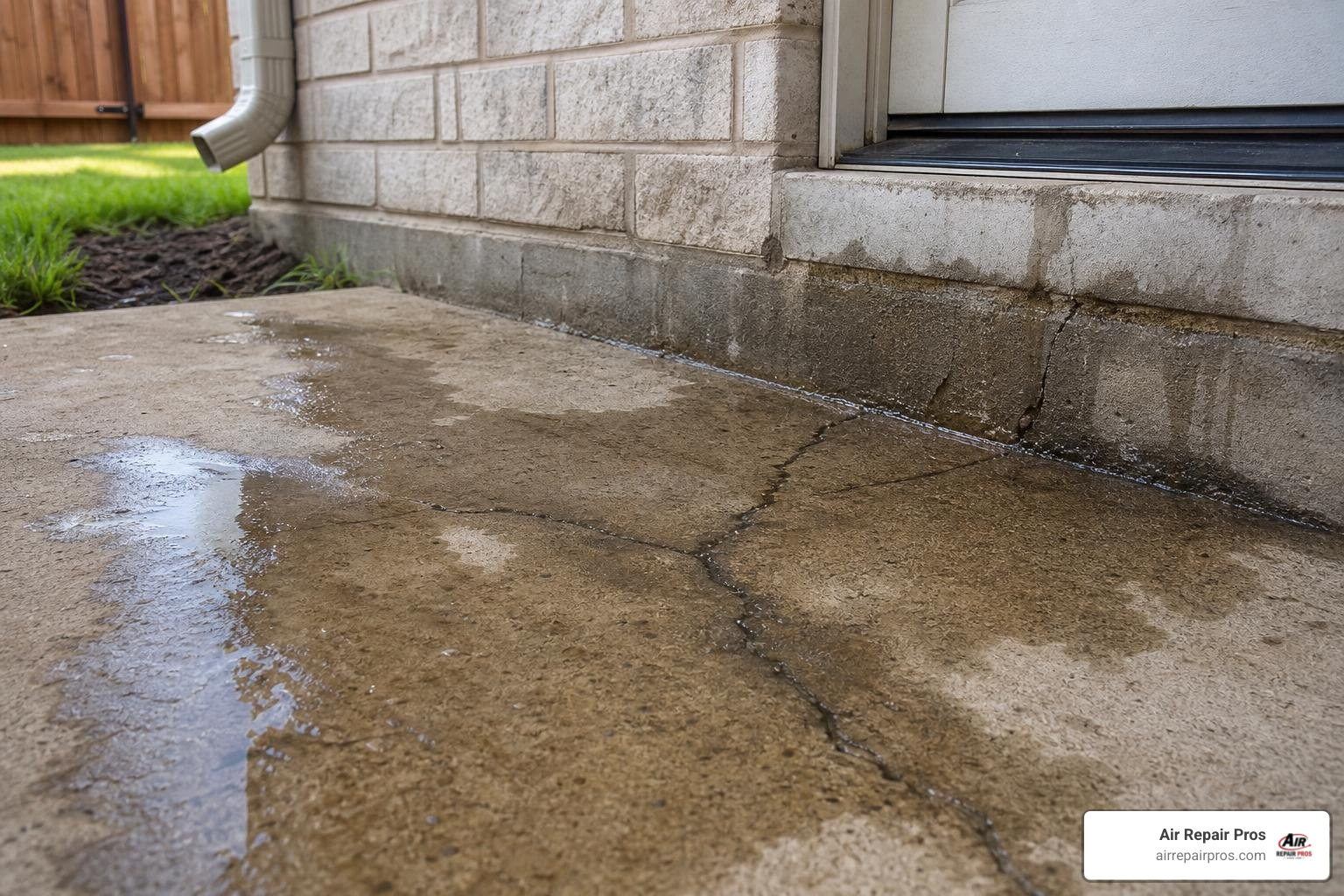
A slab leak occurs when a pipe in this inaccessible area develops a pinhole, a crack, or a complete break. Because the plumbing is buried, you cannot see the water escaping. Instead, the water pools under the concrete, saturates the ground, and eventually forces its way upward through the porous concrete or outward into your yard.
In older homes, these underground lines were almost always constructed from copper pipes or galvanized steel. While durable, these metal lines are highly vulnerable to chemical reactions and physical wear. Modern homes often use flexible PEX piping, which resists corrosion but can still suffer from installation errors or physical damage.
What Causes Slab Leaks Under a Concrete Foundation?
When a pipe fails beneath a concrete foundation, it is rarely due to a single, sudden event. Instead, it is usually the result of long-term physical and chemical processes acting on the plumbing materials. Understanding what causes slab leaks requires looking at how underground pipes interact with water, soil, concrete, and pressure over several years.
The underground environment is surprisingly harsh. Metal pipes are subjected to constant moisture, fluctuating temperatures, chemical elements in the soil, and the immense weight of the concrete slab itself. Over time, these forces work together to weaken the pipe walls until a breach occurs.
For North Dallas homeowners who already suspect a hidden foundation leak, Air Repair Pros offers professional slab leak repair services that help locate the damaged line and determine the safest repair path before foundation damage spreads.
How High Water Pressure and Thermal Expansion Cause Slab Leaks
Water pressure is one of the most common silent contributors to plumbing failures. While high water pressure makes for a great shower, it places continuous, aggressive stress on the walls and joints of your pipes. The US Environmental Protection Agency (EPA) recommends keeping residential water pressure between 45 and 60 psi. When municipal water pressure spikes or your home’s pressure-reducing valve fails, pressures can exceed 80 psi.
This high pressure acts like a constant hammer, weakening soldered joints and expanding tiny imperfections in the pipe metal. Additionally, sudden changes in water flow can cause water hammer events, generating transient pressure spikes that reach up to 300 psi, vibrating the pipes violently against the surrounding concrete.
Thermal expansion is another major mechanical cause of slab leaks, particularly in hot water lines. When hot water flows through a copper pipe, the metal heats up and expands. When the water stops flowing, the pipe cools and contracts. A 100-foot run of copper pipe can expand by more than an inch under a 50-degree temperature differential.
If the pipe is encased in concrete without adequate space to move, this repeated expansion and contraction creates continuous friction abrasion. The pipe rubs back and forth against the rough concrete, gravel, or rebar until the metal wears thin and a pinhole leak develops. This physical friction explains why hot water line slab leaks are statistically more common than cold water line leaks.
Homeowners dealing with pressure and temperature issues can use this beginner’s guide to Dallas slab leak repair to understand what typically happens during diagnosis, leak location, and repair planning.
Soil Shifting, Clay Expansion, and What Causes Slab Leaks in Older Homes
The soil beneath your foundation is not static. In North Texas cities like Frisco, TX, McKinney, TX, Plano, TX, Allen, TX, and Little Elm, TX, the ground is primarily composed of highly expansive clay soil. This type of soil acts like a sponge: it swells significantly when wet and shrinks dramatically during dry, hot summer months.
This constant shifting puts immense physical stress on your concrete slab, causing it to move and settle unevenly. Because the plumbing pipes are anchored within or beneath the concrete, foundation movement forces the pipes to bend. Rigid plumbing materials cannot handle this bending force, leading to cracked joints or sheared lines.
In older homes built before 1990, the problem is compounded by aging pipe materials. Homes from this era often rely on galvanized steel or copper pipes that are reaching the end of their natural lifespan. Over decades, galvanized steel rusts from the inside out, while copper pipes thin due to constant water flow. When you combine weak, brittle metal with shifting clay soil, a slab leak is highly likely to occur.
For homeowners comparing slab leaks with other urgent residential plumbing issues, Air Repair Pros provides full plumbing services in Frisco and North Dallas for leak detection, pipe repair, water heater problems, and emergency plumbing needs.
Electrochemical Corrosion and Poor Installation Practices
Chemical reactions are another primary driver of slab leaks. Electrochemical corrosion, or galvanic reaction, occurs when different metals come into contact in the presence of an electrolyte, such as moist soil or water. This is common when copper pipes make direct contact with steel rebar or certain minerals in the surrounding earth. The chemical reaction strips electrons from the pipe metal, leading to localized pitting corrosion that eventually eats a hole through the pipe.
Hard water also plays a major role in internal pipe degradation. Hard water contains high levels of dissolved minerals like calcium and magnesium. While these minerals can sometimes form a protective scale inside pipes, they can also react with the copper to cause pitting corrosion from the inside out, especially in areas with high water velocity or turbulent flow. If mineral buildup is a recurring concern in your home, these signs your home has hard water explain how hard water affects plumbing fixtures, pipes, and long-term system performance.
Finally, poor installation practices during original construction set the stage for future failures. If a builder or plumber fails to install protective plastic sleeving around copper pipes where they pass through concrete, the pipe is left in direct contact with the highly alkaline concrete. Concrete is naturally corrosive to bare copper. Additionally, poor soldering job quality, kinking flexible pipes during installation, or failing to properly compact the soil bed before laying pipes all create weak points that fail prematurely under pressure.
Early Warning Signs of a Below-Slab Plumbing Failure
Because slab leaks occur out of sight, homeowners must rely on secondary clues to identify them. Recognizing these early warning signs can help you catch a leak before it causes major structural damage to your foundation. Additionally, high humidity from a slab leak can affect your indoor climate, causing your AC system to run constantly, which links plumbing issues directly to HVAC performance.
- Sudden water bill spikes: If your water usage jumps unexpectedly without a change in your household habits, you likely have a continuous leak. Compare your current bill to the same month from the previous year to spot unusual trends.
- The sound of running water: If you hear a faint hissing, rushing, or trickling sound behind your walls or beneath your floors when all faucets and water-using appliances are turned off, water is actively escaping your plumbing system.
- Warm or hot spots on the floor: A leaking hot water line will transfer heat through the concrete slab to your flooring. If you feel a noticeably warm patch on your tile, laminate, or carpet while walking barefoot, a hot water slab leak is likely directly underneath.
- Damp or ruined flooring: Water from a slab leak will eventually travel upward through the concrete via capillary action. This moisture can cause hardwood floors to warp or cup, tile grout to crack, and carpets to develop damp, musty patches.
- Foundation and wall cracks: As water saturates the soil beneath your home, the ground swells or erodes, causing the foundation to settle unevenly. This movement manifests as new cracks in your drywall, cracked exterior brickwork, or misaligned doors and windows that suddenly stick.
- Musty, damp odors: Persistent moisture trapped beneath your flooring or behind baseboards creates the perfect environment for mold and mildew. A continuous musty smell in a specific room is a strong indicator of trapped water.
- Low water pressure: A significant breach in a pressurized supply line diverts water away from your fixtures, leading to a noticeable drop in water pressure throughout the home.
- Constantly running water heater: If you have a hot water slab leak, your water heater will constantly work to heat new water replacing the hot water escaping under the slab. This can lead to high energy bills and premature water heater wear.
If you suspect your water heater is working overtime or showing signs of stress, this guide on what a leaking water heater means can help you connect water heater symptoms with the larger plumbing issue before calling the team.
Non-Invasive Methods for Detecting a Slab Leak
In the past, finding a slab leak involved a lot of guesswork and destructive demolition. Plumbers would often have to jackhammer multiple sections of a concrete floor just to locate the general area of a broken pipe. Today, professional plumbers use advanced, non-invasive technology to pinpoint the exact location of a leak before making any repairs.
- Acoustic listening devices: Water escaping from a pressurized pipe under concrete makes a distinct sound. Technicians use highly sensitive ground microphones and acoustic receivers to listen through the concrete, mapping the sound levels to find the exact point where the noise is loudest.
- Thermal imaging cameras: Infrared cameras allow technicians to see heat signatures through your flooring and concrete slab. This is incredibly effective for hot water line leaks, as the camera clearly displays the warm plume of water spreading out from the broken pipe.
- Static pressure testing: By isolating different sections of your plumbing system and applying air or water pressure, plumbers can monitor for pressure drops. This test confirms whether a leak exists on the hot supply, cold supply, or sewer drain lines.
- Video pipe inspection: For sewer and drain-side leaks, plumbers insert a flexible, high-resolution camera down the line. This allows them to visually inspect the interior of the pipe for cracks, root intrusion, or collapsed joints.
- The DIY water meter test: You can perform a simple check yourself. Turn off every faucet, appliance, and water source in your home. Locate your water meter and watch the low-flow indicator, usually a small triangle or star wheel. If it is spinning while all water is shut off, you have an active leak.
Safety Warning: When performing any DIY plumbing checks, always ensure your hands are completely dry before touching any electrical components near your water meter or water heater. Never attempt to excavate concrete or cut into plumbing lines yourself, as this can compromise your home’s structural integrity and lead to severe injury. Professional detection is necessary to avoid damaging the foundation.
If you discover your water meter is spinning and suspect an active plumbing issue, knowing what to do before the plumber arrives can help you shut off water safely, reduce damage, and give the repair team useful information when they arrive.
Professional Repair Options for Under-Slab Pipe Failures
Once a slab leak has been accurately located, you must choose the right repair method. The best option depends on the age of your plumbing, the material of your pipes, the location of the leak, and whether your system has experienced multiple failures in the past.
| Repair Method | How It Works | Best Used For | Key Advantages | Key Disadvantages |
|---|---|---|---|---|
| Spot Repair (Cut and Patch) | Jackhammering through the concrete slab directly over the leak to replace the damaged section of pipe. | Newer homes with localized damage on a single pipe. | Highly targeted; avoids replacing large runs of good pipe. | Extremely disruptive to flooring; can leave older, weak pipes vulnerable to future leaks nearby. |
| Pipe Rerouting (Bypass) | Abandoning the broken pipe under the concrete and running a new PEX line through the walls or attic. | Older homes with copper pipes; localized leaks that are difficult to access. | Avoids damaging floors; replaces the entire run with durable, flexible PEX. | Requires running new lines through walls, which may require minor drywall repair. |
| Epoxy Pipe Lining (Trenchless) | Coating the interior of the existing pipe with a liquid epoxy that cures to seal pinholes and cracks. | Long, straight runs of pipe with minor pinhole corrosion. | Non-invasive; requires no demolition of floors or walls. | Cannot be used on severely collapsed or heavily deformed pipes. |
Beyond these three main methods, there are other specialized approaches. Under-slab tunneling is often used when a leak is located near the perimeter of the home. Technicians dig a tunnel underneath the concrete slab from the outside of the foundation, allowing them to access and repair the pipes without disrupting high-end interior flooring like marble or hardwood.
For older homes with systemic pipe failure, a whole-home repipe is often the most cost-effective long-term solution. This involves bypassing all the plumbing beneath the slab and installing a completely new, modern PEX plumbing system throughout the home’s walls and ceilings.
When dealing with a major pipe failure, understanding the first few minutes matters. These steps to take after a burst pipe at home explain how fast action can limit water damage while you wait for emergency plumbing help.
For a deeper look into the engineering and technical trade-offs of these different repair methods, consulting with a licensed plumbing professional is always the best course of action.
Frequently Asked Questions About Slab Leaks
1. Is a slab leak considered a plumbing emergency?
Yes, an active, pressurized slab leak is a plumbing emergency. Because water escapes continuously under high pressure, it can wash away the supporting soil beneath your foundation within days, leading to rapid structural settlement, mold growth, and severe interior water damage.
2. How much does it typically cost to repair a slab leak?
Slab leak repair costs can vary widely depending on the depth of the pipe, the location of the leak, and the chosen repair method. A simple spot repair is generally different in scope than a complete line reroute or a whole-home repiping project. Homeowners should request a professional estimate to understand the scope and pricing for their specific situation.
3. Is a slab leak covered by homeowners insurance?
In most cases, homeowners insurance covers the cost of repairing the water damage caused by the leak, such as ruined flooring or drywall, and the cost of tearing out and replacing the concrete slab to access the pipe. However, policies typically exclude the cost of the actual plumbing repair itself, which is considered standard home maintenance.
4. Can a slab leak cause permanent foundation damage?
Yes. If left untreated, the escaping water will saturate the surrounding soil, causing expansive clay soils to swell and lift the foundation, or wash away loose soil completely. This leads to foundation settlement, structural cracking, and uneven floors that can be incredibly expensive to correct.
5. How long can a slab leak go unnoticed?
A slab leak can run silently for weeks or even months before showing visible symptoms. Slow leaks on drain lines or minor pinholes in supply lines often go unnoticed until a homeowner notices a gradual rise in their water bill or a musty odor near the floor.
6. Can a slab leak fix itself?
No, a slab leak will never fix itself. Over time, the continuous flow of pressurized water will erode the edges of a pinhole or crack, causing the leak to grow larger. Shifting soil and thermal expansion will also continue to stress the weak point, accelerating the damage.
7. Does insurance cover tearing up concrete to access a slab leak?
Many standard homeowners insurance policies include access or tear-out coverage. This means the insurance company will pay for the demolition and restoration of the concrete slab needed to reach the broken pipe, even if they do not cover the plumbing materials used to fix the pipe itself.
8. How do I know if water is from a slab leak or groundwater?
A professional plumber can perform a static pressure test to isolate your plumbing lines. If the system holds pressure, the water is likely coming from groundwater or external drainage issues. Additionally, slab leaks from supply lines produce clean water, whereas sewer leaks or groundwater often contain sediment or odors.
9. How long does it take to repair a slab leak?
The timeline depends on the chosen repair method. A trenchless epoxy lining or a straightforward pipe reroute can often be completed in one to two days. More invasive methods, such as direct slab excavation or under-slab tunneling, can take several days to complete due to the physical digging and concrete restoration required.
10. Can slab leaks be prevented?
While you cannot control soil shifting, you can significantly reduce your risk of slab leaks by keeping your home’s water pressure regulated below 60 psi, installing a water softener to prevent mineral corrosion, and ensuring your foundation’s moisture levels remain consistent during dry summer months.
Conclusion
Understanding what causes slab leaks is the first step in protecting your home from severe foundation and water damage. Whether your plumbing is dealing with high water pressure, thermal expansion friction, or the challenging expansive clay soils of North Texas, ignoring the early warning signs can lead to incredibly costly structural repairs.
If you suspect a plumbing issue beneath your foundation, do not wait for cracks to appear in your walls. Air Repair Pros has been serving homeowners in Frisco, TX, McKinney, TX, Plano, TX, Allen, TX, and Little Elm, TX since 1998. With the team’s certified technicians, 24/7 emergency availability, and fully stocked trucks carrying over 85% of the parts needed for a one-trip fix, they can locate and repair your leak quickly and professionally.
To protect your home and restore your plumbing system, contact our professional slab leak repair technicians with the experienced team at Air Repair Pros today.