

Why Understanding How Plumbers Detect Slab Leaks Can Save Your Home
How plumbers detect slab leaks is one of the most important things a North Dallas homeowner can understand before a hidden pipe problem turns into a foundation nightmare. Here is a quick look at the core methods professionals use:
- Water meter check – Turn off all fixtures and watch the meter dial for movement
- Pressure testing – Isolate and pressurize lines to confirm a leak exists
- Acoustic listening devices – Sensitive ground microphones pick up the sound of escaping water beneath concrete
- Thermal imaging – Infrared cameras detect warm or cool floor anomalies from leaking pipes
- Tracer gas detection – A safe gas is pumped into the line and sensors pinpoint exactly where it escapes
- Moisture mapping – Moisture meters identify the highest concentration of dampness across the floor
Slab leaks are hidden water leaks that occur in the plumbing lines buried beneath your home’s concrete foundation. They can go unnoticed for weeks or even months. By the time you feel a warm spot on your floor or notice your water bill climbing, the leak may already be wasting hundreds of gallons of water every month and quietly eating away at your foundation.
In North Texas cities like Frisco, TX and Dallas, TX, the problem is especially serious. The region’s expansive clay soil shifts with every rain and drought cycle, putting constant stress on underground pipes. Homes built on slabs that are 15 years old or older are particularly at risk.
The good news? Modern detection methods are highly non-invasive. Plumbers today can pinpoint a leak’s exact location without immediately tearing up your floors. Knowing how this process works helps you ask the right questions, act fast, and avoid unnecessary damage or cost.
For a trusted reference on identifying household leaks early, the EPA WaterSense Fix a Leak Week guide is a reliable starting point.

What Is a Slab Leak and Why Is It Dangerous?
A slab leak occurs when the freshwater supply lines or sewer pipes running beneath your concrete foundation develop a crack, pinhole, or complete break. Because these pipes are encased in or buried directly under several inches of solid concrete, a leak is not immediately visible. Instead of pooling on your lawn or dripping from a ceiling, the water slowly saturates the soil beneath your home.
This hidden water flow is incredibly destructive. In North Texas cities such as Frisco, TX, Plano, TX, McKinney, TX, Little Elm, TX, and Allen, TX, the local geology makes slab leaks uniquely dangerous. The region is famous for its highly expansive clay soil. When clay soil absorbs water from a leaking pipe, it expands with immense force. When it dries, it shrinks. This constant movement beneath your concrete slab creates uneven pressure, which can easily crack your home’s foundation, warp your floors, and cause structural damage to your walls and roof.
The chemical environment beneath your home also plays a major role in how these leaks develop. Many older homes utilize copper pipes for water distribution. Over time, the lime present in concrete chemically reacts with the copper, leading to corrosion and pitting. Additionally, if the copper pipes were not properly sleeved where they penetrate the concrete, the constant friction from thermal expansion and contraction will eventually wear a hole right through the metal.
If left unaddressed, a slab leak can lead to severe mold growth beneath your floorboards and behind baseboards, creating serious respiratory hazards for your family. Understanding how your home’s integrated systems work is vital, which is why homeowners often review The Complete Guide to Plumbing Services in Dallas, TX to see how modern residential systems are maintained and kept safe from these foundation-threatening issues.
How Plumbers Detect Slab Leaks in Texas Homes
When a homeowner suspects a leak, a professional plumber does not just grab a jackhammer and start digging. Modern diagnostics are built around precision and non-invasive technology. The goal is to pinpoint the exact location of the leak before any concrete is disturbed.
The process of Slab Leak Detection begins with systematic isolation. The plumber must first confirm that a leak actually exists and determine whether it is on the pressurized freshwater system or the gravity-fed sewer system.
Slab leaks are overwhelmingly more common on hot water lines than cold water lines. This is because hot water pipes undergo constant thermal expansion and contraction as hot water flows and cools. This slight movement causes the pipe to rub against the abrasive concrete or surrounding soil, eventually wearing down the pipe walls. To understand the overall health of your home’s water distribution, you can read more about how professionals handle plumbing systems to prevent catastrophic water loss.
Step-by-Step: How Plumbers Detect Slab Leaks Initially
To narrow down the location of a hidden leak, a professional technician follows a structured diagnostic protocol:
- The Visual and Auditory Assessment: The plumber walks the property, checking for soft spots on the floor, damp carpets, ruined baseboards, or the distinct sound of running water when all household fixtures are completely turned off.
- The Water Meter Verification: By turning off the main shut-off valve to the home’s fixtures and observing the water meter, the plumber can see if the low-flow indicator dial is still spinning, which confirms active water loss.
- The Pressure Gauge Test: The plumber connects a highly accurate pressure gauge to the plumbing system. After shutting off the main water supply, they monitor the gauge. A drop in pressure confirms a leak is present in the pressurized lines.
- Isolating Hot and Cold Lines: The technician isolates the hot water system by turning off the cold-water inlet valve on the water heater. If the pressure drop stops, the leak is on the hot water side. If the pressure continues to fall, the leak is on the cold water side.
- Manifold Isolation: Many modern homes use a manifold system where individual lines run to different areas of the house. By isolating these individual runs, the plumber can identify which branch contains the compromised pipe.
This initial phase is critical because it prevents unnecessary work. For a detailed look at why acting quickly during a water crisis is so important, see Burst Pipe at Home: The First 10 Minutes Matter Most.
Why Professional Expertise Matters: How Plumbers Detect Slab Leaks Safely
Attempting to locate or repair a slab leak without professional training and tools is incredibly risky. Concrete slabs often contain post-tension cables, electrical conduits, and gas lines. Accidentally cutting or drilling into a post-tension cable can compromise the structural integrity of your entire foundation or cause severe physical injury.
Professional plumbers perform a thorough risk assessment before any physical work begins. They use specialized pipe locators to map out the exact path of your underground utilities, ensuring that any eventual access point is completely safe. Furthermore, professional leak detection services are highly accurate, meaning you will not have to deal with multiple test holes being jackhammered into your beautiful tile or hardwood floors.
Advanced Tools and Technologies for Pinpoint Accuracy
Once the plumber has isolated the leak to a specific plumbing line, they deploy advanced electronic tools to find the exact square foot where the pipe is broken. This is where the science of modern plumbing truly shines.
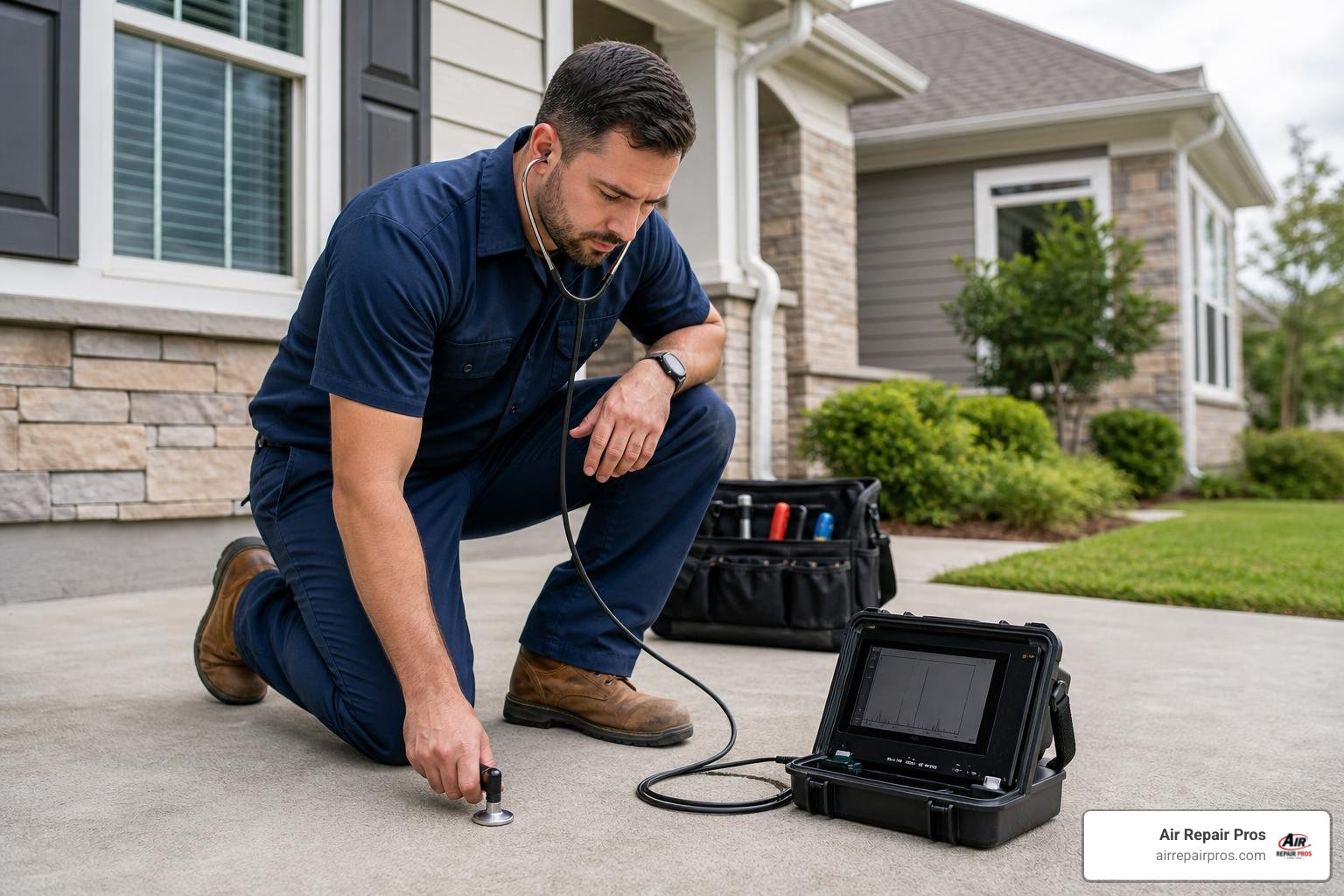
- Acoustic Listening Devices and Ground Microphones: Water escaping from a pressurized pipe under concrete creates a distinct hissing or whooshing sound. Plumbers use electronic acoustic equipment to amplify this sound. By placing a highly sensitive ground microphone on the floor and wearing specialized headphones, the technician can trace the sound of the pipe. The sound becomes louder and higher in pitch directly over the point of the leak.
- Tracer Gas Detection: For small, quiet pinhole leaks that are difficult to hear, plumbers use tracer gas. They drain the water from the suspected line and pump in a safe, non-toxic mixture of helium and nitrogen. Because helium is lighter than air, it escapes through the pipe leak and rises rapidly through the concrete slab. The plumber then sweeps the floor with a highly sensitive gas detector that registers the presence of helium, pinpointing the leak.
- Thermal Imaging Cameras and Infrared Thermometers: This technology is incredibly effective for hot water slab leaks. The escaping hot water heats up the surrounding concrete slab. By scanning the floors with an infrared thermal imaging camera, the plumber can see a bright orange or red heat signature glowing through the flooring.
- Moisture Mapping: Plumbers use non-invasive moisture meters to map out the moisture levels in your concrete slab and flooring. By finding the area with the highest concentration of moisture, they can cross-reference their acoustic and thermal findings to ensure absolute accuracy.
To learn more about how these high-tech tools are used to solve difficult residential water issues, you can explore the specialized services offered for Leak Detection.
Comparing Repair Options: Spot Repair vs. Pipe Rerouting
Once the leak is located, the next step is deciding on the best repair method. Homeowners generally have three choices: a spot repair, a pipe reroute, or an epoxy pipe coating.
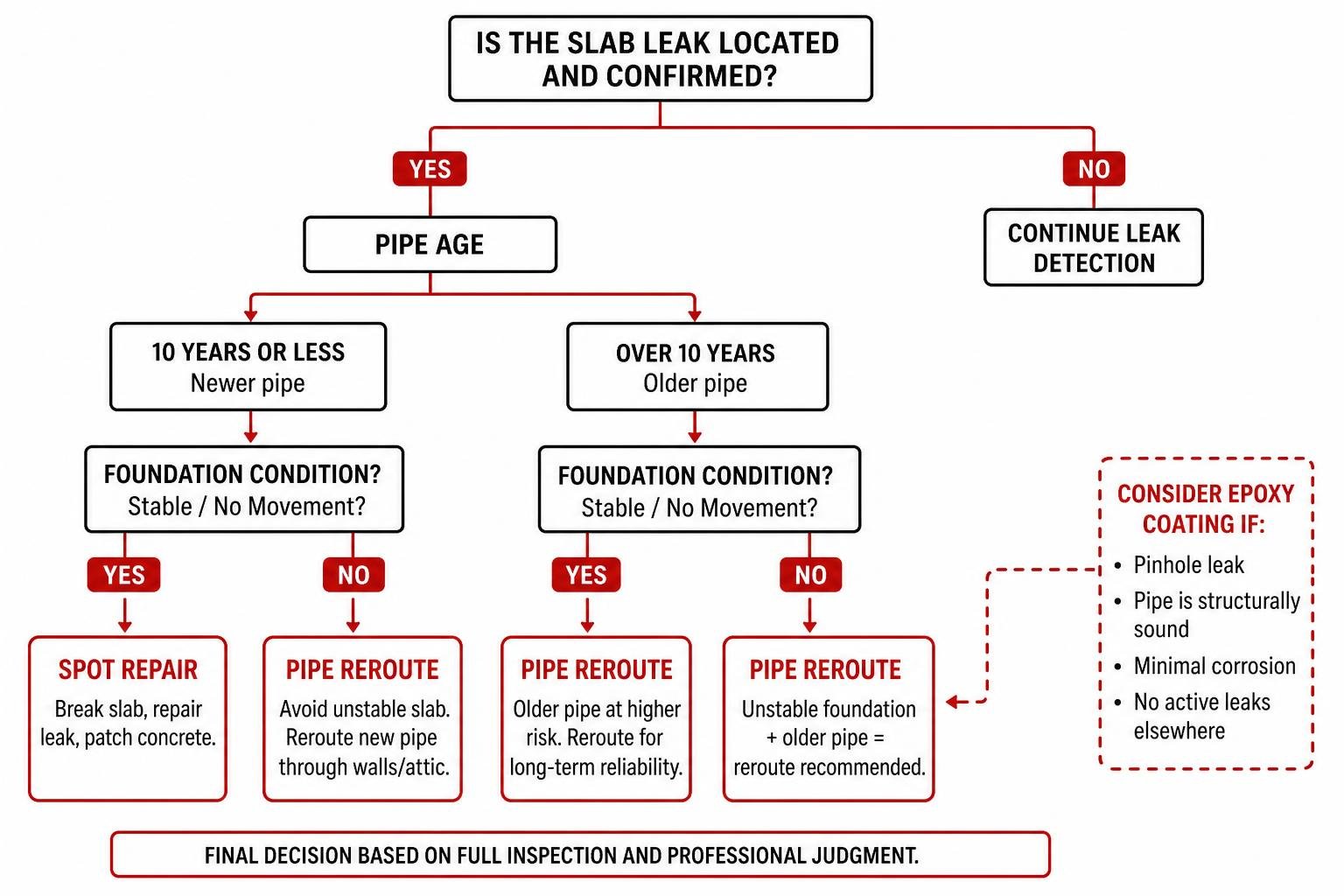
A spot repair involves jackhammering a small hole through the concrete slab directly over the leak, digging out the dirt, cutting out the damaged section of copper, and soldering in a new piece of pipe. While this is often the most direct method, it can be highly disruptive to your daily life, creating dust and noise inside your living room or kitchen.
A pipe reroute is often the preferred long-term solution, especially for older homes with aging copper pipes. Instead of breaking through your foundation, the plumber abandons the leaking pipe beneath the slab entirely. They run a new, modern PEX pipe through your walls or attic space to reconnect the fixtures. This completely eliminates the risk of another slab leak occurring on that line in the future.
For minor pinhole leaks in pipes that are otherwise structurally sound, epoxy pipe coating is an option. The plumber coats the inside of the existing pipe with a durable epoxy barrier, sealing the leak from the inside without any excavation or wall damage.
Here is a comparison diagram illustrating the decision-making process for choosing between a spot repair and a pipe reroute:
To help you understand the pros and cons of each method, look at the comparison table below:
| Feature | Spot Repair | Pipe Rerouting | Epoxy Coating |
|---|---|---|---|
| Excavation Required | Yes (breaks concrete slab) | No (runs through walls/attic) | No (seals internally) |
| Disruption to Living Space | High (dust, noise, floor damage) | Low to Medium (minor drywall cuts) | Very Low |
| Long-Term Reliability | Low (other sections of pipe may leak) | High (completely bypasses the slab) | Medium |
| Best Suited For | Newer homes with localized damage | Older homes with systemic pipe wear | Minor pinhole leaks in stable soil |
For an in-depth look at how these choices apply to local properties, read the Beginner’s Guide to Dallas Slab Leak Repair. It explains why Dallas-area slab leaks are often influenced by local soil movement, aging copper lines, and foundation conditions that are common across North Texas neighborhoods. The guide also helps homeowners understand what to expect during the repair process, including when a direct access repair may make sense, when rerouting is usually the smarter long-term option, and why a professional diagnosis should come before any concrete or flooring is removed.
To see how these options are executed safely and professionally, you can read more about Slab Leak Repair and leak repair services. A professional repair plan typically starts with confirming the leak location, mapping nearby plumbing lines, and choosing the least disruptive access point before any concrete, flooring, drywall, or cabinetry is disturbed. Depending on the pipe condition and home layout, the technician may recommend a targeted slab access repair, a reroute through the attic or walls, or another approach that protects the foundation while restoring reliable water service. This helps homeowners understand not just what the repair options are, but how licensed plumbers control risk, limit interior damage, and keep the home usable during the work.
Frequently Asked Questions About Slab Leak Detection
What are the most common signs of a slab leak?
The most common signs include hearing the sound of running water when all faucets are off, noticing unusually warm spots on your floor, seeing unexplained cracks in your walls or baseboards, experiencing a sudden drop in water pressure, and seeing a dramatic, unexplained increase in your monthly water bill.
How can a homeowner confirm a leak before calling a professional?
A homeowner can perform a simple water meter test. First, turn off every water fixture, washing machine, and ice maker in the house. Locate your water meter box in your yard. If the small low-flow indicator dial or digital reading shows water is still moving, you have an active leak. You can also turn off the cold-water valve to your water heater to see if the movement stops, which helps determine if the leak is on the hot water line.
How accurate is professional slab leak detection?
Professional slab leak detection is incredibly accurate. By combining electronic acoustic listening devices, thermal imaging cameras, and tracer gas, certified plumbers can typically pinpoint the exact location of a leak within a single square foot, preventing unnecessary damage to your flooring and concrete foundation.
Does homeowners insurance cover slab leak detection and repair?
Typically, homeowners insurance policies cover the cost of “tear-out” and restoration, meaning they will pay to locate the leak and repair the flooring and concrete damaged to access the pipe. However, the actual physical repair of the plumbing pipe itself is often excluded from coverage and must be paid out of pocket. It is important to review your specific policy with your insurance agent.
Why do slab leaks happen more often on hot water lines?
Hot water lines carry heated water, which causes the metal pipes to expand. When the water stops flowing, the pipes cool and contract. This constant movement causes the pipe to rub against the surrounding concrete and soil. Over time, this friction wears a hole in the pipe wall, leading to a leak.
Is it better to repair the specific leak or reroute the plumbing?
If your home is older than 15 years and has copper pipes, rerouting is generally the better long-term option. Once a copper pipe under a slab begins to leak due to age and corrosion, it is highly likely to develop additional leaks in other areas. Rerouting the lines through your walls or attic permanently solves the problem.
How much does slab leak detection and repair typically cost?
Pricing can vary depending on several factors, including the depth of the leak, the type of flooring you have, and whether you choose a localized spot repair or a complete pipe reroute. Homeowners should request a professional estimate from a licensed plumber to get an accurate assessment of their specific situation.
Can a slab leak cause foundation damage?
Yes, slab leaks are a leading cause of major foundation damage in North Texas. The constant water flow saturates the expansive clay soil beneath the slab, causing it to swell and lift the foundation. In other cases, the water can wash away the supporting soil, causing the foundation to sink and crack under its own weight.
What is the lifespan of copper pipes under a concrete slab?
While copper is a durable material, copper pipes buried directly in concrete slabs often begin to fail after 15 to 20 years. This is due to chemical reactions between the concrete’s lime and the copper, as well as friction from thermal expansion and the highly corrosive nature of certain local soil types.
How can homeowners prevent future slab leaks?
Homeowners can prevent slab leaks by installing a water pressure regulator to keep household pressure below 60 PSI, maintaining consistent moisture levels around their foundation using a foundation watering system, and scheduling regular plumbing inspections to catch minor wear and tear before it leads to a pipe failure.
Conclusion
A slab leak is a serious plumbing emergency that requires immediate, professional attention. Ignoring the warning signs can lead to catastrophic foundation damage, mold growth, and expensive water bills. By understanding how plumbers use modern, non-invasive technology to locate these hidden leaks, you can make informed decisions to protect your home.
When you suspect a leak under your foundation, do not wait for the damage to spread. The certified plumbing technicians at Air Repair Pros have been serving Frisco, TX and the surrounding North Dallas communities since 1998. With fully stocked trucks carrying over 85% of the parts needed for a single-trip repair, they are ready to handle your plumbing diagnostics and repairs quickly and professionally. They also provide Emergency HVAC and full-scale residential plumbing solutions to keep your home comfortable and safe.
If you are experiencing any signs of a foundation leak, contact our professional slab leak repair technicians at Air Repair Pros today to schedule an inspection and protect your home’s foundation.