The Hidden Costs of Staggering Your Heating and Cooling Upgrades
When a cooling system breaks down in the middle of a sweltering July heatwave, the natural instinct for many homeowners is to replace only the outdoor condenser. However, staggering heating and cooling upgrades often introduces hidden operational penalties that quietly inflate monthly utility bills. Modern air conditioners are engineered to operate at strict SEER2 compliance standards. These standards rely on precise airflow metrics that older, single-speed furnace blower motors simply cannot produce.
When you retain an aging heating unit, the blower motor struggles to synchronize with the variable-speed or two-stage outdoor unit. This mismatch forces your new system to run longer cycles, leading to substantial energy efficiency degradation. Knowing when to replace your home central air conditioning system requires evaluating the entire thermal envelope and the mechanical components working inside the home. Staggering the purchase also subjects homeowners to redundant labor charges, dual diagnostic fees, and two separate rounds of municipal permitting when the inevitable furnace replacement becomes necessary a short time later.
Residential comfort systems are engineered as unified thermal platforms where the furnace blower serves as the primary air distribution engine for both heating and cooling cycles. If an outdated blower fan moves air across a modern evaporator coil at the wrong velocity, the system cannot manage indoor relative humidity effectively. In warm climates like North Texas, this inability to dehumidify forces occupants to set their thermostats lower, driving up electricity consumption and adding unnecessary wear on mechanical assemblies.
The Efficiency Trap of Mismatched Indoor Coils and Condensers
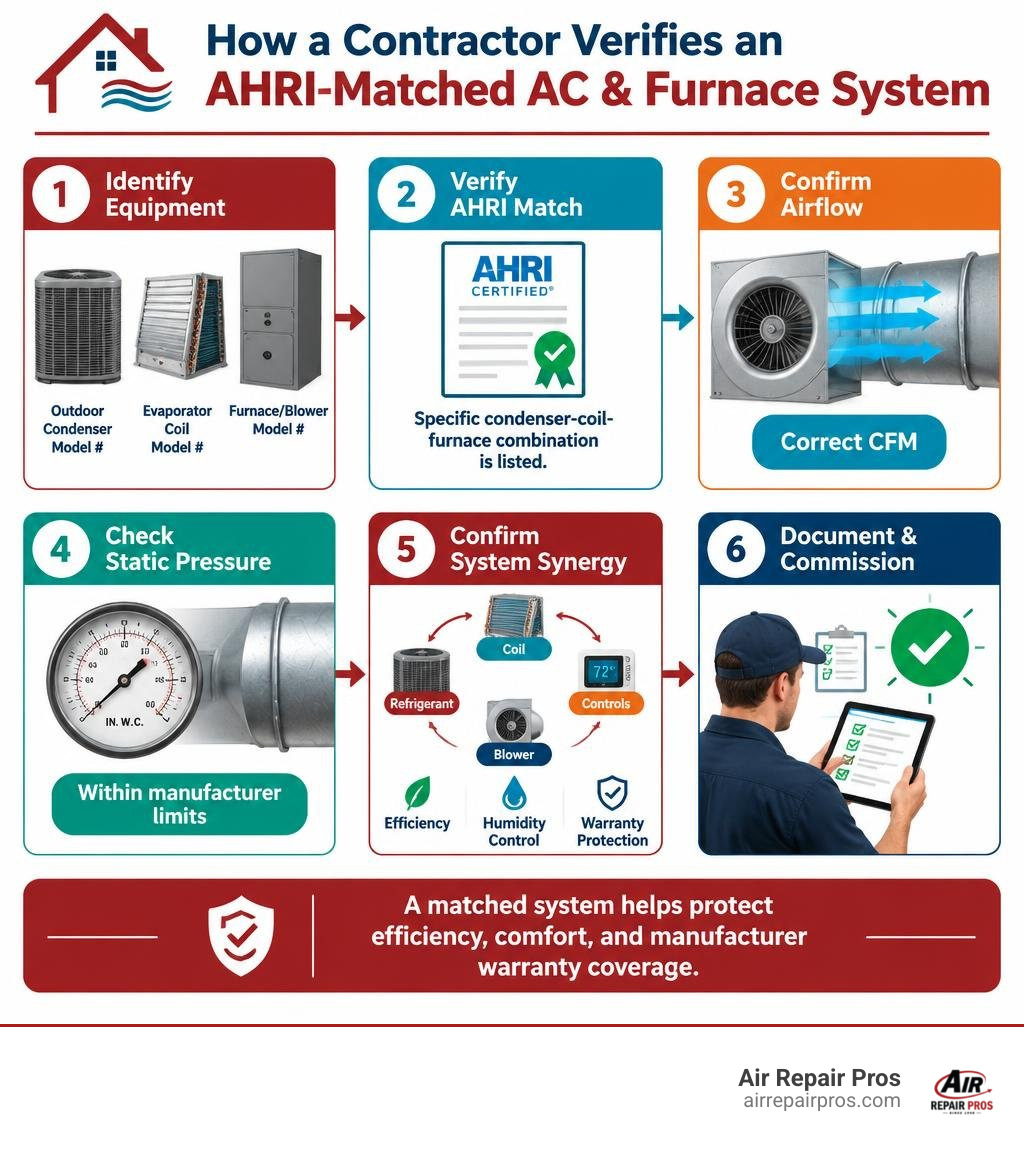
The biggest performance hazard in partial replacements is creating a mismatched system. To achieve its advertised efficiency, an outdoor cooling condenser must be paired with an engineered indoor evaporator coil listed in the Air-Conditioning, Heating, and Refrigeration Institute directory. An AHRI-matched system ensures that the refrigerant metering device, coil surface area, and airflow dynamics work in absolute harmony.
When an advanced outdoor condenser is forced to circulate refrigerant through an aged, sludge-filled indoor coil, significant mechanical conflicts occur:
- Homeowners routinely suffer a 20% to 30% penalty in overall cooling efficiency, completely erasing the energy savings expected from a modern unit.
- Static pressure imbalances develop across the indoor coil, choking airflow and leaving rooms unevenly cooled or humid.
- Trapped debris and incompatible legacy oils can migrate into the new compressor, causing premature component failure and costly out-of-warranty breakdowns.
- Evaporator coils designed for older refrigerants may not withstand the operating pressures of modern systems, increasing the likelihood of micro-fractures and costly chemical leaks.
- Thermostatic expansion valves calibrated for older equipment cannot dynamically adjust flow rates, leading to liquid refrigerant flooding back into the compressor.
Labor and Mobilization Expenses in Dual Installations
Beyond pure mechanical synergy, the economics of installation favor handling both units in a single service event. Replacing heating and cooling units concurrently allows a licensed contractor to dispatch a full technical crew for one concentrated window. The crew completes the heavy lifting, line set flushing, electrical disconnect updates, and ventilation reconfigurations in a unified workflow.
Doing these jobs independently means paying twice for site preparation, transit time, crane deployment, and administrative overhead. In addition, when contractors perform a bundled installation, sheet metal transitions between the furnace plenum and evaporator casing are fabricated cleanly on-site, minimizing air leakage that commonly plagues patchwork jobs.
The table below illustrates the operational differences between single-unit installations and bundled replacements:
| Operational Consideration | Single Unit Replacement (Staggered) | Bundled AC and Furnace Replacement |
|---|---|---|
| Technician Crew Mobilization | Multiple site visits across several seasons | Single, coordinated crew deployment |
| Municipal Permitting | Multiple applications and separate inspections | Single consolidated permit and inspection |
| System Commissioning | Partial testing with legacy hardware | Full-system dynamic airflow and combustion testing |
| Refrigerant Line Service | Repeated evacuation and charging cycles | Single line flush, pressure test, and charge |
| Warranty Administration | Split coverage timelines and mixed terms | Unified parts and labor warranty start date |
| Sheet Metal Fabrication | Custom retrofits to legacy dimensions | Factory-aligned matching plenums and airtight transitions |
The Financial and Performance Realities of AC Furnace Replacement
Evaluating the total scope of an HVAC overhaul requires looking closely at equipment lifespans, operational reliability, and updated industry benchmarks. Homeowners can plan their budgets effectively by reviewing a reputable HVAC Replacement Cost Calculator to understand how baseline equipment costs align with regional requirements.
In North Texas, where summer power demands place immense strain on the regional electric grid, choosing high-efficiency hardware is essential for both reliability and lower operating overhead. There are several key factors to keep in mind when considering a replacement HVAC system, including system capacity, contractor markups, ductwork integrity, and long-term energy savings.
Investing in a synchronized heating and cooling system delivers measurable drops in utility bills. Modern multi-stage gas furnaces paired with variable-speed AC units run at lower capacities for extended periods, maintaining even temperatures throughout the home while consuming a fraction of the electricity required by single-stage equipment.
How the 2026 A2L Transition Alters AC Furnace Replacement Economics
The regulatory landscape has undergone an overhaul with the nationwide shift toward mildly flammable, low-GWP refrigerants like R-454B and R-32. These modern compounds replace legacy R-410A, significantly shrinking the environmental footprint of residential cooling while requiring advanced safety engineering.
P
Modern units designed for these refrigerants may include integrated leak-detection features, safety controls, and updated electrical components. Those design changes can increase equipment costs and make it especially important to evaluate the indoor and outdoor components as a complete, compatible system. Replacing both units together can reduce the risk of pairing older R-410A equipment with newer refrigerant technology and can help support reliable, efficient operation.
The Five-Thousand Dollar Rule for Equipment Longevity
Deciding whether to repair an aging unit or invest in a comprehensive replacement is a common dilemma for homeowners. A widely accepted standard among service technicians is the $5,000 rule. To apply this metric:
- Multiply the exact age of your existing equipment (in years) by the total estimated repair quote (in dollars).
- If the resulting product exceeds 5,000, replacing the unit is universally considered the wiser financial investment.
- If the resulting product is below 5,000, completing the targeted repair may remain economically viable, provided key parts like the compressor or heat exchanger remain sound.
For instance, spending $600 to repair a 10-year-old system yields an index score of 6,000, signaling that continuing to patch up the equipment will quickly become a money pit. Because standard central heating and cooling units operate with an expected service life of 12 to 15 years in demanding climates like Frisco, TX and Plano, TX, applying this formula prevents homeowners from pouring capital into obsolete machinery.
Furthermore, homeowners should weigh recurring emergency repair costs against predictable monthly financing for modern equipment. When you factor in escalating refrigerant costs for older chemistries alongside the likelihood of cascading part failures, comprehensive replacement provides immediate peace of mind and fixed operational costs.
Navigating Equipment Selection, Warranties, and Installation Contracts
Securing the best return on an HVAC investment demands thorough vetting of contractor proposals and technical specifications. Homeowners should always insist on receiving fully itemized bids that break down equipment model numbers, AHRI certificate ratings, electrical modifications, and warranty specifics. Proper installation starts with a comprehensive Manual J load calculation, which measures your home’s square footage, window exposure, insulation levels, and duct layout to determine the exact tonnage required. Sizing equipment purely on square-footage rules of thumb often leads to oversized systems that short-cycle, fail to dehumidify, and wear out prematurely.
When upgrading home systems, selecting certified specialists for professional AC replacement ensures all duct connections and indoor airflow rates meet strict manufacturing guidelines. Similarly, precise craftsmanship during expert air conditioning installation safeguards system longevity and helps homeowners maintain optimal comfort during intense summer stretches.
Contractor proposals should also detail dynamic airflow balance and total external static pressure expectations. An air handler or furnace that is improperly matched to existing ductwork will suffer from premature motor burnout and excessive operational noise. Working with experienced technicians guarantees that transition plenums, vibration isolators, and return drop sizes are engineered correctly from day one.
Warranty Protection and Registered AHRI Matches
Standard manufacturer warranties typically guarantee major functional components for 10 years, provided the equipment is registered promptly following installation. However, homeowners must recognize that pairing a new outdoor condenser with an unregistered or mismatched indoor coil can immediately invalidate that factory coverage. Manufacturers explicitly state in their warranty terms that equipment must be part of an AHRI-certified combination to qualify for full parts replacement. Furthermore, retaining an outdated indoor coil leaves you exposed to complete labor costs should an avoidable refrigerant leak or pressure failure take place.
Many premium equipment manufacturers also offer secondary heat exchanger warranties extending up to 20 years or lifetime replacement guarantees on the furnace firebox. These protections remain valid only when installation records show professional commissioning and regular annual maintenance by certified technicians.
Managing Timelines and Codes for a Dual AC Furnace Replacement
Completing a full system change-out is an intricate mechanical process that normally requires an installation window of one to two full working days. In North Texas communities like McKinney, TX and Allen, TX, municipal mechanical permits are legally required for both gas furnace and air conditioning upgrades.
Professional crews must adhere to strict regulatory steps during installation:
- Securing local mechanical building permits and scheduling official third-party code inspections.
- Conducting rigorous static pressure tests across supply and return plenums to verify adequate airflow.
- Executing static fuel gas line pressure tests to guarantee total combustion safety and zero gas leakage.
- Upgrading high-voltage electrical disconnect boxes, emergency shutoff switches, and condensate overflow safety float switches.
- Verifying proper flue gas venting clearances and intake combustion air supplies to eliminate carbon monoxide risks.
Safety Warning: Handling high-voltage electrical connections, natural gas supply lines, and pressurized refrigerants poses severe life-safety, fire, and poisoning hazards. Homeowners should never attempt DIY HVAC replacements or repairs; all installation and service work must be completed by licensed, certified professionals.
When It Actually Makes Sense to Replace Only One Unit
While bundling upgrades delivers the greatest overall value for most properties, replacing a single component can be the right choice under specific conditions. If an isolated equipment failure occurs on a system where the companion unit is relatively new, a standalone upgrade is entirely practical. This path also makes sense for homeowners with near-term relocation plans or immediate financial limitations that prevent a full change-out.
When an unexpected heating breakdown strikes a younger system, scheduling expert heating repair can often restore safe operation and avoid an unnecessary full replacement.
The Narrow Five-Year Window for Standalone Upgrades
Replacing only the air conditioner or only the furnace is generally sensible only when the companion piece of equipment is under five years old. In these scenarios, the existing hardware retains a substantial portion of its operating life, and its internal components are clean enough to support a new match.
The primary requirement is confirming that the blower motor and existing coil match the physical specifications and control boards of the new unit. If the existing unit falls outside this narrow five-year window, the risks of mechanical mismatch, higher utility costs, and shared component failure rise dramatically. In addition, mixing equipment generations often requires complex wiring workarounds that can complicate future diagnostics.
Assessing Ductwork and Electrical Capacity Before Deciding
Before deciding on any replacement strategy, a thorough evaluation of your existing home infrastructure is essential. A high-efficiency heating and cooling system cannot perform properly if forced to breathe through undersized, damaged, or leaky ductwork. Technicians must measure the cubic feet per minute (CFM) capacity of your supply registers and verify that your electrical service panel can accommodate modern circuitry. Homes in Little Elm, TX with older 100-amp service panels may require electrical updates to support advanced variable-speed blowers, electric heat strips, or modern control modules.
Technicians should also conduct duct leakage tests to ensure that conditioned air actually reaches your living areas rather than leaking into unconditioned attics or crawlspaces. Sealing duct joints with mastic or replacing crushed flex ducts often recovers 15% to 25% of lost heating and cooling capacity before new equipment is even powered on.
Frequently Asked Questions About HVAC System Replacement
What are the key signs that indicate my AC or furnace needs replacement rather than repair?
Key warning signs include equipment that has surpassed 12 years of service, escalating monthly utility bills, frequent repair calls, persistent temperature imbalances between rooms, and catastrophic failures such as a cracked furnace heat exchanger or a seized AC compressor.
How much money do homeowners typically save by replacing both units at once?
Homeowners generally save between 10% and 15% on total installation expenses by bundling their upgrades. These savings stem from shared technician labor hours, single-trip equipment mobilization, unified refrigerant line flushing, and avoiding separate municipal permitting fees.
How does the 2026 refrigerant transition impact replacement costs?
The industry-wide move to low-GWP refrigerants such as R-454B and R-32 has introduced factory-installed leak detection sensors and redesigned internal components. These architectural updates have led to a 10% to 15% baseline increase in cooling equipment costs compared to legacy systems.
Does pairing a new AC with an existing furnace void the manufacturer warranty?
Yes, it frequently does. Major HVAC manufacturers require equipment to be installed as an AHRI-matched system to maintain full 10-year parts warranty coverage. Pairing a modern outdoor condenser with an aged, non-certified indoor coil can void the warranty on key components.
What is the $5,000 rule for deciding whether to repair or replace HVAC units?
The $5,000 rule is an economic formula where you multiply the age of the unit in years by the estimated repair cost in dollars. If the total number exceeds 5,000, replacing the system is the recommended financial choice; if it is under 5,000, repairing the unit may still make sense.
What efficiency ratings should North Texas homeowners aim for in 2026?
North Texas homeowners should look for cooling systems rated at 15.2 to 16.0 SEER2 or higher to manage long, hot summers efficiently. For heating, an 80% to 96% AFUE gas furnace or an advanced multi-stage heat pump provides an ideal balance of performance and fuel efficiency during winter cold snaps.
How long does a full heating and cooling replacement take to install?
A complete replacement of both the indoor furnace and outdoor cooling unit typically takes a professional crew between 8 and 16 working hours, which is usually completed across one to two business days depending on ductwork modifications and site access.
Are there federal tax credits available for HVAC replacements in 2026?
Federal Section 25C energy efficiency tax credits expired on December 31, 2025. However, homeowners can still reduce their investment through local utility rebates and state-administered clean energy incentive programs.
What permits are required for replacing a furnace and AC in North Texas?
Municipalities across North Texas require mechanical building permits for heating and cooling replacements. These permits ensure the work complies with local building codes, including rigorous testing of fuel gas connections, electrical safety disconnects, and ventilation exhaust venting.
Can I switch to a whole-home heat pump instead of a furnace and AC combination?
Yes. Modern variable-speed, cold-climate air-source heat pumps provide efficient year-round cooling and heating from a single system. Homeowners can also choose a dual-fuel hybrid system, which pairs an electric heat pump with an auxiliary gas furnace for reliable comfort in extreme freezes.
Conclusion
Making the decision to upgrade your home heating and cooling infrastructure is an investment in long-term comfort, indoor air quality, and property value. For homeowners across Frisco, TX, McKinney, TX, Plano, TX, Little Elm, TX, and Allen, TX, coordinating a complete system replacement eliminates efficiency penalties, safeguards factory warranty protections, and ensures dependable climate control throughout blistering summer afternoons and freezing winter cold fronts.
For reliable guidance, clear assessments, and certified technical service, Air Repair Pros is dedicated to keeping your home running smoothly. We invite you to learn more about our comprehensive heating solutions or contact our professional AC furnace replacement technicians today to schedule your complete home comfort evaluation.