

The Costly Impact of Dirty Condenser Coils on Your AC
Dirty condenser coils are one of the most common reasons AC systems in North Texas struggle to keep up on hot summer days, and most homeowners never see it coming. When your outdoor unit is neglected, the accumulation of environmental debris can quietly degrade your system’s performance until it completely breaks down.
Here is a quick answer if you need it fast:
How to fix dirty condenser coils:
- Shut off power at the thermostat and the outdoor disconnect box.
- Remove large debris by hand or with a shop vac.
- Rinse the coils gently with a garden hose, spraying from the inside out.
- Apply a coil cleaner (foaming or non-foaming) if dirt is stubborn.
- Straighten bent fins with a fin comb if needed.
- Restore power and test the system.
- Call a professional if dirt is impacted, fins are heavily damaged, or the system still underperforms.
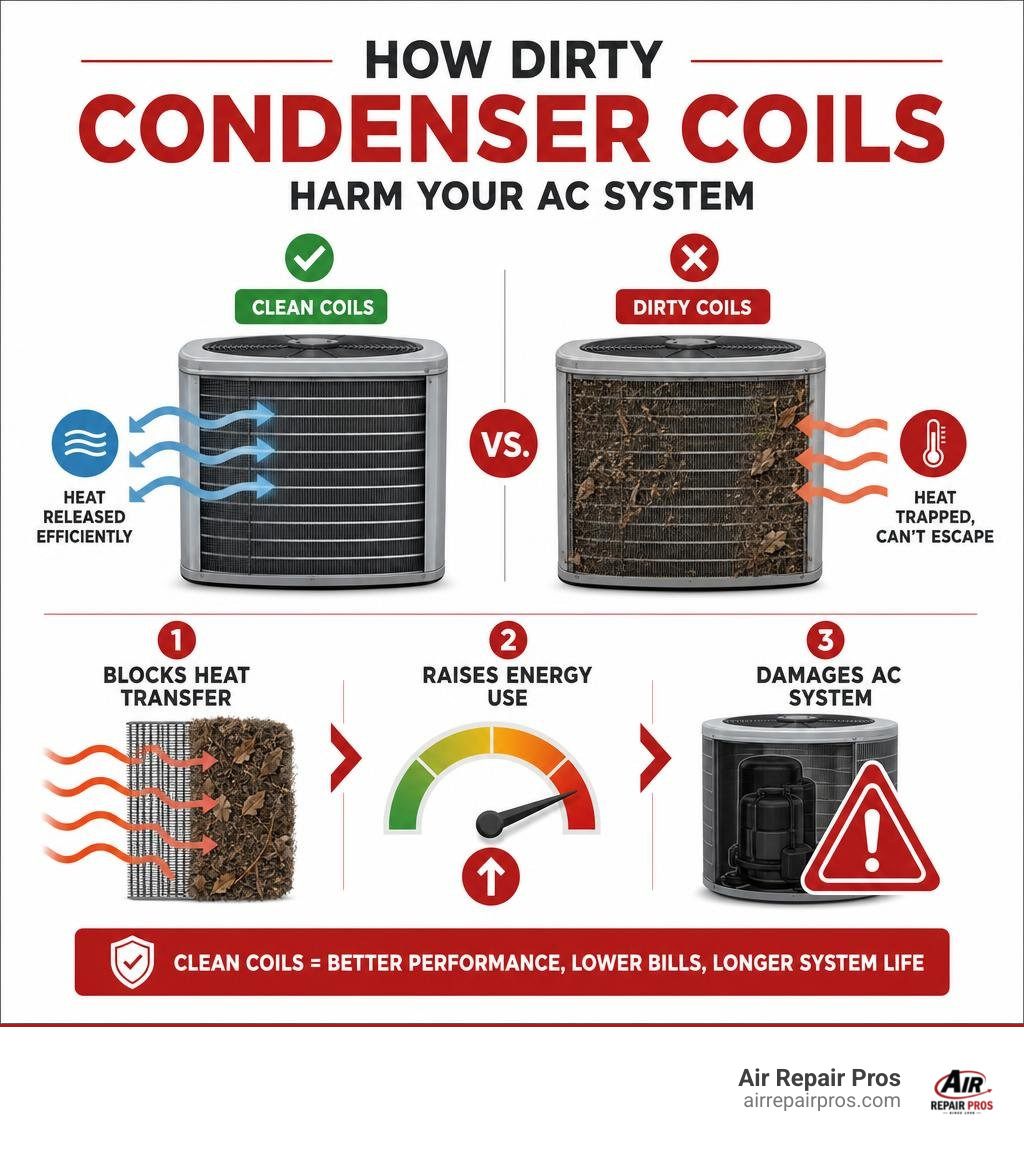
When dirt, pollen, cottonwood seeds, and grass clippings pack into the coil fins on your outdoor AC unit, the system can no longer release heat efficiently. The result? Your AC runs longer, works harder, and costs more to operate, which can significantly increase your monthly electric bill. In extreme North Texas summers, where highs regularly push past 100 degrees, that extra strain can push a compressor to failure years ahead of schedule.
The good news is that dirty coils are a fixable problem. Some basic maintenance is well within reach for most homeowners. Deeper cleaning, especially when dirt is impacted or fins are bent, is where a certified HVAC technician adds real value.
When homeowners search for dirty condenser coils, they are often describing related AC symptoms such as AC blowing warm air, an AC not cooling properly, or refrigerant leak signs. These issues can feel similar because they all reduce comfort and force the system to run harder, but the underlying causes are not always the same. A clogged condenser coil blocks outdoor heat release, while low refrigerant, airflow restrictions, electrical issues, or failing components can create overlapping warning signs. Understanding these related terms helps you describe the problem more clearly, recognize when a simple coil cleaning may help, and know when it is safer to call a professional technician for a complete diagnosis.
To understand why clean coils are so vital, it helps to look at the physics of how your air conditioner actually cools your home. Many people believe an AC generates cold air, but it actually works by removing heat from the indoor air and dumping it outside. The refrigerant in your system acts as a courier, absorbing heat at the indoor evaporator coil, traveling outside, and releasing that heat through the outdoor condenser coil.
According to the U.S. Department of Energy, keeping your AC coils clean is essential for maintaining system performance and energy efficiency. When your outdoor unit is caked with dirt, a layer of thermal insulation forms over the copper tubing and aluminum fins. This grime acts like a thick winter blanket wrapped around the outdoor unit. Instead of releasing heat easily into the surrounding air, the heat remains trapped inside the refrigerant loop.
This thermal impedance disrupts the entire refrigeration cycle. Because the heat transfer efficiency can drop significantly from even a thin layer of dust, the refrigerant cannot cool down and condense back into a liquid properly. This forces the compressor to work under significantly higher head pressures and compression ratios.
When the compressor works harder, it draws more electrical current, which can increase your energy consumption substantially. Over time, the internal temperature of the compressor rises. If the discharge temperature exceeds safe operating limits, the system oil begins to break down, leading to rapid mechanical wear and eventual compressor burnout. To avoid these budget-busting utility spikes, homeowners can prevent high utility bills with timely AC repair and regular coil cleanings.
How Condenser Coils Get Dirty in North Texas
If you live in North Texas, your outdoor AC unit faces a constant barrage of airborne debris. The climate and local vegetation in cities like Frisco, TX, McKinney, TX, and Plano, TX make outdoor coils highly susceptible to rapid buildup.

Several common local culprits quickly coat your system:
- Cottonwood Seeds: In late spring, cottonwood trees release fluffy white seeds that drift through the air. These fibers act like a sticky web, clinging to the aluminum fins and trapping other particles.
- Grass Clippings: When mowing the lawn, discharging grass clippings directly toward the outdoor condenser unit can coat the fins in a moist, green layer that dries into a hard crust.
- Pollen: Heavy pollen seasons coat everything in a yellow film, which combines with morning humidity to form a sticky paste between the tightly spaced coil fins.
- Dust Storms and Wind: High winds carry dry Texas soil directly into the cabinet, where the condenser fan pulls the dirt deep into the coil assembly.
Because these elements are constantly at play, scheduling routine air conditioning maintenance to avoid costly repairs is the best way to keep your system breathing freely. Regular maintenance ensures that these environmental factors do not compromise your comfort during the hottest months of the year.
Warning Signs of Dirty Condenser Coils
Your air conditioner will usually tell you when its lungs are clogged. Recognizing these warning signs early can save you from a complete system breakdown during a July heatwave.
Identifying Dirty Condenser Coils by System Performance
When dirty condenser coils restrict heat transfer, your AC has to run much longer to achieve the temperature set on your thermostat. You might notice the system running constantly during the afternoon without ever reaching the desired temperature. The air coming out of your supply vents may feel lukewarm rather than crisp and cold.
Because the system cannot reject heat, the pressure inside the refrigerant lines spikes, which can trigger safety switches or cause the system to short cycle, turning on and off rapidly. If you notice these performance red flags, reviewing a list of common AC problems and fixes can help you determine if a dirty coil is the primary culprit. Homeowners in McKinney, TX, Little Elm, TX, and surrounding areas should address these issues promptly to prevent permanent damage to the compressor.
Physical Symptoms of Dirty Condenser Coils on the Outdoor Unit
A simple visual inspection of your outdoor cabinet can reveal a lot. If you walk up to your condenser and see a visible carpet of dust, pet hair, or grass clippings stuck to the metal fins, your coils are dirty.
Other physical symptoms include:
- A Hot Outdoor Cabinet: If you place your hand near the top of the running outdoor unit and the air blowing out feels cool while the metal cabinet itself is boiling hot, heat is not being rejected properly.
- Restricted Airflow: The condenser fan motor may sound like it is straining because it is trying to pull air through a blocked wall of dirt.
- Ice Buildup: Surprisingly, a severely fouled outdoor condenser coil can cause pressure imbalances that lead to the indoor evaporator coil freezing over, resulting in ice forming along the copper refrigerant lines.
How to Clean Your AC Condenser Coils Safely
Cleaning your condenser coils is an excellent way to restore system efficiency, but it must be done carefully. Aluminum fins are incredibly delicate, about the thickness of a soda can, and can easily be crushed or ruined by improper cleaning methods.
DIY Maintenance Steps for Homeowners
For light, superficial dirt, homeowners can perform a basic cleaning using standard household tools. Before you begin, always prioritize safety.
First, turn off the power to your AC system at both the indoor thermostat and the outdoor electrical disconnect box, which is usually located in a metal box mounted on the wall near your unit. If you need detailed guidance on how to safely access your unit, you can read about how to get your AC ready for summer: how to clean your AC unit’s condenser coils.
Once the power is completely disconnected:
- Clear the Area: Remove any leaves, weeds, or toys within a two-foot radius of the outdoor unit.
- Brush Away Loose Debris: Use a soft-bristled brush or a hand broom to gently sweep away loose dirt, cobwebs, and grass clippings from the outer grilles. Always brush in the direction of the fins, which is usually vertically, to avoid bending them. Keeping your cooling system in good condition between professional tune-ups is a great way to prevent major issues.
- Rinse with a Garden Hose: Using a standard garden hose with a spray nozzle, gently rinse the coils. Never use a pressure washer, as the high-pressure stream will instantly flatten the aluminum fins and block airflow permanently. Spray from the inside out if you have removed the top cover, or spray at a downward angle from the top of the unit to wash the dirt out of the fins.
- Let It Dry: Allow the unit to dry completely before restoring power at the disconnect box and turning your thermostat back on.
When to Call a Professional Technician
While a light rinse is great for routine maintenance, heavy grease, deeply impacted mud, or delicate internal components require professional expertise. If your outdoor unit is located near a dryer vent or an outdoor grill, the coils can become coated in a greasy film that water alone cannot remove.
Professionals use specialized, pH-balanced foaming chemical cleaners. These cleaners expand inside the coil, pushing deeply embedded dirt out from the center of the unit. Additionally, if your coil fins are already bent, a technician will use specialized fin combs to carefully straighten them without causing further damage.
For homeowners in Frisco, TX, Plano, TX, and Allen, TX, professional assistance is highly recommended to protect your system and dramatically lower your summer energy bills. Attempting to use harsh chemicals without proper training can corrode the copper tubing and lead to expensive refrigerant leaks.
To schedule a safe, deep clean that keeps your system compliant with manufacturer warranties, contact our professional AC repair technicians at Air Repair Pros.
Preventing Coil Grime and Extending System Lifespan
The best way to deal with dirty condenser coils is to prevent them from getting heavily fouled in the first place. Simple household habits can dramatically reduce the speed at which grime accumulates:
- Change Your Indoor Filters: A clogged indoor air filter restricts airflow, putting extra stress on the entire system and causing the outdoor unit to run longer, which pulls more outdoor dirt into the condenser coils.
- Maintain a Clearance Zone: Keep shrubs, flowers, and grass trimmed back at least two feet from your outdoor unit. Avoid piling mulch or soil against the base of the metal cabinet.
- Direct Grass Clippings Away: Always point your lawnmower discharge chute away from the AC unit when cutting your grass.
To understand the difference between basic homeowner care and professional service, consider this comparison:
| Maintenance Task | DIY Rinsing | Professional Deep Cleaning |
|---|---|---|
| Tools Used | Garden hose, soft brush | Foaming chemical cleaners, fin combs, diagnostic gauges |
| Depth of Clean | Surface-level dust and loose leaves | Deeply impacted dirt, grease, and internal grime |
| Component Inspection | Visual check only | Electrical testing, refrigerant monitoring, fan lubrication |
| Warranty Protection | Does not count as official maintenance | Provides certified service records for warranty compliance |
| Frequency | Monthly during high-pollen seasons | Annually before the peak cooling season |
Investing in professional care is the single best way to protect your equipment. You can read more about how to extend the life of your HVAC system with preventive care to keep your unit running smoothly for years. If you want to make maintenance hassle-free, exploring local AC maintenance plans is an excellent way to find a plan that fits your household needs.
Frequently Asked Questions About AC Coil Maintenance
What are condenser coils and what do they do?
Condenser coils are the network of copper tubes and aluminum fins located in your outdoor AC unit. Their primary job is to release the heat that the indoor evaporator coil absorbed from inside your home, allowing the refrigerant to cool down, liquefy, and repeat the cooling cycle.
Why do condenser coils get dirty so quickly?
Because the outdoor unit relies on a powerful fan to pull large volumes of outdoor air through the metal fins to dissipate heat, it acts like a giant vacuum cleaner. This constant airflow pulls in dust, pollen, leaves, grass clippings, and pet hair, which easily stick to the tightly spaced fins.
What happens if I do not clean my AC coils?
Neglecting your coils leads to restricted airflow, poor heat transfer, and high operating pressures. This forces your system to run longer, increases your utility bills, and can eventually lead to catastrophic compressor failure, which is one of the most expensive HVAC repairs.
How often should condenser coils be cleaned in Texas?
In North Texas, condenser coils should receive a professional deep cleaning at least once a year, ideally in the spring. If your home has heavy pet shedding, nearby construction, or cottonwood trees, you may need to perform light DIY rinses every few months.
Can dirty coils cause my indoor AC unit to freeze up?
Yes. When the outdoor condenser coil cannot release heat, the pressure and temperature balance of the refrigerant cycle is disrupted. This can cause the refrigerant in the indoor evaporator coil to drop below freezing, leading to ice formation inside your home.
Can I use a pressure washer to clean my AC coils?
No, you should never use a pressure washer on your AC coils. The intense pressure will instantly bend and flatten the delicate aluminum fins, permanently blocking airflow and requiring expensive coil replacement.
What is the best cleaner for dirty condenser coils?
For basic DIY cleaning, clean water from a garden hose is best. For professional cleanings, technicians use specialized, non-corrosive foaming alkaline cleaners that penetrate deep into the coils to dissolve heavy grease and dirt without damaging the metal.
Will cleaning my condenser coils lower my monthly electric bill?
Yes. Cleaning dirty coils can improve your system’s energy efficiency significantly. By allowing the system to transfer heat easily, your AC will run shorter cycles and consume substantially less electricity.
What is the difference between condenser coils and evaporator coils?
The evaporator coil is located inside your home, usually in the attic or closet, and absorbs heat from your indoor air. The condenser coil is located in the outdoor unit and releases that absorbed heat into the outside air.
Does regular coil maintenance keep my manufacturer warranty valid?
Yes. Most HVAC manufacturers require proof of annual maintenance by a licensed professional to keep your warranty valid. Keeping service records of your annual coil cleanings protects you if a major component fails.
Conclusion
Keeping your condenser coils clean is one of the simplest yet most effective ways to ensure your home stays cool, your energy bills stay manageable, and your air conditioner survives the intense North Texas heat. Whether you are performing a quick rinse with your garden hose or scheduling a deep chemical clean, staying proactive with your coil maintenance pays off in long-term comfort and savings.
When you need a thorough, professional deep clean, Air Repair Pros is here to help. Serving Dallas, TX, Frisco, TX, McKinney, TX, Plano, TX, Little Elm, TX, and Allen, TX since 1998, our certified technicians arrive in fully stocked trucks carrying the vast majority of the parts needed for one-trip service. To ensure your system is running at peak efficiency all year long, you can schedule regular air conditioning maintenance in McKinney, TX or contact our professional AC repair technicians today to experience the peace of mind that comes with expert, reliable care from Air Repair Pros.