
Should You Repair or Replace Your AC in Plano, TX?
When it comes to AC repair vs replace in Plano, TX, the right answer depends on a few key factors: your system’s age, repair cost, and how often it breaks down. Here is a quick guide to help you decide fast:
Quick Decision Guide:
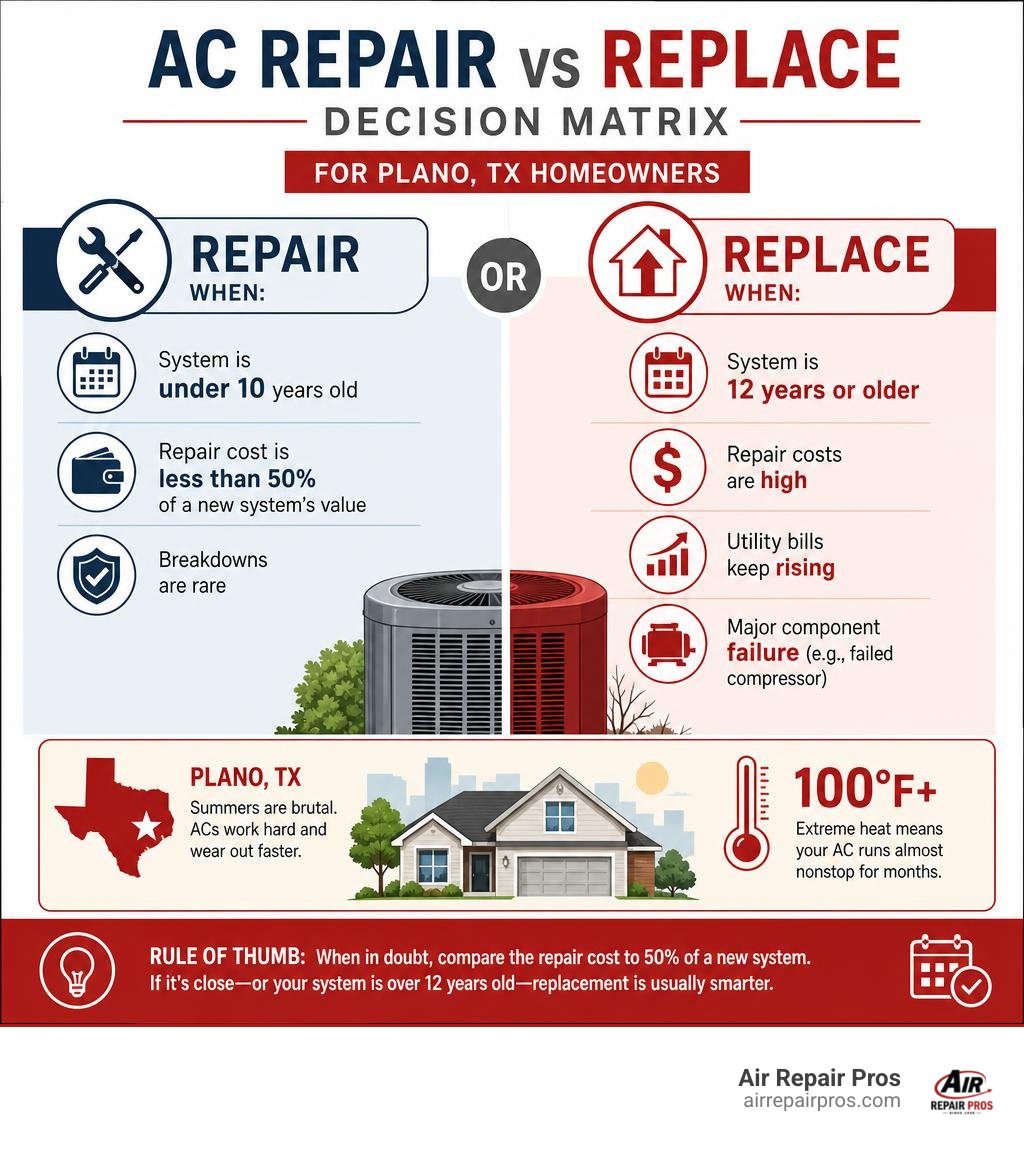
- Repair if your system is under 10 years old, the repair cost is less than 50% of a new system’s value, and breakdowns are rare
- Replace if your system is 12 years or older, repair costs are high, utility bills keep rising, or you are facing a major component failure like a failed compressor
Plano, TX summers are brutal. Temperatures regularly push past 100°F, and your air conditioner runs almost nonstop for months at a time. That kind of workload shortens the lifespan of even a well-maintained system. While AC units in milder northern climates can last 13 to 15 years, most systems in North Texas only last 12 to 13 years, and sometimes less without regular maintenance.
That means Plano, TX, homeowners face this repair-or-replace question more often than most. And the stakes are high. Make the wrong call, and you are either throwing money at a dying system or paying for a new unit you did not actually need yet.
This guide breaks down exactly how to make that decision with confidence, covering the key rules HVAC professionals use, what local Plano, TX housing and climate conditions mean for your system, and when it makes more financial sense to invest in a new high-efficiency unit rather than patch an old one.
Before deciding, pay close attention to the symptoms your system is showing. Issues like AC blowing warm air, an AC not cooling evenly, weak airflow, short cycling, or visible refrigerant leak signs can point to very different repair needs. Some problems may be simple fixes, such as a clogged filter, dirty coil, thermostat issue, or failed capacitor. Others, especially refrigerant leaks, compressor failure, repeated breakdowns, and rising energy bills on an older system, may indicate that replacement will be the better long-term investment. The goal is not just to restore cool air for the day, but to choose the option that protects your comfort, lowers avoidable repair costs, and keeps your Plano, TX home reliable through the hottest months of the year.
Key Factors in the AC Repair vs Replace Plano, TX Decision
When your cooling system malfunctions, the decision to fix or swap the unit often comes down to basic economics. One of the most reliable guidelines used by professional HVAC technicians is the 50% rule. This rule states that if the cost of a single repair is equal to or greater than 50% of the value of a brand-new system, replacement is almost always the smarter financial move.
For example, if your system is out of warranty and needs a major component repair, compare the quoted repair cost with the estimated cost of a new, high-efficiency AC installation. If the repair approaches half the value of a replacement system, you have reached that critical 50% threshold. Investing a large amount into an older unit that may experience another major component failure next season is a risky gamble.
Even if the immediate fix is less than 50% of the replacement cost, you must consider the frequency of your service calls. A system that requires multiple minor fixes every single season will quickly drain your bank account, often exceeding the cost of a new installation over a short period.
To help you visualize this choice, we have compiled a comparison table highlighting the key indicators for both paths.
| Indicator | Choose AC Repair | Choose AC Replacement |
|---|---|---|
| System Age | Under 10 years old | Over 10 to 12 years old |
| Repair Frequency | Rare, occasional issues | Frequent, recurring breakdowns |
| Utility Bills | Stable or minor seasonal increases | Consistently rising, unexplained spikes |
| Refrigerant Type | Modern R-410A or newer | Obsolete R-22 |
| Overall Comfort | Consistent cooling throughout the home | Hot spots, high humidity, weak airflow |
| Safety Concerns | None; minor electrical or mechanical wear | Major electrical hazards or compressor failure |
When evaluating these indicators, it is helpful to consult professional resources. You can read more about the financial breakdown in our detailed guide on how to repair vs replace air conditioner units. Additionally, you can review the official ENERGY STAR Guide on AC Replacement to understand national standards for system efficiency and retirement.
When to Choose Full AC Replacement Over Repair
While a quick fix can restore cool air temporarily, there are several scenarios where a full air conditioning replacement is the only logical choice. Frequent breakdowns are a primary warning sign. If you have your local HVAC technician on speed dial and find yourself scheduling emergency service multiple times a year, your system is telling you that its major components are reaching the end of their operational life.
Another major factor is your monthly energy bill. Older systems lose efficiency naturally over time due to wear and tear on the compressor and motor. If you notice your utility bills climbing steadily year after year, despite regular maintenance, your system is working much harder than it should to cool your home.
Modern cooling technology has advanced significantly over the last decade. New systems offer variable-speed compressors, smart thermostat compatibility, and superior humidity control. Choosing a modern system not only lowers your monthly bills but also provides a level of indoor comfort that older units simply cannot match. For a deeper dive into these considerations, explore our resource on customer education repair or replace an air conditioning or heating system.
Evaluating Long-Term Savings with a High-Efficiency AC Repair vs Replace Plano, TX Strategy
Many homeowners hesitate to replace their cooling system because of the upfront cost. However, looking at this decision as a long-term investment reveals significant savings. Modern systems are rated using the SEER2 (Seasonal Energy Efficiency Ratio 2) scale. The higher the SEER2 rating, the less electricity the system uses to cool your home.
In 2023, the Department of Energy implemented new, stricter SEER2 standards. For southern states like Texas, the minimum efficiency standard for residential split-system AC units was raised to 14.3 SEER2. Replacing an old 10-SEER system with a modern 16-SEER or 18-SEER unit can slash your cooling costs by up to 40% or more.
In a climate like Plano, TX, where cooling systems run almost continuously for six months of the year, these monthly savings add up rapidly. Furthermore, federal tax credits, along with local utility rebates, can significantly offset the initial cost of a high-efficiency system. When you factor in these incentives alongside the reduction in your monthly utility bills, a new system often pays for itself within a few years. If you are currently dealing with a broken system and want to explore your options, you can learn more about local service standards by reading about AC repair in Plano TX.
Understanding the Lifespan of an AC Unit in Plano, TX
The climate in North Texas is incredibly demanding on HVAC equipment. The extreme summer heat forces systems to run for extended cycles, often under intense thermal stress. Because of these harsh operating conditions, the average lifespan of a central cooling system in Plano, TX is typically shorter than the national average, usually lasting between 12 and 13 years.

As a system crosses the decade mark, the likelihood of a major component failure, such as a failed compressor or a leaking evaporator coil, increases dramatically. Understanding where your system stands in its life cycle is essential for planning purposes. To learn more about how to evaluate your system’s remaining years, check out our guide on when to replace your home central air conditioning system.
In addition to the extreme heat, Plano, TX homeowners must also contend with local soil conditions. The heavy clay soil in North Texas is prone to shifting during periods of drought and heavy rain. This shifting ground can cause the concrete or plastic pad supporting your outdoor condenser unit to tilt. A tilted condenser can lead to uneven oil distribution in the compressor, accelerated mechanical wear, and physical stress on the copper refrigerant lines, which often results in costly refrigerant leaks.
How Age Affects the AC Repair vs Replace Plano, TX Choice
The age of your system dictates more than just its likelihood of breaking down; it also determines the type of refrigerant it uses. Older systems manufactured before 2010 often rely on R-22 refrigerant. The Environmental Protection Agency (EPA) has completely phased out the production and import of R-22 to protect the ozone layer.
If your R-22 system develops a refrigerant leak, repairing it is incredibly expensive. Because the supply of R-22 is extremely limited, the cost of this refrigerant has skyrocketed. Furthermore, the industry is currently transitioning away from R-410A to newer, more environmentally friendly refrigerants.
Investing a large sum of money into a system that uses obsolete or phasing-out refrigerants is rarely a wise decision. When major components like the compressor or condenser coil fail on an older unit, the smartest move is to transition to a modern, eco-friendly system. For more insights on navigating this transition, read our article on AC repair or replace options.
Signs Your Home Needs Immediate AC Repair
While replacement is often the best long-term move for aging systems, many issues can be resolved quickly and affordably with professional repair services. Recognizing the early warning signs of system distress can prevent a minor issue from turning into a catastrophic failure.
- Warm Air Blowing from Vents: If your system is running but the air coming out of your registers is warm or lukewarm, you could be dealing with a failed compressor, a refrigerant leak, or a faulty capacitor.
- Weak Airflow: Poor airflow often points to a failing blower motor, a severely clogged air filter, or issues within your ductwork.
- Frequent Cycling: If your system turns on and off every few minutes, it is short-cycling. This places immense strain on the compressor and is often caused by thermostat issues, low refrigerant, or an oversized system.
- Water Leaks around the Indoor Unit: Standing water or active drips around your indoor furnace or air handler indicate a clogged condensate drain line or a frozen evaporator coil.
- Strange Noises: Squealing, grinding, scraping, or loud banging noises are clear indicators of mechanical wear, such as a loose belt, failing bearings, or a damaged blower wheel.
If you notice any of these symptoms, it is crucial to act quickly. Delaying service can cause secondary damage to other expensive components. You can read a detailed breakdown of these warning signs in our article on signs you need AC repair. For general tips on keeping your system running smoothly, you can also consult the Department of Energy AC Maintenance Guide.
Troubleshooting Common AC Problems Before Calling a Professional
Before you pick up the phone to schedule an emergency service call, there are a few basic troubleshooting steps you can perform. Sometimes, a system that seems completely broken is simply suffering from a minor, easily correctable issue.
Safety Warning: Always turn off the power to your HVAC system at the thermostat and the main electrical panel before inspecting any electrical components or opening the cabinet. Never attempt to handle internal wiring, capacitors, or refrigerant lines yourself, as these carry high voltage and high pressure that can cause severe injury or death.
- Check the Thermostat Settings: Ensure your thermostat is set to “Cool” and the temperature setting is at least a few degrees below the current room temperature. If the screen is blank, replace the batteries.
- Inspect the Air Filter: A heavily clogged air filter restricts airflow so severely that the system may shut down entirely or freeze up. Replace dirty filters immediately.
- Check the Circuit Breakers: Look at your home’s main electrical panel to see if the breaker labeled for your AC has tripped. If it has, reset it once. If it trips again immediately, do not attempt to reset it a second time; call a professional, as this indicates a serious electrical fault.
- Examine the Outdoor Unit: Ensure the outdoor condenser is free of debris, leaves, and overgrown vegetation. Restricted airflow around the outdoor coil prevents the system from releasing heat effectively.
- Inspect the Condensate Drain Line: If you see water pooling around your indoor unit, the condensate drain line may be clogged with algae or debris. You can sometimes clear minor clogs using a wet/dry vacuum to suction the blockage from the outdoor drain pipe.
If these basic steps do not resolve the issue, it is time to call in a certified technician. Attempting complex DIY repairs can void your manufacturer’s warranty and lead to costly mistakes. For more troubleshooting tips, read our guide on AC repair in Plano troubleshooting common AC problems.
Frequently Asked Questions About AC Repair vs Replace Plano TX
How long does an AC unit typically last in Plano, TX?
Due to the intense heat and prolonged summer cooling seasons in North Texas, a central air conditioning system typically lasts between 12 and 13 years. Systems that receive regular professional maintenance may last slightly longer, while neglected systems can fail in under a decade.
What is the 50% rule for AC repair vs replacement?
The 50% rule is a financial guideline stating that if the cost of repairing your current AC unit is 50% or more of the cost of a brand-new system, you should replace it. This rule helps homeowners avoid spending large sums of money on aging, inefficient equipment that is likely to break down again.
How does the R-22 refrigerant phase-out affect my decision?
The EPA phased out R-22 refrigerant completely in 2020. If your older system uses R-22 and develops a leak, the cost of sourcing this scarce refrigerant is extremely high. In almost all cases, it is more cost-effective to replace an R-22 system with a modern unit rather than paying for a repair and recharge.
Can a dirty air filter cause my AC to stop cooling?
Yes. A severely dirty air filter restricts airflow through the system. This lack of airflow causes the temperature of the evaporator coil to drop below freezing, leading to ice buildup on the coil. Once the coil freezes, the system will stop cooling your home and may shut down entirely.
Is it worth repairing a 10-year-old AC system?
It depends on the nature of the repair. If the issue is minor, such as a failed capacitor or a clogged drain line, a repair is usually worth it. However, if the compressor has failed or the evaporator coil is leaking, investing in a replacement is generally wiser, as other major components are likely nearing the end of their lifespan.
How much can I save on my utility bills by replacing an old AC?
Upgrading from an older, low-SEER system to a modern, high-efficiency SEER2 system can reduce your monthly cooling costs by 20% to 40%. Over the course of a hot Texas summer, these savings can add up to hundreds of dollars.
What are the risks of delaying an AC replacement?
Delaying replacement often leads to frequent, costly emergency repairs, higher monthly utility bills, and poor indoor air quality. In extreme cases, a failing system can present safety hazards, such as electrical shorts or compressor fires.
Does a home warranty cover AC replacement in Plano, TX?
Home warranty coverage depends entirely on your specific policy details. Some policies cover full replacement if the system cannot be repaired, while others only cover specific components or place caps on payout amounts. Always review your policy terms and contact your provider before making a decision.
How long does a standard AC installation take?
A standard, straightforward residential AC installation typically takes between four and eight hours. This means our professional technicians can usually complete a full system swap in a single day, minimizing disruption to your household.
What maintenance practices can extend my AC system’s lifespan?
The most effective ways to extend your system’s lifespan are changing your air filters every 1 to 3 months, keeping the outdoor unit clear of debris, and scheduling professional preventative maintenance tune-ups twice a year, once in the spring for the cooling system and once in the fall for the heating system.
Conclusion
Deciding whether to repair or replace your air conditioning system can feel overwhelming, but you do not have to make this choice alone. At Air Repair Pros, our EPA-certified technicians are dedicated to providing honest, transparent guidance tailored to your home’s unique needs and your budget. We arrive in fully stocked trucks, ready to perform reliable repairs on the spot, and we offer 24/7 emergency service for those times when your system fails in the middle of a scorching summer night.
Whether you need a quick, dependable fix to get your system back up and running or a comprehensive consultation for a high-efficiency replacement, we are here to help. Contact our professional AC repair technicians at Air Repair Pros today to schedule your diagnostic visit, or browse our website to learn more about how we keep families cool and comfortable across Plano, TX.